


Tue, 21st July Cardiff 24°
Nation.Cymru wordmark
Advertisement

Opinion

New Century, New Ideas, New Wales
By Mark Mansfield
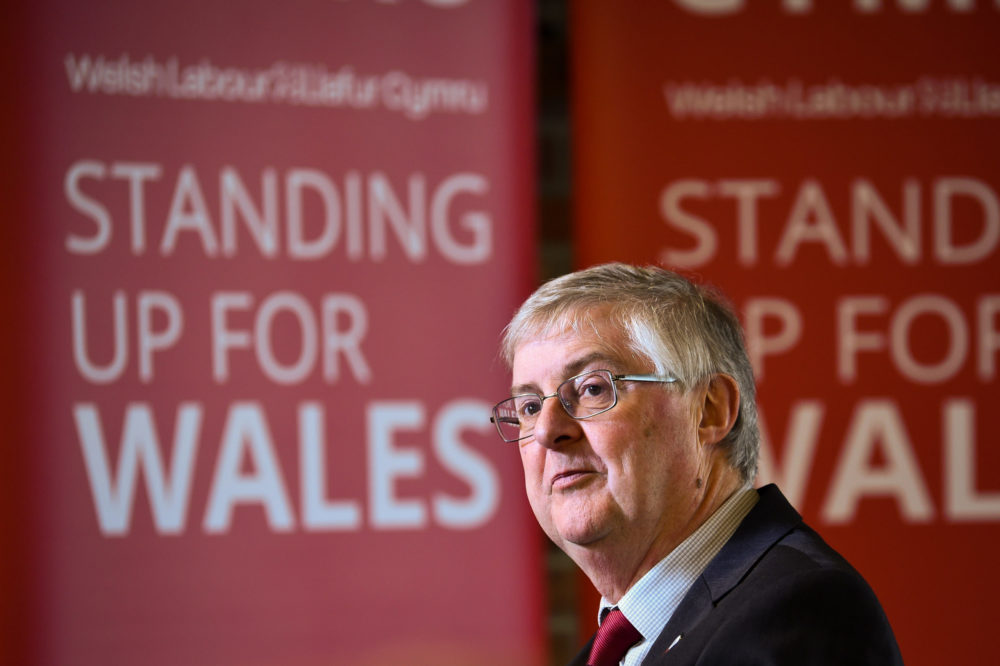
Photo Ben Birchall/PA Wire

Gwern Gwynfil

Mark Drakeford’s reminiscences of his political awakening and early activism in the 1960s and 1970s provide an incredibly interesting first person snapshot of 20th century Welsh history.

The details speak to a different time and a different world:

‘Don’s example was to raise his deer stalker hat, as he marched towards the voter (always a ‘housewife’ at home in 1960s Carmarthenshire)’

Remote working, greater sexual equality and a vastly different fashion sense make this an unlikely scene in today’s Wales.

But this snapshot reveals much more than the socio-economic changes of the last half century. The nature of politics and political thinking has also been transformed. These are symbiotic changes, social, economic and cultural change inevitably has a profound impact on political thought and expression.

[mid-content-banner]

Political Change Lost?

Whilst we all accept the social and economic changes – it’s hard to resist as these have very concrete impacts in our lives – not so in the political sphere. Despite being at the heart of modern politics right now, a former First Minister and now back as the Health Minister for Wales, Mark Drakeford is himself guilty of this. He avows socialism and detests nationalism.

I would argue strongly that both terms are meaningless when it comes to contemporary politics. They certainly have their place in the history of the 19th and 20th century, but like the deer stalker, they are incongruous today.

The fundamental change that technology has wrought upon the nature of society, upon the workings of the global economy, upon our cultural lives, must be reflected in new ways of thinking about politics. That needs fresh labels to describe who we are politically. Whilst we don’t need to ditch all of our historic reference points (political compass uses the fundamentals well to help people work out where their natural home may lie) labels which have been around so long that they have become both meaningless and pejorative are now redundant.

Multilabelism

I am a left of centre, liberal collectivist who wrestles with an inner tension between free market inclinations and recognition of the vital role of government and a strong civic society. More than anything else I believe in making things work and work well, fuelled by a culture of constant innovation and improvement – ‘that’s the way we’ve always done it’ is assuredly my political antithesis.

I suspect that politically Mark Drakeford and I would agree on almost everything but I would never consider or call myself a socialist even though I have some political positions that others may wish to label this way.

I have also come to believe that, ultimately, only independence will allow Wales to be the best version of itself. However, I am certainly no nationalist, not in the sense given to the word by those who equate it with its toxic history, its exclusionary fundamentals and its absurd exceptionalism.

I am an internationalist – we all are. The smartphones in our pockets mean that we are connected to the whole world, all the time, almost everywhere – there’s no escaping internationalism anymore, even if you’re North Korea, technology will break down the barriers sooner or later.

Ah, to be Welsh

I completely agree with Mark Drakeford that no one needs to be a nationalist to be Welsh. Where this was a source of existential angst for some in the 1960s and through to the end of the 20th century, it’s an absurd proposition today. In the last 25 years, social media, digital technology, an ever smaller world, have blown away the idea that people can be anything other than what or whom they choose to be.

Reactionary culture warriors may well wish this was not the case but they are trying to hold back a wall of water with pebbles for a dam. Those who’ve grown up with the world in their pocket and on their screens will be whoever they decide they want to be and no one will be able to deny them their choices. They will always be able to easily find others who will affirm and strengthen their decision – toxic cesspits, echo chambers, misinformation and disinformation aside, this is the underlying strength of global social media platforms that can bring the like minded together from across the globe.

Where Next?

 The challenge we face today is that our old political structures are no longer fit for purpose. We saw this in the General Election – first past the post makes a mockery of democracy when you have a multi party system. The Labour government in Westminster have a sweeping majority with the approval of barely one in five of the voting age population – only 34% of those that actually voted cast their vote for what is an overwhelming majority government. This is not real democracy by any means.

Senedd 2026

In Wales in 2026 things could be far, far worse than this. Automatic voter registration will add 400,000 voters to the electoral roll in Wales. Turnout is already lower than General Elections for Senedd elections and this year’s General had a terrible turnout in Wales (at 56%). The extra voters and a downward trend will almost certainly result in a Senedd election with a turnout under 40%, it may result in an election with a turnout as low as 30%. This will be a huge blow to the democratic credibility of our government in Wales.

Disappointingly, the political parties and our politicians all seem sanguine about this looming democratic crisis. They are all rolling along with their own versions of ‘that’s the way we’ve always done it’.

Pointless Politicians?

No wonder the voting populace are angry, disengaged and largely of the belief that politicians are a total waste of space. If you can’t or won’t make yourself relevant and engaging why on earth would anyone pay attention or engage with you?

It’s the age of TikTok, Facebook, Instagram and the platform formerly known as Twitter; the age of YouTube, podcasts and endless repositories of streamed entertainment; the age of influencers, wikipedia, ChatGPT and citizen journalism – if you’re not interesting, exciting and relevant then don’t be so surprised when everyone ignores you.

Wales needs bold, innovative, fresh thinking from its politicians; it needs a vision of its future that inspires; it needs clear goals that everyone in Wales can understand and strive to achieve; it needs to clearly express its place in the world today and its aspiration for tomorrow.

Who will lead the charge for Wales?

For the price of a cup of coffee a month you can help us create an independent, not-for-profit, national news service for the people of Wales, by the people of Wales.

Get more trusted Welsh news

Choose Nation.Cymru as a preferred source in Google News to see more of our journalism.

Choose Nation.Cymru as a preferred source in Google News

16 comments

Nia James

It is impossible to be an internationalist without being a nationalist, as the "inter" part is the interblend and interactivity of the nationalists. In a world of nations and nationalists you simply have to choose your allegiance. If you want political independence for Wales then you are a 'Welsh nationalist' whether you completely buy into the ideology of nationalism or not. The alternative is that you accept your British nationalism and continue with the UK state system. If you wish to reject them all then perhaps Marxism or Anarchism should be your bag.

Reply
Gwern Gwynfil

Henffych Nia - my point is that the term has become redundant because of the way it’s thrown around with multiple meanings. If you are a ‘nationalist’ it can mean any number of things, some of which are mutually incompatible! This is not yet true of internationalism

Reply
Annibendod

Advocating political nationhood and democracy centred on that community is a far cry from the nationalism I understand. Far too simplistic to describe people as nationalists simply because they are supportive of their State or indeed otherwise.

Reply
Ernie The Smallholder

Good article. Your not necessarily a nationalist to want your country to be an independent nation, it is to be liberated from imperialism. This is what Vietnam was fighting for in the 1960s and into the 1970s. The Vietnam people's movement was socialist, independent and internationalist. The same can be said for Cuba and elsewhere. Those examples are from developing countries and are still in the process of change. For Europe countries, the role of colonialism has largely past except in the case of the unchanged UK system which has remained a legacy from the nineteenth century with its class system politics. Europe has seen the collapse of the Soviet Union with its centralised top-down control system yet the UK still remains much of the centralised, rigid top-down system it has always been. Power that should be in the people's will. Power also means economic power, the right to wealth, that means ownership access to company stocks, shares, and dividends. and with power comes responsibility and to take part in decision in governance. The European Union was formed as an economic community, to give European nations a combined voice in the world. Then developed into a confederation of independent European states which should always be its future. Every EU member has its own taxation, courts, law and full decision making government. In Cymru, we still don't have this power as a nation, our budgets, taxation, news media, courts, police are all controlled from another country and one that often has differing political ideas from our own country. In 2026, Plaid Cymru will present the new Cymru. We must take that opportunity to vote and elect Plaid Cymru for our path to a free, liberated and independent Celtic nation, and naturally internationalist. This is our destiny. We need our rights as an independent nation like every other nation on our planet.

Reply
Another Richard

The Vietnam war was not a war of liberation as the French had withdrawn before it started. Cuba was independent from 1898. It may be socialist and independent but it is also poor and oppressive, and many of its people have fled. It makes a very poor exemplar for Wales.

Reply
Ernie The Smallholder

The point I was making is wanting your country to be independent is not ... necessarily nationalism. .... And nationalism is not necessarily fascism. I would not want Cymru to adapt the appalling systems of oppression, those countries have centralised economic regimes similar to USSR and the UK.

Reply
Johnny Gamble

Cuba isn't perfect I know but this is a country with the lowest GP Patient ratio in the World. Whereas in the USA nearly half the population can't afford healthcare in what is supposed to be the World's number 1 economy. Before 1959 when Cuba was overun by the American Gangster fraternity less than a Third of the population were literate, Today literacy is 98%. Cuba has always been one of the first Countries in the World to send International aid assistance to Countries hit by natural disaster.

Reply
John Ellis

'The Vietnam war was not a war of liberation as the French had withdrawn before it started.' Not so: French forces had been fighting the Viet Minh for some years in the early 1950s, but France effectively gave up on 'Indo-China' after their military defeat at Điện Biên Phủ in May 1954 - despite a spectacular defence by forces under French commander Christian de Castries. The US, which had hitherto not been directly involved in that war but had backed France with political support and some military assistance, then took on the Viet Minh themselves as part of their effort to combat the global expansion of communism. You have to be old to have actual recollection of this stuff, and, being old, I can actually remember when it was top of every news report.

Reply
James Wilson

Love reading stuff like this. Its part of what makes Nation Cymru so very different. Maybe there are some things to pick holes in, but it would be weird if that wasn't the case. Interesting, provocative and important words

Reply
Gwern Gwynfil

Diolch James! 😊🙏

Reply
Mab Meirion

What it doesn't need is to be run by a 'gang'...

Reply
Rob Pountney

On 'nationalism'... I really don't think Plaid or the SNP are 'nationalist' parties, I see them as national liberation parties, they have nothing in common with English or Flemish 'nationalists' who are in fact 'ethno-nationalists'... It isn't just the political difference between left & right wing policies, it is also the difference between 'a better future for our society' and 'a privileged position for our ethnic group'... ANC rather than NASDP... Naturally, political unionism does its absolute best to try and paint the Celtic independence movements as the latter rather than the former, that this often comes from English nationalists who tend to the latter is somewhat ironic...

Reply
Ernie The Smallholder

Well said !

Reply
Jonathan Edwards

Gwern, I don't fancy being a reactionary cultural warrior, living in a toxic cesspit or an echochamber. It sounds very bad. It also sounds (maybe) the same as a Drakeford nationalist. As opposed to the OK Nia James sort of nationalist, obviously. Can you help? Wales needs a very strong 'Why' and an equally strong 'How' to break away from the UK.Wales is hopeless on the 'How'. The free world has many examples of 'How' both in the Commonwealth and from the USA. But I have never, ever, heard a serious discussion of 'How' despite being a member of Plaid for years. But you only look at 'How' if you secure on the 'Why' - and we aren't. I love the language and distinctiveness of Wales. It leads me to look very hard at the way its run, and here is what I seewe are behind in economic and cultural developmPrent because one party based in London needs us to be tame and dependent. This is a 100-year old story about Labour.the new threat is to our ability in Wales to do free-thinking and enjoy civil liberties. Reason enough to wake Wales up and break away.It all fits. When at last we arrange a Constitutional Convention for Wales, to write the Wales we choose together, we get a bonus. We can do what 50 States did in the USA (+ Philadelphia) and add a Bill of Rights as well. Our own, written by us. It'll be fresh, up to date and Welsh and protect us. Well worth waking Wales up for, Gwern?

Reply
Garry Jones

'Love reading stuff like this.' [Comments > James Wilson]. I heartily agree with James here.  The linear comparison of today's social, economic, and cultural values and political discourse with those in 1960s UK is of particular interest to those of us with lived experience of that time. I read this article before leaving my room in Machynlleth early this morning. Later, reflecting on it in connection with Owain Glyndŵr's Senedd in Machynlleth, thinking what an interesting project it would be to consider linear research on changing political thought and expression in Cymru from the time of Glyndŵr's Senedd in 1500 say, to 2100 CE. But then again, perhaps our future is more certain or knowable, than our past.  The Centre for Alternative Technology (CAT) near to Mach, have an MSc program of study in Sustainability and Behaviour Change. Perhaps in Cymru we could also become leaders in the provision of political and cultural awareness education, training and research. All predicated on the urgent need for behaviour change in a changing world. The implication of Gwern's article here is that the electorate in Cymru are ill prepared at present for the non-negotiable changes yet to show their full force to us. Climate change, AI, changing demographics, colonial extractive economy, and so on. Behavioural change while we still have time to prepare for it, could be a lasting and beneficial legacy for future generations. 

Reply
Jack

'extra voters and a downward trend will almost certainly result in a Senedd election with a turnout under 40%, it may result in an election with a turnout as low as 30%. This will be a huge blow to the democratic credibility of our government in Wales.' But there is the argument that one may not support any of the parties on offer and so not vote. That's a legitimate choice. Surely parties have to work harder to motivate turnout - so perhaps the parties might be more inclined to find out the concerns of the population rather than telling the population what they should think. It's a common problem in western countries - the mass of voters are tired of being told what to do and what to think. Consider smoking in pub gardens. Classic nanny state annoy the people ...

Reply

Leave a reply

Replying to Ernie The Smallholder Cancel

Well said !

Comments are reviewed before they appear.