


Opinion
My life with Hydrocephalus
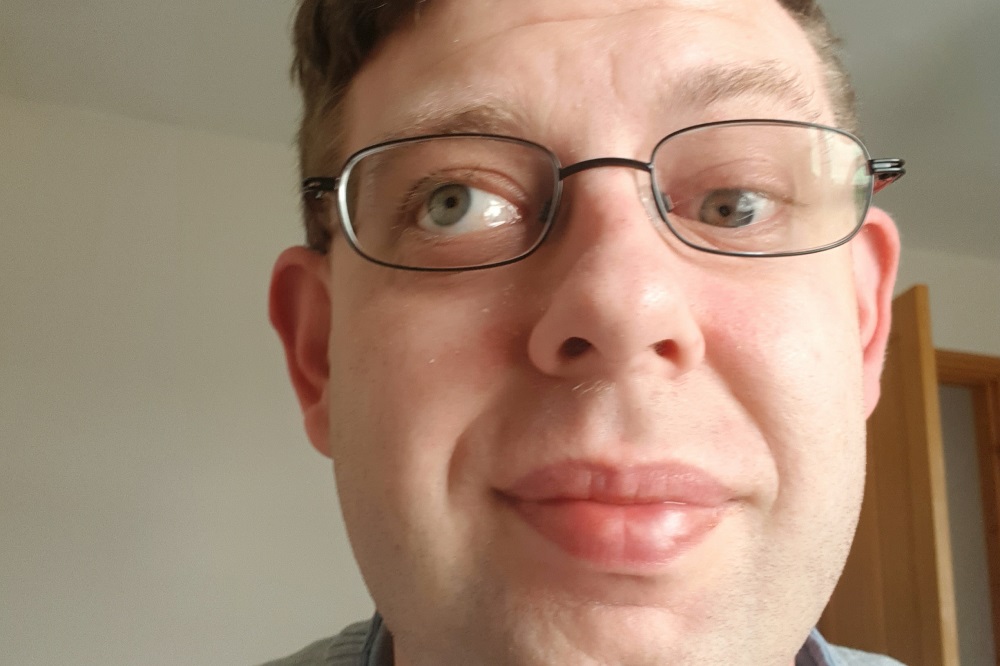
Ant Evans
Mine was apparently a difficult birth, but when I eventually arrived, there was silence. I took a couple of minutes to take my first breath, which was a source of great concern for my mother (though the staff told her everything was fine).
They still insisted I was fine after I began breathing, but my mother was having none of it. The words “paranoid mother” apparently appeared on my notes soon after.
I was about two weeks old when mum realised what was wrong. As she woke me up for my morning feed, she knew immediately what was wrong from looking at the size of my head (due to the excess CSF).
Mum had trained as a nurse at Alder Hey children's hospital in the 1960s & had cared for many babies & young children with Hydrocephalus during that time. She took me to see a GP friend of hers, who confirmed her fears. And so I was taken to hospital and diagnosed with Hydrocephalus.
[mid-content-banner]
Language
So, what is it? Hydrocephalus (or “water on the brain”) is a condition where there is a build-up of excess cerebrospinal fluid (CSF) in the brain, which isn’t drained away into the bloodstream.
Many things can cause Hydrocephalus. A problem with the developing brain during pregnancy, failure of an otherwise healthy brain to deal with CSF levels, or head injuries causing damage to the brain, can all lead to Hydrocephalus. In my case, I imagine (though it’s difficult to say for certain) that I have Hydrocephalus because my brain cannot control CSF levels or because of a developmental problem before I was born.
I had my first shunt (a device which helps regulate CSF levels) installed when I was five weeks old. However, something went wrong during the operation and I had what was described to me years later as a stroke. To this day, my right arm and leg are much weaker than my left (though after many operations & physiotherapy sessions, I can use both limbs much better today than I could as a child).
Following my first operation, the specialist painted a very bleak picture for my mum: “Your son will likely be a wheelchair-bound vegetable, unable to move, speak or do anything for himself. It is highly unlikely that he will learn one language, let alone two. So, it would be in Anthony’s best interests if you spoke to him in English.”
Well, I don’t mean to brag, but I’ve not used a wheelchair since the age of 13, I live independently, have a MA and am fluent in three languages.
Sadly though, aside from the odd chat in Welsh, up until her death in 2012, mum and I only spoke to one another in English. Specialists can do more harm than good sometimes.
Noise
With it being Hydrocephalus Awareness Week between the 7th & 13th of February, I thought it’d be a good idea to put pen to paper and talk about living with the condition.
As I’ve mentioned already, I have a shunt to control CSF levels. I first remember bringing up my shunt with mum aged four, when I asked if “everyone can hear the same noise in their heads” to which mum replied “yes”. I imagine telling me otherwise at that age would have scared me.
But yes, shunts are very noisy. The sounds mine have made have varied from sounding like tumble dryers and aeroplane engines when I was little, to sounding more like a life support machine today. Mum apparently nearly dropped me after my first operation as she wasn’t expecting to be able to hear the shunt.
Over time, as my skull hardened, mum was no longer able to hear the shunt. But I can. I tend to only notice it when I’m home alone. If I’m out & about or chatting with someone, I can ignore the sound as I’m concentrating on other things.
I have had three shunt revisions, due to blockages. Twice (in 2005 & 2009) I received a new shunt. In 2016, the blockage was flushed out, but I kept the same shunt.
Memory
I’m lucky that, day to day, living with Hydrocephalus is no great challenge. I have to attend the Walton Centre in Liverpool for 'MOTs' once a year to see how things are, raise any concerns I may have and so on.
But medically, that’s it. The appointments are really short. Not that I blame the staff, I’m well aware of the workloads they have to deal with. However, I would prefer it if I could be seen closer to home, so I wouldn’t have to travel as far.
One thing hydrocephalus does interfere with is my memory, especially when stressed. Aside from stress, remembering people’s names has always been a challenge for me (it takes a while for me to commit a person’s name to memory).
One other thing that I always did until relatively recently, was worry. And when I say worry, I mean I would go over the top, allowing even the tiniest things to snowball into much bigger things unnecessarily. Luckily, thanks to lots of support, I have managed to knock worrying on the head. And if something looks as though it may worry me, I’ve got lots of coping strategies to help before it snowballs out of control.
I was surprised to learn, via the SHINE (a charity that supports people with Spina Bifida and or Hydrocephalus) website, that worrying and anxiety is a common problem for people with Hydrocephalus. So, whilst I may never be rid of Hydrocephalus, I’m glad I’ve overcome one aspect of the condition.
Another problem I have which is related to Hydrocephalus is navigation. Giving directions isn’t something I’m confident doing. If not for apps like Google Maps, I would get lost quite often. Luckily for me, that such apps exist means I can live and travel independently, not just locally, but getting around places like London or alone is easier for me now than it would be without a smartphone.
So, despite a rocky start, things have worked out much better for me than the specialist mum first spoke to could have imagined. This was thanks to lots of help from friends and family, as well as Shine.
Plus a healthy dose of stubbornness from me!

Support our Nation today
For the price of a cup of coffee a month you can help us create an independent, not-for-profit, national news service for the people of Wales, by the people of Wales.
Get more trusted Welsh news
Choose Nation.Cymru as a preferred source in Google News to see more of our journalism.
