


Opinion
Mark Drakeford should intervene to ensure Labour Senedd candidates are selected solely by party members in Wales

Martin Shipton
When the next Senedd election takes place in less than three years time, the institution will be 27 years old.
Surely there’s no possibility that, after such a long bedding-in period, Labour Party apparatchiks based in London will be making decisions about who can and who can’t be a Welsh Labour candidate?
It would be good to think so, but there is, in fact, no guarantee that such won’t be the case.
The level of control-freakery on display in the party is off the charts. Dawn McGuinness is a trade unionist, a Constituency Labour Party rep on the party’s National Policy Forum and a member of Welsh Labour’s Standing Orders Committee.
She was considered good enough to stand as the party’s Senedd candidate in Aberconwy in 2021.
Two years later, however, she was deemed unacceptable by the party hierarchy and barred from the long list of would-be candidates for the new Westminster seat of Bangor and Aberconwy. The cause of her exclusion was the fact that she had been a supporter of former Labour leader Jeremy Corbyn when he was in the role.
As indeed was Sir Keir Starmer when he was a member of the Shadow Cabinet, although that’s rarely mentioned these days, and it certainly won’t lead to his being barred from standing for election at the general election everyone assumes will take place next year.
[mid-content-banner]
Absurdity
Another dimension of the absurdity is that while Ms McGuinness was deprived of the opportunity to seek selection in Bangor and Aberconwy, one of the candidates who made it onto the shortlist for the seat is a councillor and former Mayor from Croydon in outer London called Sherwan Chowdhury.
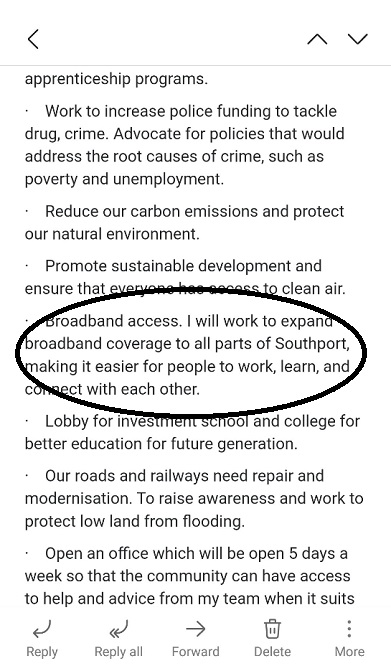
In a letter to local members he refers twice to the constituency as “Bangor and Aberconday” and states that the rising cost of living “is putting a strain on families across Southport”. A quick check confirms that he’s also seeking the Westminster nomination in the Southport seat.
There are plenty of recent examples within the Labour Party of would-be candidates from the left of the party being denied the opportunity to put their names forward for selection. The most notable is Jamie Driscoll, currently the Mayor of North Tyne, who was the favourite to become the first Mayor of the North East of England.
Driscoll may be on the left, but he is no fantasy politics utopian. An engineer by trade who set up his own software business, his achievements in the few years since he became Mayor of North Tyne have been impressive - creating thousands of jobs and extending rural broadband to improve the local economy.
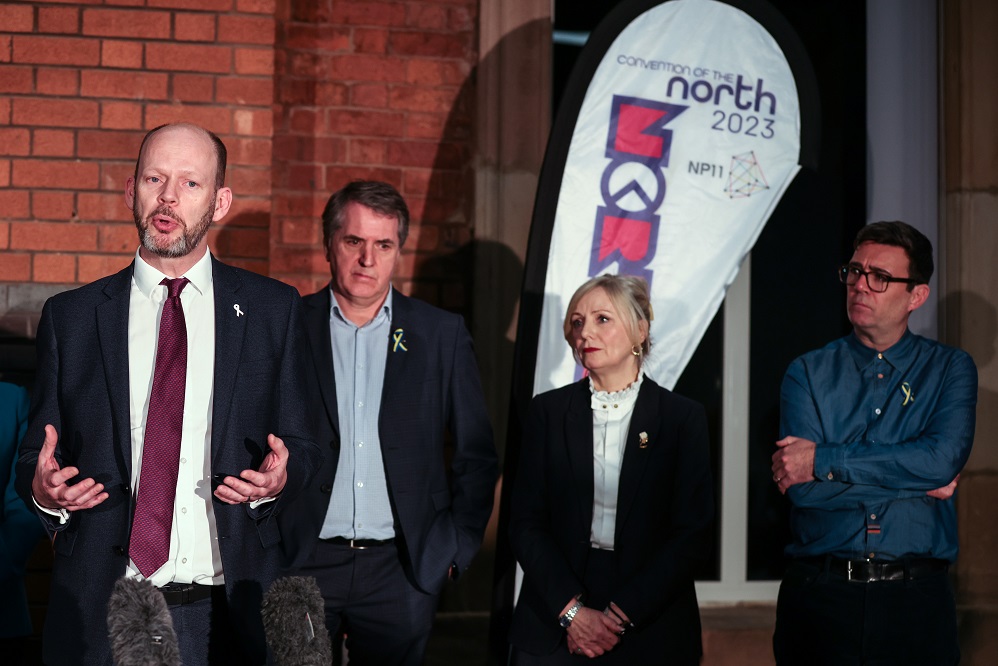
He led the negotiations that secured a £1.4bn devolution settlement for his region, but has been purged because he’s perceived by the shadowy ideology-free people who advise Starmer that he’s some kind of enemy within.
Knowing they were on flimsy ground, they blocked his candidacy on the spurious basis that he had conducted a public interview with the socialist film director Ken Loach about films he had made in the north east. Loach, of course, had previously been expelled from the party over a row unconnected to the films, which had incidentally been praised by other Labour politicians who have not been sanctioned.
Having previously lived and worked in the north east for 17 years, I have a lot of affection for the region and believe it deserves the leadership of a talented and canny politician like Driscoll. He has now left the Labour Party and announced that he will stand as an Independent in the Mayoral election next year. I have joined thousands of others in donating to his campaign fundraiser.
As the Westminster selection in Bangor and Aberconwy showed, Wales is not immune from the kind of anti-democratic interference within Labour that has become increasingly prevalent in England.
The tinkering is done on behalf of the party’s National Executive Committee (NEC), which is now controlled by the right of the party and which seems determined to block left wingers from winning nomination whenever it can.
Dissidents
The political journalist Michael Crick wrote the other day: “One of Starmer’s henchmen, Luke Akehurst, happily admitted to me that potential candidates are chosen not on quality, but on politics. Anticipating a slim majority after the next election, he argued, Labour cannot afford dissidents who might rebel against official policy.”
Put another way, it could be said that what Akehurst and his ilk are looking for in terms of candidates are unquestioning automatons who will do whatever they are told. What they don’t want is MPs with a conscience who feel impelled to speak out against the party leadership when it decides to roll over once more and decide that sticking with the existing Tory regressive policy is the right option.
Keir Mather, the new MP for Selby and Ainsty, seems just the kind of lobby fodder Luke Akehurst would see as ideal. Asked by journalists whether an incoming Labour government should stick with the Tory policy of restricting child benefit payments to two children, he enthusiastically endorsed the idea, saying Labour in government would face “tough choices”. It’s a mantra likely to lead to disillusionment after Labour wins the general election.
In Wales, Labour has a Welsh Executive Committee (WEC) supposedly with the power to make its own decisions. We do, after all, have our own devolved parliament, the Senedd, that is empowered to make policy relating to Wales.
Why then did the WEC decide to invite a representative from the NEC to participate in candidate selections for Welsh seats? I left a message for Torfaen council leader Anthony Hunt, who chairs the WEC, seeking an explanation, but he didn’t return my call.
What I can say is that some party members in Wales are wondering whether the WEC will make the same decision when it comes to selecting candidates for the next Senedd election.
Bizarre
At a time when there are calls from within Welsh Labour for devolution of the party rulebook to Wales, it would be bizarre in the extreme, and indeed outrageous, for the WEC to permit the NEC to have any role whatsoever in the selection of Labour candidates for the Senedd election. Yet such an outcome cannot be ruled out.
The next Senedd election will see the start of a new era, with significantly more Members - up from 60 to 96 - and a new voting system. What Wales can do without is a new cohort of NEC stooges elected to the Senedd.
There is a potential way forward. For understandable reasons, Mark Drakeford has not tended to busy himself with the internal workings of the WEC: he has enough on his plate as First Minister. But in these circumstances, when there is a real prospect of serious errors being made that could have seriously negative implications for devolution and his own party, he has a duty to intervene.
He should use the considerable political capital he has to ensure that decisions about the selection of Senedd candidates should be made by party members in Wales without the involvement of the NEC.
Support our Nation today
For the price of a cup of coffee a month you can help us create an independent, not-for-profit, national news service for the people of Wales, by the people of Wales.
Get more trusted Welsh news
Choose Nation.Cymru as a preferred source in Google News to see more of our journalism.
