


Opinion
Mari Lwyd and the appropriation of Welsh mythology
Stephen Price
‘Give us rhyme for rhyme through the wood of the door
Then open the door if you fail’
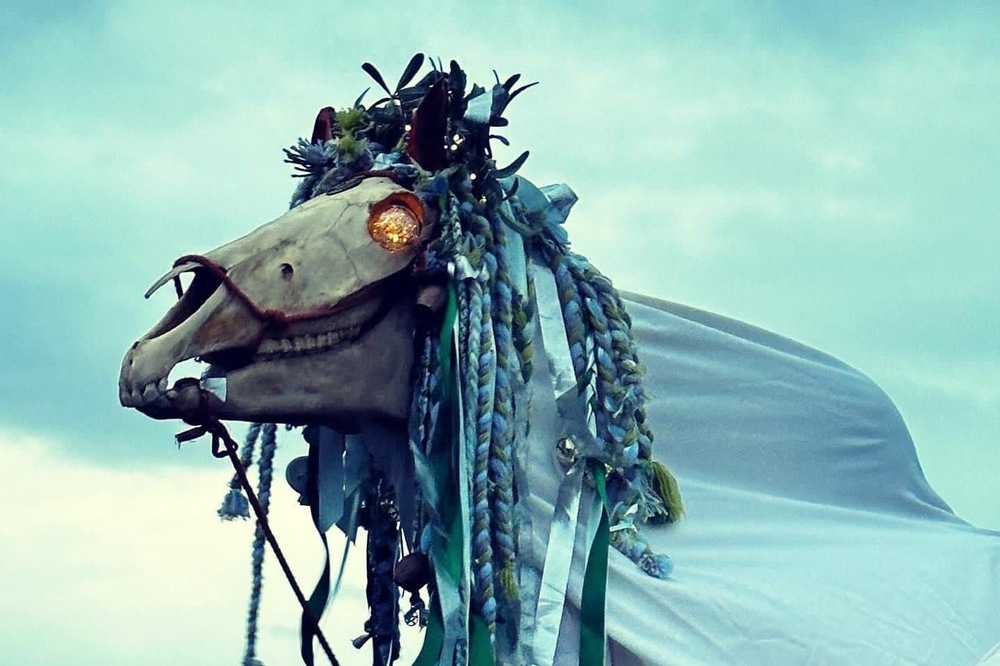
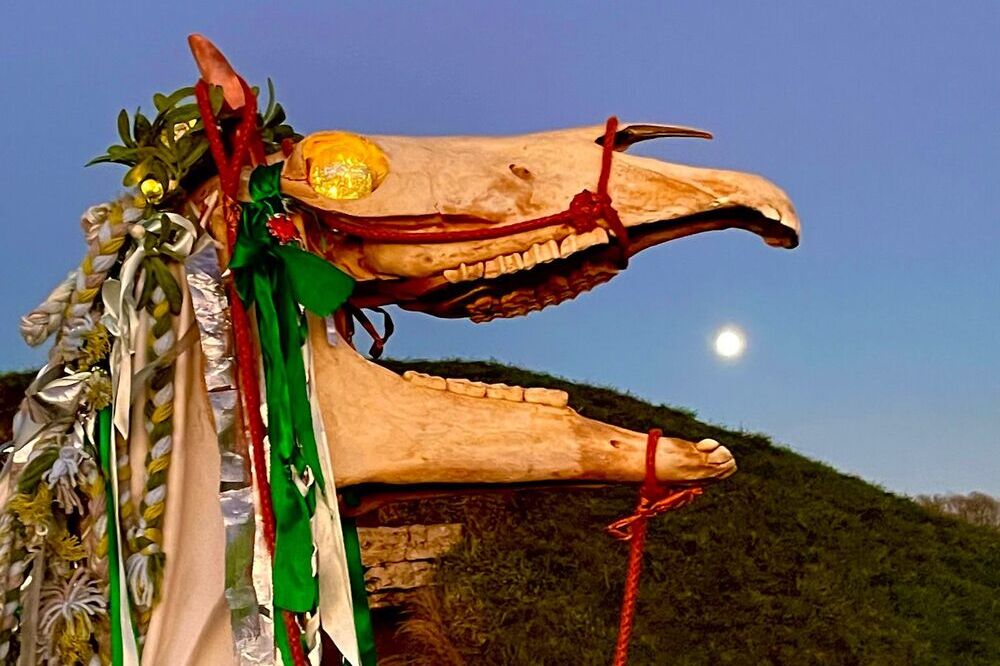
Mari Lwyd, the mysterious and menacing cloaked horse, is perhaps one of our most spectacular winter traditions. Her ghostly skull and white robes, baubles for eyes and a mane of translucent colours prove an unsettling, almost nightmarish sight.
Something stirs inside when you encounter Y Fari. She is other.
Traditionally, groups of men would accompany Mari from door to door around their local towns or villages, singing to request entry, with the inhabitants of the chosen house taking over the next verse. A battle of rhyme between the two parties would ensue until ideas ran dry and admittance was granted
Although considered South Walian in origin, Y Fari was first recorded in a book called A Tour Through North Wales by J Evans in 1800.
It is perhaps surprising that, after a period of relative obscurity from the mid-20th century onwards, our beloved Mari has experienced an unexpected renaissance over the past decade or so
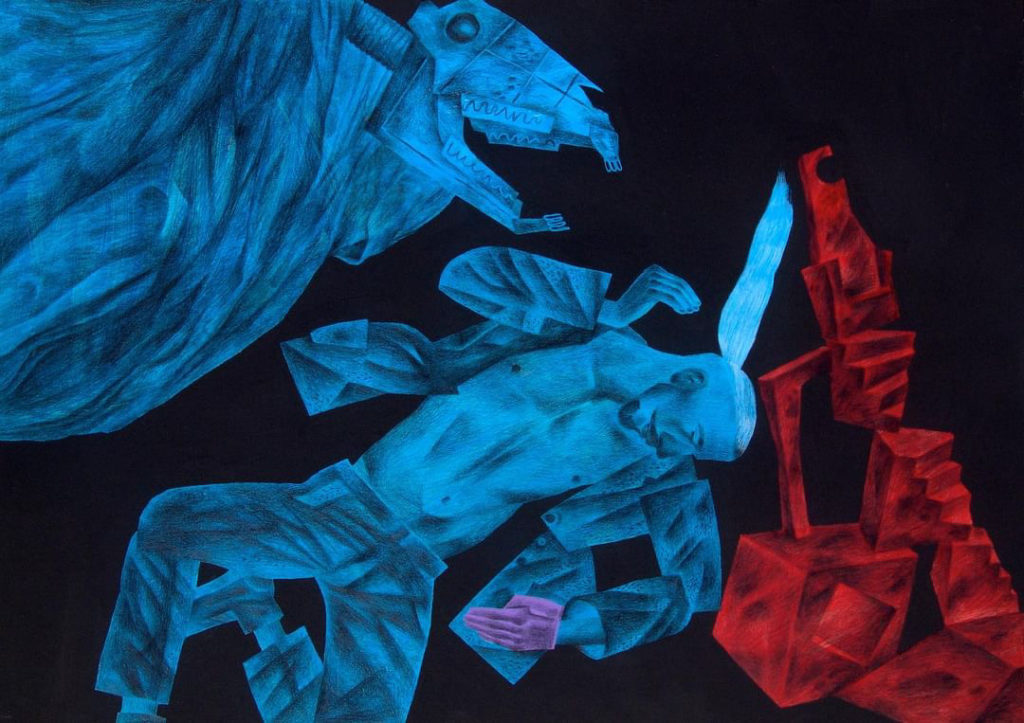
Sinner and saint, sinner and saint:
A horse’s head in the frost
Mari’s ascent into the upper echelons of alternative Christmas, or yuletide, celebrations has been a stellar one to say the least - fuelled by the Instagram generation’s thirst for likes and shares, and right on the pulse of a newfound appreciation of all things esoteric, neo-pagan or whatever the correct turn of phrase might be right now.
Similar (but not the same) hooded hobby horse characters appear across Europe and, indeed, in England in the form of the hoodening custom of Kent, Old Tup - a hobby horse with a ram’s head, and in Cornwall, as with Padstow’s ‘Obby ‘Oss - a Mayday festival tradition. But it is Mari that has captured the collective consciousness, and it is Mari who is aped in festivities across the UK at the moment, and often as a ghoulish Halloween or ‘Beltane’ character, a Morris Dancer’s prop, and not the mysterious night-time mare of midwinter. (Side note: where have all the Welsh dancers gone?!).
[mid-content-banner]
The decline of Christianity in our daily lives has, quite remarkably and restoratively, been replaced with a desire to connect with the old ways of our lands - folklore, standing stones, witchcraft - the list goes on.
But let’s not forget that many of these old ways were abandoned through colonial force, miseducation and a pervasive belief that our ways were once lesser. Is it, therefore, right that the customs, myths and legends of the colonised are there for the taking for everyone?
Appreciation is one thing. Appropriation is another.
Just as native Americans feel offence when their ceremonial clothing or images are distastefully used as fancy-dress costumes or posters with over-used quotes about eating money (don’t try it if you’ve not read the quote yet), a number of voices from Wales and beyond are quietly asking if it’s right that figurines, calendars, artwork and the like based on Welsh themes and characters are being used to cash in on this renewed interest in ‘Celtic’ spirituality and mythology.
Maybe, one might argue, not every thing is for every one.
God singe this doorway, hinge and bolt,
If you keep our evil out
Welsh communities, writers and historians have done the incredible, almost impossible, job of preserving a wealth of stories and histories that put other countries who haven’t had their neighbour try to extinguish them for over a thousand years to shame.
But so often, in the new tellings, our forefathers and mothers’ work is forgotten. The backgrounds are forgotten. The very Welshness is forgotten. We’re quite capable of telling our own stories, thank you very much.
Blodeuwedd, Melangell, Brân the Blessed - no longer Welsh but ‘ancient British’, fair game for anyone who plays hippy dress-up, ripe for the picking to appear on calendars, tarot cards and the anything else that can be sanitised and monetised.
One need only look at Mabon, now a neo-pagan term for the autumn equinox (as decided by an American Wiccan, Aidan Kelly, in the 1960s) - to see how easy it is to overlook Mabon’s Welshness or the need to have any actual understanding of him as a mythological figure.
The name sounds cute and a bit Lord of the Rings-y, that’ll do.
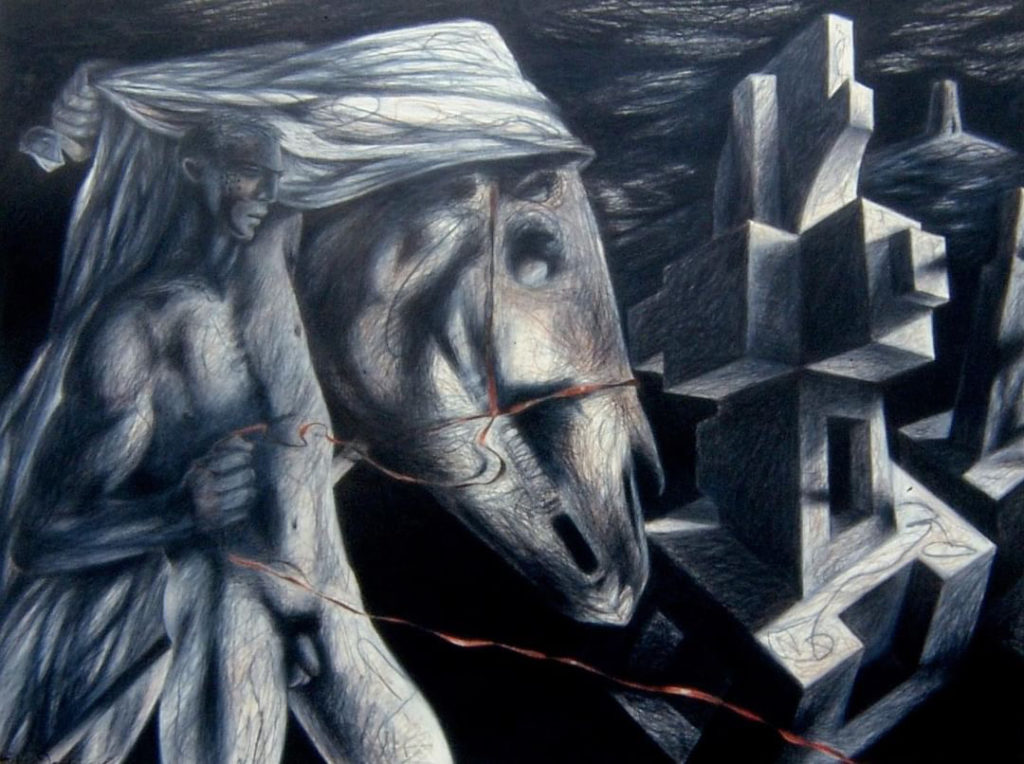
Mari Lwyd, Lwyd Mari:
A sacred thing through the night they carry
Just like King Arthur and Boadicea before him, Mari is travelling the world free of any reins (and often any Welshness) and she seems to be having a good time in the process, but there is something that, to quote the youth, ‘gives me the ick’ when she is paraded at events and across social media as a figurehead of alt-Christmas - a kooky trope to latch on to that runs the risk of becoming as tired as Mariah Carey’s uninvited appearance every year if she’s allowed to roam entirely unbridled; all style with no content or context.
Perhaps it doesn’t matter. Maybe it’s a good thing to see one of our most treasured customs do so well outside of the confines of her traditional enclosure. But who is she if she’s animated by just anyone; if she speaks not her native tongue; if she’s made a soulless cash cow and gimmick.
I’m sure that it’s not even a consideration for most of us, there are much more important things to worry about after all. But if Mari continues to lose her very essence - her Welshness - then in the immortal words of Mariah the Queen of Meaningless Christmas Carey, herself, ‘I don’t know her’.
Betrayed are the living, betrayed the dead:
All are confused by a horse’s head
(Ballad of the Mari Lwyd, Vernon Watkins)
[lower-mid-content-banner]
Support our Nation today
For the price of a cup of coffee a month you can help us create an independent, not-for-profit, national news service for the people of Wales, by the people of Wales.
Get more trusted Welsh news
Choose Nation.Cymru as a preferred source in Google News to see more of our journalism.
