


Thu, 23rd July Cardiff 21°
Nation.Cymru wordmark
Advertisement

Opinion

Living and thriving with 20mph in Wales
By Mark Mansfield
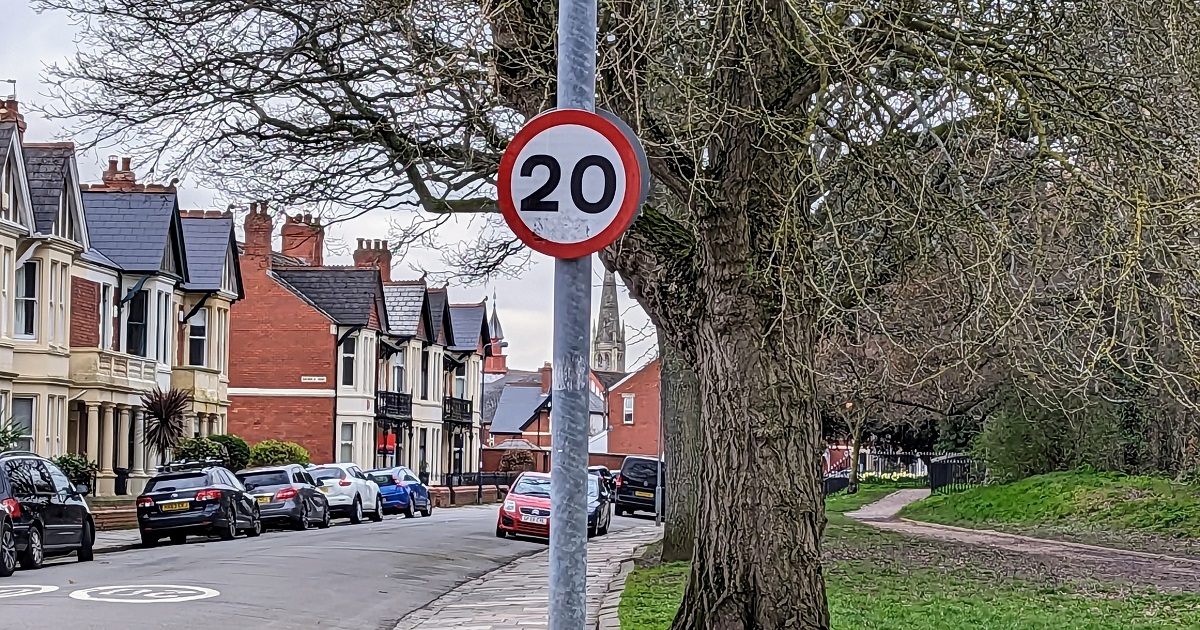
A 20 mph speed limit sign in Cardiff

Stephen Cunnah, Sustrans Cymru’ Policy and External Affairs Manager

Before 2017, I hadn’t given a great deal of thought to 20mph speed limits.

That changed when Cardiff Council introduced a 20mph zone in Canton, the area where I live.

I’ve spent the last six years living with my own young family in a 20mph community, as well as having regular conversations with neighbours, friends, and other parents, listening to and learning from their experiences.

I’ve been a keen and confident cyclist for a while, but since 2017, I’ve had two children and this significantly changed how I view things.

When I became responsible for protecting two young and vulnerable children, I had a heightened perception of risk.

Children display riskier behaviour because they’re still learning about the world and how to interact with it.

I know from experience how scary it is for a toddler to have a tantrum next to a busy road!

And even as they grow up, risks remain – I remember people in my family getting hurt on roads where I grew up in North Wales.

That’s why I feel thankful that my children have grown up knowing nothing but 20mph limits on the streets around them.

A calmer speed limit doesn’t eliminate all risks – nothing can do that completely – but there’s strong evidence that shows lower speeds result in fewer collisions.

Research by the Transport Research Laboratory, a private independent organization, has shown that there’s an average 6% reduction in collisions with each 1mph reduction in average speed for urban roads with low average speeds.

[mid-content-banner]

Good reasons to change our behaviour

When the 20mph zone was first introduced in Canton, the change itself and the need to adjust to it made me more aware of my driving habits.

I’m sure many other people drive more carefully and are more conscious of their speed now when driving in 20mph zones.

They’ve also helped me have confidence with my family and our travel habits.

I adapted my bike with one seat at the front and another at the back, and my daughter was riding with me from nine months old – I still remember how much she’d laugh from travelling around on the bike!

Both my children now attend school and nursery, and I’ve never felt the need to drive them to school.

They’ll walk with me or their mum, hop on the bike, or scoot to school – it’s not easy keeping up with them!

In the past few months, my son and I have started cycling on the road together.

He really enjoys it, it gives him confidence to travel semi-independently, and it brings us closer together by doing an activity together.

 Adapting to 20mph as a community

In the years since the 20mph zone was introduced where I live, the number of people not convinced by it has been exceptionally small.

Meanwhile, I’ve been struck by the volume of people wanting a wider coverage of the limit, better infrastructure to emphasize it, and more activity to enforce it.

This seems to be reflected in wider evidence too, where public approval for lower limits has gone up after they’ve been introduced.

In one study, approval was at 72% before and hit 80% six months after it was introduced.

When it was introduced in Canton, some residents were disappointed that it wasn’t rolled out soon enough on their own streets.

From my experience, very few people want speeding vehicles on their own street.

They want safer neighbourhoods for themselves, but also for the wider community.

Challenges facing the changes

From the start, the single biggest concern was that a 20mph speed limit would be ignored.

People wanted to see enforcement more than anything else.

Residents wanted speed cameras for 20mph limits, something that we’re still campaigning for.

Where in-person enforcement’s concerned, in 2017 South Wales Police wouldn’t enforce 20mph limits at all, saying it was a policy decision.

That’s now changed after community campaigning, but we still know that enforcement alone isn’t a silver bullet.

The police still use quite restrictive criteria for which roads they’ll carry out enforcement on, and these conditions rule out lots of urban streets.

And even where there is good enforcement activity from the police, we still see some drivers who choose to ignore the limit.

We know from data that a 20mph limit reduces average speeds, even without any other interventions.

Things aren’t perfect with the 20mph zone, and nobody’s trying to argue that it’ll solve every problem, but there’s some important things to remember.

There are – quite rightly – concerns with enforcement of 20mph speed limits, but these shouldn’t be taken as criticisms of the limit itself.

You see the same issues around enforcement in areas where the limit’s 20mph, 30mph, 50mph, or 70mph!

What the rollout in Canton has shown for me, my family, and the people who live here is that introducing a 20mph limit has meant where we live feels safer.

Change can be scary, or difficult to adapt to at times, but this isn’t anything groundbreaking – don’t we want safer streets for our children to play on?

For the price of a cup of coffee a month you can help us create an independent, not-for-profit, national news service for the people of Wales, by the people of Wales.

Get more trusted Welsh news

Choose Nation.Cymru as a preferred source in Google News to see more of our journalism.

Choose Nation.Cymru as a preferred source in Google News

60 comments

Philip Davies

Much of what your correspondent writes is reasonable and unobjectionable. But there is always the overreach in all such nice, safe, child-friendly policies when adopted by government zealots. It is no longer enough to reduce traffic to a crawl outside schools - and other stretches of road where children, or indeed the frail elderly, will be expected to be crossing. That is an acceptable restriction on the motoring public, although a controlled crossing used to be the preferred method of ensuring safety at busy pedestrian areas, and seemed to work well. But, No - that is no longer considered sufficient and so it is now further being required that whole stretches of village and urban streets should be lowered from the standard 30mph limit to a 20mph one. People have been encouraged to regard any and all restrictions on motoring as A Good Thing, irrespective of practical realities. So when your Contributor, a concerned and conscientious young dad, ends his account of his family outings by bicycle (which are really delightful, no irony intended) with an irresponsible remark like, '. . . don’t we want safer streets for our children to play on?' it is shocking. Children used to be told to be aware of the street as a naturally busy place, and to never, ever, run into the road or play on the street! Traffic is a necessity but the authorities are today averse to weighing the convenience and the commerce of one section of the public alongside the degrees of risk such freedom presents for another section of society. This increased unwillingness to compromise - i.e. get along - with motoring as a simple fact of modern life is illiberal and amounts to an attempt to actually suppress private motoring and commercial road transport. Little of that automotive activity is solely or even chiefly selfish, most such driving being necessary in the functioning of a modern society. The balance between the increasing variety of road users is admittedly a difficult one to negotiate, but that is no reason to arbitrarily disenfranchise those who have as much right to the road as anyone has to - say - the 'digital super-highway': Both are essentially different means of communicating over distance, and the Internet similarly present loving parents with the many dangers which that network brings into the home and which it is largely the parents' responsibility to protect their children from. Would it, then, be too much to expect the same parents to not allow their children to run unsupervised around our busy street networks? Both sides of this important issue of safety and the prevention of accidents surely have a role to play, if we are to have any balanced response to such concerns?

Reply
William Rees

Well said. The motorists needs are being trodden over by politicians who are not interested in fairness only in imposing thier dictatorial views on the public.And getting the benefit of taking in the money from more fines.

Reply
JimJam

Interesting to see the debate from someone’s personal opinion, and that’s really all this is; anecdotal evidence of why 20mph limits are good. Whilst there is *some* evidence that it can reduce collisions (no such thing as accidents now - someone is ALWAYS to blame), the reality is that there’s at least equal evidence to suggest otherwise - collision rates increase due to complacency, either on the part of the driver, or pedestrian. Also, the whole climate argument fails scrutiny as well. Yes, it can help with pollution, but only under certain criteria, including road layout. Overall, the negatives of the 20mph limit will outweigh the positives, and that’s even assuming that the limit will be adhered to.

Reply
CapM

 "Overall, the negatives of the 20mph limit will outweigh the positives, and that’s even assuming that the limit will be adhered to." This would of course be subject to your previous conclusion that it is "someone’s personal opinion, and that’s really all this is;" And without even anecdotal evidence to support the personal opinion that a 30mph limit is better!

Reply
JimJam

Hmmmm … that’s not strictly true is it; there is plenty of evidence to prove that safety & environmental concerns are negatively impacted, I just didn’t link to them because I was posting a comment, not writing a biased article on the pros or cons. But thanks for your input.

Reply

In reply to JimJam

CapM

However the author of the article has gone to the trouble of providing a link to a report that has looked at evidence. Maybe you could provide a link to some research that contradicts it. If you think that the evidence to support your opinion is too much to include in a comments perhaps you could approach NationCymru with a view to submitting an article. Would make for an interesting read.

Reply

In reply to CapM

JimJam

I’m a member of the Guild of Motoring Writers, I’ve researched this quite thoroughly over the years; there is plenty of fact based evidence on the subject. For every credible source promoting the cause, I can list an equally credible resource that shows a negative impact. Given the author of the article, I’d say there’s a chance there *may* be a hint of bias, just in the same way that if I wrote an article for NationCymru on the subject, I’d also lean to my side of the argument. To be clear, I am fully in favour of 20mph limits where they are appropriate, but as a blanket solution to a problem, it’s not the greatest, and for those of us that have more than a passing interest in this matter, the general consensus is that the negatives will outweigh the positives.

Reply

In reply to JimJam

CapM

Given that you are "a member of the Guild of Motoring Writers" and are someone with " more than a passing interest in this matter," I'm surprised that you are under the misapprehension that there is to be a "blanket solution". https://www.gov.wales/introducing-default-20mph-speed-limits Provides information on the introduction of 20mph limits - reasons, maps, draft plans, details of the roles of local authorities and the need for consultations. Maybe you've (and others in seems) have confused "default" limits with" blanket" limits. Default means that there will be exceptions "blanket" means no exceptions. If it comes down to residents on a street by street basis I can't see them not going for a 20mph limit for their street as it's in their and their families interests. It might not be in the interests of other motorists using that street but it's likely that their views won't have primacy. As a member of the Guild of Motoring Writers you might already know that some streets in the Netherlands have speed limits the equivalent of 19mph or even 9mph. Maybe motorists in Cymru haven't go so much to get agitated about.

Reply

In reply to JimJam

CapM

"For every credible source promoting the cause, I can list an equally credible resource that shows a negative impact." I have to comment on the absurdity of this statement. Please provide a link to evidence that shows that being hit by a car travelling at 30mph causes less injuries and fatalities than being hit by a car travelling at 20mph!

Reply

In reply to CapM

Whiteman maleman

Absurd is trying to design the world wr live in to ensure no one ever gets hurt everwhy not 5mph speed limits everywhere? Do you WANT children and old ladies to be killed in road accidents?! I mean if you had any heart at all you'd be asking to ban all vehicles full stop. It's much safer being struck by a pedestrian than even a bicycle, let alone a motorbike or car. Absurdity indeed.

Reply

In reply to Whiteman maleman

CapM

You've used the reductio ad absurdum tactic. Basically attempting to take the discussion to a silly level. Though you could have gone even sillier and proposed that pedestrians should be subject to speed limits. Most usually reductio ad absurdum arguments are used by those who are unable to present logical; rational; evidenced arguments to support their own opinion.

Reply

In reply to CapM

Alex

You're conflating speed limits with actual traffic speeds in that statement and therein lies the problem, that so many people do that.

Reply

In reply to Alex

CapM

In what way am I conflagrating it?

Reply

In reply to CapM

Alex

In Bath the average speed reduction of free-flowing traffic was 0.9mph, that's for a 10mph drop in the speed pedestrians are being told to expect most traffic to be going, giving them a false sense of security. Also even for a 1mph drop in speed, it's the most dangerous drivers on the road who are least likely to modify their speed when limits are lowered and they're also the drivers speed limits are normally there to single out.

Reply

In reply to Alex

CapM

https://www.20splenty.org/what_happenned_in_bath_did_deaths_increase https://www.20splenty.org/banes-report “A study published in the Bristol Medical Journal looking back over 20 years of data concluded 20mph zones had halved the number of children killed or seriously injured. The data when competently analysed doesn't support your opinion.

Reply

In reply to CapM

Alex

That was Bath's own figures I think, often with these schemes even if the council's most optimistic drop in average speeds is met it's with the expectation that average speed will be well over the speed limit. The non-compliance is by design. Do you have an unbiased source? Mike Maher of the Atkins Report was pretty scathing of the way they only look at data that conforms to their bias. I've had to change my opinion on this before. Despite my bias being more towards putting more emphasis on the expectation of better driver behaviour. There is evidence that setting speed limits slightly below engineering recommendations can improve safety and 20 limits may be effective on roads that lend themselves naturally to lower speeds and that 20 limits on main roads, such as part-time limits outside schools, also work. However, to be effective, these exceptions should be truly exceptional, so that they are taken seriously by motorists. Also, the lack of a 25mph limit option I think is an issue. My concern is not about 20 zones, they have design changes. It's simply placing 20mph limits on higher-standard arterial roads designed for much higher limits of 30 or even 40 with little to no changes to the design of the road as if there was never a good reason not to do that. Many speed limit drops don't exist to improve safety, either they exist to mislead people into thinking the road is much safer now the council stuck some signs up, or they exist to shift responsibility. When most people are exceeding the speed limit every accident is the fault of the driver and the council is no longer accountable for poor road design or maintenance.

Reply

In reply to Alex

CapM

Your argument, when all's said and done still appears to be- Drivers won't comply with 20mph default limits therefore 20mph default limits are a bad idea. Which, forgive the idiom- Is no way to run a railway.

Reply

In reply to CapM

DGDG

20 or 30 mph, the biggest factor with regard to injury is the drivers reaction time. An alert and responsible driver can avoid or reduce the impact of a collision. Too much emphasis on the easy speed limit option.

Reply

In reply to DGDG

CapM

That's incorrect. An "alert and responsible driver" having a collision at 30mph will have a greater impact than the same driver doing 20mph. Slower reaction time makes the likelihood of a collision and the impact greater whatever speed being travelled. You might like to suggest how reaction times could realistically be 'policed' in order to identify slow reactors at whatever speed they're driving at..

Reply

In reply to CapM

Alex

While there may be evidence to suggest 20-limits can work on roads that already lend themselves to a lower speed, we're not seeing 20-limits on roads that are nowhere near that standard and this can be dangerous. It's not a matter of how low you can set the speed limits, setting them too high or too low can increase the road danger. https://www.sciencedaily.com/releases/2018/12/181212135021.htm

Reply

In reply to Alex

CapM

Thanks for the link. Unfortunately I can't find the research paper it came from which means that it throws up a lot of questions. A main point that the summary hinges on is the "engineering recommendation" of a road which I assume is the speed limit that someone decided historically that the speed limit should be. It suggests a scientific approach but isn't totally as it would be incredible if the science always determined that speed limits were multiples of 5. So the speed limits we have aren't set by some physical law or constant and they are adhered to in a large part by familiarity and habit. A lot of people don't like the unfamiliar and changing their habit but habits can change. The' right' for drivers to drive at 21 -30mph everywhere where a speed limit of 30mph was set 90 years ago will probably go.

Reply

In reply to CapM

Alex

The reason why the previous 20 limit was abandoned in 1930 was because it was so widely disregarded. Initially, speed limits were revoked and replaced with the offence of reckless driving, 4 years later it was thought that some kind of limit was required so they introduced the 30mph limit for urban areas, this was set by streetlights rather than signs for the same reason the NSL sign is a symbol rather than a number. The road standard can vary greatly in urban areas so having a limit set by streetlights rather than a number makes sense and reckless driving laws remained in place. There used to be far more emphasis on the expectation people would adjust their speed on the conditions rather than the current drive-by-numbers mentality. In 2017, I had two children run out on me on City Road in Cardiff, I didn't hit them because I was travelling at a speed well below 30mph, the reason I was doing that was because I was on a busy street loaded with parked cars and pedestrians, I likely was going a speed somewhere down in the low 20s and I was able to stop with plenty of room, had I been going 30mph, I would unlikely have killed them, but I may have hit them. I didn't think to myself "I'd better drive a speed in the low 20s" I just did it because that's the speed that felt appropriate.

Reply

In reply to Alex

CapM

"The reason why the previous 20 limit was abandoned in 1930 was because it was so widely disregarded." It was widely disregarded because it applied on ALL roads not just those in residential areas. It was set at 30mph because there were few cars and most of those on the road took ages (relative to now) to accelerate. "There used to be far more emphasis on the expectation people would adjust their speed on the conditions rather than the current drive-by-numbers mentality." And (relatively) there used to be far more 'accidents' as some would like them to be described as.

Reply
jack david

this is the view of a labour councillor. Who told me in an email. I was lucky to live in canton despite the bus services being poor lately. Also was in favour of a congestion charge.

Reply
Ap Kenneth

20mph as a driver will take some adjustment to driving style but we will eventually get used to it as the new normal. Changes to the Highway code a couple of years ago now, giving 2m clearance to cyclists or giving way to pedestrians when turning into junctions have not yet bedded in largely as a lack of publicity so that probably the majority are not aware of the changes, but it will happen eventually. It took 100 years of cultural change in motorists favour to land in the position we have now where cars dominate the urban enviroment, that is going to change, slowly, because towns are for people not machines and if you drive a car it is a privilege not a god given right.

Reply
Blinedig

Diolch. On a large estate I have seen many young children playing in the road, just as they would have done (safely) decades ago. Yet that estate is plagued by feral drivers roaring around, racing even. Even if the 20 limit reduces their default speed to 30, that would be an improvement.

Reply
Alex

It's not a matter of getting used to it, that also assumes speed limits exist to generally dictate speed, they're meant to single out the small number of people who will drive recklessly fast. Most people default to the speed they feel comfortable driving at regardless of the speed limit, and that's more down to how our brains function rather than willful disregard of the law, that's why some of the higher standard 20-limits in Monmouthshire recorded 99% non-compliance. At that rate, the limit can no longer single out or target those who pose the most risk. The 30 limit doesn't work because people got used to it, it was simply the speed most people would not exceed in the absence of a speed limit.

Reply
CapM

The 30mph speed limit was set in 1935. Top selling car in 1935 was the Ford 8, top speed 60mph, 0 to 50mph in 36.8secs. Top selling car in 2022 was the Nissan Qashqai, top speed over 100mph, 0 to 62mph in about 8-10secs (depends on model). "Most people default to the speed they feel comfortable driving at regardless of the speed limit...," I think it's rather that most people are driving cars whose performance is practically beyond comparison with the performance of cars that were driven 90 years ago when the 30mph speed limit was set. The 30mph limit took into consideration not only the road but the performance of the vehicles and also the fact that roads were much less crowded by orders of magnitude . ".. assumes speed limits exist to generally dictate speed, they’re meant to single out the small number of people who will drive recklessly fast." Safety of vehicles' occupants, other road users, pedestrians and property are also considerations. There are also plenty of examples of speed limits that exist to "generally dictate speed" two examples - the 50mph limits on the M4 north of Caerdydd and Port Talbot

Reply

In reply to CapM

Philip Davies

No-one would care to see a vintage Ford 8 racing through a residential area at 60mph either, so your argument simply doesn't overturn the one 'Alex' proposes.

Reply

In reply to Philip Davies

Alex

You'll find most people drive at speeds well down below 25mph on tight residential side streets, this law doesn't prohibit people driving genuinely dangerous speeds more, it only pushes the prohibition onto the behaviour of the safer drivers on the road and forces the police to target them.

Reply

In reply to Alex

CapM

"this law doesn’t prohibit people driving genuinely dangerous speeds more," A different law punishes that - The Road Traffic Act 1988 https://www.legislation.gov.uk/ukpga/1988/52/section/2A Give me strength!

Reply

In reply to Philip Davies

CapM

The point that seems to escaping a few is that the 30mph limit was imposed when Ford 8's were trundling along residential streets which were practically devoid of any parked cars to reduce visibility. If cars with Qashqai performance existed in 1935 the speed limit would have been set lower than 30mph. An age when cars are faster and have greater powers of acceleration demands lower speed limits in residential areas. This argument may appear counter intuitive but a lot of people have managed to get their heads around it.

Reply

In reply to CapM

Alex

The assumption being made that motorists are incapable of driving at a speed that's appropriate for the conditions while simultaneously expecting them to slow down because the limits have been changed is counterintuitive. Speed limits aren't meant to be a target speed, they're meant to be the fastest you can go under ideal or at least favorable conditions. If there's plenty of non-compliance with it, either the limit is wrong, or the design of the road is, something has to give. The way the limits are increasingly being set with indifference to the road's design is in and of itself what causes apathy towards limits. Where the 85th percentile method has been used, compliance is very much higher but speeds aren't. Some of the limits on main roads in Cardiff just come across as beyond contempt, that's not how you get people to respect laws. Look up the "Pygmalion Effect".

Reply

In reply to Alex

CapM

The Pygmalion effect would suggest that if we have a high expectation that drivers will adhere to the new 20mph limits then they will adhere to them. and If we have a low expectation that drivers will adhere to the new 20mph limits then they will not adhere to them. Speed cameras are going to decide whether high or low expectations "win". Given the number of comments on this thread I'd be surprised if there were not a political dimension to this (I'm not accusing you of having a political agenda). Do you think that the Tory Party might ferment any motorist dissatisfaction with 20mph to gain votes as they did with the ULEZ in S Ruislip and Uxbridge? .

Reply

In reply to CapM

Alex

My politics is moderate I'm no Tory. My views on this come from having an examiner for a father. I often get frustrated with people who agree with me on speed limits because their reason for opposing it is very different to mine, this is called a concurring opinion. My issue with the ULEZ isn't its existence, it's the implementation, it comes in 24/7 from the start. I'd start it at rush hour times then all day then 24/7. Also, it's a poll tax. It takes little account of how much the car fails by or the value of the vehicle, you either pay or you don't.

Reply

In reply to Alex

CapM

You've dodged the question! In Cymru ULEZ cannot be used by the Tories as a vote winner hence my suspicion that they will use 20mph limits here as a substitute. That's why I mentioned it.

Reply

In reply to CapM

Alex

I thought you wanted my opinion on the ULEZ, I don't care what the Tories think TBH. The Pygmalion effect doesn't rely solely on people adhering to the law because it exists. If a law is perceived as contemptuous or unfair, it can lead to a loss of respect for that law, as it doesn't inherently command respect on its own. Otherwise, one could argue for setting the speed limit at an even more unreasonably low value like 10mph and still make the same claim. This argument falls into the trap of appealing to the law without addressing the underlying issues. It's important to recognize that a speed limit is not intended to depend solely on strict enforcement to gain respect. Instead, speed limits are meant to "promote self-compliance" and be "largely self-enforcing." They aim to foster a culture of responsible driving, where drivers willingly adhere to the limits for the sake of safety and the greater good, rather than merely obeying out of fear of penalties.

Reply

In reply to Alex

CapM

"It’s important to recognize that a speed limit is ...." It's important to recognize that the 30mph speed limit was set 90 years ago when road use, vehicle numbers and performances and many other things were very different to today. it's also important to recognize that the 30mph limit was not some divinely inspired constant bequeathed to motorists as an inalienable right in perpetuity. It's also important to recognise that motorists are not beyond the law and not beyond considerations for others they share roads with or are affected by roads. And it seems for some not beyond whining self victimisation when they don't get their own way.

Reply

In reply to CapM

Philip Davies

The perfectly realistic capability of an old mass-produced Ford 8 to hurtle irresponsibly through the residential streets of 1935 at twice the long-established speed limit that is now to be reduced by 10mph shows merely that there were fewer cars then, so that the notional threat was seen as too remote a possibility to have become a concern. Experience nonetheless, unfortunately, shows there are now so many high-performance vehicles available to the general public which are capable of easily accelerating far beyond even 60mph that stricter policing is necessary than was the case pre-War. It is clear also that public trust in motoring standards is very low, based on the not unreasonable assumption that excessive speed tends to injure and kill too often. At the highest speeds this is true on all roads in all conditions. Speed becomes statistically less risky as it drops, of course. The crucial question, then, is how practically to regulate the speed of the private motorist in all conditions and on all occasions? The solution has always been to impose speed limits that reflect actual road conditions. Speeds of less than 30mph have always been possible to legislate for and have for some time taken account of dangerous conditions such as poor visibility, treacherous weather or road conditions and the presence of much slower traffic including pedestrians. Even when no particular speed limit has been set, motorists have always been made fully aware of the offence of dangerous driving which makes recklessness punishable by law. Speed limits are simply a convenient way in which to avoid subjective interpretations of any motorist's driving style. I do really think that the standard urban limit of 30mph gives sufficient scope to catch the really reckless driver. Special 20mph provisions - and in places actually even lower limits - already exist for the neighbourhood of schools, Old Folks' Homes. housing estates and residential streets that are narrow or poorly provided with safe pavements and good lighting. The requirement that local authorities or communities must seek an exception from the new, generally applicable and very low urban limit now decided upon is in my view extreme and unnecessary. It smacks of a doctrinaire paranoia about motoring per se and an excessive suspicion of drivers. The present measure is in serious danger of unbalancing the basic principle of all highway management, which is to achieve a sensible compromise between safety and the actual function of any road, which is of course to permit the efficient passage of traffic, in order that journeys should proceed without undue hindrance and delay. The 'Green' justification for discouraging widespread motoring cannot seriously be maintained in view of the 'sunset clause' now rendering ICE vehicles obsolescent in favour of 'clean' EV's. Nevertheless, the much more relevant Safety issue can, is and should continue to be addressed on the basis that 30mph remains the sensible base-measure of safe urban driving, in view of the fact that pragmatic exceptions are always more acceptable than the sort of costly and onerous bureaucratic overreach we are now about to endure in Wales. The sweeping 20mph restriction, that is coming, will only save the huge notional number of injuries and deaths which statistical modelling has predicted if the assumption that careless speeding is the norm here is correct. I find it difficult to believe that Britain's drivers are unusually dangerous, since Government figures show that only Scandinavia and Switzerland have a better road safety record, with British fatalities only slightly higher than those others. These, our near-equals in road safety, have comparable traffic density which suggests that the performance of those at the top of this table is difficult to substantially improve upon. I cannot see that the cost and inconvenience of the 20mph crusade can be justified by any objective analysis of cost-benefit. Tragedy can and does result from any human activity in this dangerous world, however desirable may be the purposes of even our most benign activities: At random, for instance, one must observe that ocean-liners, ferries. merchant vessels, fishing boats, canoes and inflatable lilos regularly and in horrifying numbers are involved in accidents and sink with loss of life. Yet, does anyone seek to regulate these activities out of viable existence in an access of grief for those who perish on the sea? No: It has always been sanely and sensibly recognised that some risk must always be accepted whenever and wherever we venture forth in this hard world. The current persecution of the motorist is the result of subjective emotionalism and political virtue-signalling, imho. The 20mph restriction has an only marginal utility in terms of road safety; it is essentially a political warning to the public, signposting our way to the end of private motoring. It turns our roads into a funeral cortege for a way of life that has been a convenience, a commercial necessity and a generally harmless pleasure for over a century. Motoring is a casualty of doctrinaire political bureaucracy. Our profoundly negative age is generally fond of Zero as a target: Unreal ambitions of this nature are ultimately a doomed enterprise. Utopias must be enforced in the teeth of human nature and consequently their misguided devisers only ever realise intolerable, intolerant Dystopias for us. This is the depressing, illiberal pattern of restriction and prohibition throughout contemporary Britain.

Reply

In reply to CapM

Alex

The motorway speed limits you mentioned require average speed cameras and they have very much become target speeds.

Reply

In reply to Alex

CapM

I'm not clear as to what point you're trying to make by introducing target "speeds" . It seems to undermine your argument against 20mph. Surely a "target speed" of 20mph on residential roads is better than a "target speed " of 30mph.

Reply
Karl

It’s all s—-t safety my a—- more than half of wales will be banned within months when 20 mph goes live. Easy pickings for the paying motorist. Another way to controlling. 20 mph near schools yes totally agree not every street that’s pathetic. Country has gone to the dogs.

Reply
Frederick Ebene

I did a FOI request for the baseline data this 20mph craziness is based on. That is, the number of people injured in 30 mph zones, how air quality was measured and the base line we are aiming for - for cleaner air. The Welsh Government was unable to give me this information. This is purely polictal to get less cars on the road and not for the 'good' of the citizen. Shame on the WG.

Reply
Joeboy

Fantastic to see someone writing sensibly about the 20 zone. I can't wait to see it being rolled out and feeling safer on the narrow streets of Aberystwyth, where cars still have the absolute rule of the town.

Reply
Philip Davies

I've never felt threatened by the motor traffic in Aberystwyth. You must be one of those people with a nervous disposition.

Reply
Alex

Do you think people drive at unsafe speeds because they can, is that how you drive?

Reply
CapM

They drive at speeds they think are safe. That speed (and acceleration)is likely to higher the higher the car's performance. Anecdotally quite a few sports Range Rovers overtake me when I'm driving. Being overtaken by a Honda Jazz, not so much.

Reply
Keith Parry

Drakeford tells us he has no money to pay for meals for poor children in the summer holidays. Yet he has millions of pounds to waste on Sustrans and other parasite eco lobbying groups. This fellow will be lobbying for 15 minute cities, Low Traffic Neighbourhoods and Road Charging and other attacks on working class people who are paying taxes to support him. Time all this Net Zero nonsense was stopped.

Reply
Johnny Gamble

Hello Keith, with Sidiq Khan expanding Ulez in London is this going to give Drakeford and Waters ideas!

Reply
CapM

Maybe after their glorious anti Ultra High Emissions Zone fired victory in Uxbridge, Tory sympathisers think that fermenting an anti 20mph limit here will bring them similar rewards. Would that account for some comments?

Reply
Geraint

The Uxbridge seat has always been held by the Tories. Their majority at its lowest point was over 5,000 votes. The constituency has had to put up with the antics of Boris Johnson and still returned him to Westminster so I guess the left/ right vote is pretty embedded. The seat is one of those constituencies that recently has voted around 90% for the Tories or Labour. There has been little space for third parties. Having said that the Green and Liberal by-election vote came to around 1,400 votes and the Tory majority slumped to just under 500 votes. There was a Labour wave, it was just not big enough to wash the Tories away. Though this type of swing in a general election would finish lots of Tory MPs careers. Seems to me that the suggestion that Labour and Tories changing policies on Climate Change is based on very weak foundations. We are all aware of the fires around the Mediterranean, but I was shock to read that this weekend there were 70 wild fires in south Wales. Even more concerning to find that they were set deliberately.

Reply
Philip Davies

Your last sentence raises the troubling issue of fire-raisers, not all of whom can have been silly children, the mentally disturbed or irresponsible campers and picnickers. There is growing evidence and some suspicious coincidences of timing and location about the spots where fires are being set which suggests deliberate criminality. The politics of zealots might well be a motive, today, when so many hold extreme views. This should at least be investigated. There is also the problematic 'Green' outlawing of the normal techniques for the safe management of woodland, forest and waste ground, whereby the removal or selective burning-off of underbrush and dry rubbish no longer takes place, so that fires are more severe and spread more rapidly and further. We see so little through the obscuring clouds of smoke the MSM are intent on filming, which so perfectly illustrate their sensational doom-mongering and fuel their unbalanced climate catastrophism.

Reply

In reply to Philip Davies

CapM

On the other hand some won't believe it until their @r 5e is on fire!

Reply
max wallis

The author is not just a Labour Cllr but also Sustrans Policy&Public Affairs officer. Because of their conflicting interests, Sustrans appear unable to criticise those Labour Councils like the Vale of Glamorgan for trying to circumvent the Labour Govt's 20mph legislation. The VoG official admitted to a FoE Challenge their 20mph exception Orders are NOT in line with the Welsh Government exceptions criteria as the VoG website states . https://participate.valeofglamorgan.gov.uk/20mph-speed-limit-exceptions-consultation They admit "inaccurate" but they've ignored the criteria and cannot produce the evidenced case required. The Community Council for St Nicholas on the A48 has commissioned a professional report which shows the Council's proposals are unlawful. Others can take advantage to insist their Council comply with the law, not their bias towards motor traffic www.stnicholasbonvilston-cc.wales/uploads/1/3/0/0/130011206/objection_letter_-_19.07.23__redacted.pdf

Reply
Linda Jones

Driving around Cardiff I see little evidence that people are following the 20mph speed limit except around speed cameras. Rather than a fixation with 20mph I would like to see the government and councils investing heavily in public transport so that less people need to travel by car, at 20 or 30mph. At the moment Cardiff Bus, owned by Cardiff Council is a joke. It’s expensive, unreliable and not fit for purpose. A good public transport system would take lots of cars off the road and make them safer for all. All we will need then is a road test and licence for cyclists so that they start to behave responsibly towards pedestrians. So many are a danger to life and limb.

Reply
Philip Davies

The 33 million pounds the 20mph nonsense will consume of taxpayers' money would have gone a long way to improving public transport in Wales, with just the effect you suggest. But of course the little Cabal in Cardiff are too excited by wielding the stick of power and intolerant compulsion to ever consider the carrot of real democracy and civilised encouragement.

Reply
Alex

This is written by someone who doesn't even know the difference between a 20-zone and a 20-limit. It's no good just reducing the average speed slightly because it's the fastest 1-5% of drivers speed limits normally target who are the most likely to do harm and the least likely to slow down. The problem comes from making people feel safer. The assumption being made here seems to be that people will drive at unsafe speeds on the road due to a lack of signage to tell them not to. Traffic speeds have always been much lower on ordinary residential streets. If you actually try and get to 30 on some streets it can feel scary and you'd have always have been putting yourself in danger of a reckless driving charge if you hit someone at an unsafe speed even if you weren't speeding. The problem isn't 20-limits on side streets anyway, they're now putting 20-limits on roads that don't come close to meeting the guidelines for a sign-only 20-limit, not only does this undermine speed limits in general it creates apathy towards speed limits amongst drivers.

Reply
CapM

We'll have to wait and see if what seems to boil down to a two pronged argument against the 20mph default - Leave it to the innate judgement of drivers to drive slower than the 90 year old 30mph limit when they think it's merited. and Drivers can't or won't modify their behaviour anyway is successful.

Reply
Brian Flynn

Can anyone shed any light on this incredible story about Cardiff Council using diesel generators to power up their fleet of electric bin lorries? Has the story been censored by Nation.Cymru ? https://www.telegraph.co.uk/news/2023/07/27/labour-cardiff-council-diesel-generators-electric-lorries/#comment

Reply
Mark Mansfield

We certainly can. We reported this story in May. Does that count as censorship? https://nation.cymru/news/council-using-diesel-generators-to-charge-electric-bin-lorries/

Reply

Leave a reply

Replying to CapM Cancel

You've used the reductio ad absurdum tactic. Basically attempting to take the discussion to a silly level. Though you could have gone even sillier and proposed that pedestrians should be subject to speed limits. Most usually reductio a...

Comments are reviewed before they appear.