


Sat, 18th July Cardiff 24°
Nation.Cymru wordmark
Advertisement

Opinion

Labour just can’t be trusted to deliver a million Welsh speakers by 2050
By NationCymru
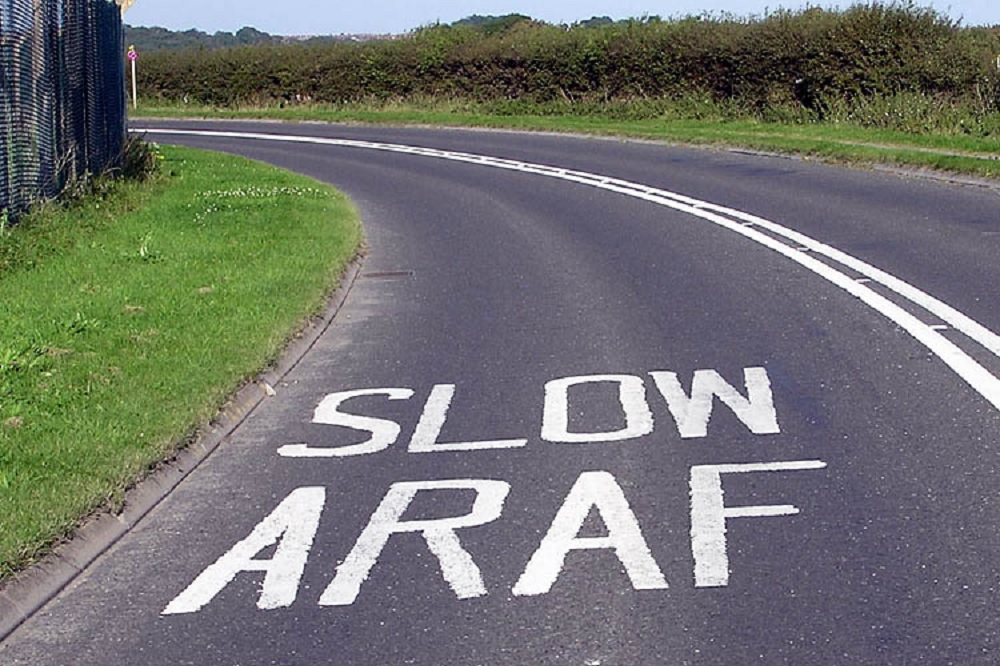
Picture by Adran Pingstone. Public domain.

Sian Gwenllian, Plaid Cymru shadow minister for the Welsh language

The Welsh language belongs to everyone in Wales, whether you speak it or not. This living language is as much of a part of our daily lives as it is our heritage and is one of the many things that makes Wales such a unique and wonderful country.

It’s something we are very proud of in Wales and want to protect and strengthen. 

That means, of course, making sure that everyone in Wales has the opportunity to learn and use the language and that everyone has the right to speak it in their day to day life if they want to, or because that is just the normal thing to do because it's their mother tongue. 

The Labour Welsh Government have a strategy to reach a million Welsh speakers by 2050. Which sounds great and in principle it really is. But the reality is different.

The reality is that when it comes to the Welsh language, Labour can offer only empty words and grandstanding. The reality is that Labour lacks the political will to deliver any real and tangible way to achieve this strategy. The reality is, they just don’t care.

Take, for example, the case of an elderly Welsh-speaking man from Anglesey who's living with dementia. His health board was considering moving him and his care to England.

The fact that a health board operating under Welsh language standards could even consider moving a dementia patient who is Welsh speaking to England where there won’t be Welsh medium care available, is undoubted proof that Welsh language standards in health are entirely deficient.

Under Labour’s own standards as they stand, the situation facing this gentleman from Anglesey is entirely legal and there is no legal safeguard for patients.

Surely it should be an expectation on a health board to provide a service for vulnerable patients, such as dementia patients, in their first language, and it shouldn't fall to families, politicians and pressure groups to safeguard the human right of Welsh speakers to a service through the medium of their own language.

[mid-content-banner]


Scandal

Plaid Cymru have argued from the very outset that the health standards are far too weak.

The irony is that even the minister herself agrees.

An e-mail that she sent to officials asking questions before passing the health standards shows that she was entirely aware of the deficiencies of the health standards.

Writing to her staff, she said: "So, I want to be clear, if a little 90-year-old lady from Gwynedd who speaks poor English goes to hospital and is about to have a complicated operation, she cannot legally ask for someone to explain to her in Welsh what is happening, and that what we are offering is that the health board makes plans so that they can set out to what extent they will be able to carry out clinical consultations in Welsh five years from now, which presumably could mean they still won't be able to."

And went on to say: "I think this is quite a tough sell. Any ideas?"

Yes, Ms Morgan. It’s a tough sell. And the truth of the matter is that the Labour Government's policy can't guarantee Welsh language services—even basic Welsh language services—for vulnerable patients today. That is a scandal and a sign of a government that does not have the well-being of its citizens as its priority.

What this case and others like it clearly demonstrates is that the Welsh language is seen as something that is peripheral or desirable in terms of care rather than being a central part of that care in terms of the quality of life and safety of those individuals involved.

There is a lack of understanding of the importance of Welsh-medium health and social care. It should be rooted in our health and care regime in Wales. To do that, we must introduce new standards that are firm and robust, and to do so as a matter of urgency. We also need a coherent plan to develop a workforce that can deliver a bilingual service of care.

And that’s not all.

Earlier this week, Transport for Wales came under significant embarrassment after it came to light that it had broken Welsh language rules six times.

According to the Welsh Language Commissioner's draft report, the Welsh Government quango failed to provide some services in Welsh and treated the language less favourably than English.

The report said the company was found to be in breach of standards by failing to provide announcements and correspondence bilingually; having its website automatically set to English and not fully functioning in Welsh; the Transport for Wales app being only available in English; that self-service machines automatically set to English and were not fully functioning in Welsh, and train tickets were only being printed in English.

It’s just not good enough.

Incompetence

Worryingly, the Welsh language could also be subject to cuts in the 2020-21 budget.

But we don’t know, because the Labour ministers aren’t being honest about it.

When my colleague Llyr Gruffydd challenged the Labour Welsh Government’s Welsh Language Minister Eluned Morgan on whether there would be an “inflationary increase” in the Welsh language budget or a cut in “real-terms” she failed to give an honest answer. In fact, she failed to give any coherent answer at all.

The Finance Minister Rebecca Evans had said during the debate on the draft budget that the Welsh language budget would not be cut however during a committee session the following day, Eluned Morgan suggested she may be required to cut the Welsh for Adults budget in order to direct some of the funding to mitigating the impacts of Brexit.

But when challenged later, the Labour Minister failed to confirm nor deny if Welsh for Adults could be subject to cuts. She also failed to say which other elements of her budget would be cut.

The truth is, this Labour Welsh Government have utterly failed to be clear about the levels of funding the Welsh language will receive during the next budget. 

This level of incompetence suggests that they aren’t capable of governing Wales to the standards that the people of Wales deserve.

And with renewed calls to legislate to protect and retain historic Welsh place names, let us not forget that it was the Labour Welsh Government who refused to back my colleague Dr Dai Lloyd’s Bill to protect Welsh names in law.

This woeful record speaks volumes and paints a painful picture of a Labour government in Wales with a lack of credibility, a lack of honesty and a lack of will to do anything to strengthen the Welsh language.

We can’t trust them to see through their pledge of a million Welsh speakers by 2050.

But that doesn’t mean we should give up or despair. It means we should work harder to elect a Plaid Cymru government next year.

A Plaid Cymru government that would ensure that our country’s most vulnerable patients can speak their own language when receiving health or social care. That it isn’t treated with disdain or as an embarrassing afterthought. That we allocate enough money to ensure that everyone in Wales gets the chance to learn it and to use it.

Because we’re proud - proud of our country and proud that the Welsh language belongs to everyone in Wales, whether you speak it or not.

For the price of a cup of coffee a month you can help us create an independent, not-for-profit, national news service for the people of Wales, by the people of Wales.

Get more trusted Welsh news

Choose Nation.Cymru as a preferred source in Google News to see more of our journalism.

Choose Nation.Cymru as a preferred source in Google News

30 comments

jr humphrys

Listen to Siän James cd "Pur".

Reply
A Prophecy is Buried in Eglwyseg

Poland was wiped off the map from 1795 to 1918 and 1939 to 1945 (%25 dead), with semi-occupation (1945 - 1989). Polish-speakers rose in rebellion 15 times. (1794, 1805, 1815, 1830, 1846, 1848, 1863, 1908, 1917) & (1940, 1943, 1944) & (1956, 1980, 1989) Come on Cymry, Cymraeg has fewer than 50 communities left where it's dominant. When have you sacrificed all once for Cymraeg, what Poland did 15 times?

Reply
Jonathon Gammond

The Polish uprisings between 1794 and 1917 were their attempts to regain independence after the country had been partitioned and were ruled by three authoritarian regimes: Russia, Prussia and Austria. Nearly all the uprisings were against Russia alone as she had the most authoritarian of the regimes. The reasons behind the later uprisings are well-known. No one had any restrictions on speaking Polish in 1956, 1980 and 1989, it was freedom of speech that was the issue i.e. what you were allowed to say, not which language you spoke, as well as freedom of assembly and a decent quality of life. For most of that period Poland had a large minority of peoples who spoke other languages (Lithuanian, Belorussian, Kashubian, Ukrainian, Ruthenian, Yiddish etc.), many of whom also participated in these rebellions, although owing to the discrimination they faced from the Polish majority and from specific poiltical movements, they sometimes chose not to join in the uprisings.

Reply
Richard Morse

There is such a fundamental lack of understanding in Labour run bureaucracies in Wales. For instance a couple of years ago one of the local councils in SE Wales said they would have to delay having a full bilingual service in reception at its headquarters because, in a period of cuts, the council couldn't afford to staff reception with separate English speaking and Welsh speaking receptionists!! Clearly they had no grasp of the meaning of bilingualism. Then they complain that they can't recruit bilingual staff while the local Welsh medium secondary school has many, many school leavers who struggle to find work in this depressed area. As a former teacher in that school it is disheartening to come across former pupils who have been given no opportunity to make use of their bilingual skills in work.

Reply
Sibrydionmawr

As you'll know, this is an issue that faces some 80% of Welsh medium school leavers in South East Wales. I've lost count of how many people I've met who are able to understand Welsh but who have lost the confidence to speak the language. The emphasis on Welsh medium education and on encouraging adults to learn the language are crucial if Welsh is to continue as a living language, but there is insufficient emphasis on Welsh usage. I used to teach Welsh to adults and as anyone working in the field will know, there is a tremendous dropout rate, a significant proportion of which is due to the very pragmatic argument that there are few, or no places where language skills can be practiced. It's all very well promoting a language, but there needs to be places where it can be spoken on an everyday basis, otherwise, for most people, what is the point?. I agree with the writer of this article, and it has always seemed to me that the Labour government's plan for the Welsh language is yet more kicking the issue into the long grass as a an act of appeasement to the Welsh language lobby on the one hand, and to the significant ant-Welsh language lobby within Welsh Labour on the other. It's also fiddling about around the edges, as on further scrutiny the plans are far from ambitious and would merely seek to replicate the current situation, but on steroids: far too much emphasis on opportunities to learn, which while important, ignores too much the learning context, (i.e. Wales) which is rapidly Anglicising ever more each day. If this plan is to succeed then some bold polices are called for, some of which will no doubt be contraversial. How about, whilst emphasising a residents right to use their language of choice, that in predominantly Welsh speaking areas (> 40%) road signage and government/local government signage is in Welsh only? The aim of this is not to alienate monglot English speakers, but to give an important psychological boost to Welsh speakers, establishing that the area is one of the few places on the planet where Welsh is emphasised. I'm sure the usual suspects would complain bitterly, but as is the case now, why are they living in Wales? The administrative language of central and local government could also be looked at, with a view to changing the language of internal administration from English to Welsh. This would result in a significant boost to the fortunes of the language and though it would be a huge project there is no real reason why this couldn't be fully achieved by 2050 if the government were serious about it and committed to gradual change over the circa two generations between now and 2050. Local government is a bit of a tougher nut to crack, and this is perhaps something that needs to be decided on a case by case basis at the local level. In no way should this allow back peddling on existing bilingual provision, but there are areas where it would be difficult to find all the Welsh speaking staff necessary. Then there is our culture, where, perhaps paradoxically it is the English language manifestation that is more overlooked than its Welsh language equivalent. This, for me is one of the most pressing reasons why broadcasting needs to be fully devolved. Where are the youth orientated programmes that showcase Welsh youth orientated culture in both languages? If John Peel could manage to promote Welsh culture in both languages, then I'd damned sure that a properly devolved broadcasting network could match and surpass that. Quite simply, people need things to do in a language, and music is not only a way of building a bridge between our two language cultures, but in building confidence in ourselves - but I should imagine that Welsh Labour would hate it, as it would really build bridges and understanding between those who speak Welsh, and those who don't. It's also somewhat baffling to me that there is still no streaming website where Welsh produced film and TV can be viewed online wherever one is in the world. If Iceland can do it with a population a little bigger than that of Cardiff, I'm sure a relative giant like Wales can also. I know we can traipse our way to the National Library in Aberystwyth and view all this stuff, but the point is we shouldn't have to. About the only Welsh film that can be easily accessed is 'Hedd Wyn' which can be streamed, for free, on the BFI Player website. That leaves a lot of content that remains, to all intents and purposes, inaccessible. Any such website could consist of both free and paid for content, as is the case with the BFI Player site. Such a site, if accessible internationally, (no doubt a proprietary rights nightmare) it could boost interest in Wales, and more importantly, boost our own self-image and confidence. There is also the very big question as to how the heck can we know who we are without full access to our own culture to the full extent of available technology? .I learnt Welsh to fluency in my late 20s and early 30s. Part of that was in the classroom, but most of it was through going out into the world and just speaking it, (often very badly) and insisting that people spoke back to me in Welsh, explaining things in Welsh. The many hours I spent hitch-hiking in my student days very often turned into impromptu Welsh lessons where I learnt many of the subtleties of words used to describe landscape, or even types of rain! I also spent many hours devouring Welsh language radio, (fond memories of listening to Sain Abertawe whilst working a summer job at Pontins in Pendine in 1985) and translating the lyrics of Welsh language recordings I bought so that I understood them fully. Without a relatively large number of native Welsh speakers around learning the language is much harder than it needs to be. It's always going to be an effort, but if there is a community where Welsh is spoken, whether in the locality or the workplace, it becomes much easier and far less of a conscious effort, and to my mind at least, learning by doing is by far the best way to learning anything.

Reply
John Ellis

A small positive to offer: our nearest Morrisons supermarket appears to have recently adopted a policy of encouraging monoglot English-speaking staff to learn Welsh, and provides those who take it up with a lanyard and a badge that says 'dysgwr'. Which enables me to say that I'm a learner too, and we then do the business at the check-out through the medium of Welsh.

Reply
John Ellis

Siân Gwenllian here offers a pretty decent on-line equivalent of a party political broadcast on behalf of Plaid! But with that caveat, and speaking as someone whose job, pre-retirement, involved assessing and commissioning appropriate care for people with dementia, she makes a solid point. For a great many people with dementia, the cognitive deterioration first makes itself evident in the loss of recall of recent events. It's by no means unusual to come across a sufferer who has no memory of what happened yesterday, or even a couple of hours previously, but who still has clear recollection of his or her younger days. I used to know an elderly woman in residential care who could describe aspects of her very young childhood in minute detail, but who could only rarely remember her late husband's name and had no memory at all of where their first home together as a married couple had been. The trouble, of course, is that the mental deterioration is relentlessly ongoing; like an incoming tide eradicating children's sandcastles on the seashore, dementia destroys memory. And for people brought up in a Welsh-speaking home who didn't learn any systematic English ubtil they went to school, it's quite likely that their ability to speak English will fade away some significant time before they also lose their Welsh. And if they're in an entirely English-speaking environment, they're left uncomprehending and with much reduced stimulus. Dementia's a destructive enough illness as it is without such therapeutic support as can be offered making it worse. And for people with dementia in Wales whose first tongue is Welsh, I think the language aspect is sometimes insufficiently understood. I remember some years ago a job applicant raising a complaint that a candidate with less experience and qualifications had been appointed over her. But the appointed candidate was a fluent Welsh apeaker, the job was that of an occupational therapist working with elderly people, and the post was based in Aberystwyth. I can't remember how the issue was ultimately resolved, but it seems to me that the interview panel had probably made the right choice.

Reply
Rhosddu

Yes, right choice; the successful candidate had a core skill that the non-Welsh-speaking candidate lacked. On a separate but related case, does anyone know of any further developments in a residential home for the elderly in Cwmtawe where staff were told to stop speaking Welsh because English residents were unable to understand them?

Reply
jr humphrys

Homes show the languages spoken on their front page, so relatives are at fault there

Reply
John Ellis

Unless you live in one of the almost entirely monoglot English-speaking areas of the east or in south Pembs, the reality in Wales is that two languages are spoken and you'll inevitably come across people speaking Welsh. Makes no difference if you're 17 or 87, it's how things are, and people need to get used to it. Why should it be different any different because you're old?

Reply

In reply to John Ellis

Rhosddu

True, John, but the point is that a management decision was made to instruct Welsh-speaking staff to use English only, in order not to 'alienate' an influx of grannies who had moved from England and who were now residents of the home in question. I was wondering if anyone knew the outcome of this.

Reply

In reply to Rhosddu

John Ellis

I didn't see or hear the news report of the allegations to which you refer, but having worked close to this sector - I was a local authority care manager/social worker on an older people's team, and so was involved in placing people in residential care - I'd have taken a dim view of any home which instructed its staff not to use, between themselves, the language in which they'd normally communicate with one another. That seems to me an entirely 'dros ben' imposition. It'd be an entirely different matter if staff were unwilling to speak English at all when the home had monoglot English-speaking residents, but, to judge from your description, the management's decree in this case went beyond that. That sort of imposition readily makes for a surly and resentful workforce, and homes with surly and resentful workforces don't provide a good living environment for their residents.

Reply

In reply to Rhosddu

Vaughan

I don't know the full circumstances of what was happening in Ystradgynlais but I fail to see how the use of a phrase pejorative such as "an influx of English grannies " really contributes much or whether or not is even factually accurate. Rhosddu, whoever you are, try to use the language of mature debate!

Reply

In reply to Vaughan

Rhosddu

I'm beginning to wonder how much truth there is in this report because I've found no record of it anywhere, and no contributers have come up with anything. We know that the relative costs of care for the elderly in Wales and England has led to such an influx, and this is bound to impact on the use of Welsh as a work-based language in residential and nursing homes in predominantly Welsh-speaking areas, as well as costing the Welsh NHS money, but this particular instance may be apocryphal, or else unreported in the Welsh media.

Reply

In reply to Rhosddu

Rhosddu

This just in: the report was true after all. The home in question is called Isfryn, and the matter was being investigated by the Welsh Language Commissioner. I was wrong, however, about the grannies; the home provides rehabilitation therapy for those suffering from a brain injury. The edict against aginst staff speaking Welsh was because to do so would be "unacceptable" to monoglot care workers and clients.

Reply
Alwyn J Evans

Given your knowledge of care and commissioning, do you think Sian is highlighting the systemic, pervasive issue of Welsh speakers being denied care placements which meet their communication and cultural needs OR she's using an individual case, without detail, which could be an outlier for many good reasons, to score political points?

Reply
John Ellis

Sorry - I failed to notice your post, and by now you may have given up on awaiting a reply! It's extremely unusual for elderly people to be placed in residential care far away from their home area, and in my experience that only happens when there's a very specific reason for doing so. Usually it's because: (a) the person no longer has family or friends in their home area, but there are relatives or close friends living in some distant place who are willing to visit and support the person in a home in that locality; or (b) the person has specific care and/or management needs which no care or nursing home in his or her own locality feels able to provide. So I suspect in the particular case to which Siân Gwenllian alluded that there are some other factors around the placement which we don't know. And without knowing, it's hard to judge whether a genuine grievance or a political point underlies it! I'd only say that I'd be surprised if any very elderly person's care needs were so complex and unusual that it proved impossible to find somewhere suitable closer to Gwynedd than a home in distant England. And that while living close to a concerned and committed friend or relative is certainly a major factor, it's not in every circumstance an overriding one in choosing a residential care home. And that if a very old and frail person was accustomed to day-to-day communication in Welsh, that person might struggle in an wholly English-speaking environment. And even more so if a dementia sufferer.

Reply

In reply to John Ellis

Alwyn J Evans

Thanks for the reply. It's important we hear from those with professional insight into these cases and services provision. I find it shameful when politicians use cases such as this, knowing full well the whole story can't be told as professionals are bound by confidentiality. Its cheap politics and it constantly undermines the public's trust in services. Are services perfect? Absolutely not, but instilling fear, which Sian Gwenllian has potentially done, in citizens is appalling.

Reply

In reply to Alwyn J Evans

John Ellis

It's certainly hard to resist determined and genuinely caring relatives shen they say 'we want our nan (or nain!) in a home near us in Melton Mowbray or Dundee. And nain may well appreciate family whom she'd previously seen just now and then visiting every few days. But would they visit every few days once the novelty had worn off? And closeness to family isn't the only factor to take into account in deciding on a residential placement, especially if there's a degree of cognitive impairment. That was a lesson learned in the post-war years when what I call 'You'd be better off in a home now, mum, where they'd look after you' became fashionable. Chorused alike by relatives, GPs, district nurses and hospital staff, many an old person found themselves whisked into residential care without ever feeling that anyone asked them what they thought or what they wanted. The benefits system back then unfortunately encouraged the fashion. And since older people moving into residential care on average survive about two years, the inevitable question is 'are they REALLY - always and in every case - better off in a home?' Or are they just going to give up and die sooner than they would if they'd stayed put?

Reply
Nefoedd Yr Adar

Rwy'n adnabod digon o gynghorwyr Plaid Cymru sydd wedi pleidleisio i gau ysgolion cynradd cyfrwng Cymraeg ynghyd a ddeiliaid portfolio, o fewn cynghorau, sydd wedi arwain at is-raddio'r iaith Gymraeg o fewn cymunedau Cymreig cry'. Nid Dr. Alan Williams (Caerfyrddin) yn unig sydd efo 'Education First' ond aelodau Plaid Cymru hefyd.

Reply
Dr John Ball

A question for Sian - and please answer. I understand that when a vote was taken on the bill to protect Welsh place names, not every Plaid Cymru A M turned up to vote. Is this true? And if so, who were they?

Reply
Theresa Green

And what about those who reside in Wales who speak English and have no desire to have the Welsh language thrust at them? They have no rights do they?

Reply
David

And what about those who reside in Wales who speak Welsh and have no desire to have the English language thrust at them? They have no rights do they?

Reply
David Roberts

And they carry on as normal, as they always have. Wheres the problem?

Reply
Rhosddu

He was being rhetorical, in answer to the stupid comment from Theresa Green.

Reply
Walter Hunt

Any outbreak of long-termism among politicians is generally something to be welcomed, but politicians should never be "trusted" to deliver anything 6 electoral cycles from now, when most of them will have retired, died, gone to the House of Lords or found themselves (or been forced to find) some other career. Any project need milestones and periodic assessment to find out what's working and what's not to ensure the best use of inevitably limited resources. This is not one of those things that can be fixed by some Brexit style cliff-edge maneuvering come the autumn of 2049

Reply
Mawkernewek

The Government never actually misses a target, just quietly drops them when it becomes obvious it won't be met.

Reply
Alwyn J Evans

Why is there absolutely no detail of Plaids plan? Broad criticisms and highlighting individual outrages, is not a policy. It is the tired, lazy politics of the political elite that people are rejecting.

Reply
jr humphrys

There is little evidence to show people are rejecting elites.

Reply
Alwyn J Evans

There will always be an elite, that doesn't mean we should accept them failing us. Theres plenty of evidence. Because the action of rejection is to embrace the same elites as a solution, doesn't mean the motivation isnt clear. It just shows the game is rigged.

Reply

Leave a reply

Replying to jr humphrys Cancel

Listen to Siän James cd "Pur".

Comments are reviewed before they appear.