


Sat, 18th July Cardiff 24°
Nation.Cymru wordmark
Advertisement

Opinion

Kirsty Williams is right - there is no such thing as one Welsh history
By NationCymru
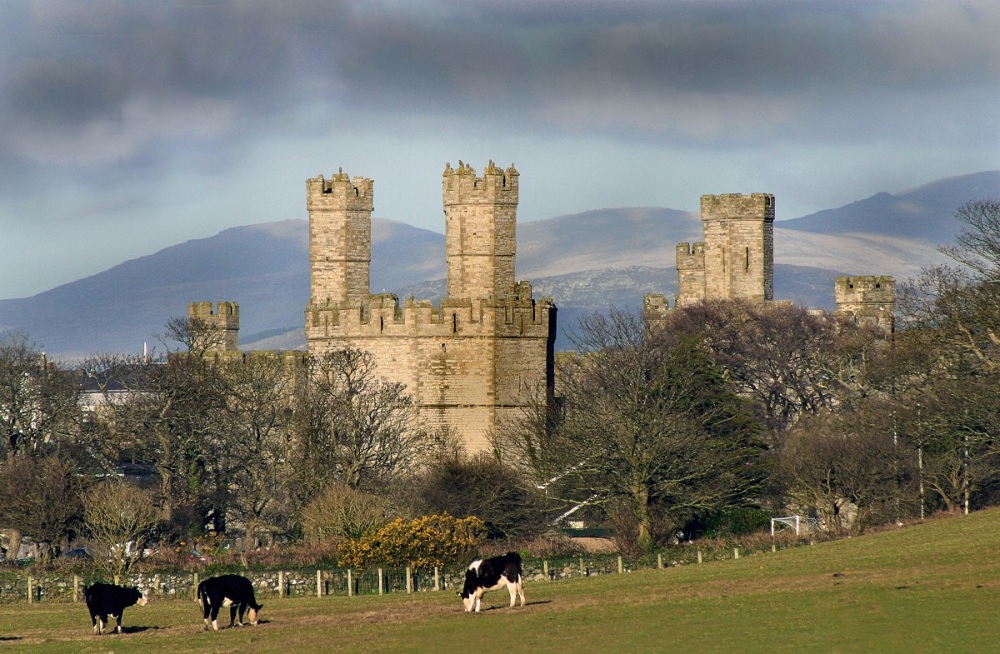
Caernarfon castle.

*English follows below*

Aled Gwyn Williams

Bu ymateb chwyrn i ddatganiad Gweinidog Addysg Cymru, Kirsty Williams, i’r wasg ar 21ain Ionawr, a’r feirniadaeth, gan fwyaf, yn canolbwyntio ar un gosodiad neilltuol:

“Does dim y fath beth â hanes Cymreig – mae yna hanesion Cymreig.”

Yn anochel, cymal cyntaf y frawddeg wnaeth ymddangos yn y penawdau newyddion, a hynny’n ymddangos yn ymfflamychol tu hwnt heb gyd-destun.

Er tegwch, mae’r geirio yn gadael y neges yn agored i'r dehongliad hwnnw. Efallai y byddai wedi bod yn well dweud “Does dim y fath beth ag UN hanes Cymreig.” Ac yn hynny o beth, mae’r gweinidog yn gywir.

Mae hanes Cymru yn dapestri – yn hanes llawn hanesion.

Mae pryder nad yw plant Cymru yn dysgu digon o hanes Cymru, ac mae’r pryderon hynny yn gwbl ddilys ac yn deg. Ond annheg yw camgymryd geiriau’r gweinidog fel ymgais i ddileu hanes a hunaniaeth Cymry, fel yr awgrymid gan rai sydd wedi ei barnu, mae’n debyg, ar ôl darllen y penawdau yn unig yn hytrach na sylwedd yr hyn a ddywedodd hi.

Rwy’n credu’n gryf bod agweddau ar hanes Cymru y dylai pob plentyn yng Nghymru eu dysgu oherwydd eu dylanwad pellgyrhaeddol trwy Gymru gyfan, gan gynnwys y pwyntiau amlwg megis Gwrthryfel Glyndŵr, y Chwyldro Diwydiannol a boddi Capel Celyn.

Er hyn, gall hyd yn oed y rhain fod yn esiamplau o hanes llawn hanesion gyda safbwyntiau gwahanol arnynt.

[mid-content-banner]


Perthnasol

Er enghraifft, mae’n bwysig i blant ddeall hanfodion y Chwyldro Diwydiannol, megis y math o ddiwydiannau newydd a welwyd yng Nghymru a’u heffaith ar gymdeithas. Ond gellid gwneud yr hanes hwnnw yn fwy perthnasol i’n plant drwy ei wreiddio yn eu milltir sgwâr.

Mae’n briodol i blant ddysgu’r hanes cenedlaethol hwn drwy gyfrwng eu diwydiannau lleol. Byddai plant cymoedd y de yn dysgu am y chwyldro cenedlaethol a rhyngwladol hwnnw gan ddechrau gyda diwydiannau glo a haearn, plant ardal Ffestiniog yn dechrau gyda’r diwydiant llechi, a phlant y dinasoedd yn dechrau gyda dylanwad y dociau.

Mae’r plant yn gallu gweld gwaddol y diwydiannau hynny ymhobman o’u cwmpas felly mae’n fodd o ddod o’r hanes hwnnw yn fyw iddynt.

Mae boddi Capel Celyn yn ddigwyddiad y byddai’r rhan fwyaf ohonom ni’n derbyn yn rhan bwysig o’n stori genedlaethol, ond mae hyn, hyd yn oed, yn esiampl o hanes ymysg hanesion.

Dydy’r boddi ei hun ddim yn unigryw. Boddwyd pentref Llanwddyn er enghraifft, yn un llyn ymysg llawer sy’n darparu dŵr Cymru i Loegr. Dylai’r rhain gael eu dysgu ar y cyd â stori Capel Celyn yn eu hardaloedd hwy.

Yr hyn sy’n gwneud hanes Tryweryn yn arbennig o unigryw a pherthnasol yw ymateb a gwrthwynebiad Cymry ar hyd a lled y wlad. Mae’r hanes wedi effeithio ar Gymru gyfan, boed yn uniongyrchol neu’n anuniongyrchol trwy’r wleidyddiaeth radical a gafodd ei bywiocáu ganddo a’r diwygiad yn yr ymdeimlad o genedlaetholdeb Cymreig a arweiniodd at, gellir dadlau, ffurfio’r wlad yn ddemocratiaeth unedig trwy ennill Senedd i Gymru.

Fel rhywun sy’n ymddiddori’n fawr mewn hanes lleol, rwy’n credu bod dysgu hanes y gymuned yr ydym ni’n rhan ohoni cyn bwysiced â dysgu hanes cyffredinol ein gwlad. Rwy’n teimlo’r un ing pan fydd plant Cwm Llynfi, fy ardal i, yn anwybodus am wrthryfel Glyndŵr, â phan fyddent yn anwybodus am ddiwydiant y cwm, am stori’r Ferch o Gefn Ydfa, neu’r ffaith taw Cymraeg oedd iaith y gymuned tan yn ddiweddar iawn.

Dydy Cymru ddim yn fonolith. Mae hanesion lu yn ei ffurfio hi ac yn etifeddiaeth i ni. Ar y cyd â’r pynciau amlwg y rhoddid sylw i rai ohonyn nhw uchod, dylem sicrhau bod plant Cymru yn dysgu am ddigwyddiadau ac agweddau llai hysbys yn hanes ein gwlad y mae eu heffaith dal i gael ei theimlo heddiw, megis terfysgoedd hil Caerdydd 1919, ynghyd â hanesion lleiafrifoedd ethnig, ieithyddol a chrefyddol, merched a phobl LHDT Cymru.

Ni fyddai’r rhain ar frig rhestr hanes Cymru i lawer, ond nid oes Cymru fodern heb eu hanesion hwy a heb hanesion lleol.

Yn bendant, fe ddylai plant Cymru dysgu hanes Cymru, ond gall yr hanes hynny gael ei gyfoethogi gan hanesion lleol hefyd.
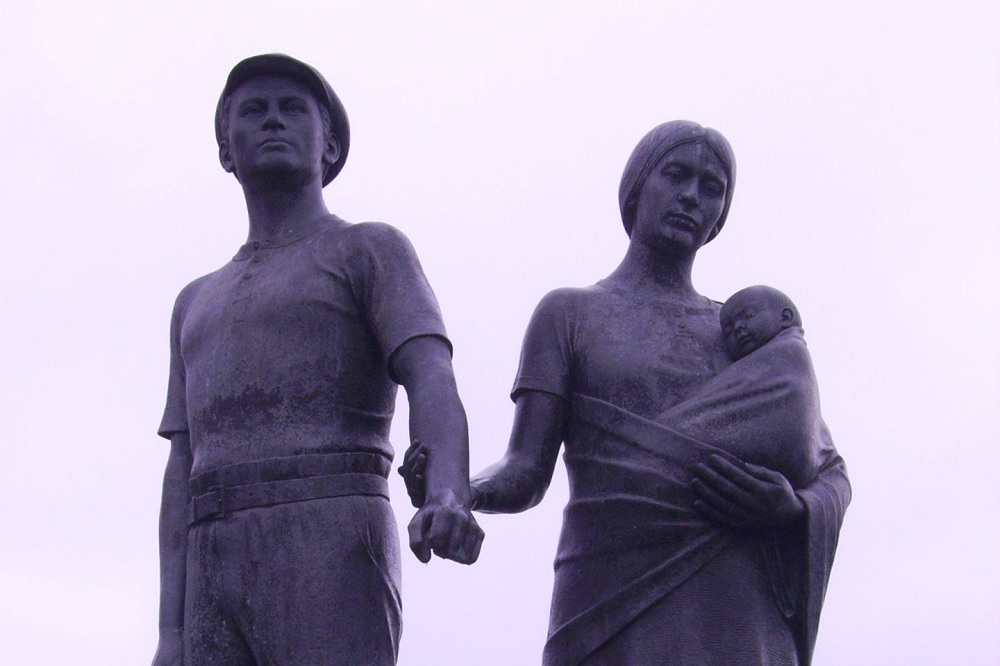

Miners' Statue, Rhondda. Picture by FruitMonkey

Welsh Education Minister Kirsty Williams faced harsh criticism after her press statement on Tuesday, most of which was mostly focussed on the statement that “there is no such thing as a Welsh history – there are Welsh histories”.

Inevitably, the first part of that sentence made the headlines - appearing deeply controversial out of context.

In fairness, the minister’s wording left her message open to misinterpretation, and might have been better expressed as “There is no such thing as ONE Welsh history”. In that respect, the minister is right.

Wales’ history is a tapestry – a history full of histories.

Many have expressed concern that children in Wales aren’t being taught enough Welsh history, and those concerns are legitimate and fair. What isn’t fair is misconstruing the Education Minister’s words as an effort to erase the history and identity of Wales – an insinuation based more on people reading only the headlines rather than the substance of what was actually said.

I absolutely believe that there are elements of Welsh history that every child in Wales should learn, due to their far-reaching influence across the nation, including the more obvious topics such as the Glyndŵr Rebellion, the Industrial Revolution and the drowning of Capel Celyn.

Despite their importance, these topics could also be considered examples of a history made up of multiple histories.

[mid-content-banner]


Relevant

For example, I believe it’s important for children to learn about the essentials of the Industrial Revolution such as the new industries that sprung up in Wales and their effect on society. But this history could be made more relevant to them by learning of its effects on their own community.

It’s appropriate for children to learn that national history through the lens of whichever industry is local to them. Children in the southern valleys could learn about that national and international revolution starting with the coal and iron industries, children in Ffestiniog would start with the slate industry, and children in the cities would begin with the influence of the docks.

These children can still see the impact of these heavy industries all around them, and so this would be a means of bringing these histories alive to them.

The drowning of Capel Celyn is an event most of us would consider an integral part of Wales’ national story, but even this event is an example of a history of histories. The drowning itself isn’t unique. The village of Llanwddyn, amongst others, was also drowned to provide Welsh water to English cities. These could be taught alongside the story of Capel Celyn in their local areas.

What makes the history of Tryweryn unique and so culturally significant is the reaction and opposition it inspired the length and breadth of Wales. The history has affected all of Wales, be that directly or indirectly via reinvigorated radical politics or the revived sense of Welsh nationhood that, it could be argued, led to the formation of a unified Welsh democracy with the creation of the Senedd.

As someone with a keen interest in local history, I believe that learning the history of the community we’re a part of is as important as learning the history of our country. I feel the same dismay at the fact that many children in my area, the Llynfi Valley, don’t know about Glyndŵr’s rebellion as I do at the fact that they don’t know about local industry, the story of the Maid of Cefn Ydfa, or that the language of their community was, until recently, overwhelmingly Welsh-speaking.

Cymru isn’t a monolith, there is a plurality of histories that make up our history and heritage. Alongside the more obvious subjects mentioned above, we should ensure that the children of Wales learn about lesser-known elements of their history whose effects are still felt today, like the Cardiff race riots of 1919, as well as the histories of Wales’ ethnic, linguistic and religious minorities, women and LGBT people.

These examples are unlikely to be at the top of the list of Welsh history topics for many, but there is no modern Wales without their stories and without local history.

Without a doubt, children in Wales should learn the history of Wales, but it is the histories of Wales that will lead to a deeper understanding of that history and enrich the lives of our young people.

For the price of a cup of coffee a month you can help us create an independent, not-for-profit, national news service for the people of Wales, by the people of Wales.

Get more trusted Welsh news

Choose Nation.Cymru as a preferred source in Google News to see more of our journalism.

Choose Nation.Cymru as a preferred source in Google News

31 comments

John Ellis

When I started secondary education, over sixty years ago now, the teaching approach to history was linear: I recall that we eleven and twelve year-olds began with the story of humanity, as far as we know it, in the old stone age, and then went forward from there. I've never thought that was a bad approach, because it set the scene for us in terms of the human story. But maybe the local might have been better still. Because the approach to geography in that long-ago first year in secondary was very much the one that Aled Gwyn Williams describes. We were all south Manchester lads attending a local authority boys' grammar school in south Manchester, and rather than adopting a lofty global perspective, our geography study kicked off with studying the reasons why, in terms of climate and geography, Manchester had evolved from a modest market town into a large metropolis, and how it had come to be considerably surrounded by a ring of smaller but still populous neighbouring towns. Which was, of course, largely the story of the cotton trade. That teaching approach made geography live for me because it started where I was and related to places that I knew and recognized. My interest in the subject was engaged, and I never lost it afterwards.

Reply
Jason Evans

My history lessons told me about the Roman's, the Anglo Saxons, skipped over Welsh history, we were taught about the industrial revolution but not Cymru/Wales contribution, skipped to the First World War again the contribution of Welsh soldiers totally over looked, I knew more about the Von Schlieffen plan than Mametz Woods. Didn't Kirsty William's say that some of the education should be left to the teachers themselves, my English born history teacher recommended Beowulf ( when we had our own local Mabinogion !?!?) and my next teacher a Welsh born man never recommended anything. So if Williams is encouraging teachers in my home town to educate their pupils that Milford Haven - was the place where the fish cames from - and how at one time it was one of the biggest, busiest ports in the British Isles then great but then she must also encourage them to teach the children that the castles of Pembrokeshire are NOT Welsh castles but English castle in Cymru/Wales and they must explain the purpose of these symbols of occupation and oppression.

Reply
John Ellis

Sounds like I got more Welsh - or at least proto-Welsh - history in a Manchester school than you got in a Welsh one, because, having begun with the old stone age in September, by the following summer we'd got to the Roman Empire's effective abandonment of Britannia and we'd already looked at Boudicca the warrior queen of the Icenii. Just before the first year ended, we were on the Arthurian traditions - probably a Celtic leader who for a while successfully held back the Anglo-Saxon advance, we were told. And we learned about Gwtheyrn, if under the Anglicized name of Vortigern. But then it was the summer holidays. and when we came back the history topic for our second year was Charles , the Civil War, Commonwealth and restoration. No more Welsh history for me, but at least, unlike kids these days, we entirely escaped Henry VIII ...

Reply

In reply to John Ellis

Anthony Mitchell

You were taught the Arthurian legend at least, which is Welsh history at it's best. But even this is a subject that has been manipulated into "legend" when Arthur is clearly Athrwys ap Meirug ap Tewdrig of Morgannwg. History is always going to be a subject that will never be treated with the respect it should as its too much of a powerful political weapon to be respected, I mean if you look at history for yourself you can see patterns that tell a truer story, William Richards prophesised the imminent death of the Welsh language ("Englished out of Wales" was the phrase he used) and Thomas Jones predicting that Welsh people would be "expunged from history" since 1682, look at events before and since then with Edward I with the bards to the treachery of the blue books. Welsh history (culture) has been continuously attacked for centuries because that is when a nation has truly been conquered.

Reply
Annie Jones

How lovely for you - my history lessons revolved around the history of England, it's kings and queens and how England's place in the world evolved. I am Welsh and my knowledge of Wales and Welsh history is all self taught.

Reply
Mike McGrane

An excellent outline of how our history could be taught. Although I live in the old mining area and went to Lewis School our history seemed to disappear after the Stone, Bronze and Iron Ages when the Romans then Anglo-Saxons, Normans etc take centre stage . I learnt more local history from writers of fiction like Alexander Cordell, this made me look at histories of Wales by historians like Gwyn Alf Williams. Starting locally would be good for history teaching anywhere in Britain.

Reply
Jason Evans

This article to me is defending the unionist mindset and is perfectly suited to the narrative of the unionists. The UK isn't made up of history but histories (but let's just concentrate on one bit). With the history of Cymru/Wales let's forget about the whole and just concentrate on your little corner. Children will learn more about their local area from family than they ever will from school. The first thing teachers will do is set a project and get them grab info from mothers, fathers, grandparents, aunties, uncles, the older generation etc. What they will most definitely miss out on, like the vast majority of us, is the broader picture of Cymru/Wales, The Princes of Wales, the Last War of Independence, Rebecca Riots, Industrial revolution, Welsh coal powering the world, Tryweryn, Welsh slate roofing the world etc.

Reply
John Ellis

I read the article as advocating starting with the local, or at least relating the wider scene to the local - not that the focus should wholly and permanently dwell on the local ...

Reply
Richard

In my first year at secondary school (a Welsh medium one in the North) we didn't study History, Geography or Religious Studies as separate subjects but rather did a subject called "Bro" (literally translated as "district") which looked at those 3 subjects from a local perspective, giving us a grounding to studying the subjects in a broader context further up the school.

Reply

In reply to Richard

John Ellis

Yes, I can see the point of that. I think that was probably the idea with the geography teaching in my school, though I don't recall anyone actually saying that to us. We perhaps had an advantage, because I later learned that the geographical and historical economic development of what's now, but wasn't then, called Greater Manchester was the peculiar and passionate field of interest of the school's woodwork teacher, and they evidently farmed out first year geography to him. The positive side was that he really knew his stuff, and over sixty years later I still clearly remember the gist of what he taught us. The downside was that he was a martinet who terrified us!

Reply
j humphrys

Give me a child of six yrs.................................................

Reply
Bill Fearnley-Whittingstall

Of course Kirsty Williams is right, as is Aled Gwynn Williams also right to point out that she left herself open to misinterpretation. As important as it is for people (not just children) to have some idea of their local history, they should also have some idea of their family story. Pill is still one of the poorest parts of Newport, as it was when my maternal grandfather was born there in 1873. Like quite a lot of children he was illegitimate, almost certainly because his mother was raped by someone in her employers family. Like many children he started crying part-time (30/35hours a week) around school hours at the age of nine and left school when he was twelve. Despite (or because of) his start in life he became leader of one of the biggest Trade Unions of his time, and an MP and a Cabinet Minister. My paternal grandfather was the youngest son of a very rich family. He went to Eton and Oxford and was leading academic theologian before he was thirty. My grandmother came from another rich family, but brought her husband's career to a shuddering halt when she went off with another woman the day before he was offered a bishopric.

Reply
Walter Hunt

I agree with everything and nothing Aled Gwyn Williams says. Nations which don't value and transmit their culture and a unified sense of who they are lost. Nations are their history. Local history : an indulgence. People are no longer born, schooled, live and die in the same place. We pass through the physical world and connect through the virtual world. If the state system can't compete with private education's old boy networks, then it must make every classroom hour count, develop life skills and teach how to locate and pull the levers of power.

Reply
John Ellis

Local history isn't enough, but it isn't an indulgence either; it's a start, to which beginners can often more easily relate. Same principle as the political strategy which asserts that all politics is, first and foremost, local.

Reply
Walter Hunt

Communities in industrial Wales have had their purpose torn out and young people are departing rural Wales leaving those communities to be transformed into Little Englands. Wales' education system needs to create active agents for change. "Pan o'ddwn i'n grwt...." hiraeth and sentimentality won't build the New Wales. The struggle for communities is being lost. Gaining Welsh statehood requires rebuilding a shared sense of Welsh nationhood of which a shared historical narrative is an essential part. Only Welsh statehood can restore Welsh communities with histories the locals actually care about.

Reply

In reply to Walter Hunt

John Ellis

I wouldn't dispute your assertions. But after all the long centuries of emphasis on 'the realm of Britain' my feeling is that the sense of Welsh identity that a great many Welsh people have is essentially not that different from an averageYorkshireman's sense of being 'Yorkshire': a strong local patriotism sitting quite comfortably within a no less strong sense of 'Britishness'; to such a degree, indeed, that back in May last year he might well have voted for the Brexit party even if the local candidate had an east London accent! And having lived on and off in Wales for nearly a quarter of a century, my impression is that Welsh people feel their Welshness most strongly in the context of their local area. My elderly next-door neighbour, for example, here in Dyffryn Clwyd is a first-language Welsh speaker who spent her childhood in the old Merionethshire and her adult life as a farmer's wife outside Denbigh: she always tries to see a Welsh-speaking GP, nurse or council officer, and in their farming days they were Welsh enough to have joined the FUW rather than the NFU! But anywhere south of Welshpool and Aberysywyth is terra icognita to her, and while she's been to London she's never in her life set foot in Cardiff, Newport or Swansea. And when it comes to the Welsh spoken by yr Hwntws she's struck more by the differences than the similarities. For her they seem to be quite literally 'tu hwnt'! My point really is that in terms of 'rebuilding a shared sense of Welsh nationhood' it's surely better to build on the foundations of what and where people feel they really are rather than to attempt to cram them perempotority somewhere where they aren't. Incidentally, the invaluable Wikipedia has an interesting page - the first paragraph especially: https://en.wikipedia.org/wiki/Geography_and_identity_in_Wales

Reply

In reply to John Ellis

Rhosddu

The reason "Welsh people feel their Welshness most strongly in the context of their local area" is because they have not been taught their national history. The new curriculum was a chance to right that wrong, and it has been rejected.

Reply
Geraint

Diolch yn fawr. An excellent, considered response to the multitude of fiery responses to the minister’s reported comments. By the end of her tenure KW will have presided over significant change in the Welsh education landscape and its positioning in the mainstream of progressive international education systems. It will have moved finally out of the limiting historical England & Wales paradigm that has failed us so badly. It’s been depressing seeing the criticisms levelled against her on the basis of one turn of phrase that could be read either way. Good that the record is being put straight here. As we move onwards, our schools and future learners have everything to play for. We’d be wise to challenge each other to make our History the best it can be in every school, but let’s not lose sight of the fact that across the whole new curriculum schools will have to work hard to deploy their local autonomy cleverly to provide the best for our learners across that curriculum. For that to be achieved it will take a whole community to educate the child, and many schools will need to transform their whole outlook to make best use of local knowledge and expertise. We do not currently have many of the civic structures in place to make it easy for schools to know where to turn. Maybe that will be the next challenge for us keyboard warriors: to form enough credible fora for teachers to be able to access to bring an entirely new Welsh curriculum to life - Welsh scientists, Welsh literati, Welsh business leaders .etc The English publishing houses and press won’t do it for us as they did in 1988 (for England and Wales and NI) If we could harness our small nation energies, we might just help our children to seriously re-write our national story.

Reply
CapM

"There is no such thing as a Welsh history, - There are Welsh histories ....” Surely the sum of these Welsh Histories amount to a distinct and unique Welsh History . Or perhaps KW thinks that Welsh Histories are just parts that go into the British Histories collection.

Reply
John Ellis

The sum of the Welsh histories do indeed amount to a distinct Welsh history. But people often find it easier to relate to what they know and care about, and that's often the local perspective. Easier - at least for some - to start with bite-sized portions of familiar fare.

Reply
CapM

From the start of their schooling pupils can develop awareness and understanding of the History of Cymru. It's likely that these pupils will also then identify the History of Cymru as being their History. We know that this is possible because of the success that the teaching of Anglo-centric British History in Cymru has had in getting pupils to identify that Anglo-centric British History is their History. Both approaches could be described as indoctrination and neither approach need be made less effective by the inclusion of local histories. Both can be made more effective by including local histories. The issue regarding the curriculum is not the inclusion of local histories but whether the Labour Government intends that the teaching of History ( or in Kirsty Williams speak "Histories") in Cymru will result in people who identify with being Welsh or identify with being British ( also extent and partiality).

Reply
Cambro

When I was in school the main thing was drilled into me was not to forget the "historical context". Understanding the cause and effect of how actions can invite reactions and where that can lead is really what learning history is all about. For example the greed that led to the financial crash in America, mixed with the Treaty of Versailles and how those two things led to the rise of Nazism in Germany. Of course there would also be ramifications on the local level as well with cities being bombed and loss both at home and abroad. The question is however: Should the wider context be taught before the local? Does the wider context offer more information and understanding of what was happening locally then if the local history was taught before the wider context? In our case... think of Kenfig Castle. It's impossible to really talk about what it is and why it's there or any part of its history without covering the wider context of Welsh history. It just wouldn't make sense doing it from a local perspective first.

Reply
John Ellis

Isn't there a case for starting with the phenomenon of Castell Cynffig, the remains of which local people are aware and can see with their own eyes and, starting from there, then start to explore its wider context in terms of Welsh history?

Reply
Rhosddu

The teaching of Welsh history is as much of a political issue as language, water, and second homes. Kirsty Williams was on a hiding to nothing when she took on the task of overseeing a new approach to that history, and whichever side of the fence she chose was bound to either frighten British unionists or anger Welsh patriots. But it seems self-evident to me that there is only one national history of Wales, and that to particularise local topics as fit subjects of historical study before providing a grounding in the bigger picture will produce a different interpretation of that national history in different parts of the country. That, to me, is just wrong, and goes against what I always considered to be standard practice. I then have to ask myself if there is an agenda here to bowdlerise that national history for political reasons. Forget the "no such thing as Welsh history" slip-up; it was ill-considered and unwittingly offensive (smacked of "For Wales, see England"), but the "many Welsh histories" approach will not get Welsh children very far in terms of an understanding of their country's overall history, at least not for a long time in their school careers. The whole issue centres around historiography, children's learning, and current Welsh and British politics.

Reply
Moelwen Gwyndaf

Fe ddywedodd KW beth y dywedodd ac roedd hi'n gwybod yn iawn beth a ddywedodd. Gallwch chi ddim cyfiawnhau geiriau rhywun trwy eu newid. Mae'r erthygl yn gwrthddweud ei hun gan ei fod yn mynd ymlaen i sôn am bwysigrwydd hanes y genedl. Rhaid cofio fod KW yn aelod o blaid uniolaethol gref iawn sydd yn gweld Prydain fel "cenedl" gyda Chymru yn rhanbarth ac mae'r polisi hwn yn hybu hynny. Rhaid i ni ddysgu plant a phobl ifanc i werthfawrogi eu hanes personol a lleol ond hefyd i weld y pictwr mawr fel eu bod yn gallu gweld trwy'r twyll sy'n cael ei gyflwyno gan wleidyddion uniolaethol.

Reply
j humphrys.

Mae ein hanes yn rhwyn i'n hiaith?

Reply
Martin Owen

In 1960, as a first year student at Saint Asaph Grammar School our text was a book entitled "They Lived in Flintshire" (Later Enwogion y Syr Fflint- when Welsh language secondary started) by Huw Williams. Through the lives of a dozen or so characters who through time had influenced or been influenced by living in the area ( I seem to recall Robert of Rhuddlan, a Norman invader, Daniel Owen, H.M.Stanley...) and through that book get an overview of changing times and location we were introduced to school history. Nothing new then. There are as many histories as there are writers of History if we are to believe EH Carr.

Reply
j humphrys

Waffle all ye may, but for most of us Cymru IS locally! Ein Gwlad!!

Reply
Mawkernewek

I'm glad we don't let politicians decide on Physics, otherwise we might be fearing the consequences of the Law of Gravity (Repeal) Act (2020) on Friday evening. What I'd worry about is there may be a great switcheroo done, with a bit of local history initially, but when it comes to more serious study back to a British-centred presentation.

Reply
Rhisiart

I do not agree that there is not one history of Cymru, the fact that those over the boarder poo poo our ancient writers, heaving no idea how Folk lore plays a vast part of our Oral tradition, could not be understood by the academics. England's History is one History also made up of untruths and perpetuated lies! I believe it is an attempt to keep our history fragmented, and so keeping people in the Union with a beliefe that they are some how British but not good enough to be English!

Reply
Rhisiart

The one subject that is not discussed is Arthur ap Meurig ap Tewdrig, Chris Barber David Pykett have a fantastic argument that is not infallible but a goo d attempt at the subject, now you could put it to the children and by doing so introduce them to our ancient literature Y Mabinogi. The four branches are great stories and adds credence to our cultures written history, that is totally ignored! If you want to pit the English version against the real history of Cymru then this would be a great discussion to have with the children. We teach Silurian History to children in Gwent so that they know they are Celts, which most of them did not know and how are ancestors fought the Romans, so that they get a whole story not just one of conquest continually. Throw a spear at a Celt they shout from the Museum in Caerleon? So when I explained what that meant the kids were horrified! So we teach Y Fari Lwyd now with char actors from the Mabinogi to Gwentian children instead of Victorian ones and hopefully we make them think about our identity? Why after a petition of a thousand people from Gwent to have a bespoke Silure Museum, the promise came that Caerleon Roman museum would share the museum with a Silurian one after building the round house in Saint Ffagans, it has just reopened with out any mention of the Silures and what they achieved in a 25 year war against one of the most powerful peoples the world has ever seen and not having civitas status for 130 years after conquest, meaning they did not go quietly into that good night! Where is the museums to tell this. To me it is a massive British construct to spend countless millions on Roman ruins and using the Romans to show us we are a conquered people instead of the truth where we were one of the most powerful tribes or confederacy of defensible cartrefi and Caerau in the world having beaten them twice in a toe to toe battles. Some school of thought say they may have been paid to stop fighting?

Reply

Leave a reply

Replying to Rhosddu Cancel

The reason "Welsh people feel their Welshness most strongly in the context of their local area" is because they have not been taught their national history. The new curriculum was a chance to right that wrong, and it has been rejected.

Comments are reviewed before they appear.