


Opinion
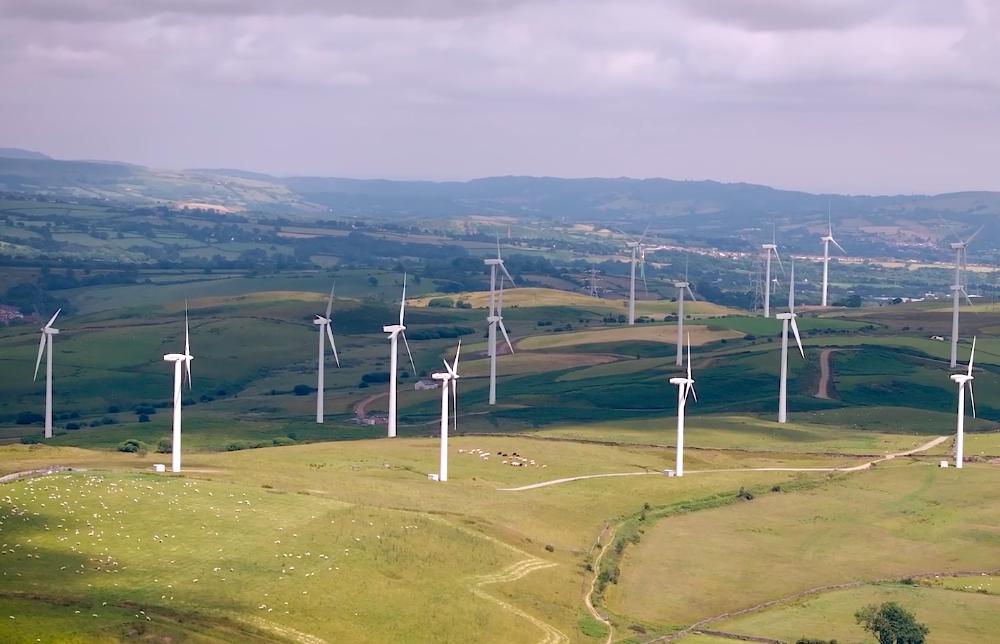
Joining the dots of the proposed Trydan Gwyrdd Cymru — Glyn Cothi Wind Farm
Sarah Eyles
‘Of all tyrannies, a tyranny sincerely exercised for the good of its victims may be the most oppressive’ C.S. Lewis
You can’t have failed to notice that there is a ‘gold rush’ taking place all over Wales. There are huge profits to be made from giant wind and solar farm developments, and the Welsh Government doesn’t want to miss out! But don’t panic, this is all done for our own good.
Trydan Gwyrdd Cymru is a limited company, wholly owned by the Welsh Government, recently established to develop large-scale renewable energy projects, including Glyn Cothi Wind Farm in Carmarthenshire.
The Welsh Government want to stake their claim along with Bute Energy, Green Gen Cymru, Wind 2 Ltd, Galileo Green Energy, RWE Renewables UK, EDP Renewables, Coriolis Energy / ESB, Renewable Energy Systems Ltd (RES), Ventient Energy, Renantis S.p.A, Amegni, Scottish Power/Eurus Energy, Lightsource BP, Statkraft, and other development companies (from many places in the world), all listed on The Welsh Countryside Charity (CPRW) energy map.
I’m glad someone is keeping track!
The Special Landscape Areas in Carmarthenshire, which previously protected regionally or locally significant landscapes within the county's planning system, were ‘conveniently’ removed as part of the revised Local Development Plan, making it easier for developers to gain planning permission through the Infrastructure (Wales) Act 2024.
[mid-content-banner]
Enhanced process
This Act established an enhanced process for consenting to major infrastructure projects, creating a ‘one-stop-shop’, and strengthening the compulsory purchase rights for developers. This Act applies to ‘Significant Infrastructure Projects’, between 50 and 350 megawatts in size. It’s almost as if certain people have been ‘in the know’ and have surreptitiously smoothed the way for these windfarm developers.
So what has happened to ‘Free, Prior, and Informed Consent’, as cited in the UN (and UK supported) Declaration on the Rights of Indigenous Peoples? The Welsh are an Indigenous People, a distinct social and cultural group sharing ‘collective ancestral ties to the lands and natural resources where they live.’ These lands and natural resources are ‘inextricably linked to their identities, cultures and livelihoods.’
Many such peoples maintain ‘language distinct from the official language’.
The Welsh are, in addition, a National Minority. The Council of Europe's Framework Convention for the Protection of National Minorities, to which the UK Government is a signatory, sets out the rights belonging to national minorities and the obligations to be respected by the Convention’s signatories.
These include: ‘Being able to influence public decision making for issues affecting persons belonging to national minorities’.
The new wind turbines proposed by Trydan Gwyrdd Cymru and other development companies are much higher than the existing ones in Wales, at over 200 metres tall. The Tower, also known as Meridian Quay, in Swansea is currently the tallest building in Wales, standing at 107 metres. Imagine two of these towers, one on top of the other, and that will give you an idea of the size of each of the hundreds of turbines proposed across Wales -twenty-seven in the Glyn Cothi development alone.
[lower-mid-content-banner]
Industrialisation
Industrialisation brings more industrialisation. Wind farms require connection to the grid and pylons to move high voltage electricity to where it’s needed. And all that electricity is not needed in Wales, which already exports more electricity than it uses.
This energy is destined for England and to sell abroad. So, wind farms are dependent on pylons, new substations, and increasingly on Battery Energy Storage Systems (BESS) – a ‘wild west’ industry.
The National Fire Chiefs Council has produced robust guidelines including the need for ‘Identification of any surrounding communities, sites, and infrastructure that may be impacted as a result of an incident’, but adherence to these guidelines is not a mandatory part of the Significant Infrastructure Projects planning consent. A BESS fire, often referred to as ‘thermal runaway’, can burn and reignite for weeks, and the poisonous fumes can drift for miles.
The wind farm ‘gold rush’ in Wales means that there is no co-ordination between development companies. Green Gen Cymru, for example, wants to site 28.5 metres high pylons (roughly equivalent to a 9-story residential building) through the Teifi and Towy Valleys. In addition, National Grid (a privately owned company, despite its name) is planning a major upgrade to the electricity transmission network in Wales, including a new line of 45+ metre high pylons, running from Bangor in the north to Swansea in the south.
Trydan Gwyrdd Cymru will also need a way of transmitting the energy generated from its wind farms.
However, there is no forward thinking to combine transmission. Each company has its own agenda and its own project timeline. So we could end up with rows of parallel pylons cutting across the countryside.
And then what — perhaps AI?
AI
Keir Starmer has set out a blueprint to turbocharge AI and has pledged £2bn towards its development. Wouldn’t it be convenient to place AI giant data centres next to the wind farms, to use the excess energy so they didn’t have to keep turning off the wind turbines when the grid can’t cope? This idea is called ‘zoning’, and whilst the upside is that it could provide cheaper electricity to areas hosting renewable energy, the downside is that these areas would become very attractive to energy guzzling industries. Data centres also use a huge amount of water, which Wales has in abundance.
So it’s not going to be ‘just’ wind farms but also everything else that goes with them.
Developers, and that now includes the Welsh Government, want to maximise profits. And there’s a rampant conflict of interest here, because the Welsh Government is supposed to be representing and protecting our interests.
But aren’t we supposed to love green energy and ‘do our bit’ to save the planet? The fact that our property value will decrease by around one-third, wildlife will be decimated, the beautiful landscape in which we live scarred, farmland irreparably damaged, and much of our tourist industry lost, is a huge hit. Lives, livelihoods and mental health will be negatively affected. The Welsh Government should be protecting us from this exploitation, but instead it is complicit.
And when exactly does Wales fulfil its part in Net Zero? When we have enough renewable energy for Wales? No, because we are well on track for that. When we have enough renewable energy to fulfil the needs of the rest of the UK? No, as some of this power is already being sold to other countries through electricity interconnectors. When there are as many wind farms sited in Wales as it can possibly contain? Well, in lieu of information to the contrary, this is what we will have to assume. So how many wind farms can we fit into Wales?
Minimum distances
In 2010 there was a proposed UK Government Bill to set the minimum distances from residential premises for wind turbines, which never made it through parliament. For wind turbines with a height of 150m–200m, for example, the minimum distance required was going to be set at 3000m.
The Welsh Government has never committed to a mandated setback distance, and instead suggests a 500m buffer. I’m no mathematician, but I know that means a heck of lot of wind turbines can, in theory, be sited in Wales. I’m sure that on worksheets deep in the bowels of the development companies lies the answer to that mathematical conundrum.
Imagine trying to get even a fraction of this industrialisation sited in the Cotswolds, on the South Downs, in Cardiff, or on Hampstead Heath (near where Ed Miliband resides)? There would be uproar. Yet the people of rural Wales are supposed to ‘suck it up’ and do this, apparently, for their own and the greater good. Wales is subject once again to ‘Robber Barons’ and Industrialists, who have always seen Wales as a ‘soft touch’ and ripe for exploitation.
The Welsh Government is not abiding by The Well-being of Future Generations (Wales) Act 2015, legislation designed to improve the social, economic, environmental, and cultural well-being of Wales by placing sustainable development at the heart of decision-making.
It legally binds public bodies to work towards well-being goals and to consider the long-term impact of their action. Instead, the proposed Trydan Gwyrdd Cymru developments, and similar projects, will inflict an industrialised landscape on future generations, resulting in damage similar to that caused by the mining industry.
So what can you do? Find out what is going on in your area and beyond, and make up your own mind about it. Join local protest groups. Experience has shown that these developers take the path of least resistance, so resist! Join the The Welsh Countryside Charity (CPRW), who are active in fighting the desecration of rural Wales.
It will be a tragedy if we sleep-walk into this piece-meal industrialisation, and wake up in ten years time to find that the Wales that we know and love has disappeared for ever.
Support our Nation today
For the price of a cup of coffee a month you can help us create an independent, not-for-profit, national news service for the people of Wales, by the people of Wales.
Get more trusted Welsh news
Choose Nation.Cymru as a preferred source in Google News to see more of our journalism.
