


Thu, 23rd July Cardiff 18°
Nation.Cymru wordmark
Advertisement

Opinion

Is Wales a principality? No – and it never was one
By NationCymru
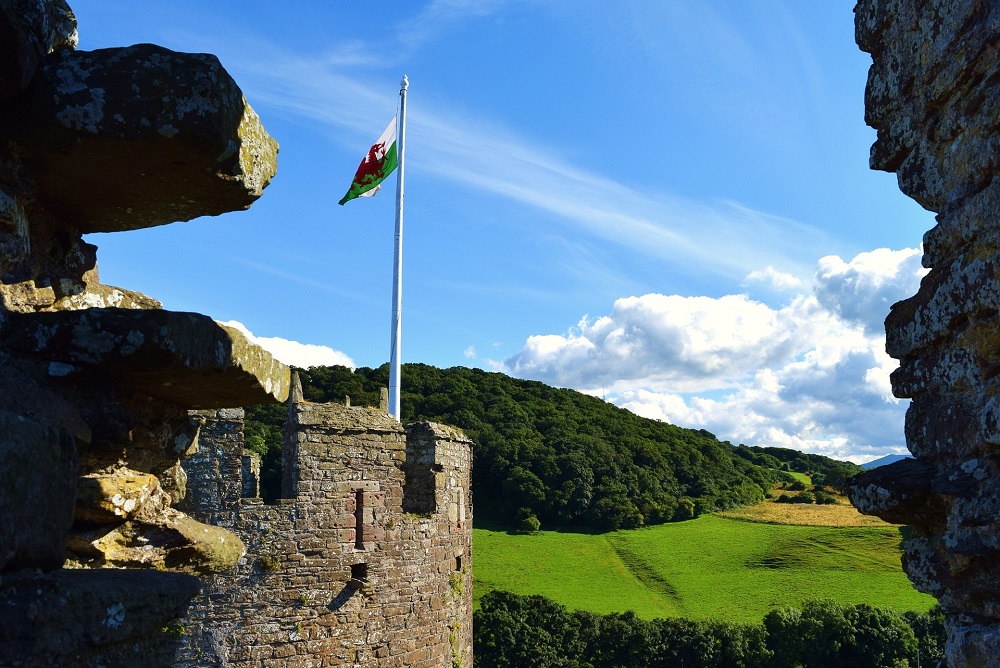
A castle and flag of Wales
Is Wales a Principality? No it isn't. Not even when this castle was built.

Ifan Morgan Jones

Is Wales a principality? No – and it never was.

Wales is often referred to as a principality in the media. And the fact that there is a Prince of Wales, and the national stadium is sponsored and named after the Principality Building Society, does rather encourage that interpretation.

But not only is Wales, as we know it today, not a principality, but it has never been one.

You may be already familiar with the argument that Wales is no longer a principality. It stopped being one, the argument goes, in the 16th century at the time of Henry VIII’s Laws in Wales Acts, when Wales was officially incorporated within the Kingdom of England.

This did reunite Wales as one unit and gave it a set border, and it was still referred to as a principality - as it is up to the present day.

However, it was not a principality as it wasn't a territory run by a prince (there wasn't even a Prince of Wales to run it between 1509 and 1608).

It was run by the same authority as the rest of the Kingdom of England - the King or Queen of England. And until the end of the 19th century, it had no form of ‘national’ institutions of its own.

What it did have was a Council of Wales and the Marches. This was a regional administrative body that operated out of Ludlow Castle.

But this council didn’t just cover what we now know as Wales but also, at various times, Shropshire, Herefordshire, Worcestershire, Cheshire and Gloucestershire, before being abolished in the 17th century.

Although its authority did cover the present-day Wales we know today, what this council definitely wasn't was a prince governing a principality.

[mid-content-banner]

United

Between 1301 and 1536 however, something called the Principality of Wales did exist, which was a principality, as it was given to the first non-native Prince of Wales, the future Edward II, son of Edward I.

However, this Principality of Wales was not the Wales we know today. In practice, it was made up of parts of the north-west of the country, Ceredigion, the north of Carmarthenshire, and Flintshire, which at that time included parts of the present-day county of Wrexham.

The rest of Wales was divided up among various marcher lords.

But just because, for some two hundred years, what we now know as Wales had a principality as part of its territory, doesn’t mean that Wales was a principality. It had a principality, called the Principality of Wales, within it.

This principality didn’t have the same borders as present-day Wales and, if it was reimposed today, only about 700,000 of Wales 3.2m population would find themselves living within its borders.

You could argue that Wales was a united principality for those brief moments when various native Welsh princes held most of its territory.

But having one Tywysog Cymru was always more of a 13th-century policy than something that was actually realised.

In practice, those that declared themselves Tywysog Cymru depended on a patchwork quilt of other leaders up and down the country to defer to them, and this quilt never did quite cover the whole present-day body of the country from head to toe.

They also didn't consider themselves mere princes subservient to a king as the translation of 'Tywysog' to 'prince' would suggest today. Tywysog (tywys = guide) meant leader.

Survivorship bias

We always have to be careful when looking back at the past that we don’t project our own modern understanding of what Wales is and the territory it covers back through history.

Both those who would like to consider Wales a Principality, and those who consider it a nation and country in its own right, would sometimes rather think that something called Wales with the exact present borders has always existed.

But that’s not the case for any modern country. If you look at any map of Europe from just a few hundred years ago you will see that the borders are very different. A 17th-century map of Germany illustrates this point quite well:
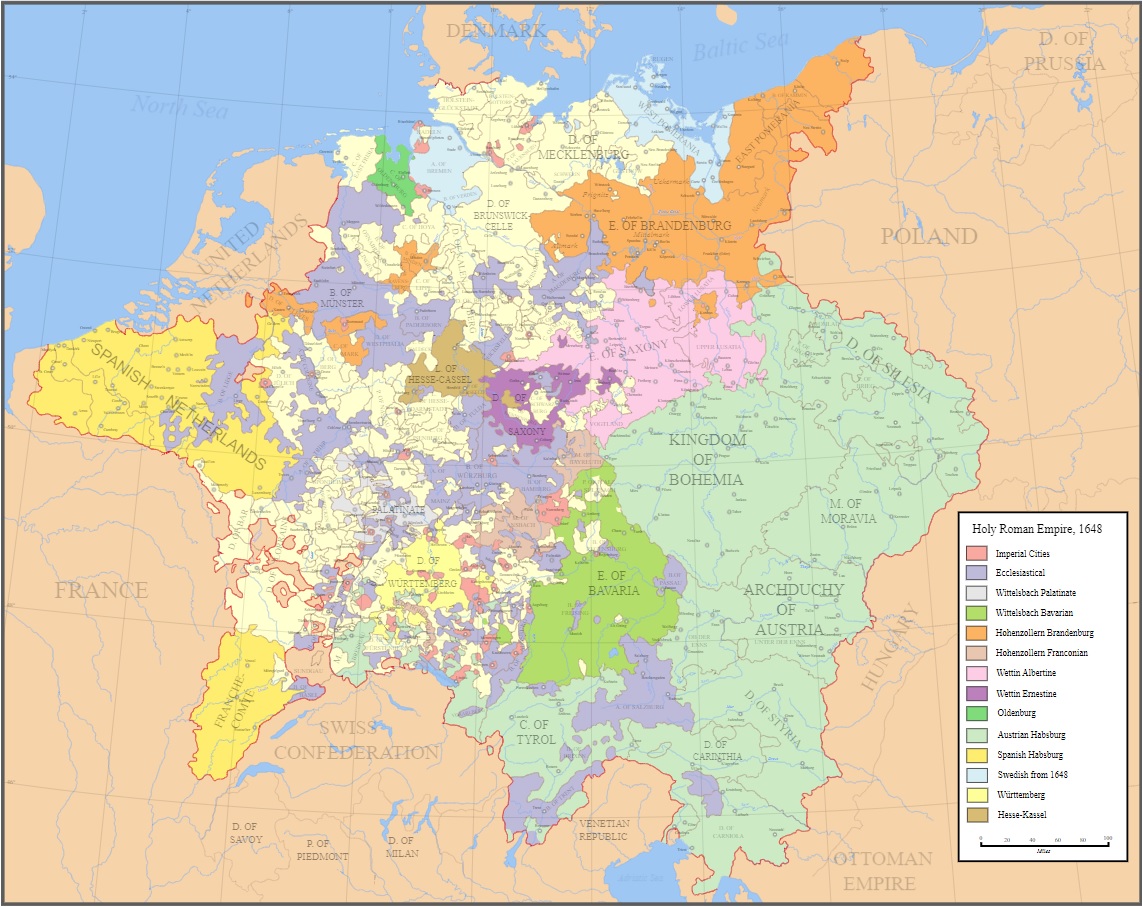
Germany in the 17th century. Picture by Astrokey44 (CC BY-SA 3.0).

Going back to before the industrial revolution, people didn’t really think of themselves as belonging to a country in the way we think about countries in our own present day.

An illiterate people who rarely ventured beyond the gate at the end of the valley didn’t have as much of a sense as we do today of belonging to a nation of people, and the feudal lords were part of a supra-national elite that often didn’t speak the same language as the peasantry.

People did have a sense of belonging to a communion of other people – medieval poets did think of themselves at ‘y Cymry’, a people who were Welsh.

But it was a much hazier sense of national identity than we have had since the industrial revolution, where - as the recent dispute between Chester FC and the Welsh Government over Covid rules showed - we can measure our borders to the millimetre.

Going back before the early modern period, especially, it wasn’t entirely clear where borders stopped, and they kept moving as various medieval leaders won and lost territories.

There is also an element of survivorship bias when we look at the histories of present-day nations. We think that because a nation exists now it must have always existed or it must have been inevitable that it would exist.

In reality, the arbitrary lines on a map we recognise as countries or nations today are largely accidents of history and could have turned out any number of different ways.

Yma o hyd?

But this isn’t something to get defensive about – the important thing from Wales’ perspective isn’t whether Wales existed before – as a principality or a country - but the fact that it exists now.

Wales today has its own parliament, government, laws, national media, national museum, library, sports teams, and other institutions that make up a country.

It has also been recognised as a country by the International Organisation for Standardisation (ISO), meaning that it is also officially recognised as such by almost every other nation-state.

Wales, as we know it today, has an interesting and varied history that tells us a lot about where we’ve come from and where we’re going.

We can't pretend that Wales was always united in the way it is now, or that its present shape was somehow predestined. Rather, we can take pride, perhaps, that a nation called Wales did emerge - against the odds - out of this difficult and fragmented history.

We’re not as much Yma o Hyd (still here) as something new made out of the past – and even today, we’re in a constant process of reinvention and re-creation.

The Wales we know today was never a Principality, and shouldn’t be referred to as such.

But it is a country – now - and it’s the now that matters, because we have it make it work.

For the price of a cup of coffee a month you can help us create an independent, not-for-profit, national news service for the people of Wales, by the people of Wales.

Get more trusted Welsh news

Choose Nation.Cymru as a preferred source in Google News to see more of our journalism.

Choose Nation.Cymru as a preferred source in Google News

29 comments

Stephen Phillips

I think when medieval poets thought of themselves as y Cymry, this was probably a linguistic thing, meaning native speakers of Welsh. I think this persisted until very recently. In my own family Weld speakers never used to call anyone Cymro or Cymry unless they spoke Welsh. If they didn't they were Saeson even if born and bred anywhere in Wales.

Reply
Dave

I had that experience as a kid as well, literally forced to speak Cymro. glad I did now though

Reply
Not My Real Name

Ouch. That hurts! But a fair point. I consider myself one of the Cymry with the ancestry to go with it. But my Cymraeg is limited. I am not an enemy of the Saeson (some branches of my father's tree are from across the border), but I would be appalled ot be described thus. Once, after I had sworn to never support the WRU again (something which still persists) my father - as a rather mean joke/test - bought me a cheap English jersey. I could not bring myself to put it on. Can't stand for GSTQ, can't wear of wave the butcher's apron or the red + sign. There is a psychological blocker there. Most of my colleagues and a big chunk of my friends are English and I value them all (except for Nev), but to be described as one of them would appal me. Please let me be Cymry? I'm working on the language

Reply
Welsh_Siôn

Do you also have a Scottish persona on the Wee Ginger Dug? ;) I'd be happy to consider you a Cymro (or Cymraes) - it's hard to tell which one from your posts ... I do know the NMRN in Scotland is female - Mae hi'n Albanes i'r carn.

Reply

In reply to Welsh_Siôn

Not My Real Name

No mate. Different person. Siôn and Stephen, thank you for the responses. My post was tongue in cheek for the most part, but I think it revealed to me a little bit of shame about my lack of knowledge of the language which was my mother’s first language. But I do kind of agree that we really should cherish our language and I want to do my bit

Reply
Stephen Phillips

I wasn't expressing my opinion, just that that was the way the words Cymry and Saeson were used in my experience. I don't know if that is still true. I grew up in the 1950's and that's how Welsh speakers used the words then and up to the 1970's in my experience, and beyond in some cases at least. Whether you regard yourself as a Cymro is not my decision or anyone else's anyway! Just yours. I don't think anyone else has the right to interfere there.

Reply
Ann

I can really identify with this! As a child my first words were Cymraeg but for several reasons I switched to Saesneg but my grandparents always used Cymraeg to me and I used to claim that we were bilingual as we spoke both languages. I could read and understand Cymraeg but just didn't have the hyder to use it. Did Ail iaith at both O and A level. When we visited relatives in Ceredigion I was always introduced as Saesnes although I knew exactly what was being said about me! After 35 years dros y clawdd I returned home and am now Cymraes ail iaith!

Reply
Aimee

Edward I made Wales a principality and ruled it through his son, who became the Prince of Wales.

Reply
Not My Real Name

A fascinating piece of history which crams in a lot of details I only knew a bit of. Thank you for that. But I think I will probably not try and argue against Cymru ever being a Principality, because quite frankly, there's too much there to remember and it ultimately rests on some technicalities. What I WILL say though, is you make a good point about the lords and the proper folks not being alike. This went for "Our" lords as much as it did the imposed French ones. Kings and Queens and Lords and Ladies will never act for the people. So let's never let them again. The Cymry never lost. But "our" lords have sold us out many times.

Reply
Phil Davies

The fact that the Millennium Stadium is now known as the Principality Stadium has done Wales's image irreparable harm. People around the world assume it is so called because Wales is a Principality. It is a complete waste of money for the building society since no one connects their brand to the stadium name. Imagine if the Eurovision Song Contest is held there what a boost it would be to our image if the venue was called the National Stadium.

Reply
Not My Real Name

And yet Principality Building Society is one of the best ones out there (by Building Society standards).

Reply
Welsh_Siôn

And a noted supporter of Cymraeg. Together with colleagues, I have previous experience of translating much of their website into Cymraeg so that customers can bank with them and use a range of financial services in their language of choice. Building Society it may be, but the Principality (the biggest one in our country, I believe), does not deal in BS. :)

Reply

In reply to Welsh_Siôn

Andrew Thomas

Could possibly of the account holders (not one myself unfortunately) call for a name change at the A.G.M. The Cymru Building society possibly? Just a thought anyone with other options please state so 🏴󠁧󠁢󠁷󠁬󠁳󠁿

Reply

In reply to Andrew Thomas

Ann

I am an account holder and a member of a customer focus group. I have complained about the name several times but not formally. Need to find out how to submit a motion to the AGM!

Reply
Cai Wogan Jones

It is also important to note that the title "Prince" had a different meaning in 13th century to that it was to acquire centuries later. It was a generic term encompassing any and all sovereign rulers - whatever they called themselves. Emperor, brenin, king, grand duke, doge, tsar, tywysog, or whatever. The title did not at that time signify and particular status relative to other sovereign rulers of the period. When Machiavelli wrote his famous book "The Prince" in 16th century Florence, he was using the title in this generic sense. He was providing advice for any and all sovereign rulers. It follows that Edward Longshanks, the Emperor Frederick II, the Pope and Llywelyn were all "princes". Principality just referred to the territories over which a prince's superior feudal lordship was recognized and accepted.

Reply
CJPh

Very important historic context you provide here, Cai. "Tywysog" (as in "one who leads us") existed in a distinct and separate context to 'Princes' elsewhere in Europe and Asia. Indeed, what we now refer to historically as 'Princes' change from place to place and era to era. The imposition of English terms on the Welsh system was in order to standardise rule across the island. The similarities are there, of course, but it is the distinctions that are vital. Otherwise culture, national identity and individual experience do not exist.

Reply
Y Cymro

Wales is not a princilpaity. We are a kingdom of kingdoms. The first & last kings of all Wales were Gruffydd Ap Llywelyn (1010- 1063ad) & Owain Gwynedd (1100 -1170ad). And there are only three true principalities in the world. Those are Andorra, Monaco & Liechtenstein. .

Reply
Jim Tones

Thank you for this welcome contribution. Most of Europe was a patchwork of small territories well into the 19th century. The kingdom of England was unique in Europe in being such a centralised state with a defined national boundary. Wales’ position was very much like that of mediaeval Ireland, with numerous small kingdoms, sometimes subject to a High King. Scotland included a substantial territory on its north-west coast, which was semi-independent until the 15th century. The Lord of the Isles made treaties with other powers. Ireland only became “united“ when The lordship of Ireland was set up by Henry 8th. Yet no one would seriously argue that Ireland was other than a national territory. It’s time to push back against the notion that Wales was never a country, compared to the kingdom of England, which was not the norm. Kings of England as Dukes of Aquitaine gave submission to the Kings of France when they were in France! Wales was no different from the rest of most of Europe. On a separate note, why the three feathers badge continues to be used beats me.

Reply
Cochyn Caerloyw

Yet another fantastic article by IMJ. It was about time that the 'Principality' fallacy, which was concocted solely to belittle our status as a nation, was firmly put to bed.

Reply
Stephen Owen

Excellent article, like every other country ''the important thing from Wales’ perspective isn’t whether Wales existed before – as a principality or a country – but the fact that it exists now.'' Wales exist now which is what matters, for example the USA didn't exist before it was created

Reply
Laura

This site gets there in fewer words: iswalesaprincipality.com

Reply
Geoffrey ap.

One identifiable border,one language, one religion,one set of laws, one common enemy That's a good definition of a country. Regarding the term prince, I believe this stems from the time of Augustus Emperor of Rome. He used the title, Prinicips, the first among equals, within the Roman Senate in preference to the title King, which was detested by the Roman people. As Cymru was part of the Roman empire and we're proud of the fact, it ment a very different thing to the now accepted one of second to the king.

Reply
Cynan

hmm. not sure. parts of what is today wales was a principality between the 13th and 16th centuries.

Reply
Not My Real Name

Original Cynan would know. Also it’s written in the article. Gwynedd and bits of Deheubarth

Reply
Michael

If I’m right, Owain Glyndwr was named King over all Wales, so not quite right there! And in regard to the national media, a media which is overly censored, limited to what it can show with money specifically coming from the licence fee, hand that feeds. Would be glad to see Nation Cymru take a different path to the likes of Wales Online. More or less a tabloid and step into the new light a bit more, talk about world politics, and take a Welsh point of view. Baby steps!

Reply
Cardiff City Forum 🕐 🏴󠁧󠁢󠁷󠁬󠁳󠁿

Nicely written, well done.

Reply
Carol James

So much of the rhetoric emanating from the English-adoring media still amounts to 'little old Wales', who are 'punching above their weight'. After the fuss over whether Kate Middleton could become the FAW's figurehead, we are now referred to as a "Principality", of all things, in front of 9 million people across ITV land, and countless others watching globally. We have to continue to call this out. Let us proudly tell the world who we really are.

Reply
Crwtyn Cemais

Llongyfarchiadau i chi Ifan, am ysgrifennu erthygl mor dda - trueni nad yw wedi cael ei gyhoeddi yn y Wasg 'quality/broadsheet' Seisnig hefyd - hen bryd i'w darllenwyr (y Cymry yn eu plith yn ogystal â'r Saeson) ddysgu mwy am ein hanes ni! Baswn i wedi hoffi gweld rhyw gyfeiriad at deyrnas Gymru-gyfan a'i chreuwyd am gyfnod - byr ond arwyddocaol iawn - gan Gruffudd ap Llywelyn yng nghanol yr 11fed ganrif. Cyfeiriad byddai'n chwalu'r celwydd nad yw Cymru erioed wedi bod yn un deyrnas unedig ac annibynnol - yn hytrach nag unrhyw fath o 'Dywysogaeth'. Pe byddai hynny wedi cael ei chydnabod gan y rheiny a ddyfeisiwyd baner Jac Yr Undeb a baner brenin/brenhines Lloegr, byddai symbol o Gymru wedi cael ei chynnwys ynddynt - ond wrth gwrs, mae ein galw ni yn 'Dywysogaeth' wastad wedi siwtio dibenion gwleidyddol-hegemonaidd gwladwriaeth Lloegr. Diolch byth bod gennym o'r diwedd - o leiaf - Senedd ein hunain.

Reply

Leave a reply

Replying to Stephen Phillips Cancel

I wasn't expressing my opinion, just that that was the way the words Cymry and Saeson were used in my experience. I don't know if that is still true. I grew up in the 1950's and that's how Welsh speakers used the words then and up to the...

Comments are reviewed before they appear.