


Opinion
Is the push for economic growth creating tension between the Welsh Government and the Future Generations Commissioner?
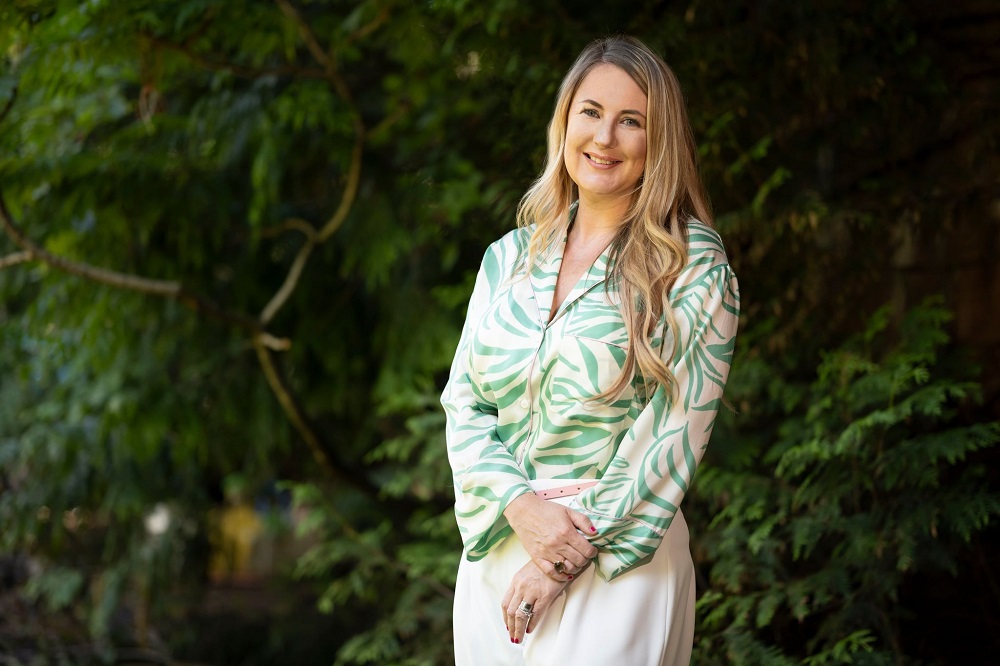
Martin Shipton
Is it possible that a rift could be developing between the Welsh Government and the body it created to actively promote one of the core values it holds dear?
It’s 10 years since The Well-being of Future Generations Act was passed by the Senedd, and a year later Sophie Howe became the first Future Generations Commissioner in the world.
She had previously been a councillor in Cardiff - the youngest in Wales when first elected in 1999 - a deputy police and crime commissioner, and a special adviser to the Welsh Government.
In many ways she’s a consummate Welsh Labour insider - well-connected for many years and trusted to follow the Welsh Government’s progressive agenda, with policies aimed at achieving carbon net zero and thus protecting future generations from the worst effects of climate change.
In office, she saw it as an important part of her role to ensure that those civil servants and other public sector managers who weren’t as keen on this agenda as its political proponents were gently persuaded to fall into line. Occasionally she called them out.
[mid-content-banner]
M4 relief road
A crucial moment for the credibility of the legislation, and indeed her role, was the decision that had to be taken over whether the proposed M4 relief road in Newport should go ahead or not. During the consultation on the scheme and at the public inquiry which followed, Ms Howe argued that allowing the project to proceed would make a nonsense of the Welsh Government’s sustainability policies. If the M4 relief road was allowed to proceed, smaller projects that caused lower emissions might as well go ahead too.
In the event, Mark Drakeford as First Minister decided that the relief road should be abandoned on environmental and cost grounds, thus simultaneously gaining plaudits from Ms Howe and severe criticism from those who believed the scrapped road would have made Wales a more attractive location for investment.
In January 2023 her term of office came to an end and Ms Howe became much sought-after consultant, having to date advised more than 30 governments across the world on how they could adopt the future generations model. For its part, the Welsh Government has expressed pride in a concept that has seen it described as “visionary” in the refined circles of those who take notice of such things.
Ms Howe was succeeded as Commissioner by Derek Walker, another Labour insider who had been chief executive of Cwmpas, the rebranded Wales Cooperative Centre. Prior to that he was head of policy and campaigns at the Wales TUC.
[lower-mid-content-banner]
Rift
It’s a current Cardiff-based policy officer at the TUC, Joe Allen, who posted a message on X that led me to speculate about a potential rift between the Welsh Government and the Future Generations Commissioner.
Mr Allen had not been impressed by a passage he had read in a newly released report from the Commissioner, which stated: “While progress has been made in promoting a foundational and circular economy, these approaches are not yet central or overarching priorities across government.
Instead, 20th-century economic strategies, such as growth and competitiveness, continue to be used as core measures of success without clearly articulating their purpose in improving the well-being of people and planet. Welsh Government economic policy continues to follow the UK Government’s direction.”
Mr Allen commented: “Depressing to see the Future Generations Commissioner's new report dismiss economic growth as a "20th-century strategy"(?) and criticise the Welsh Gov for paying attention to it.
“I guess we should be relieved to have had such little growth in the last 20 years?”
Utopian
The need for economic growth to secure increased prosperity is indeed accepted by both the UK and Welsh governments. The rejection of growth as an imperative is seen as a utopian position that won’t deliver material improvements for the impoverished. In this, the TUC is on board with the two governments.
Back in 2021, in the run-up to the last Senedd election, Mr Allen - who at the time was working specifically for what was then known as the Wales TUC - wrote a report for the organisation that expressed what thousands of workers saw as their priorities for the future of the country.
The first of five points was the wish for “a stronger, better funded public sector and pay rises for public sector workers”.
Another of the points suggested there was nothing incompatible between wanting “green” investment as well as growth: “After investing in strengthening the public sector, the next highest priority for the recovery is creating jobs through public investment in green infrastructure, including faster broadband, greener homes, and new electric transport.”
Mr Allen added in the comment: “Wales TUC research has set out how funding in this area could create up to 60,000 jobs over the next two years.”
Criticism
I asked Future Generations Commissioner Derek Walker how he responded to Mr Allen’s criticism of his latest report.
He responded: “I support economic growth which benefits the people of Wales and the planet. A key point of my report is that the pursuit of GDP growth at all costs may not be in the interests of current or future generations.
“Growth can lift people out of poverty and provide much needed jobs – but it can also widen economic inequality, see the extraction of wealth from Wales and result in using the Earth’s resources at a faster rate than they can be replenished.
“Wales requires a sustainable approach to economic growth. The Welsh Government has progressed fair work, foundational and circular approaches to the economy. It is time for these approaches to be at the heart of economic growth plans across the country.
“The Welsh Government should use every economic lever at its disposal to ensure economic policy serves the interests of people as well as the planet, otherwise our children and their children will have nothing left.”
Future Generations Report 2025
Mr Walker added: “Our Future Generations Report 2025 lays out what the pursuit of economic growth should entail:
Ensure everyone in Wales is paid a real living wage – that means all businesses in receipt of Welsh Government support should pay their workers a fair reward;
Double the size of the social enterprise sector - these businesses are more likely to pay a real living wage and retain wealth in our communities;
Invest in the circular economy so that repair and reuse of the Earth’s resources becomes the norm, not the exception;
Ensure that everyone in Wales can benefit from a transition to a green economy – to meet the First Minister’s green jobs mission, we need to ensure everyone in Wales can access the skills to benefit from these green jobs.”
The body Constructing Excellence defines the circular economy as representing “a development strategy that enables economic growth while optimising consumption of resources, deeply transforms production chains and consumption patterns, and redesigns industrial systems at the system level.
“ … Moving to a circular economy requires changes in all parts of the value-chain, from consumer demand, through product design, new business models and new ways of turning waste into a resource. It implies a fully systemic change, affecting all stakeholders in the value chain.”
This sounds like a long-term strategy rather than a quick fix. How do those in poverty cope in the meantime?
I asked the Welsh Government what it thought of the Future Generations Commissioner’s disparaging description of growth as a 20th-century economic strategy.
A Welsh Government spokesperson said: “On this one, we will be providing an official response to the FGC report in question in due course so we won’t be responding at this point.”
We haven’t heard the last of this.
Support our Nation today
For the price of a cup of coffee a month you can help us create an independent, not-for-profit, national news service for the people of Wales, by the people of Wales.
Get more trusted Welsh news
Choose Nation.Cymru as a preferred source in Google News to see more of our journalism.
