


Opinion
Is he up to it?
Ben Wildsmith
When Rishi Sunak took office as Prime Minister, there were a couple of hours after his opening speech, in which he promised to restore accountability to politics, when it seemed possible that we had seen the end of the Johnson/Truss circus of absurdity.
Then he reappointed Suella Braverman at the Home Office and that hope was over. Dysfunctional organisations produce disordered outcomes, and the Conservative Party is, at best, nearing the end of a cycle of existence if not permanent extinction.
So, in retrospect, it’s simple to draw a line from Sunak’s ill-conceived ‘Eat Out to Help Out’ catastrophe to the continuing performance of the government under his leadership.
For a moment, though, something about his affect and presentation suggested to many that he represented a return to the ‘grown-up’ politics we had lacked since the beginning of the Brexit campaign.
[mid-content-banner]
Managerial
He seemed managerial and self-effacing when viewed in relief to the egotistical bombast of Johnson and ideological recklessness of Truss. His policies may have been anathema to those of us on the left, or extreme right, but nothing about him during his leadership campaign suggested that he was an agent of chaos.
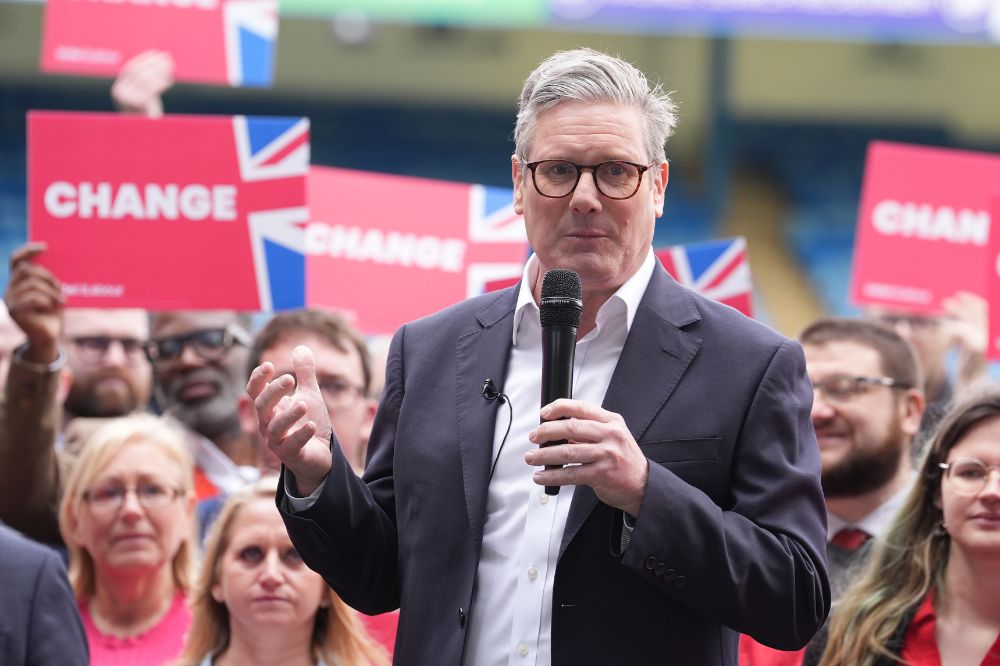
I wonder if the nation is experiencing the same blind spot when it comes to Sir Keir Starmer.
Objections to Starmer have tended to be ideological. The right distrusts his commitment to upholding Brexit, whilst the left decry a perceived unwillingness to redress inequality alongside a foreign policy that appears to shadow the government.
Neither of these groups have mounted a case that Starmer’s government might prove to be incompetent.
If anything, his detractors are worried that it will be too effective in implementing a programme they dislike.
Both sides warn of an immovable centrist force in government; a bland machine imposing its will so insidiously that by the time voters wake up to the changes it has made, they will be irrevocable.
Starmer’s record as a politician, however, suggests otherwise. As shadow Brexit Secretary, he wielded a lot of power in the Labour Party. Such support as it retained during the Corbyn years was heavily reliant on opposing the various government Brexit strategies.
There was a point during Theresa May’s premiership when party politics became almost irrelevant. Both parties were split and if either had advanced a coherent plan to get us through the post-referendum confusion, it would have been placed to shape the next decade.
[lower-mid-content-banner]
Second referendum
In pushing for a second referendum, Starmer lost the opportunity to secure a soft Brexit that would have respected the vote whilst preventing its most pernicious effects.
Swathes of traditional Labour voters were lost in the process. Jeremy Corbyn’s shortcomings as a leader are never far from the lips of UK politicians and commentators. Starmer’s misreading of the nation at this crucial time seems not to have made it into the accepted narrative.
More recently, Starmer allowed himself to be boxed into endorsing Israel’s threat to cut off water and power in Gaza.
This happened during an interview with Nick Ferrari, LBC’s veteran presenter, and it illuminates some dynamics in Labour’s current performance.
Ferrari is a grizzled and wily operator on the right of British politics, and he clearly smelt weakness during this encounter.
Under pressure, Starmer appeared to explicitly endorse war crimes and has had to spend the last six months finessing himself out of that corner.
I’m more forgiving than some on this particular incident. I don’t believe that Starmer is ideologically rabid enough to believe in the outcome he appeared to suggest.
One of his trumpeted attributes is that he is not a career politician; he’s a lawyer who has come into politics because of a sense of duty. He is, though, about to plunge into a world where Nick Ferrari is the least of his problems.
Everybody from Putin and Xi Xinping to unfriendly figures in the Civil Service will be lined up against him and they know he can be wrongfooted.
Ideological ballast
Centrist politicians lack the comfortable certainty of those with ideological ballast. Margaret Thatcher’s appeal lay in the simplicity of her arguments, much the same could be said for Tony Benn.
It is far trickier to sell the centre position, laden as it is with compromise, contradiction, and nuance. To pull it off requires the political instincts and single-mindedness of a Tony Blair or Bill Clinton.
Many close to Blair were surprised at his refusal to expel Jeremy Corbyn when the electric gardener was openly calling for a leadership election.
Blair’s position was that his strength derived from the structural integrity of the Labour Party as a recognisably progressive force and that to offload Corbyn would threaten that.
This week’s floundering over Diane Abbott suggests that Starmer, with Peter Mandelson in his ear, has mistaken political expedience for strategy.
The appeal of not being the Tories will evaporate upon contact with power, and the ex-Tory voters to whom Abbott has seemingly been sacrificed will be the first to reject Starmer when immediate solutions to endemic problems are not forthcoming. To whom will he turn then?
Support our Nation today
For the price of a cup of coffee a month you can help us create an independent, not-for-profit, national news service for the people of Wales, by the people of Wales.
Get more trusted Welsh news
Choose Nation.Cymru as a preferred source in Google News to see more of our journalism.
