


Sun, 19th July Cardiff 23°
Nation.Cymru wordmark
Advertisement

Opinion

Insufficiently other: Equal footing with Scotland should be a minimum demand for Wales

By Stephen Price
Eisteddfod Genedlaethol © Aled Llywelyn

Stephen Price

In spite of Wales' distinct culture, language and history, I've lost count of the times I've had to explain to people from other countries, including England, that we're a different people to the English.

From England acting as the name for these Isles in other languages, to the British flag often being the symbol for the English language, and so on and so forth, Wales and Welsh identity is erased in countless ways.

If we're lucky, we get to make do with an appearance as 'England and Wales', akin to the old days of 'Wales and Monmouthshire', but for many, the terms 'Britain' and 'England' are synonymous, which is very convenient for some.

From the 'highest mountain in England and Wales' *groan*, to news and weather reports and meaningless 'national statistics' and everything in between, Wales more often than not plays a guest or 'plus one' role, while Scotland and Northern Ireland are much more likely to achieve top billing.

It hit me how comfortably we accept lesser than the Scots the other week when receiving a gift of a Scottish ten pound note from a relative who effectively wanted it laundered and the worry of it being scrutinised by a sales assistant taken away (I'm on hand for anyone with similar insecurities).

"Sorry dalen, but what the 'ell is this?!"

[mid-content-banner]

Crown Estate

The issue of disparity between the devolved nations rears its angry head on quite the regular basis, but the question over the fairness of the situation has reached boiling point lately amid growing dissatisfaction with the Crown Estate.

Spurred on by the green energy gold-rush, along with scrutiny over the large swathes of land (and their profits) owned by a colonising power here in Wales, calls are being repeated for Wales to receive the same control over the Crown Estate that Scotland has.
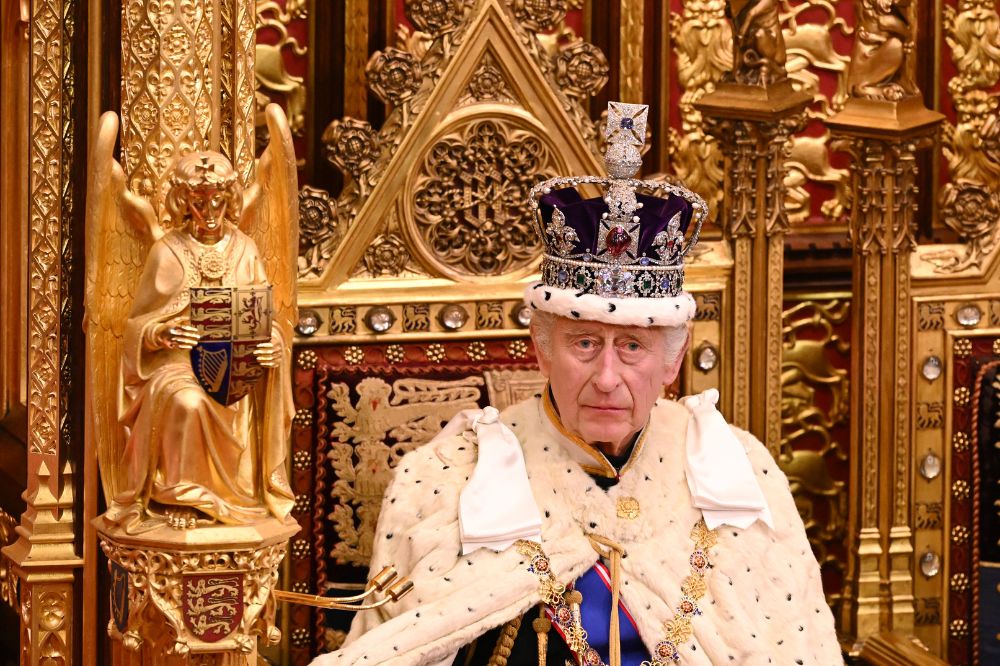
King Charles III during the State Opening of Parliament - Image: Leon Neal

But it's not just this one area where Wales lacks both the same level of power granted by the land next door.

Even down to the number of public holidays we have, Wales always seems to be last in line.

Devolution

The UK has had devolved governments since the late 1990s, which work alongside the Westminster Parliament.

There are different types of devolution across the UK's nations and parts of England.

For many years England, Wales, Scotland and Northern Ireland were run by the UK government, based in Westminster in London, but there were growing calls to transfer some of this power to Edinburgh, Cardiff and Belfast.

Public votes about devolution were held in 1997 in Scotland and Wales, and on both sides of the Northern Irish/Irish border in 1998 as part of the Good Friday Agreement.

The UK government in Westminster remains responsible for policies which affect just England, as well as overall policy in a number of areas.

These include defence and national security, foreign policy, immigration, citizenship and tax - although Scotland has its own powers to raise and lower income tax.

Wales

The Senedd's responsibilities include:

  • Agriculture, forestry and fishing
  • Education
  • Environment
  • Health and social care
  • Housing
  • Local government
  • Highways and transport
  • Some control over income tax, land transaction tax (known commonly as ‘stamp duty’), and landfill tax
  • Welsh language

Scotland

Scotland already had its own legal and education system. After devolution, it has become responsible for many areas, including:

  • Agriculture, forestry and fishing
  • Education
  • Environment
  • Health
  • Housing
  • Justice, policing and courts
  • Local government
  • Some transport
  • Taxes including income tax, stamp duty and air passenger duty
  • Some welfare powers
  • Crown Estate

Northern Ireland

Devolution in Northern Ireland is different to Scotland and Wales, with government powers divided into three categories:

  1. Transferred powers are controlled by the Northern Ireland Assembly
  2. Reserved powers remain with Westminster, but could be transferred in the future, these include prisons and civil defence
  3. Excepted powers cannot be moved to the Northern Ireland Assembly without special laws being made in Westminster. They include elections and national defence

The main powers of the Northern Ireland Assembly include:

  • Agriculture
  • Education
  • Environment and planning
  • Health and social services
  • Local government
  • Justice, policing and prisons
  • Control over air passenger duty
  • Transport
  • Culture, language and sport

[lower-mid-content-banner]

Wexit

Wales only has control over some areas of tax unlike Scotland. And Wales lacks the same power over justice, policing and courts.
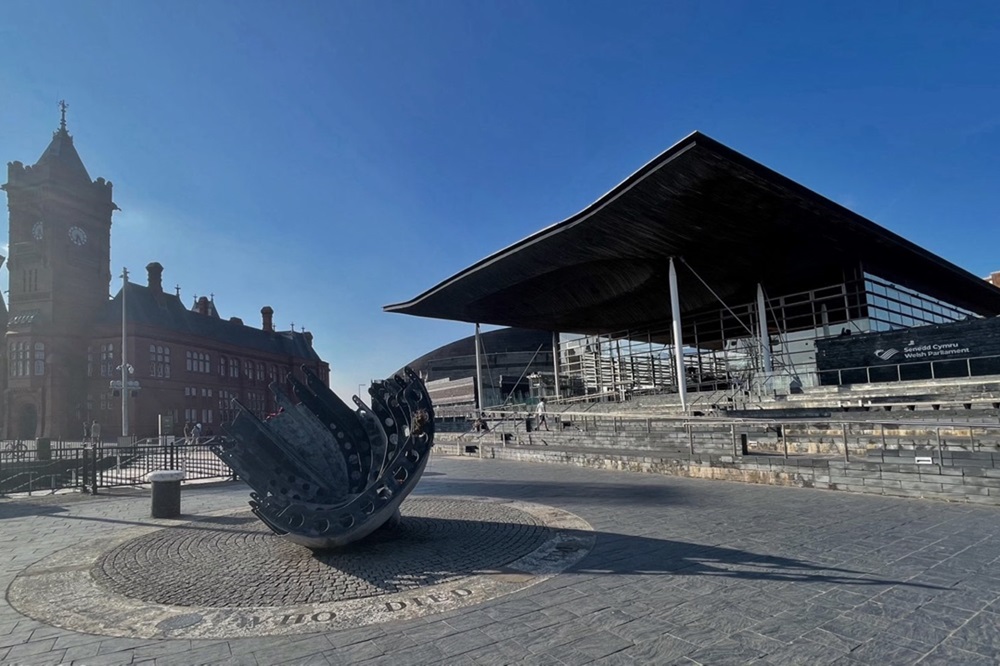
The Senedd and Pierhead Building, image by Sarah Morgan Jones

Concentrating on Scotland for ease, though, are we less of a different people to the English than our Celtic cousins, despite having greater numbers still speaking our native language?

Is it our smaller population or land mass?

Is it our reputation for being too friendly for our own good?

Or are we just easier to appease at the ballot box with our undying love of a rebranded red rosette?

Various Commissions have recommended the devolution of further powers, such as certain tax powers, policing or the legal jurisdiction, with some but not all of these recommendations having been implemented thus far.

This has led to Wales having fewer areas of responsibility than Scotland and Northern Ireland.

Before the UK blindly walked into the ongoing chaos that is Brexit, many were calling for an 'off the peg' status for the UK in line with others that have 'special relationships' such as Norway, but knowing what we were actually voting for was far too sensible an option for anyone to explore further.

Similarly, wouldn't it be easier, more sensible, for everyone if the devolved nations had equal powers? The same number of public holidays?

Raise your flag (higher)

But we shouldn't let equality with Scotland be our end goal.

The last thing we need are squabbles over the amount of crumbs our natural, historical allies have in comparison with our own.

Our goal should be absolute equality with England, too.

While the offer of independence is yet to be presented or (as I would have it) simply declared, in the words of Mike Hedges MS, "we need a full overhaul of the devolution settlement to Wales, Scotland and Northern Ireland."

Eisteddfod Genedlaethol © Aled Llywelyn

Even when combined, the populations of Wales, Scotland and Northern Ireland are dwarfed by England's, and Westminster will naturally reflect the will of the majority - and certainly not the will of the people of Wales.

While it still exists, we need a federal Kingdom united by equality - a devolved England, Northern Ireland, Scotland and Wales each having the same powers, no more and no less.

We need to be bolder, and not ask for the profits from Crown Estate lands, but the complete handover of the land itself, and greater openness over who else owns our land at our own expense.

We must demand that St David's Day becomes a public bank holiday. And if it's not given, it's taken.

And we need a nice little mug shot of Llywelyn ap Gruffyd or Owain Glyndwr on our notes.

Or, failing that, Eileen Beasley or Saunders Lewis in full-on rebel mode.

Let's make it happen!

For the price of a cup of coffee a month you can help us create an independent, not-for-profit, national news service for the people of Wales, by the people of Wales.

Get more trusted Welsh news

Choose Nation.Cymru as a preferred source in Google News to see more of our journalism.

Choose Nation.Cymru as a preferred source in Google News

42 comments

Annibendod

What you propose is better than the status quo Stephen. However, it would be helpful if you could address some of the traditional counter arguments for a federal UK. Namely England's weight of numbers. If the three nations + NI each had parity at a sub-state level, we would have to consider then how the federal govt was constituted. England would never agree to having a 25% share of that government. If England has a population share then we're not much better off than where we are other than we get more powers devolved. There are other issues as well such as how public revenues are collected etc. Whilst I have sympathy for the federal option, the lack of statehood for Wales remains a problem for me. My prefered option is a confederal union in which Wales, Scotland and England are each sovereign states which choose to pool sovereignty in specific areas as we need a high level of cooperation sharing these isles as we are. That then would become the remit of an elected "Council of the Isles". What institutions and powers we would share is something that would have to be negotiated but I suggest that each nation have a veto in order to ensure no one can push legislation on another by dint of their size. This is the only way in which I see any kind of union between our nations operating effectively whilst ensuring that each is governed by the government each democratically elects. Failing that there is the option of each applying for EU membership and applying its rules (I would imagine that we would wish to create our own treaties with one another as there is no guarantee that the EU will exist for ever). Failing that, I'd rather democratic statehood for Wales and negotiate treaties on a one by one basis with the other nations on matters such as FOM etc. What I cannot abide is continuing in this anti-democratic, dysfunctional Tory State as a politically emasculated sub-state nation.

Reply
Fymarni

I’ve always thought the “overweight England” argument is spurious. It is a classic example of letting the perfect be the enemy of the good. Yes, England is much bigger than the other countries. Yes that will cause problems at times. But compare it to the status quo, not some imagined ideal, it would still be better than the current, non-federal setup. It’s a significant improvement that doesn’t fix everything, but that still means it’s a significant improvement. I’m not disagreeing with much of what you say, I just think that federalism within the current state is not such a huge change and is viable, possible, wouldn’t take decades, and would be a vast improvement. Yes, it may need future changes, and yes it may be a step along a path, but a step in a positive direction.

Reply
Barnaby

The real test of imbalance in a federal UK will be whether Wales can veto England. If that idea elicits laughter you have your answer.

Reply

In reply to Barnaby

Jack

Wrong argument entirely. In a real federal syetm each country would have clearly delineated powers inside their area (call it Wales) and none in another area (call it England). There would remain a UK Westminster government with obvious powers such as defence, foriein affairs and a unifying currency.

Reply

In reply to Jack

Barnaby

Malta (pop 0.5m) can veto EU legislation.

Reply
Annibendod

We may have some common ground between us but the political problem of England's relative population size is far from spurious. It is currently wielded within the UK to impose legislation against the will of the smaller nations. It imposes mandateless majoritarian Tory governments via FPTP. It is at the very heart of what makes the UK undemocratic if you are Welsh or Scottish. I don't agree with your framing. Yes a federal UK could be a step in the right direction under the right arrangements. If it prove to be a winnable option in terms of a referendum I would go for it every day of the week in comparison to keeping the status quo, just as I did in 1997. But that will not stop me from aiming for a Democratic Welsh State. It's not some imagined ideal. It's the norm for nations. And it is what is right for us. Now how we fit alongside the other British and European nations is clearly yet to be determined. I cannot pronounce some predetermined outcome on that front but it is possible to talk about realistic options. Since the days of Gwynfor Evans, Plaid Cymru has spoken about an alternative union between the British nations. Nothing new in this and many examples of such arrangements to the east of the English channel. So I don't agree that it's some unknowable ideal. Yes, more of a step to get there. Perhaps a federal UK will be a step on the way, who knows? But it is a perfectly realistic and realiseable aim.

Reply
Barnaby

UK federalism will only work properly when England is dissolved and the Heptarchy reinstated.

Reply
Annibendod

Which England would not accept and doesn't really make sense constitutionally in the modern era. England would be more likely to split along north-south lines (see the Northern Independence Party) ... but even that remains a very low probability. What has a better chance of working is England's 9 regions returning elected members to a Council of the Isles, akin to the EU parliament alongside Scotland and Wales. Former UK territories such as the Isle of Man might wish to be members also - but the advantage would be that each nation would be a sovereign state with a veto.

Reply

In reply to Annibendod

Barnaby

Where you draw the lines is a different topic to whether England should be broken up. One of the reasons devolution in North East England wasn't successful is because the chosen region didn't align with people's sense of place. Now offer Yorkshire (pop 5.4m) the option of nation status (and the powers and financing that comes with it) versus remaining an insignificant province and see what happens. The reference to Heptarchy isn't a strict proposal on names and borders but a reminder that England was only ever a temporary alliance to defeat the Danes. It also doesn’t really make sense constitutionally in the modern era.

Reply

In reply to Barnaby

CapM

People from Yorkshire (to an very large degree) still self identify as English. https://www.bbc.co.uk/news/uk-england-humber-57998638 Yorkshire first English second for many but still English. A lot may want Yorkshire to have powers such as those held by the devolved nations but only a very tiny fraction want an independent Yorkshire. Similarly for all other English regions. That's a big reason why a federation of nations and regions if established would work against Scotland and Cymru's interests. As none of the English regions would want to be independent all would oppose Scotland and Cymru progressing towards independence Due to the advantages over English regions that progression would bring their competitors, Scotland and Cymru..

Reply

In reply to CapM

Barnaby

You seem to confuse "nation" with "independence". Would you also seek to deny Kernow nation status?

Reply

In reply to Barnaby

CapM

I think of Kernow as a nation even though a large majority of it's inhabitants do not. No other part of what is now referred to as England comes close to even Kernow's sense of nationhood.. It's pretty preposterous to think that the historic areas of Wessex or Essex have any sense of being nations never mind somewhere like the east Midlands. The only areas of Britain where a sense of nationhood exists are Scotland and Cymru (and following a long way behind Kernow). Having extra powers devolved to them would likely be welcomed by English regions such as Greater Manchester, Wessex etc but none would consider themselves to be nations.. Without the sense of being a nation the idea of it being an independent nation state doesn't arise.

Reply

In reply to CapM

Barnaby

Yorkshire independence is a real movement. It's not for you or me to decide if they want nation status within the UK. The right of self-determination is theirs alone. With respect your position is a familiar one - don't talk about it in case you awaken something long stifled.

Reply

In reply to Barnaby

CapM

I've not said that it's for me to decide that's just your strawman argument. I've based what I've said on what I am aware of about the issue, including - https://www.yorkshireparty.org/our-mission The answer to this neglect is a Yorkshire regional parliament, elected by and accountable to those who live here, and with the same kind of powers and formula-assured funding that the Scottish parliament has. The Yorkshire Party doesn't make any reference to Yorkshire being a nation or not being part of the UK

Reply

In reply to CapM

Barnaby

It's implied in that quote that they want to put Yorkshire on an equal footing with Scotland. That's clearly aiming for more than regional status. The word nation simply means "a large body of people united by common descent, history, culture, or language, inhabiting a particular country or territory". There's nothing there to prevent Yorkshire choosing to be a nation. And doing so doesn't diminish Wales if that's your fear. One person's identity shouldn't be threatened by how another chooses to identify.

Reply

In reply to Barnaby

CapM

"There’s nothing there to prevent Yorkshire choosing to be a nation." You're lobbing that red herring again. They could but every indicator shows that there is very little interest in Yorkshire for doing so even based on the definition you've used. And next to zero interest in Yorkshire for it becoming a nation state. Not one of the regions of England aims to become a nation state independent of a rump England or UK. Likewise neither does this type of aim exist in any of the regions of Cymru and Scotland. All the English regions would be content with devolved powers that fall well short of powers that define what a nation state is. Not so Cymru and Scotland . The extra powers that go along with being a nation state give them advantages over regions, even if those regions consider themselves and are recognised as nations eg Cymru. Therefore it's not in the interests of regions(nations) that are content with their status to enable those regions(nations) that wish to become nation states to realise that aim. Think of the crab mentality but with added economic, prestige, profile, power, food and energy security etc. motives to drag escaping crabs back into the bucket.

Reply

In reply to CapM

Amos

You've introduced the word state to create your own straw man. The only state today is the UK.

Reply

In reply to Amos

CapM

Duh! Nation state It's a accepted term. The UK is an example of one. A nation-state is a political unit where the state a centralized political organization ruling over a population within a territory, and the nation, a community based on a common identity, are congruent. From Wikipedia If Cymru and Scotland were independent they would be nation states as would England. I introduced the term in order to avoid ambiguity about what the term nation describes.

Reply

In reply to Barnaby

Annibendod

Sorry, but a lot of history has happened since Alfred. It isn't the strongest point, besides, it's a distraction from the original point. On that we do agree. England's political weight is a problem within the UK's constitution. Until we extract our political agency from the UK's dysfunctional anti-democratic constitution we will always land up with England's political choices and our governance dominated by the Tory State.

Reply

In reply to Annibendod

Barnaby

You have to consider the situation where a freshly independent Wales has a belligerent dysfunctional neighbour intent on making sure independence fails. That's far less likely if England has strong regional government. The argument for independence needs to be much better that simply escaping woeful Westminster governance.

Reply

In reply to Barnaby

CapM

You're the second commenter saying that Cymru is better off in the UK by arguing that an independent England would be " belligerent dysfunctional neighbour". You seem to have overlooked the fact that we are currently part of a UK overwhelming dominated by that same " belligerent dysfunctional neighbour".! If England wants "strong regional government" that's up to it to achieve. It's a big enough challenge to gain independence for Cymru without the prerequisite of dragging a ." belligerent dysfunctional neighbour" to a better place.

Reply

In reply to CapM

Barnaby

Look at the damage being caused to Ireland since Brexit. Without their EU membership and support from America it's not difficult to imagine a future where Ireland was "welcomed back to the motherland" by poor economic circumstances. Which, of course, is exactly how the union with Scotland was formed.

Reply

In reply to Barnaby

Annibendod

No, I'm not seeing it.

Reply

In reply to Annibendod

Barnaby

If an economy collapses because it's been undermined by a belligerent actor or simply exposed to global events at an early stage, it has to be bailed out and whoever bails it out calls the shots. Look at Greece. Ireland is only still independent because they had powerful and wealthy allies in the US and more recently the EU. This isn't an argument against independence as CapM believes. It's an argument for building global relationships and having a rock solid foundation for the transition to independence.

Reply

In reply to Barnaby

CapM

I conclude that the anti independence arguments have moved on from the Welsh are too stupid to run their own country via Wales is too poor to be an independent country to the latest offering -England is too nasty to allow an independent Wales to exist. I see this decay of the anti independence argument as progress.

Reply

In reply to CapM

Barnaby

We saw it in Covid when central government worked tirelessly to undermine devolution. There's no real explanation as to why the Johnson administration opted not to use - and amend if needed - the existing Civil Contingencies Act which baked in intergovernmental cooperation, instead choosing to rush through a completely new Coronavirus Act which dumped loads of new powers and responsibilities onto the devolved governments, unless the plan was to have them fail so the "real" government could rush in and save the day thus putting the failed experiment to bed. Obviously it backfired because the devolved administrations ended up showing up central government but that doesn't mean it wasn't the intention.

Reply

In reply to Barnaby

CapM

That has hallmarks of a conspiracy theory. A lot of the decisions made by that government on Covid (and Brexit) could have the cunning plan explanation applied to them if incompetence, ignorance, being hopeless and useless, mendacity and plain stupidity are all ruled out

Reply

In reply to Barnaby

Annibendod

I've long advocated a federal England but that's their business.

Reply
Gwyn Hopkins

Well said. The political situation in Wales today is a legacy of its barbaric conquest by England in 1282. Thereafter the colonialist English Establishment tried to eliminate Wales by incorporation into England and destroying its language, culture and history. It enacted 3 laws to do so: The Statute of Rhuddlan (1284), The Acts of Union (1536/43) and the Education Act (1870). With their enormous majority of English MPs (84%), their descendants rule us today with a scarcely abated colonialist mentality with Wales being kept down and enduring many examples of gross discrimination.

Reply
Padi Phillips

Please explain to us how the Education Act of 1870 destroyed Welsh language, culture and history? There is not even a mention of Cymraeg in that act, or indeed, as is often claimed, any stipulation as to which language is to be used in educating children. The act didn't even establish education as compulsory. The Laws in Wales Acts of 1534 and 1543 had very little impact on Cymraeg, so much so that by the middle of the 17th century it was necessary to legislate that shipping logs in Cymraeg were acceptable, and that for the vast majority Cymraeg remained the normal, (and for most the only) medium of everyday intercourse until well into the 19th century. Those laws may have contained clauses that disbarred monoglot Welsh people public office, but I suspect the sheer impracticality of implementation soon saw those clauses being ignored. As for the Statute of Rhuddlan, that was merely something cooked up by the elites, and in those days the concept of the nation state as we understand it did not exist. And in any case, that piece of legislation would have had zero effect on the vast majority of ordinary Welsh people. It would have had an effect on the nobility, but they are the enemy anyway, no matter what language they speak. None of the above means that Wales wasn't oppressed, but that constantly playing the victim blinds us to what was really going on and Welsh people's widespread collusion in the process, even though sometimes this was less than willing participation. We should be focusing far more on what affects us in the here and now, and not on some alleged slight in the dim and distant past that is highly open to interpretation. It's far more complex that English=bad and Welsh=good. If a study of Welsh history tells us anything it is that it's perhaps time to grow a backbone and strive to build the independent and free Cymru we would like to see instead of wailing pitifully in the mist about how bad 'we' have been treated in the past. And indeed, why focus on the negative? There is so much positive to be seen in our history too, but that doesn't fit the narrative of those who want to proclaim perpetual victimhood. 'Ry'n ni yma o hyd' - we're survivors, not victims!

Reply
Annibendod

The cultural shift from 1870 to 1920 is one that is not properly appreciated. A couple of things going on which impacted on Cymraeg. In the earlier era, Wales had been made literate with the now famous schools and had a thriving press. By the 20's, the chapel was losing ground to the new wave of socialism and a new nascent media of film, radio and television, almost entirely in English, was taking off. I will always remember what my grandfather (born in the late '20's) said about losing Cymraeg. His parents were 1st language speakers, farming stock from Ceredigion. His older siblings spoke Cymraeg. But on arriving in the Rhondda, they were told not to speak Cymraeg because Wales needed to modernise and the way to do that was to speak English. He would often remind me that it was people in the Labour party who said it. When you then roll on another 50 years to the jurassic figures in Welsh Labour in that era, the line to their anti-Cymraeg bigotry is clear to see. Welsh people stopped speaking Cymraeg because they chose to. Some were suckered into the majority culture chauvinism. Others simply followed. What is clear is that those communities that anglicised lacked the belief that their native tongue was valuable to them ... and how their descendents regret it (for the most part).

Reply
S Duggan

Ultimately, and as touched upon here, the size of England's population rules out a federal British isles. The Confederate model would be a good way to go as we'd have independence but as part of a number of countries sharing the same group of islands we could pool resources in some important areas, such as defence. Many of the issues facing Cymru will only be resolved as an independent country. We can begin the road towards independence by resolving certain issues now - declaration of the 1st of March a public holiday, refusing to pay anything to the Crown Estates (while continuing to demand the area be devolved) and charging a levy on water and electricity given to England. Cymru has to start standing up for itself on the road to full independence.

Reply
Linda Jones

A federal UK is certainly a better option than the current undemocratic system we have now. It would be vital for each country to have an equal number of representatives at the top table regardless of population size.

Reply
Annibendod

Which is why England would never agree to it.

Reply
Jack

See federal Australia. States run their own Parliamnt (call it wales) with clearly delineated power within that state. Then their is a fedral Parliament in Canberra to deal with whol country issues such as defence, foreign affairs, a unifying currecny and so on. That patrliament has a0 the Lower House where real power lies based on seats by popualtion and an elected Upper House with limited power, with equal number of senators per state. All sorted due to a written constitution.

Reply
Jack

Federal issue. Simple. Look at Australia which has a massive difference between large states and small states in both wealth and population. It has the federal (top) government in Canberra and each state has a local 'country' government Canberra. The Upper House - with limited House of Lords type powers - is elected on same number of Senators for all states.b) The lower house reflects the population in each state and is where the PM and government sits. Powers are clearly delineated between state and federal governments due to Australia having a written constitution (hint)!

Reply
CapM

Do the inhabitants of any Australian state or part of self identify as not being Australian? If not it probably goes some way to explain why it's "sorted"..

Reply
Barnaby

Most of the indigenous population probably. Especially since they were recently denied recognition in the constitution.

Reply

In reply to Barnaby

CapM

That's an issue that I chose to ignore as my reply was to the "sorted" of Jack's, whose comment I suspect may not have considered the position of indigenous Australians at all. I don't know anywhere near enough about the issue to comment on how indigenous people and peoples view the concepts of nations and nation states.

Reply
John Ellis

'And Wales lacks the same power over justice, policing and courts.' Indeed, that's the case. But in respect of the reasons for that disparity, Mr Price asks: 'Is it our smaller population or land mass? Is it our reputation for being too friendly for our own good? Or are we just easier to appease at the ballot box with our undying love of a rebranded red rosette?' The reality is that it's none of those things. The reason is that, first, Wales was gradually conquered and subdued by England while it was still a pretty fluid and shifting society, politically speaking, and then was later legally and wholly integrated into England in the mid-sixteenth century. While Scotland was never conquered and subdued in that sort of way, but was first joined to England by nothing more substantial than the 'union of crowns' in 1603, and wasn't organically integrated into what ultimately came to be known as 'the UK' until the 'Act of Union' in 1707. By which time Scotland had already evolved its own distinctive legal system which nobody at the time of thereafter seems to have attempted to integrate with England's. And the consequence, rather naturally, was that associated competences which evolved in later years - e.g. police forces and a more modern prison system - also remained separate from England's.. Whereas in 'conquered' Wales, the 1950s legal textbook entry 'For Wales, see England' applied, and, even after devolution, still considerably applies. That's a logical nonsense, and I'd argue that devolution should mean essentially pretty much the same thing in Scotland, in Wales and in Northern Ireland - perhaps with some differences in NI in consideration of the specifics of the Belfast Agreement. But I can't see it happening right now, because the Westminster instinct is always to maximize control from the centre, and the brief '90s flirtation with the idea of devolution which temporarily created a counter-culture has, post Brexit, been replaced by a more assertive 'British' nationalism.

Reply
Stephen Price

Diolch John, I was being flippant (and sometimes think I'm funnier than I am) there but thanks for providing that info, I do appreciate. As a side note, if you'd ever be interested in writing any op eds or features etc on that subject or more do let me know! [email protected]

Reply
John Ellis

It actually hadn't occurred to me that there was a touch of the 'tongue in cheek' in your opinion piece here! As for the invitation, I'm just an old feller who, nearly seventy years ago now, became sufficiently intrigued by the way that our politics was playing out that I determined to try to get my head around why it was as it was and how we got to where we were - and are. And I'm still doing it. But I'll try to bear your invitation in mind!

Reply

Leave a reply

Replying to Jack Cancel

Federal issue. Simple. Look at Australia which has a massive difference between large states and small states in both wealth and population. It has the federal (top) government in Canberra and each state has a local 'country' government...

Comments are reviewed before they appear.