


Opinion
In praise of Paul Flynn
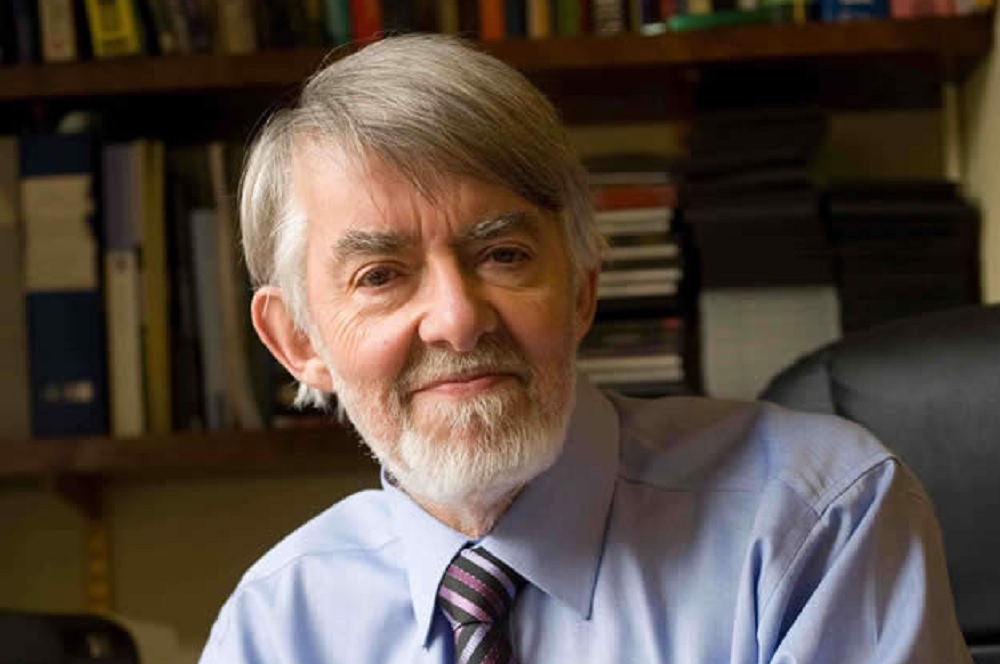
Desmond Clifford
Paul Flynn, the late MP for Newport West, was hailed unexpectedly this week among the commentaries on Citizen Andrew, formerly known as Prince.
Assiduous researchers pulled extracts from Hansard, Parliament’s verbatim record, and found Flynn in 2011 opining that MPs should “remove the bandages from our mouths” in respect of debate on the Royals.
Flynn made a sensible case for scrutiny and transparency on Andrew’s trade role. For having the temerity to broach this topic, Flynn was smacked by then government minister, now leader of the Liberal Democrats, Sir Ed Davey.
In full-on Toad Mode, Davey accused Flynn of “spreading innuendo” and praised the then Prince’s performance as trade envoy saying he did an “excellent job”.
Davey has been giving it large about Andrew this last week or two and now says he regrets his 2011 comments. I’ll bet.
No doubt we all say things we regret, but you wonder what other rubbish he’s said without checking the facts first?
Flynn was a Republican, a fair choice in a democracy. In the Senedd, all of Plaid Cymru and a fair chunk of Labour are Republicans.
What Flynn wanted on the that day in 2011 was to ask questions and to participate in reasoned debate about the performance of Britain’s publicly funded international trade representative.
For that, he is justly celebrated this week: the man who saw the king with no clothes on and told it like it is.
I concur with the posthumous praise for Flynn but there’s something a little strange here.
We’re saluting the memory of a politician who did no more than articulate what people at the nearest Newport bus stop might be thinking. In return for which he was shat upon by Sir Ed Davey in that simpering voice reserved by politicians for talking about royalty.
A chap called Walter Bagehot wrote the textbook on parliamentary convention. Given that he died in 1877, I suggest that this is part of the problem.
Bagehot defines monarchy as the “dignified” part of the constitution, meaning, in practice, that subjects – for we are not citizens - must suspend some critical judgement if it’s going to work. If you don’t, you’re left with some very ordinary people and a dressing up box.
And if you do engage – no, you’re not mad. We do something very similar at church or watching Manchester United, the National Eisteddfod or a Taylor Swift concert.
We inject juice into life by cultivating a collective sense that there’re things bigger than us and our daily grind. It’s just a question of what we pick.
Scrutiny
But respect is not submission. Monarchy is an institution of state and should be subject to appropriate scrutiny.
Surely it’s reasonable for those responsible for Palace administration and expenditure to take questions from elected representatives from time to time.
They’re clever people and would perform as well as any other public servants. Such transparency would root monarchy more deeply in the nation’s affairs, and make it appear more engaged and relevant.
With a little care on procedure, this would help monarchy, not undermine it. Time to ditch Bagehot and get real.
At any rate, it’s pleasing to see Paul Flynn accorded a new respect. He was a Newport MP for more than 30 years but never held government office and often passed under the radar.
I knew him a little. I first became acquainted working in journalism in the 1990s and, later, for the pre-devolution Welsh Office.
He was invariably friendly. He was genuinely witty and maintained a caustic commentary on New Labour and other pieties – a bit of a journalist’s dream.
Shaking his hand
One evening in 1998 I was walking along The Strand with the Secretary of State for Wales and a few Labour MPs. From across the road, we heard voices coming from a group of young Asian men, “It’s him, it’s him!” “Yeah” shouted another, “Mr Flynn…Mr Flynn..!”
They walked straight past the cabinet minister and gathered around Paul Flynn, slapping his back and shaking his hand. In the weeks before Flynn had taken a position advancing the case for legalising cannabis.
My recall of selfies must be false memory syndrome – the selfie hadn’t yet arrived – but it was the only time I ever saw anything like that happen to a politician.
Flynn was a life-long devolutionist and among a small group of Labour supporters who campaigned for it both in 1979 and 1997. He thought seriously about pitching for a Senedd seat but decided he was too old – a misjudgement, perhaps, since he lived for another 20 years and passed away as an incumbent MP.
And what a shame! His wit and verve would have electrified an often dreary chamber.
Paul never held office but was appointed by Corbyn to the shadow cabinet at the age of 81, a gerontological achievement topped only by William Gladstone.
He was a brilliant backbencher, independent and unbiddable.
Whenever he spotted a passing bandwagon, that’s where he’d aim his dart-gun. He was among the few in Labour who resisted Blair’s charm.
Until Iraq, almost everyone wanted to be Blair’s gang. Flynn was a Gordon Brown Menshevik from day one.
He was, I suspect, an uncomfortable colleague and perhaps he under-estimated the difficulties involved in exercising power. Not all his criticisms of government were justified.
Of the many Welsh MPs who’ve written books over the years, Flynn’s were by far the best and most entertaining.
His “Dragons Led by Poodles: Inside Story of a New Labour Stitch Up” (1999) records entertainingly the travails of Welsh Labour after the demise of Ron Davies.
'Reform or die'
He essentially argued that Labour needed to “reform or die”. As we can see now with clarity, it chose the latter.
“Commons Knowledge: How to Be a Backbencher” (1997) is written from a base of experience few could match and has acquired the status of handbook for parliamentarians or anyone who wants to know what it’s really like to be an MP. His books are hilarious and classics of the genre.
Of all the many politicians I have met, Flynn was among the 3 or 4 I’d most like to spend an hour in the pub with.
I last bumped into him a few years before his death outside the Senedd in Cardiff Bay. He was quite infirm at this point but cheerful and warm.
We spoke in Welsh; he was very proud to have learned the language and spoke it excellently, he published a volume of memoirs, “Baglu ‘Mlaen”.
Flynn was principled, passionate and fearless. He was gentle in manner but would kowtow to no one. It’s pleasing to see him having a moment.
Support our Nation today
For the price of a cup of coffee a month you can help us create an independent, not-for-profit, national news service for the people of Wales, by the people of Wales.
Get more trusted Welsh news
Choose Nation.Cymru as a preferred source in Google News to see more of our journalism.
