


Friday, 17th July 2026 Cardiff 22° · Clear sky
NationCymru A news service by the people of Wales, for the people of Wales.

Opinion

If you want quality public services - you have to pay for them via taxes
By Emily Price
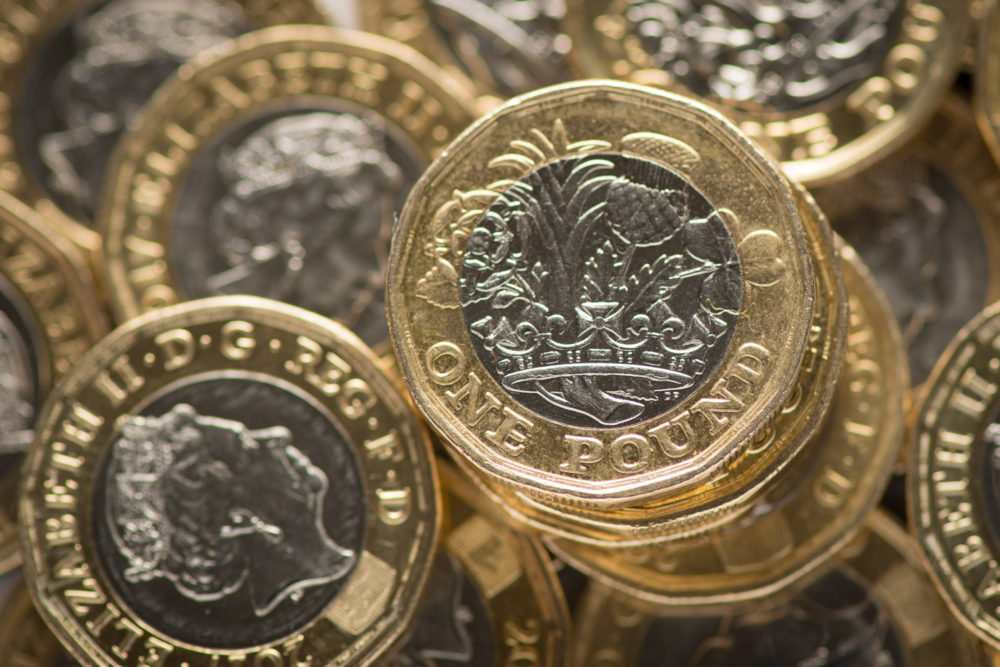
One pound coins. Photo Dominic Lipinski/PA Wire

Mike Hedges - MS for Swansea East

Taxation is the price we pay for being part of a civilised society. Taxation exists to pay for the public services we all need and use.

Too many people believe that we can have the same quality of public services as Scandinavia but have a taxation system which is more like that of the USA.

When you look at the cost of private education and private health care, it puts into perspective the value for money we get from our taxation system.

It is not by random chance or serendipity that those countries with the highest tax levels have the best public services and those with lowest tax levels the poorest.

It is because taxation is necessary to raise the money to pay for the public services, we all need.

[mid-content-banner]

Savings

Whilst there is a commitment by the government not to increase the rates of income tax, there is no reason why dividend income cannot be taxed at the same rate as income tax and for those who pay income tax and tax on dividend income to have it aggregated and to get taxed accordingly.

Currently dividend taxation is substantially less than income tax with a rate of 8.75% on earnings from £12,571 to £50,270, 33.75% on earnings between £50,271 and £125,410 with an additional rate of 39.35% paid on earnings over £125,410.

We need to have efficiency savings across public services. It is not about reducing numbers in employment but about using them more efficiently.

Health has an opportunity using AI to improve productivity and produce substantial efficiency savings. AI enables more accurate diagnoses, predicting patient outcomes, patient monitoring and personalizing treatment plans.

AI-driven tools can analyse medical images faster and with higher precision than traditional methods. It can also enhance patient care through wearable devices that monitor health in real-time.

We could also have better and more efficient use of equipment, keeping designated operating theatres available for routine but necessary operations such as cataracts and orthopaedics to improve the productivity of surgeons and the outcomes for patients.

[lower-mid-content-banner]

Personalised 

Efficiency savings are available in education administration and by the confederating of small schools in the same area under one headteacher. AI can provide personalised learning experiences, automated administrative tasks, and improve the accessibility of educational resources.

On council tax the average Band D council tax bill in Wales this year is £110 lower than in England and more than 256,000 low-income households in Wales receive support with their bills through the council tax reduction scheme. Also, in some council areas most council taxpayers are in bands A, B and C.

Whilst council tax is based upon the value of property, and it replaced the much-disliked poll tax which itself had replaced the rates system based upon the rateable value of a property which is still used to tax businesses, it is not fair. The principle is fair; the best indicator we have of wealth is the value of houses and property owned.

The value of council tax bands was set on 1 April 2003 so the value of all properties will have increased substantially since then and the relative values will also have changed.

Band A is for properties up to £44,000; Band D is for properties between £91,001 to £123,000, with Band H is for properties between £324,001 to £424,000.

Unfair

Council tax is set on band D and all other band payments are based on that. Properties in Band A pay 75% of the amount charged on band D. Properties in Band H pay twice the amount charged on band D.

A £40,000 house will be charged two thirds of the amount of council tax paid for a £120,000 house despite being a third of the value.

A £420,000 house will be charged twice as much in council tax as a £120,000 house and three times as much as a £40,000 property despite being worth substantially more.

This is unfair because the payment is not proportional to the value of the property. I continue to call for all houses to have a Council tax set as a fixed percentage of the value of the property.

We know that ratepayers in the retail, hospitality and leisure sectors have received more than £1 billion in additional business rates support over the last six years and almost half of all business ratepayers pay no business rates. We also know that for many retailers it is rent rather than rates which is the most expensive.

I have had personal experience of a business in hospitality whose costs increased each year. They paid combined rent and business rates; the landlord said the increased bill was due to increased rates. When I investigated the business was small and zero rated for rates.

Finally, if you want quality public services you have to pay for them via taxes. Asking for more expenditure but less tax does not create a coherent economic policy - remember Liz Truss and her budget.

For the price of a cup of coffee a month you can help us create an independent, not-for-profit, national news service for the people of Wales, by the people of Wales.

Get more trusted Welsh news

Choose Nation.Cymru as a preferred source in Google News to see more of our journalism.

Choose Nation.Cymru as a preferred source in Google News

52 comments

TheWoodForTheTrees

Absolutely spot on. Years of the Tories obsessing about tax cuts while driving the country into the ground has to be corrected through fair taxation in this country. It is currently inherently unfair as lower taxes benefit rich people the most while they have the comfort of knowing they can afford good housing, private health care, private personal care. The rest of us can't and to believe we will be supported in our needs by public funding is completely deluded unless taxation is reformed. Will someone also please explain this to the current disappointing Labour Government.

Reply
Neil Anderson

No, we don't, Mike. Taxation - the fundamental reform of which I firmly support and at which the thrust of your article is mostly aimed - doesn't pay for anything. That doesn't mean tax is unimportant - it is critically important for managing inflation. Except at the top end - where the wealthy pay much much less tax than they should - from where much of our recent inflation has arisen. Proves the point, somewhat. Luxury goods - property, sports cars, racehorses, private jets and yachts - evade most tax and ensure that you and me pay more. It's only fair, they might claim. Unconvincing, I say. But seriously Mike, you, and Rachel from Accounts, really need to learn more about how money works. Don't ask the Bank of England - they did know the answer in Q1 2014 but have forgotten.

Reply
mike hedges

Thank you for proving a little knowledge is dangerous. Government's can borrow or print money(quantitative easing) What we know from Liz Truss budget is that getting cutting taxes and not reducing spending creates problems such as bond rates increasing and the currency reducing in value.

Reply
Neil Anderson

Why do you want to reduce the size of the economy, Mike? If you understood how money works, you would know that it is only by boosting the public sector (printing money, as you might say), that we can ensure a vibrant private sector. Your Labour and Tory governments have it precisely around the wrong way! And it won't work - Rachel will be removed from Accounts soon. Comprehensive taxation reform holds the key to reducing income tax on low and middle incomes and fair Council tax. Redistribution of income holds the key to economic justice - which your Labour Party, supported by the union movement, used to support - but which it is now totally frit about! The growth fetish is merely a way around facing it, and will end in tears. Labour - lost again, but firmly supported by Reform, with play skirmishes around the edges... For more misinformation and mere entertainment... https://www.taxresearch.org.uk/Blog/2025/06/03/panorama-an-exercise-in-economic-misinformation/

Reply

In reply to Neil Anderson

Badger

There's no such thing as a free lunch. Printing money devalues money. More pounds but every pound is worth slightly less, causing inflation. Borrowing more means paying more interest on that debt meaning less to spend on public services. This can be justified for infrastructure spending, where there's a short term boost from the projects themselves as well as the long-term boost from the infrastructure itself once built. But it can't be justified for day-to-day spending like tax cuts, public sector salaries or pension increases.

Reply

In reply to Badger

Neil Anderson

It is certainly possible to devalue a currency, Badger. Have a look at the fall of the pound over recent decades. That 'excess' funding (by way of deficits, 71 under Conservative governments) has most times maintained sufficient liquidity in the economy to keep things ticking over, especially during a bank crisis 2007 - 2008, say. But it's not essential to print too much money - the balance needs to be right - controlling inflation with an effective and efficient taxation regime, which we don't have. Especially at the luxury end, the source of much of our inflation. In the sense that money is created out of nothing, there is a free lunch, the much-derided magic money tree. If you don't believe me, read the Bank of England's quarterly review, 1:2014. But that's not the end of the matter - the government will recover those funds through taxation (etc). If the government invests in productive assets (health, education), it can recoup even more revenue as there is a multiplier effect (2.5 - 4 for health). Similarly, pension increases are very good because almost all of them gets spent. Tax cuts fail for many reasons, but tax does not pay for anything. Like Mike, more knowledge of how money works will help. See Murphy/tax research.

Reply

In reply to Neil Anderson

Badger

The magic money tree is directly inflationary, that's why it's not a free lunch. Putting more money in the pockets of people who'll spend it on goods and services in their local economy is absolutely the way to boost GDP and tax take which is broadly related to GDP. But boosting pensions isn't a good way of doing that. A million pensioners are paying the higher rate of income tax, so with an annual income over £50k and probably no mortgage to pay it's safe to say they're already spending what they want in the local economy. Giving them a bit more will probably be put towards another overseas holiday so it actually leaves the economy. It would be much better for UK GDP to suspend state pension benefits to those paying the higher rate of income tax and use the savings to boost pensions for all other pensioners. Boosting the economy and eliminating pensioner poverty in one move.

Reply

In reply to Badger

Neil Anderson

Now, Badger, where is your evidence that MMT is directly inflationary? Do you not know that all government operations are funded by money simply being created out of nothing - that's MMT at work, every day (or by borrowing, but why would you if interest was paid on it). That is the driver of the economy. The objective of boosting GDP is not sustainable and wholly ineffective in reaching low income groups, including the millions of pensioners NOT paying the higher rate. Starmer and Reeves are wrong - agree with them if you wish.

Reply

In reply to Neil Anderson

Badger

It's self-evident. Printing money can't make a state more wealthy. If that were possible, the UK could become the richest state in the world tomorrow by simply giving everyone a few million pounds each. I assume you agree that's absurd so all that can happen when money is printed is for the perceived wealth of the UK state to be represented by more pounds, meaning an individual pound is worth less and buys less stuff. And that's inflation.

Reply

In reply to Badger

Llew Gruffudd

Printing money, or raising money for investment. It depends how you use it. Printing money, it's not really printing it is it, doesn't in itself cause inflation. Not when the economy is at less than full capacity and that's certainly not the case with the UK. As for your argument that it wont make the state more wealthy, that isn't self evident to me. Take two scenarios. An Independent Wales and that's really what we should be talking about, on independence will need to raise finance. It is a sovereign state with a fiat currency. Wales has energy resources off its coast worth billions of pounds [ that's in old money ] The Crown Estate, Marine Energy Wales and Carbon Trust have between them identified renewable energy sources worth £10 billion pa at present market prices.To maximise that return, Wales would need to own and control that energy and therefore cover the costs. The capital costs for these projects would be also £10 billion [ Carbon Trusts survey ] . So the Welsh government raises £10 billion, perhaps a bit more for contingencies, and over the period of 3 to 10 years [ the average timescales of installing the differing forms of energy, it will have an income over that period to the anticipated £10 billion pa in 10 years and then thereafter.. Now that's how printing money makes the nation wealthy. Contrast that with the UK HS2. £100 billion cost to build with an anticipated £1 billion per year improvement to the UK economy. Over 100 years to see a net gain, if then. So it's not the money its how you use it. .

Reply

In reply to Llew Gruffudd

Badger

Printing money doesn't itself make a state wealthier otherwise every state would be doing it, but of course the money can invested wisely to create new wealth. That's no different to a business loan. Getting the loan and using it just to pay bonuses to directors (Trussonomics) is a one-way ticket to bankruptcy. But using that loan to develop new products that are highly profitable, or upgrade systems to improve efficiency, or market to find new customers, are ways to increase the business's profitability that enable the loan to be repaid and everyone to get bonuses. And you didn't explain why printing (creating) new money isn't inflationary. https://www.investopedia.com/ask/answers/042015/how-does-money-supply-affect-inflation.asp >> "Inflation occurs when the money supply of a country grows more rapidly than the economic output of a country".

Reply

In reply to Badger

Llew Gruffudd

You seem to need to move the goal posts to make a point.Your statement was ' it is self evident that printing money can't make a state more wealthy. My answer was that it can and in my example is essential. The difference between a businessman and the state, is that a businessman relies on someone else to agree the loan, the state does not. On your argument that all nations would be wealthy if it were the case, 66 nations have pegged their currencies to anther country, others are directly or indirectly using another country's currency in these cases they cannot 'print ' money Others, many developing countries, don't have the resources to use the money to invest in. Some, as per my example with HS2 don't invest particularly wisely. You also say that I didn't explain why it wouldn't cause inflation. I quite clearly stated that printing money wouldn't cause inflation if an economy was at less than full capacity. Which is pretty much what your example from Investopedia says.

Reply

In reply to Llew Gruffudd

Badger

If you'd read the thread instead of just jumping in at the end you'd see the point was being made about printing money being "directly inflationary" because the *act* of printing money doesn't *immediately* make a state more wealthy. I'm not arguing against printing money. I'm simply saying it's not a free lunch.

Reply
Llew Gruffudd

' Taxation is the price we pay for being part of a civilised society. Taxation exists to pay for the public services we all need and use '. You started badly and then it went down hill. Taxation in the UK [ and by extension Wales ] doesn't pay for public services. Taxation in the UK is a mess. You quote other economies, the UK raises less tax revenues than they. Income tax and VAT is about the average, National Insurance contributions are well below and according to the IFS this is the difference. Whereas their contributions go more directly to funding public services, the UK regarded it as general taxation. That aside, the UK taxation system is increasingly used to impose government policy. The so called sin taxes, alcohol, tobacco, gambling etc to change behaviour and policy taxes to persuade more savings or less savings, more investment or less investment according to changing government policy.. It has become so complex that tax laws run to some 3000 pages, 30 times more than criminal law. There are also 1100 areas of tax relief all costing the UK treasury revenue. The problem is, as discovered by a House of Commons committee, that HMRC have only costed one third of them, but that 105 have cost £195 billion. Further, there is so little scrutiny that it is unknown how much the reliefs have affected the policy to which they were meant for, if at all. The Institute of Chartered Accountants called the system ' unworkable '. You make reference to the high taxation of other nation. Those nations also have high wages and high disposable income and it is that that grows the economy. Consumer spending is the biggest contributor to GDP. A growing economy, more tax revenues. So instead of fiddling around finding a bit of NHS savings or education efficiencies, surely the answer is better use of the taxes that are raised. I am surprised you didn't emphasise that, you being a member of the Welsh Government Finance Committee.

Reply
Hal

"Taxation [..] doesn’t pay for public services" How do you think public services are funded?

Reply
Llew Gruffudd

i would start by looking at the £2.7 trillion national debt.

Reply

In reply to Llew Gruffudd

Hal

So your point is that taxes do pay for public services, they just don't cover the full cost creating a deficit that's funded by borrowing.

Reply

In reply to Hal

Llew Gruffudd

Perhaps I should have phrased it differently, in that the UK doesn't depend on taxes to fund public services. The UK government pays for its public services before it raises any tax revenue.The points remain the same. The inefficiencies of the tax system rather than the amounts, that is the biggest problem.

Reply

In reply to Llew Gruffudd

Hal

The inefficiencies are intentional. How else can big money from around the world hide their wealth in labyrinthine schemes only accessible to the most expensive accountants and only understood by revenue staffers who may intend to retire early and rake in the real money as advisors to these folks. None of that is possible with a simple, efficient and easily understood tax system. The establishment takes great pride in London's status as the dirty money capital of the world. It's why they funded Brexit because the EU was coming for aggressive tax avoidance.

Reply
Evan Aled Bayton

Taxation is excessive and maldistributed in the UK. A major problem is the funding of the NHS which has become unsustainable. This is not a problem unique to the UK - other healthcare systems also have problems. VAT is 20% which means that the poorest pay a substantial amount of tax on daily living. Council Tax while somewhat better in Wales than in England is ludicrously badly organised. Charities receive tax relief which increases the tax burden on all especially the poorest. It should stop on all charities. This is aggravated by Cameron’s definition of organisations like the Canal and Rivers Trust and the GMC as charities which they are not. Some taxes smack of corruption like VAT added to fuel costs after excise duty - a tax on a tax. Profits made by shareholder companies are taxed with corporation tax then dividend tax then as income tax. This is not conducive to investment. It all needs rethinking…

Reply
Hal

Taxation is not excessive overall: https://ifs.org.uk/taxlab/taxlab-data-item/total-tax-revenue-share-gdp-oecd-countries How it's collected and spent is a different matter, and taking more out of the pockets of people who'll consume fewer good and services as a result is antigrowth.

Reply
Undecided

Yes, but the issue is how much tax and for what? The UK already has the highest relative tax burden since WW2 and we must be at or near the point when government revenues start to decrease if tax increases further. There is scope for efficiency in education; but not by asking head teachers to do 2 or 3 jobs - get shot of the middle tier organisations instead and stop bringing forward unfunded legislation. As for Council Tax, Welsh Labour has had 26 years to reform it, but being scared of the consequences have repeatedly gone for the long grass, leaving many people with the equivalent of a second mortgage.

Reply
Peter J

Tax burdens are at the highest level in every developed country in the world. Note; I fully agree re council tax!

Reply
Undecided

Yes, that seems to be true; but my main point is that tax rising beyond a certain point means that government revenues actually start to fall.

Reply

In reply to Undecided

Badger

That's starts to be a problem above around 75%.

Reply

In reply to Badger

Undecided

At around 40% according to some commentators. The small minority who pay about a third of all income tax would be long gone at 75%.

Reply

In reply to Undecided

Badger

Feel free to update Wikipedia Laffer Curve article which states: "In 2017, Jacob Lundberg of the Uppsala University estimated Laffer curves for 27 OECD countries, with top income-tax rates maximising tax revenue ranging from 60 to 61% (Austria, Luxembourg, Netherlands, Poland, Sweden) to 74–76% (Germany, Switzerland, UK, US)".

Reply

In reply to Badger

Undecided

I will leave that to the IFS who are in the 35-40% camp.

Reply

In reply to Undecided

Badger

Do you wonder if the IFS, all likely to be higher rate tax payers, might be biased in this? Odd isn't it that the numbers you quote are slightly below what we have today. But if it was up to me I'd go much lower and have one fixed income tax rate of 33% so everyone paid the same. What could be fairer - and more pro-growth - than that? I'd also set the tax free allowance such that no-one earning less than the London Living Wage (about £27k pa) paid any income tax. I'd also subject all unearned sources of personal financial gain (dividends, capital gains, interest on savings, gifts and inheritance) to income tax with reasonable annual allowances on each.

Reply
Peter J

Great article, and good to see a politician putting their thoughts down on paper. Earlier this year, the FT compared tax increases over the past 50 years across developed countries. The UK ranked second lowest out of around 20 nations. Only the US had a smaller percentage increase in the tax burden. Unsurprisingly, ageing populations and healthcare have significantly affected all countries. The main reason the US saw a lower increase than the UK is because it relies on privately funded health insurance. Most other European nations experienced a 10–25% rise in tax burden, while the UK's increase was just a few percentage points over 50 years. Currently, we are sacrificing many public services to support a growing elderly population. In my view, taxes need to rise. Dividend taxation is an idea, but needs a deatiled discussion. Obiously, everyone thinks it's about millionaires. But measures are needed to protect pensions. The reason dividend tax is low is dividends are paid after tax profits, so you will be double taxing.  

Reply
Hal

Double taxation is two states trying to tax the same income. Paying multiple different taxes is normal. Most people pay VAT, fuel duty, ctax etc out of earnings that have already been subject to two lots of NI and income tax.

Reply
Adrian

I'd say we pay more than enough council tax. After a journalistic investigation last week, it turns out there are three Welsh councils that pay more than 30% of their council tax take straight into the staff pension funds. Blaenau Gwent at 39%, Flintshire & Neath Port Talbot at 35%.

Reply
Hal

Collectively we pay enough but it's imbalanced, with the less well off paying proportionally more. This is fundamentally unfair because it's supposed to be a property wealth tax ring-fenced for local government and not a charge for services.

Reply
Adrian

Nope - the top 1% pay around 30% of income tax, if you own an expensive property you pay more council tax, an expensive car? More VAT. Now - you can suggest taxing the wealthy more of course, but there's this pesky thing called the Laffer curve that's going to trip you up.

Reply

In reply to Adrian

Hal

The point was about council tax. But VAT is a great example to make the point. Imagine you and your neighbour both buy a new car. Because you splash out on one that's double the list price of your neighbour, you pay twice as much VAT. No-one says that's unfair. No-one says they've paid enough tax already so they should get a VAT discount on their much more expensive set of wheels. Yet if your neighbour has a home worth twice as much as you, their ctax bill isn't twice what you pay, or even close. And in 2017 research by Uppsala University calculated Laffer curves for most OECD countries, identifying an optimal top tax rate of between 74 and 76% for the UK.

Reply

In reply to Hal

Adrian

That’s because council tax has a base component for things like policing & street lighting, which are not related to the value of the property.

Reply

In reply to Adrian

Hal

Nonsense. It was intentionally designed by Portillo with compressed bands because he was more worried about asset rich cash poor grannies who could've subletted a room than families working three jobs and still struggling to feed their kids. >> Michael Portillo's council tax bands confession https://www.bbc.co.uk/news/av/uk-politics-17312335

Reply

In reply to Hal

Fanny Hill

And asset rich Farage with his multiple properties and farmland. Oh, and the house he claims to have recently bought in Clacton which was actually bought by his lady friend.

Reply

In reply to Adrian

Neil Anderson

Just a small detail you omitted, Adrian...just what proportion of income do the top 1% 'earn'? The Laffer Curve has been discredited many times. Try for example... https://www.taxresearch.org.uk/Blog/2024/07/23/how-much-can-the-institute-of-economic-affairs-get-wrong-about-tax/

Reply

In reply to Adrian

Fanny Hill

You're having a Laff. Glad to see you're looking out for Nigel's financial interests.

Reply
Peter J

Do you mean the pension paid out by the LGPS for ex Welsh council employees is approximately 30% of Welsh council expenditure? Obviously Welsh councils do not pay out pensions. That is the job of a pension scheme?!

Reply
Siobhan Jones

Mike, you’re so close to striking gold, yet veer off at crucial moments. I agree with your broader point. If we want to expand public services, we must accept the need for higher taxes. However, far too much public money is squandered on quangos, vanity projects, and fleeting fads. Artificial Intelligence is one such fad, or at least, it's being treated as one by those who do not understand what it truly means. I urge you to look more deeply into the subject. We desperately need more programmers (software developers) and technologists (UX designers, web designers, database engineers, network technicians, and so on) in the public sector. Yet attracting them is virtually impossible for two key reasons: Job security — compared to clerical workers in "statutory posts", technologists face far less stability, despite the fact that many clerical roles could now be automated or streamlined.Pay — is oftentimes a fraction of what the private sector offers. (That's a discussion in itself, perhaps for another day.) To claim AI is some sort of silver bullet is utter folly. It's 90% marketing hype and 10% the work of highly skilled developers. National Labour's plan to replace junior civil servants with AI is absurd. When the senior officer retires, who will step up? AI? Of course not. Otherwise, we may as well replace politicians with AI! Please, check the facts. By promoting this narrative — that AI can replace staff rather than support them — we risk adding a third reason why capable technologists avoid public service: a sense of professional futility. Unless they're altruistic or already financially secure, why would they join an environment that undervalues expertise and overvalues the illusion of automation? If we're serious about saving money while preserving — even strengthening — public sector expertise, then the sensible route is this: merge clerical "statutory" roles into broader posts already managed by technologists and specialists. These are people who are often perfectly capable of handling both administrative and technical responsibilities, provided they're given the right tools and support. This approach does two things. First, it reduces unnecessary duplication and cost. Second, it safeguards and encourages real expertise within the system — rather than displacing it with gimmicks. In effect, the situation as it is right now should be a national security emergency. Far too many local authorities undervalue their go-to programmer guy or their wonderful network technician lady, yet also overvalue the person who does that one simple statutory task, only to find that the statutory post holder lacks sufficient technology expertise and ultimately leads to a data breach. Merging the two into one would tackle issue 1 - job security - for the technologist, and thereby encourage them to remain. It wasn't the developers at Marks and Spencers that messed up Mike, and AI can't fix stupid. The opportunities are there for the taking, yet so many have swallowed the AI hype uncritically. We need to investigate, learn, and understand that AI is not a silver bullet. What we truly need are experts — regardless of whether they hold degrees or speak Welsh — who understand their craft and can integrate tools like AI effectively. Project managers will mantra talk you to death over how they can use AI to enhance your business. Again, cool-aid. They're project managers, not experts. They juggle and hope you don't notice they're faking it. Individuals such as these are likely already working in local and national government departments — underpaid, underrecognised, and without protection. With the right support, they could use AI not to replace people, but to automate the mundane and empower the essential. Wouldn't it be far better if our tax revenue supported people who enjoy their work — statutory or not — because they're backed by genuine expertise focused on solving the real, repetitive problems? Or should we settle for the mundane and lose the expertise to the private sector overseas?

Reply
Adrian

Indeed. Monmouthshire Council has just blown £60K on a fence that they now have to remove, because they did follow their own process.

Reply
Neil Anderson

Unfortunately, Siobhan Jones, Mike Hedges is quite wrong - which in part he concedes in his earlier reply to me - "Governments can borrow or print money (sic) (quantitative easing)" - neither of which they are but are the standard means by which governments finance their expenditure and ensure (or not) there is sufficiency liquidity in the economy. They are sometimes camouflaged by QE for political rather than economic reasons (https://www.taxresearch.org.uk/Blog/the-qe-process/).  If you agree with Mike about printing money(?), and I do, then you might agree that higher taxes might not be necessary...? The answer lies in understanding multipliers and the marginal propensity to consume (MPC). Sensible public investment (just print it!), like health which has a multiplier of 2.5 - 4, can pay for itself. Education similarly. Low-income households do not save - they are forced to spend 100% of their incomes. They all create demand in the economy. The wealthy save (low MPC) - creating dead money. Savings are not investments if they lie dormant. The multiplier for defence is reckoned to be about -9. A very poor investment for the state, but undoubtedly profitable for arms manufacturers. Ever met a poor one? The relation of the type (and scale) of investment to economic growth - problematic in itself - has not been understood by successive governments so it's not surprising that Mike is similarly confused. “If we’re serious about saving money…” Siobhan Jones, like Musk we’ll find that it is not easy. Very little is wasted in the public sector. But it’s a good thing we are not serious about saving money – that would just choke the public and private sectors even more. The whole thing is based on a fallacy, and a lack of knowledge about how money works. Understanding MMT really helps!  Anyone who says that we have a tax and spend economy, and tax precedes spending, ask them what exactly we would be taxing? I generally concur that AI could play a positive role in our society and economy. But I don’t accept your suggestion that "the sensible route is this: merge clerical "statutory" roles into broader posts already managed by technologists and specialists". Why does this just sound like privatisation? And corporate control of the state?

Reply
Mike Hedges

what happened to Liz Truss when she tried this

Reply

In reply to Mike Hedges

Neil Anderson

You'll have to be a more precise if you wish to hang Truss around my neck, Mike. Be assured that I would never advocate Truss-style economic management. Nor anything that successive Tory and Labour governments have done to inflict austerity on us. I am a libertarian socialist, not an authoritarian anything. I argue for low interest rates (abandoning the quaint notion that they can control inflation), unified management of fiscal and monetary policy (dispensing with the quaint notion that the MEPC/BoE are 'independent'), a shift away from taxes on income to taxes on consumption, three different taxes on high income and wealth to reduce unjustifiable differentials), rewarding rather than penalising, having an economy that serves our society - not the other way around... I favour growth in just about everything except material consumption. Personal growth, cultural growth, community growth, well-being growth... Degrowth is inevitable, and the sooner that Cymru adopts the sustainable steady state as our objective, the better chance we will have of survival.

Reply

In reply to Neil Anderson

Badger

"I argue for low interest rates" How low? I argue that interest is the engine oil of capitalism. Too thick and the engine is sluggish and inefficient, too thin and the engine gets damaged. Central banks have been causing damage since 2008 with ultra low interest. For example, cheap and easy money has driven up house prices because people are able to offer more for their ideal property. But the same cheap money has encouraged land banking, disincentivising industry to respond by building more houses. Why build them when you can make more money by sitting on land with planning permission. The social and economic consequences of the housing crisis they created are huge. We mustn't return to an era of ultra low interest.

Reply

In reply to Badger

Neil Anderson

2 - 3% Anything higher just makes unearned and largely untaxed income for the for the already rich.

Reply

In reply to Neil Anderson

Badger

That's reasonable. As a minimum money in a savings account shouldn't be eroded by inflation, but nor should it provide a healthy income as it's better to have it active in the economy contributing to GDP than squirred away.

Reply
Charles Coombes

OK. But why are our taxes paying for war.

Reply
Anonymouse

Or stop wasting money on fluff and get the basics right?

Reply
Badger

One person's fluff is another person's essential public service. Not everyone agreed with the Cons that the armed forces were "fluff" and should be squeezed to the point they were totally ineffective without joning up with Europe to create a European army but that's just what we'll have to do now.

Reply

Leave a reply

Replying to Adrian Cancel

Nope - the top 1% pay around 30% of income tax, if you own an expensive property you pay more council tax, an expensive car? More VAT. Now - you can suggest taxing the wealthy more of course, but there's this pesky thing called the Laffer c...

Comments are reviewed before they appear.