


Wed, 22nd July Cardiff 25°
Nation.Cymru wordmark
Advertisement

Opinion

If we call Wales, Cymru, what will we call ourselves?
By Stephen Price
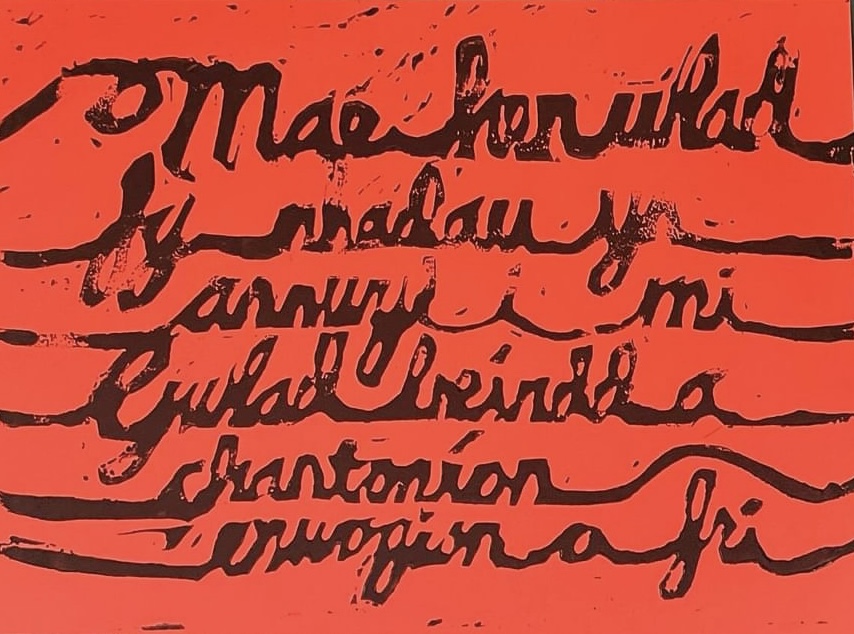
Mae hen wlad fy nhadau. Image: Hywel Edwards

Stephen Price

With a petition calling to ‘abolish’ the name Wales in favour of its Cymraeg name, Cymru, set to cross the 10,000 signature barrier this week, attention is being turned towards the term we might use to refer to ourselves.

Cymry, Cymro, Cymraes, Cymric.... Or what about Cymraeg or Cymreig?

Let’s get the last two out of the way first is it.

[mid-content-banner]

In the bin

While Cymraeg does indeed mean ‘Welsh’ - it specifically only refers to the Welsh language, unlike in English, where we are both ‘Welsh' and speak ‘Welsh'.

So that’s a quick one for the bin, but it perhaps needed a mention as it’s commonly mistaken as a one-for-all Cymraeg version of ‘Welsh’.

Next, let’s also bin “Cymreig’ as an option. Cymreig means ‘pertaining to Wales or Welsh people' - culture, language, food etc.

This leaves us with four(!) possible contenders (and spoiler alert, they’re all staying)...

Let’s look at the ‘sexed’ ones first. Cymro and Cymraes - Welshman and Welshwoman.

As an English speaking Welshman who has learned Welsh, I’m very familiar with ‘Cymro’ as a term of pride and endearment and have used it to refer to myself in the past. Similarly, I’ve spotted a fair few users and lovers of the term ‘Cymraes’ online. I think these two terms will gain even more importance *when* Wales becomes Cymru.

But I also know that sexed terms are far from in vogue - just look at the term ‘actor' for one example, and the ‘gender wars’ are ones I’m staying far out of. I don’t even want popcorn to watch from the sidelines.

So, I’ll be using Cymro no problem.

But for a one for all term for all of us - that leaves us with two options (Or maybe more - let me know)... Cymry and Cymric.

[lower-mid-content-banner]

Compromise

Now - Welsh speakers will undoubtedly continue to use Cymry as the right and proper term - and double, triple, quadruple checking with a few friends that’s the conclusion I expected.

Cymry, quite simply, means Welsh people. There you have it. Nailed. But have we?

All those I spoke to (and this is not binding, don’t throw things at me, I’m only little)... had no issue with Cymric being used by English speakers. And the reason I think Cymric is the term we should consider is because a one for all Welsh and English language designation, unlike the name for the land, just won’t fit in this case. Or will it?

Just as the French will still call us Gallois, from Pays de Galles and so on and so forth, and long may that be the case - "Je suis Gallois" works. I am Cymry just doesn’t. I wish it did but it sounds totes awks. And even if Wales is ever to reach full bilingualism, it’ll still be as jarring when we use English.

“The Cymry actor...” “I am Cymry...” “Isn’t she Cymry?” (Isn’t she wonderful) Nah. That won’t fly.

“The Cymric actor...” “I am Cymric...” “Isn’t she Cymric?” To me, that works.

For all those in Yr Hen Ogledd, the Cumbrians and descendants of the Cumbric speakers, it might even be seen as a return to the fold. Although even they may have referred to themselves as Cumbri. Are we going in circles here? Hmmm.

For the English speaking majority of Wales, it’s perhaps not as clear cut as we might think.

Absolutism won’t do Cymru any favours - let’s do this right for us once and one time only on the world stage.

I’m the first to push for defiance and accuracy, but I haven’t got time to sit down with the nearly 8 billion other residents of planet earth to ask them to call us ‘Cymry’ if even the people here won’t buy in - Cymric just flows better and sits better alongside people of the other nations of the world.

Cymru offers a rebrand like no other, let’s be open to a little compromise for everyone’s sake.

We have no issue calling people from Iceland, ‘Icelanders’, and neither do they have a problem with that. For themselves, they live in Ísland and call themselves Íslendingar but also call themselves Icelanders when speaking English. It’s normal. It’s natural.

And so having our own terms for the people of Cymru that work in English and in Welsh, but not necessarily in both, is also normal.

I am Cymric. I live in Cymru. I could go with that.

USP

Ant Evans, book reviewer, feels different. He said: “I think it’s great to see people being so passionate about this. The language is our nation’s USP, so we should certainly make more use of it whenever we can (how many of us have been asked “Is that in England?” when overseas & telling locals where we’re from, after all?)

"Using Cymry for the people makes perfect sense to me as it places emphasis on the connection between those who live here and Cymru. If you live here, you belong to the country.

"However, not wanting to rain on anyone’s parade, I would proceed with caution. In Ireland, from my understanding, there’s a lot of use of Irish for names of agencies, and a lot of of status afforded to the language (the Irish language version of the constitution taking precedence over the English version for instance). However, as a living community language, it’s not in as great a position, and I feel we need to be wary of falling into a similar situation here.”

And so, it’s over to you. Cymry, Cymric, Cymro or Cymraes? All or none of the above? For this, I will be getting the popcorn in.

For the price of a cup of coffee a month you can help us create an independent, not-for-profit, national news service for the people of Wales, by the people of Wales.

Get more trusted Welsh news

Choose Nation.Cymru as a preferred source in Google News to see more of our journalism.

Choose Nation.Cymru as a preferred source in Google News

40 comments

William Dolben

llyncu'r camel a hidlo'r gwybedyn

Reply
Welsh_Siôn

Interesting points. I call myself a Cymro Cymraeg (not least as I am a mother tongue speaker and professional user of that particular language in the P Celtic family tree). I have no objection to my fellow Countrymenand women calling themselves Cymro, Cymraes and Cymry respectively. (After all the origin, *Combrogi, indicates we all inhabitants of the same 'bro' - a feature retained in our sister language of Brezhoneg, and their 'borrowing' of our national anthem, too). However, just to stir the pot, and you did ask for other suggestions. Could we not be Cambrians? (My late father however would have no truck with Imperial Rome and often associated himself with the local Iron Age Celtic hillfort of Dinas Dinorwig and dub himself 'an Ordovician'. Other comments welcome. :)

Reply
Mab Meirion

A tick for your father...

Reply
Evan Aled Bayton

When I was first asked my ethnicity in Liverpool in the 1980s on a job application I put down Silurian(Gwentian Welsh). I wasn’t asked that again for quite a while.

Reply
Crwtyn Cemais

Da iawn chi! ~ Well done!

Reply
Riki

The Romans weren’t as bad to the Britons as others, this is an historical oversight by a lot of people. The British monarchy (no not the English one) were from Wales and part Roman via Caratacus’ daughter. Even the first bishop of Rome was from Wales, Linus. The British monarchy and with Iestyn Ap Gwrgan and as for the English monarchy being “British”, NO, and their have only been there Brits to sit on their throne. Henry Tudor, Henry the 8th and Elizabeth the First. “Welsh” or the adoption of said terminology was a direct result and counter punch to the theft of the British terminology by our neighbours.

Reply
Richard E

I think 🤔 the answer is … “ free “ my friend.

Reply
Evan Aled Bayton

Aside from the serious loss of language precision caused by the misuse of pronouns by the less than 2% of the population with gender identity issues there is now a trend to use native language terms for nations and territory. Türkiye or whatever seems to have started this. in fact there is a long tradition of nations having different names in their own language and neighbouring languages some of which are certainly non p c. Personally I don’t think it matters that much as long as the language in use has known terms.

Reply
J. W. Soares Jones

"Turkiye or whatever..." were not the first to start calling themselves by own names in their own language.

Reply
TJ Palmer

We understand other nationalities saying ‘Ich bin Deutch’ etc, they will soon get used to us saying Cymry ‘dwi. Our place names are mangled enough by various occupiers without us doing it ourselves.

Reply
Stephen Price

!00% with you in Welsh. Do you think it would work in English though? For a newsreader in America to say ‘Michael Sheen, who is Cymry, said...’?

Reply
TJ Palmer

Yes. If we default to Cymry now perhaps we wont have to endure Cymric, Cymrese or Cymrish.

Reply

In reply to TJ Palmer

Stephen Price

Haha brilliant! Yes - we get one shot at it and I do like the defiance. It would all happen naturally in the past wouldn’t it, not in a closed office so I’m glad at least that we’re going to debate it now and test the water. Diolch.

Reply

In reply to TJ Palmer

CapM

Do you know of any other country/people names that are the same or sound the same with different spellings that are used by others and not just in English? The important thing is that the root of the term used in other languages is "Cymru".then I think other languages will modify as per their language rules and norms. And there are lots of other languages with their own particular rules and norms. After all in Cymraeg it's Ffrancwyr or Ffrancod not Ffranse (to match Francais) .

Reply

In reply to CapM

TJPalmer

Obviously there are local variations in each country but the single word Cymru to describe the place, the people and the culture would be less confusing for others to get used to.

Reply

In reply to TJPalmer

CapM

I'm not convinced that a word that serves as a noun and two adjectives and sounds the same would be less confusing. We've needed to deal with the situation in the written form. Also what about the word to describe the language?

Reply

In reply to CapM

TJPalmer

There are millions of Cymry for whom Cymru is the only Cymraeg word they know and wouldnt know when Cymry yng Nghymru is the correct form so how could we teach the rest of the world unless we keep it simple.

Reply

In reply to TJPalmer

CapM

The point I've been trying to make is that there are a lot of languages in the world and it's common practise for many(probably a large majority) of those languages to customise the indigenous root terms for countries and peoples to conform to the rules and norms of their own languages. Cymraeg does it. The example I gave was we use Y Ffrancwyr/Y Ffrancod rather than a phonetic Cymraeg version of Les Francais. If we advocated that others should use our Cymru/Cymry convention we would basically saying -do as we wish, not as we do. Getting Cymru accepted as the sole term for our country is ambitious but I think achievable but there'll be a push back from the usual suspects I expect. I can see a criticism of Cymru/Cymry approach being - you've got double standards/hypocrisy. However it would be great if everyone in Cymru was aware of, understood and used both the terms Cymru and Cymry.

Reply
Another Richard

How about sticking with the long-established English words when describing ourselves in English? Finns don't refer to themselves as "suomalaiset" and nor do the Japanese call themselves "Nihonjin" or the Hungarians "Magyar" when they are speaking English, and I see no good reason why the Welsh should be different, unless it's with a view to causing unnecessary resentment and confusion.

Reply
Shan Morgain

Problem is 'Welsh' means 'foreigners, strangers' and was long used as an insult by the English.

Reply
CapM

If we preferred to who/what sort of person would resent the use of of the term Cymru and it's derivations.

Reply
Crwtyn Cemais

As a mother-tongue speaker of Cymraeg and even more specifically, the Demetian dialect (y Ddyfedeg) of south west Wales, I would be happy -when speaking English - to use 'Cymro' for describing myself, 'Cymraes' for a lady/girl and 'Cymry'** for Welsh people in general. I think that the rather old-fashioned adjective of 'Cymric' would do just fine for describing anything Welsh other than when describing something in or of the Welsh language. For instance, referring to to a book or a conversation, I would say 'this is a Cymraeg book' or 'they were speaking in Cymraeg'. ** I live so far down in the south west that we locals pronounce 'Cymry' as 'Kim-ree' as opposed to the standard 'Kum-ree'!

Reply
Mr Jones

Welsh

Reply
Johnny Gamble

That means reneging on a bet.

Reply
Dewi Evans

Spot on Steve with ‘Cymric’. I suspect we may take some time with “I live in Cymru’ as in Welsh it’s “….byw yng Nghymru”. Those mutations again, but as a friend said to me “If the English can change the end of their words why can’t we change their beginnings!” I’m sure one can maintain the momentum. Especially as more and more Welsh, sorry Cymric, folk realise that the name ‘wales’ is Saxon for foreign.

Reply
Johnny Gamble

Cymric people of Cymru, however in reality trying to stop people using the Words Wales and Welsh would be like King Canute trying to stop the sea.

Reply
CapM

It's not about stopping people using the words "Wales" and "Welsh" it's about encouraging people to use the words "Cymru" etc. The first approach is confrontational and I suspect at least some people who are against a change are saying it's going to be forced hoping to convince others to think that it will be also. We've all probably heard people who claim that the Welsh language is being "rammed down their throats". The -forcing people to stop using the words "Wales" and "Welsh" - is a similar meme. Remember the frothing in some quarters regarding "Bannau Brycheiniog"

Reply
Riki

None of them mean “Welsh” people. Our terminology for ourselves pre-date “Welsh”, the English term for us.

Reply
Ant

Cymru - country name for Wales Cymraeg - the Welsh language Cymreig - pertaining to Welsh culture, ie Welsh music, Welsh cheese etc. (Caws Cymreig etc) Cymro - Welshman Cymraes - Welshwoman Cymric - this should be the true English word for Welsh in the English language. For example, the Cymric language, Cymric music, Cymric cuisine, The Cymric people etc. You can still use Cymru to describe Wales the place in English though. The rest I feel would work better if you're conversing in the Cymric language. So, to summarise:- In the English language Wales - Cymru. Welsh (language) - Cymric. Welsh (Cymreig) - Cymric, ie Cymric cheese, Cymric music etc. Welshman- Cymric-man but I don't see an issue with using Cymro. Welshwoman - Cymric-woman but I don't see an issue with using Cymraes. In the Welsh language Wales - Cymru. Welsh (language) - Cymraeg. Welsh (Cymreig) - Cymreig Welshman- Cymro. Welshwoman - Cymraes. Hope that helps :)

Reply
Meinir

When speaking Cymraeg use Cymro, Cymraes a Cymry as relevant. In English I would agree one word would be best and Cymric seems to fit the bill.Therefore for example, Ruth Jones and Michael Sheen are from Cymru and are Cymric and Cymric actors, or Catherine Zeta is Cymric and is a Cymric actor. Daw Ruth a Michael o Gymru ac maent yn Gymry (mutation there!) ac yn actorion Cymreig, mae Catherine yn Gymraes ac yn actores Gymreig. Sharon Morgan however is an actores Gymraeg or Gymreig as she performs in both the Cymric and English languages.

Reply
Craig

Cambria & Cambrian This is an Exonyms vs Endonyms debate, but if we want balance between the two languages of this country, then my favour would be Cambria and the people Cambrian. It's neither English nor Cymraeg, but the former both have Latin influences. I think it's important to ensure that any decision taken includes consideration of our international branding with other languages, especially in Europe—where much of the languages have Latin influences or have descended from it.

Reply
CapM

It not an 'Exonyms vs Endonyms debate' but an Exonyms vs Endonym one. That is a number of non-native names vs one native name. Because of course there are other of non-native names for Cymru besides "Wales". We need to remind ourselves that English isn't the only language spoken by the rest of the world. All of the world's languages have not been influenced by Latin. There are even European languages that owe little to it. We must not limit 'consideration of our international branding' to those whose languages have been. It would be bizarre for us to ditch one exonym designated by a one time imperial power only to adopt one by a long defunct imperial power! Would there even be a suggestion of a rebrand to "Cambria" if our nearest neighbour called our country "Bhreatain Bheag"

Reply
Craig

If we dismiss the international consideration, then we are dismissing an opportunity to rebrand ourselves internationally. But if you want to just focus on Endonyms, then the debate shifts back to the domestic languages, because Wales is no longer a nation that speaks just one language, but two languages now. Not every Welsh person is going to accept a Welsh only name. So if we adopt Cymru as the sole official name, then does this debate shift to how it is now spelled? Does it change from Cymru to Cymri, because we all know English speakers domestically and internationally will pronounce it as Cymroo, instead of Cymree; Cymraeg-supporters will resist any sort of change to the language. I've always thought because of our Romano-Celtic descendency, Cambria is a neutral, balanced, and fitting name for our country; for Cymraeg and English, the pronunciation and spelling in both languages are the same which also applies to other Latin-rooted, and Latin-influenced languages.

Reply

In reply to Craig

CapM

"If we dismiss the international consideration" I'll repeat what I said previously -  We must not limit ‘consideration of our international branding’ to those whose languages have been [influenced by Latin]. You appear the one doing the dismissing. "Not every Welsh person is going to accept a Welsh only name." Are you saying that these people will except Cambria but not Cymru. Latin is acceptable to them but Cymraeg is not. Is that the sort of people we want to decide on our country's name!  "Does it change from Cymru to Cymri," Perhaps stop and look at Wiki to see how many different alphabets are out there. You seem to think that English is the world's default language. It is not and the same issues with spelling and pronunciation apply to "Cambria" and "Welsh". What did the Romans do for us? Well they didn't name the land "Cambria" that name appeared 800 years after they'd left "Brittania", "Neutral" for who. Those for to whom "Cymru" would be ramming Welsh down their throats? I think the international community, England included would have no problem with "Cymru" apart from those types who would rather Zimbabwe were still called Rhodesia.

Reply

In reply to CapM

Craig

Neutral to the population's linguistic ability that's who; to both of the languages that are native to this country. Let's get some facts going here: Wales is a majority English-speaking country, Cymraeg is a minority language. Obviously I would support Cymru being the only name for historical and cultural purposes, but English is going no where whether we like it or not. So there is an opportunity here to name the country that is inclusive to the nation's two official languages. That is why I mentioned Cambria. It doesn't have to be Cambria, it can be what ever we choose as a nation, it can be wholely a new Cymraeg name, but I would propose that it should be a name, that should be phonetically easy for native English-speakers of this country to also pronounce as they read it. You keep the Cymraeg, but also include the English-speakers capability to pronounce it without prior education of Welsh pronounciation. Yes, I am also aware that there are other writing scripts out there other than Latin, but Welsh and English use the Latin-script, so Latin is relevant to this discussion as it's part of our culture. Also on the international stage, English is one of the top world languages: Mandarin, Spanish, Portuguese and others are also top world languages, but for Wales, due to our capability to speak it, English is the most important language for our international branding, economy and politics.

Reply

In reply to Craig

CapM

"it should be a name, that should be phonetically easy for native English-speakers of this country to also pronounce as they read it.* The native English speakers of this country won't thank you for suggesting they are too thick to cope with pronouncing 'Cymru' correctly. Especially as they've already coped with pronouncing 'through', 'though', 'thought' , 'thorough' , 'rough', 'plough' and 'cough' correctly !

Reply

In reply to CapM

Craig

It's not the case of whether they're "thick", English-Language speakers will always try to pronounce Cymraeg words or any other language with English-Alphabet pronunciation unless they decide to educate themselves, I'd say most won't or won't even bother to try. The amount of times I've heard people mispronounce place names across Cymru is quite normal. Even now there's a petiton on the Senedd petitions website to oppose the removal of Wales, so think of that as you will. I don't believe you can ignore the social fabric of a nation, sometimes you have to compromise to balance it out, which is why I mentioned Cambria. Cambria is a name that is associated with Cymru and its people. We have many place names named Cambria across Cymru. So I would find it reasonable to adopt it, whether we replace Wales with it or both Cymru and Wales together. What ever happens in the future, Wales definitely has to go, and the Denonym Welsh.

Reply

In reply to Craig

CapM

If someone insists on being wilfully ignorant of the correct pronunciation of "Cymru" or not making the effort then that says a lot about what type of person they are. Most people don't want to be like that. "Cambria is a name that is associated with Cymru and its people." Rather Cambrian is for the most people across the world is associated with a geological period not a country or people. Some use Cambria when for various reasons they can't bring themselves to say Cymru.  If Cambria is associated as you say then it is because the term Cymru has been suppressed and excluded. There's no point of change if there isn't a change.

Reply

In reply to CapM

Craig

"Rather Cambrian is for the most people across the world is associated with a geological period not a country or people." Adam Sedgwick named it the Cambrian System later known as Period because of the discoveries founded within Cymru. If he didn't associate the name Cambria with Cymru or Wales, then he would have named it to something else. So I think it's safe to say Cambria is a name long associated with this land. Cambria is also mentioned in ancient pieces of literature by authors born within and outside the boundaries of Cymru.

Reply

In reply to Craig

CapM

Entering "Cambria" into Google gets 25,800,000 results. Entering "Cymru" into Google gets 26,400,000 results. So I think it's safe to say that Cymru is the winner. No need to evoke the deeds of a nineteenth century geologist.

Reply

Leave a reply

Replying to Craig Cancel

It's not the case of whether they're "thick", English-Language speakers will always try to pronounce Cymraeg words or any other language with English-Alphabet pronunciation unless they decide to educate themselves, I'd say most won't or won...

Comments are reviewed before they appear.