


Thu, 23rd July Cardiff 18°
Nation.Cymru wordmark
Advertisement

Opinion

I say Bannau, you talk a load of B***ox
By Mark Mansfield
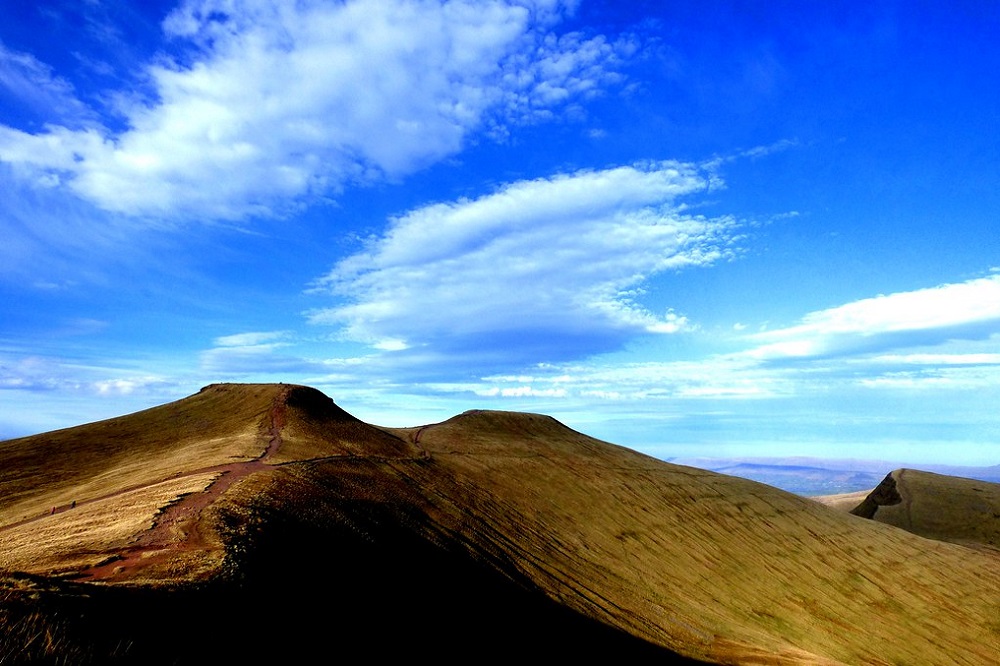
Pen y Fan and Cribyn Photo Leshaines123 is licensed under CC BY 2.0.

Gwern Gwynfil, CEO YesCymru 

It’s been fun watching the meltdowns on social media this week, and those in the less serious parts of the English press and the Telegraph, triggered by the reversion to the original name of Bannau Brycheiniog.

The reaction says a great deal about the depth of change in Wales and across the UK in the 21st century. Gone is the deference and submissiveness of last century. In its place is a new confidence in ourselves, in a cultural and social identity that has little to do with nationalism but recognises the social, cultural, economic and political differences between nations.

My favourite aspect of this in Wales is how welcoming it is, how easily and happily it embraces anyone who wants to be a part of it. I have lost count of the number of English migrants to Wales who have become vocal and ardent supporters of Independence and all things Welsh. No wonder that the reactionaries are hysterical in their responses - it is incredibly hard to make a sensible case for the Union today.

A century ago, the UK was a superpower, it had purpose in an era of World wars and the Cold war, but today? Today it is a state in incredibly rapid decline, badly run, becoming poorer whilst nurturing an ever-growing gap between the rich and poor.

It is literally the case that being in the Union is making Wales poorer.

How then can they convince us that they still know best that the people of Wales should continue to bow their heads, bend the knee and subscribe to the long tail of feudalism as part of this now decrepit hangover from the age of empire?

[mid-content-banner]

Wilful ignorance

With no positives to offer they resort to relentless misinformation and often wilful ignorance. Everyone - simply everyone - knows that the original name for over a thousand years is Y Bannau. This has always been used and all that the national park authority have done this week, after an extensive two-year consultation period, is revert to having the proper name front and centre rather than tucked to the side.

I understand why this scares the Unionists so much, it is a symbol of confidence and a harbinger of what is to come for them. The people of Wales are going to press ever more to have the interest of Wales and the people who live here front and centre. This will inevitably lead to Independence, as the centre, Westminster, will never want to surrender all that it gains from keeping Wales deferent and servile.

Within a decade the green energy revolution already begun will see Wales producing over 16 times more energy than we currently use. Energy that can be sold, converted into green hydrogen and shipped around the world, a resource to power an economic boom built on cheap and plentiful energy. Westminster wants that benefit, and it wants it at Wales’ expense.

This won’t wash. The people of Wales will awaken, Cymru and the Cymraeg, will be proudly ‘woke’. Disinformation and ignorance will always exist, even in a world permeated with information but over time reality always asserts itself and the reality is that the Union is coming to end.

No wonder that those who cling to this legacy of Empire, to the ossified structures of Westminster and the Union, who hanker for the mystical days of English exceptionalism, are becoming ever more shrill as they sense the end is near.

As we grow in confidence, so they become weaker and more desperate.

Let’s remind ourselves that they are already a minority - a wealthy, loud and powerful minority.

England too has the opportunity to grasp the nettle of transition in the 21st century. Imagine an independent England with a proper constitution, with proportional representation, with a government and leadership genuinely representative of its people rather than a narrow coterie of privately educated Oxbridge graduates - a self-perpetuating elite whose interests lie in maintaining the status quo however damaging that may be to the majority.

Self interest

Self-interest is always a powerful motivator. Such a shame that the current opposition lacks the confidence and bravery to take this to their electorate. All of them, all of us, trapped in the aspic and treacle of our shared history.

It’s time to step out of this viscosity and enter the free-flowing waters of a new century. With confidence, with ambition and with hope for a better future.

Bringing our own unique past to the fore in the rebranding of Y Bannau is part of that process. An expression of the confidence that’s growing across Wales.

A newfound confidence that will lead to a new and better composition for the islands of Britain and Ireland. A brighter, better future which will benefit all of us.

Four strong, productive, independent nations, Wales, Scotland, Ireland and England, standing side by side in the new international order, not as a superpower (those days are long gone) but as vibrant, wealthy, modern nations.

For the price of a cup of coffee a month you can help us create an independent, not-for-profit, national news service for the people of Wales, by the people of Wales.

Get more trusted Welsh news

Choose Nation.Cymru as a preferred source in Google News to see more of our journalism.

Choose Nation.Cymru as a preferred source in Google News

33 comments

hdavies15

Good article although I think there may be some exaggeration, such as - " I have lost count of the number of English migrants to Wales who have become vocal and ardent supporters of Independence and all things Welsh. " Or is that an indication that Gwern can't count beyond three figures 999? I accept that the attitude of incomers may have softened in some cases but when one starts to push on some of the more fundamental issues there is a tendency to revert to a more tentative stance - "Don't move too quickly or your might upset "our" equilibrium." Beware of progressive Saeson who have come here to steer our progress to liberty.

Reply
Richard Thomas

I have a friend who moved from England to Swansea who always sees himself as British, and that lead to something that quite surprised me. He is very enthusiastic about the Welsh language, as he sees it as one of native languages of Britain, and therefore something that is part of his country and culture. Not everyone fits into a stereotype.

Reply
hdavies15

Like I said yesterday - "the attitude of incomers may have softened in some cases..." which acknowledges that fact.

Reply
John Thomas

. Da iawn.Rhesymol a huawdl.Ond pwy yn y pleidiau eraill sy'n gwrando?. Heb eu cefnogaeth mae'n freuddwyd gwrach

Reply
Julie Jones

As a neighbour of mine, a retired accountant from Nottingham, told me recently, "you Welsh want everything your way". To which I reminded him that he was in Wales. He shook his head, jumped in his car and sped off to his golf club.

Reply
Y Cymro

The Tory Telegraph attack on Wales means we must be doing something right. I absolutely love it when their journalists froth at the mouths when Wales goes its own way. They just can't accept the reality that we won't kowtow to them anymore. Onwards Cymru and two fingers upwards Telegraph.

Reply
Tomi Benn

The paper should change its name to The Torygraph, as many of us already call it.

Reply
Gaynor

How many billions lost to PPE contracts to Tory mates?

Reply
CapM

Those - "With confidence, with ambition and with hope for a better future." versus Those - they'll always be the Brecon Beacons, Ceylon, Malaya, Rhodesia to me.

Reply
Gaynor

Shows how out of touch you are then and offensive to those inhabitants of said countries.

Reply
Che Guevara's Fist

This is only the start though. Every place name should be returned back to it's historically correct Cymraeg name if it isn't already, but that also city, town, village and every street name as well. Far too much imperial English influence everywhere.

Reply
Erisian

Oes dim paent gyda ni?

Reply
Padi Phillips

What about Cross Hands?

Reply
CapM

renamed as - Not Cross Hands Retail Park

Reply
Rhufawn Jones

And also changed the name of the area from Garthmadryn to Brycheiniog!

Reply
Robert

Well said

Reply
Gwion

The Torygraph has published a few misinformed negative articles about Cymru being full of 'woke progressive nationalists'. We must be doing something right. Our culture, sense of equality and freedom is sending the BritNat keyboard warriors into overdrive. Our lack of subservience is rocking the foundations of what remains of their empire. The penny has dropped, and they have realised that they have built their kingdom on someone els' land, and the natives have turned down their retrospective planning application.

Reply
Garry Jones

If I were a betting man and I am, and if I also wanted to put myself on the right side of history, then I'd put my money on Cymru realising its potential as an independent state. Cooperating with its neighbours, represented at the UN, and having the talent, resources, political maturity, and agility to do more than just get by, but to thrive. In Casnewydd this evening Gwern gave supporting evidence of how this was not only possible, but is an achieveable and probable consequence of independence. If only we knew how good we are. 

Reply
Richard Thomas

You also say Yes Cymru, which is surely by your own definition "b***ox" as it's half in English. There's far too much headline and not enough real use of Welsh. By that I mean for example, I recently bought my ticket for the Welsh Cup Final at Bangor. The FAW has been very vocal on the whole Cymru thing, yet apart from a token "Diolch" a word so widely used to have become Wenglish, the whole of the front of the ticket is English only. Only the small print on the back is bilingual. Simply calling places a name doesn't preserve or promote a language by itself, names are intrinsically abstract for the most part. Blaenau Gwent is full of Welsh place names but has a severe dearth of Welsh speakers. There are numerous Welsh/Cumbric names in England and Scotland, it hasn't kept it a community language.

Reply
AntonJacques

You know bilingualism is a thing right? It's possible to have both, and not one at the expense of the other. Equity means bringing Welsh back soon it's on par with English. A fully Welsh speaking Wales, will also be able to speak English.

Reply
Padi Phillips

I doubt that anyone who cares about Cymraeg would disagree with you, however, the dearth of Welsh speakers in the Blaenau Gwent area is a relatively recent phenomenon, and one that has a very clear socio-economic basis. Go back to as recently as the early 1860s and it's probable that the majority spoke nothing but Cymraeg, and the community so strong that those moving into the area would have been assimilated quite quickly. However, the demand for workers was so great once coal extraction got under way that even the high population growth from within Wales was insufficient to satisfy demand, so many migrated to the are from places like the Forest of Dean and Somerset. In 1861, for example, the Rhondda had a population of 4,000. In 1893 it had grown to 163,000, and I have no doubts that the Blaenau Gwent would show a similar pattern of population growth. Whatever happened, English became to dominate, largely due to popular culture the explosion in communications technology, such as wireless broadcasting and cinema, particularly after the introduction of talkies in the late 1920s. I'm fairly sure that on the whole the people in the area still have good will towards the language, but that there is simply virtually nowhere where you can speak Cymraeg as part of your normal day, so there is little point in learning a language that you aren't going to speak, or that you aren't able to speak due to the simple lack of anywhere to speak it and the dearth of others able to speak it. Classes and learner's groups do their best, but there really isn't a substitute for being able learn in the 'real world'of everyday interactions, ordering, and getting a pint in a pub, or even the simple transaction of buying a stamp in a post office, or having a short conversation with someone about the weather. It's this kind of interaction that makes it real, brings the language to life, and provides wonderful learning opportunities, hearing colloquialisms and dialect words you won't necessarily get in a classroom. 'Diolch' may well be widely understood, but I don't think it will ever really be regarded as Wenglish, as it's fully Cymraeg, and seen as such by all. I think a better way of looking at it is as 'understood by all', which is no bad thing. I've started to use it in Cardiff as I leave buses, as almost everyone here thanks the driver, and I've had one or drivers actually respond back to me, yn Gymraeg.

Reply
Mark Hoffer

That's not an accurate reading of history. Welsh medieval Kings and princes were of the same class and status as their English and Irish counterparts. They were all making alliances and infighting, not for a "real independent Wales" , but for personal power and wealth. We don't need royalty, we don't need any outside influence. We need a new democracy and a real voice.

Reply
Padi Phillips

Thank you for clarifying that point in such a succinct manner. For too long we've had to listen to ultra-nationalistic drivel about 'our last prince' imposing a late 19th century understanding of nationalism on an age of feudalism where the concerns of kings and princes were bound up with maintaining or improving their position within the pecking order. Neil Kinnock used to enrage nationalists when he dismissed Welsh history as a tale about robber barons. Though he was wrong to dismiss so much of our history in this way, I feel he was about spot on when talking about Llywelyn ap Gruffudd. He was no more than his peers of the time, a feudal wannabe uncaring about his national identity, as it didn't even exist at the time. Welsh villeins would still have lived lives that were 'nasty brutish, and short' under him as they would have under any Anglo -Norman feudal lord. However, Gwyn Alf Williams reminded us that we need our national myths,but even so, a cautious consideration shows that Owain Glyndwr is a far better choice, for at least there is evidence there of the modern concept of the nation state, but let's not forget how even his campaign started - as a dispute between two feudal lords quarreling over a land boundary. Hardly an everyday concern of your average peasant at the time!

Reply
Erisian

Message to England: "Soon, you will achieve the stability you strive for; a place among the fosils of your kind" John Wyndham / Jefferson Airplane

Reply
Clive Jones

Sewage being dumped into the rivers, the NHS in meltdown and a cost living crisis. So much for you strong independent nations. Devolution and what it is has brought with it, SNP point in case, has been a disaster and only lined the pockets of yet more over paid politicians.

Reply
Gaynor

Devolution is not independence bach.

Reply
Padi Phillips

No name change whatsoever, (at least not recently) as Bannau Brycheiniog has always been the name. The new policy simply makes the name in Cymraeg the official name. People can, and certainly will still refer to the area as the Brecon Beacons, only that name no longer has any official status. Hopefully it won't be long before we start a similar process with cities, towns and villages where there are currently two official names.

Reply
jon donoghue

Call it what you want 😄 any mother can come here 😭

Reply
Sue Todd

What a divisive article. Is it really necessary?

Reply
Nigel Bedford

More concerning than the rebranding without local consultation are the plans to get rid of the sheep and build wind turbines all over the hills. I presume the Senedd wants to kill off the tourist industry along with any semblence of democracy in Wales.

Reply
CapM

Bannau Brycheiniog catnip to the ill-informed and those wanting to get their knickers in a twist.

Reply
Gaynor

No facts, no argument

Reply
Stephen Owen

Da iawn 🙂

Reply

Leave a reply

Replying to Padi Phillips Cancel

I doubt that anyone who cares about Cymraeg would disagree with you, however, the dearth of Welsh speakers in the Blaenau Gwent area is a relatively recent phenomenon, and one that has a very clear socio-economic basis. Go back to as recent...

Comments are reviewed before they appear.