


Opinion
HS2 was an England only project from the start
Professor Stuart Cole, CBE. Emeritus Professor of Transport Economics and Policy, Prifysgol de Cymru / University of South Wales
HS2 was an England only project from the start.
Originally intended to provide extra capacity on the London to Birmingham rail route with a high-speed line following the European pattern and where construction costs were acceptably higher than a conventional speed railway. There were to be two extensions – to Manchester and to Leeds though these were sophisms to placate the north of England.
HS2 was a good project in terms of the principle of expanding the decarbonised railway. The rest of the world is building high speed lines as the preferred way of improving rail infrastructure and attracting more passengers.
However, HS2’s costs escalated from the original 2014 cost estimate of £50 bn to £101 bn (2020) following changes in specification and construction cost inflation.
A national Audit Office report (2020) showed HS 2 was now costing nearer £200m per kilometre where the French TGV cost £32m.
[mid-content-banner]
Block grant
Three rail issues have arisen in relation to the Welsh block grant which is based on the Barnett formula – a device set up in 1980 and now part-funds the devolved governments.
Firstly, it took until 2003 for Cymru to have its own single franchise rather than three separate franchises managed from London. The contractual payments to England’s train companies forms the legal contractual basis of the Barnett consequential payment in the block grant for train operations.
Secondly, HM Treasury argues that HS2 does not attract a Barnett consequential payment in the block grant. This resulted from the Welsh Government turning down the offer of responsibility for rail infrastructure under the 2005 Railways Act.
As that expenditure is not devolved all Welsh rail infrastructure is an ‘England and Wales’ joint HM Treasury account.
The Welsh Assembly Government as it was at the time gave several reasons for not taking up the offer:
There was insufficient rail expertise and a shortage of capacity and understanding. The answer there was to recruit rail staff. This was more about fear of the unknown and a reluctance by civil servants to advise the same approach as Scotland.
It took the responsibility and has benefitted from the HS 2 expenditure through the Barnett consequential and if HS 2 had been built in full there would have been a significant reduction in journey time to Glasgow and Edinburgh.
Capital was tight and where would the investment come from. Well only from HM Treasury through the Barnett consequential funding.
Integrated
England’s network was integrated too closely with that of Cymru. This again was peculiar as cross-border motorway and major road agreements had been set up over many years.
Thirdly, as the Welsh Government became more established it has consistently asked for devolved rail infrastructure powers including funding from HS 2 expenditure. As the House of Commons Welsh Affairs Committee have recommended, HS2 expenditure should attract Barnett consequential payments.
HS2 is planned, built and managed by HS2 Ltd, a Special Purpose Vehicle company (SPV) owned by the UK Department of Transport. It is not funded by Network Rail expenditure which forms the basis for the rail infrastructure element in Scotland’s block grant.
The Scottish Government has therefore received a Barnett consequential payment for HS2 and ironically Scottish destinations would have reduced journey times from English stations.
Wales has no such benefits.
Consequentials
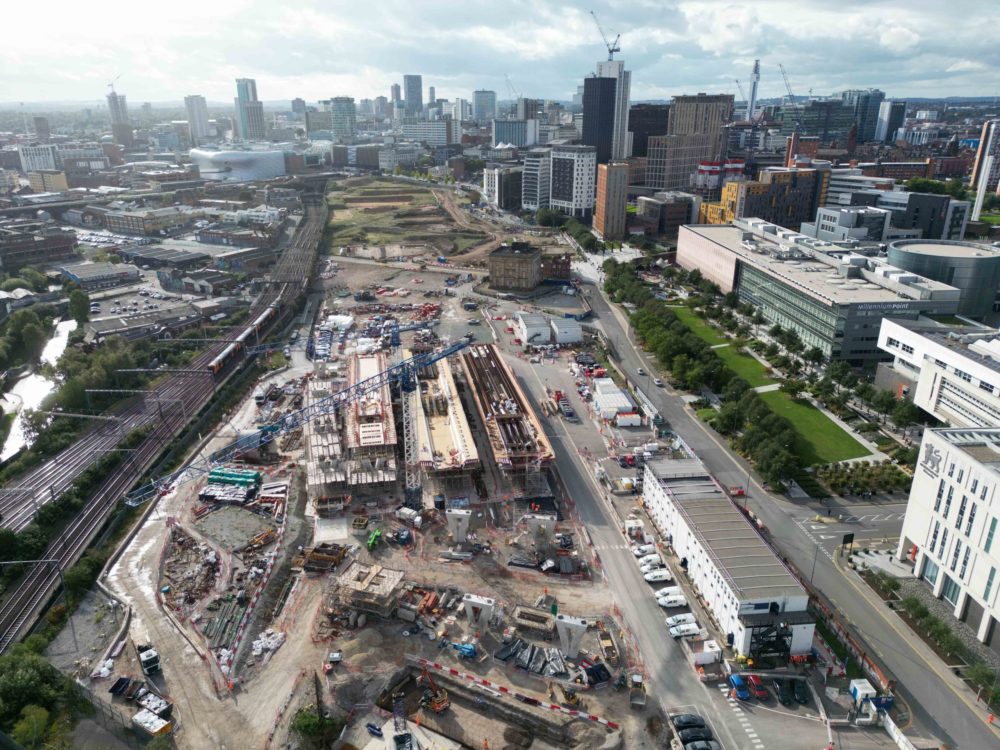
The Elizabeth Line (the London east-west Crossrail route), another SPV, attracted Barnet consequential payments. So, one might reasonably argue that as HS2 was funded similarly then Wales is ‘owed’ £1.25 bn based on the £25 bn already spent on the Birmingham – London section clearly an England only scheme.
As the rail network (apart from Core Valley Lines) in Cymru is managed by Network Rail, it has the responsibility to invest where the greatest return will be found. Ministers who direct Network Rail will also have the Northern Powerhouse rail expectations to fund.
Cymru is likely to do badly in that dichotomy. However examination of HM Treasury’s budget forecasts will not distinguish between Cymru and England expenditure.
Although Welsh Government is not bound to increase rail infrastructure expenditure because of increased block grant, one would expect some of it to be spent on key routes – electrification and increased line speeds (with lower journey times) to Holyhead and to Carmarthen; re-signalling of the Marcher (north – south line) and increased capacity on rural lines.
The King’s Speech on Wednesday (17 May 2024) declared the railways’ central role in Labour’s economic growth plans; this surely means planning and funding of these schemes will now go ahead quickly.
In addition a return to the two schemes in the original high speed rail proposals which brought benefits to Cymru would be welcomed. London to south Cymru and west of England and HS2 with electrification of the north Cymru Wales main line
Lord Peter Hendy’s Union Connectivity Report said, ‘railways in Wales require radical overhaul far beyond the benefits of HS2’. Peter Hendy, recently head of Network Rail and now Rail Minister in the new Labour Government, should follow his report’s advice and correct many past policy errors.
One might expect from the Labour party heralded ‘special relationship’ between Welsh and UK governments, a financial arrangement more beneficial to Cymru than the Barnett Formula.
To achieve this Peter Hendy and Chancellor of the Exchequer Rachel Reeves must now begin immediate discussions with our Transport Secretary, Ken Skates and Finance Minister, Rebecca Evans.
The deal must be backdated to accommodate the underpayments under the old system. This will then enable adequately funded rail enhancement/upgrading decisions to be made in Cardiff not Westminster.
HM Treasury officials will not be in favour of such a scheme as it will increase costs. At present it pays a five-year financial period (called the Control Period) sum to Network Rail which includes Cymru.
As our railways are currently underfunded compared with England there will be a net increase in expenditure.
Support our Nation today
For the price of a cup of coffee a month you can help us create an independent, not-for-profit, national news service for the people of Wales, by the people of Wales.
Get more trusted Welsh news
Choose Nation.Cymru as a preferred source in Google News to see more of our journalism.
