


Opinion
How LGBTQ+ youth clubs can offer help and support to Queer Youth
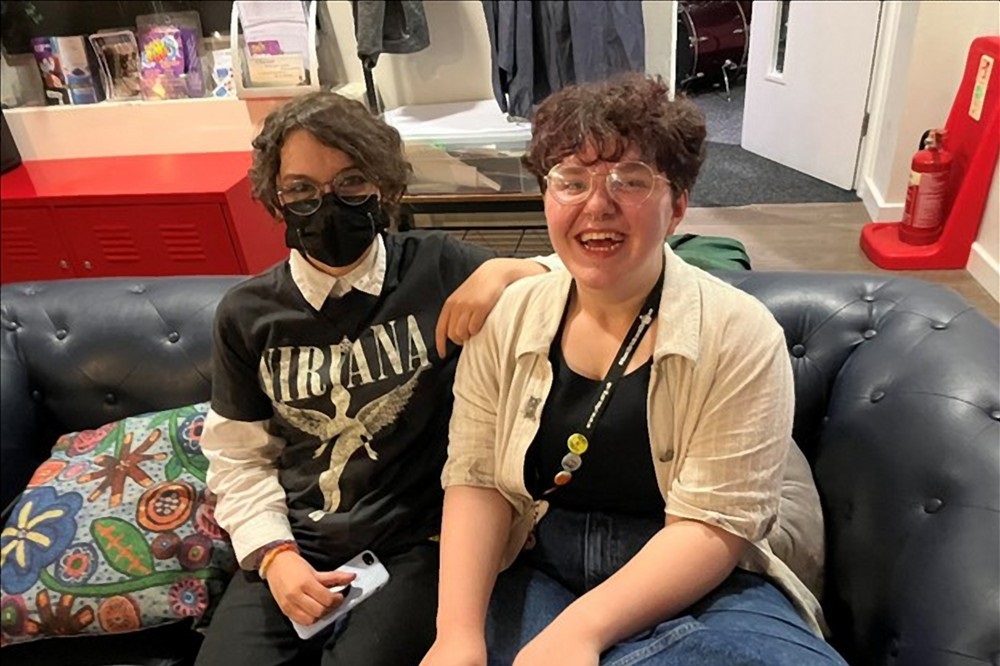
Laurie Elen Thomas
Back in January, 2021, I created a survey on LGBTQ+ discrimination in schools, which I shared with my peers. The purpose of the survey was to provide proof to teachers that a club with resources supporting LGBTQ+ youth was genuinely needed.
Unfortunately, my time as a Sixth Former ended before the Covid precautions did and so holding a physical club wasn’t possible. I was left with nothing but a survey of 50 answers that would haunt me:
“I was threatened to be beaten up”
“They said, ‘You don’t belong in our world.’”
“I have pleaded and suggested numerous times over the years that we as a community have more resources and support for LGBTQ+ youth available, because every day at school I see the toll it takes on these young children.”
These voices motivate me. They’re what remind me why I put so much of my energy into advocating for queer rep.
Hoping to help them I realised that young LGBTQ+ in Wales might have part of the answer as they begin to campaign for LGBTQ+ Youth Clubs.
One such advocate is Ellis Peares, 16, who as a Wales Youth Senate member has been campaigning for such support clubs to become more common in schools. According to Peares, the school groups in Cardiff allow young people to raise their voices about issues that are important to them and plan several types of activities such as badge making for Pride.
These school clubs, which offer students the opportunity to honestly communicate with staff, are a hit in more industrial areas and could be useful for opening up discussion.
However, ignorance still has a tight grip on some schools, which creates a need for out of school clubs. In Wales, there are clubs in various locations including Cardiff and Caerfyrdd.
[mid-content-banner]
Volunteers
Caerfyrddin’s youth LGBTQ+ club is run by a group of volunteers including Gwilym Roberts who’s run many queer youth groups since 1996.
Gwilym, along with volunteer Aled Gustafson, holds bi-weekly meetings that offer a safe space to any LGBTQ+ or questioning youths under the age of 21.
Activities at the club range from playing video games and chatting to going on trips to Cardiff and aerial painting. Gwilym explained that while school groups weren’t a bad idea, an outside group has the capability to reach students who aren’t in school anymore and is much more likely to be run by queer adults.
In his experience, the best queer youth groups are those run by queer people.
“There's something about queer facilitators that adds a flavour that isn't pathologising; meaning it isn't seeing the gayness as a problem that needs curing.”
He explains that groups run by well-meaning cis-het people “trying to be nice to queers” often don’t manage to connect with young LGBTQ+ people.
Having queer people facilitate queer safe spaces creates much needed local representation. Aled, who’s been working with Gwilym since the club’s inception in 2019, told me, “I look at this youth group being so young and knowing themselves so well. I'm excited because even ten years ago, I couldn't have done that.”
The club is based in Dr Mz’s Clubhouse, a modern yet cosy space. Club meetings can range from film nights to drag nights or trips away. During my visit there, I had a chat with Becky and her son, Nathaniel, who has regularly attended the group for 2 years.
Support
Becky first discovered the group when she went looking for ways to support her son after he came out to her. Chatting to both of them made clear why these clubs are so needed.
Nathaniel said: “I cannot say that I feel happy and safe at school because I just don't. I don't have any friends! It just makes me miserable having to go there.”
Becky explained: “He had people doing Nazi salutes at him because they knew they put the gays in the concentration camps. He's had people take his legs out from under him, and he's been up in the air and dropped on his spine, nearly cracking his neck. All before he's even turned 14.”
To them, an LGBTQ+ focused club has been incredibly important as it’s given Nathaniel a space to be himself freely whilst also offering Becky a support system of parents with LGBTQ+ children.
Whilst the children have their fun, their parents gather at a local cafe for a friendly chat.
And he isn’t the only one to find solace in the club. Jamie, 16, said: “Coming here, it's an escape. There’s barely any representation that feels like me. Here, there's just so much. It just reminds me of myself. I feel comfortable here.”
Research
Just Like Us, a UK-wide charity for young LGBTQ+ people, recently released their research which revealed that LGBT+ respondents were nearly twice as likely to do everything they could to avoid going to school.
Although the teens at the club all had varying forms of physical, sexual and verbal harassment thrown at them during school hours, there was an alarming commonality in all of their experiences.
Administrative incompetence. A long line of teachers and upper staff hearing but not actually listening. Even some of the best educators are prone to the trap of enabling homophobia.
In a study by Stonewall, 9 out of 10 teachers admitted that they had no training to tackle homophobic bullying.
Fortunately for current and future students, it doesn’t have to be a problem. The resources available for teachers and staff are growing. Both Stonewall and Just Like Us offer free resources for schools for both staff and students to help create safer, more understanding environments in school.
They also offer a course for those hoping to set up a club and training for staff on how to support their students and effectively tackle homophobic and transphobic bullying.
Clubs like the ones in Caerfyrddin and Cardiff are brilliant and sorely needed however, they shouldn’t be relied on as the only possible solution for a safe space.
Every student has the right to receive their education in an environment they feel safe in. To not have to cower around corners, hiding from peers who’ve been fed misinformed hate.
That safety starts with the system itself; it starts with training teachers and with not pretending that young children can’t comprehend Queer love.
For those looking to establish a club, those online resources are yours to use. If the barrier is finance, check out what other groups are doing. There are many ways to go about it - Caerfyrddin’s group is low budget as it’s attached to a Youth Project whilst Impact Cardiff holds fundraisers and member-made art.
These groups and the resources available prove that we, as a society and a country are perfectly capable of change - we just need to be brave enough to take that first step.
Support our Nation today
For the price of a cup of coffee a month you can help us create an independent, not-for-profit, national news service for the people of Wales, by the people of Wales.
Get more trusted Welsh news
Choose Nation.Cymru as a preferred source in Google News to see more of our journalism.
