


Opinion
How have we managed to turn thanking the NHS into a pissing contest?
Mike Parker
Living in a remote rural setting with no immediate neighbours, there are numerous advantages. Sure, no-one can hear you scream, but also, and much more pertinent right now, no-one can hear you clap. Or not clap, as the case may be.
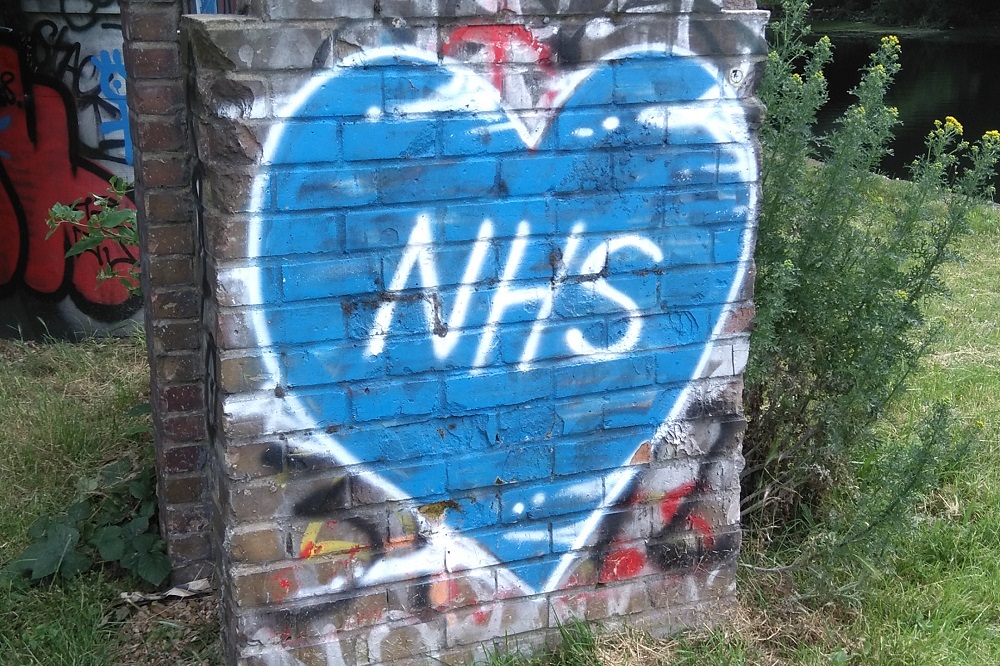
I get that in towns, cities or villages, the Thursday night doorstep applause is a hugely important ritual, a way not just to show solidarity and support for NHS and other frontline staff, but also to reach out to share space and intent with our neighbours and community, people from whom we feel so weirdly estranged right now. There’s something quite wonderful about that.
As ever though, we’ve managed to turn something precious and powerful into a pissing contest. The signs were there from the beginning, when politicians of every stripe leapt aboard the bandwagon, even those who had run the health service into the dust, who cheered when they voted against pay rises for medics and who refused to heed any experts or take pandemic planning seriously. Despite all that, there they are every Thursday, clapping like the Duracell bunny and ensuring that the camera gets their best angle as they do so.
Ditto the papers, of course. Those that have most loudly cheered on the dismantling of the state have suddenly become its greatest advocates, extolling in syrupy tones the ‘angels’ ministering to us, and demanding that everyone fall into line with their oh-so-public demonstrations of newfound affection. In the hollowed-out cliché of the moment, it’s all getting very ramped up (‘ramping up’ is very much the new ‘going forward’). No surprise that the Thursday clap now comes accompanied by music, fireworks, live TV outside broadcasts and dark mutters about those not partaking. There’s more than a whiff of Remembrance Day poppy-fascism about the whole thing.
And that’s the key to the British way. No matter what the crisis, just invoke the war and its bulldog spirit. We’ve heard it in the language of the politicians and media since the outset, how we’re going to vanquish the virus just like we did Hitler. Remember all the vainglorious boasting at the beginning, how there was no better country on earth in which to be facing the coronavirus than the UK? Strange that we don’t hear that one so much these days.
[mid-content-banner]
White elephants
So back to the past we go, as we always do. Back to the sepia-tinted memories of the war, falsified by constant retelling, like an eight decade long game of Chinese Whispers. Vera Lynn is back in the charts aged 103, though she’s facing a tough battle for the top from Captain Tom Moore, at only 99. More than anyone, that sweet old man doing his bit has inadvertently become a perfect symbol of the UK in 2020: a country shuffling on its Zimmer frame round and round its garden, before being surrounded by squaddies and turned into an overblown Help for Heroes meme and career boost for Michael Ball.
And where the UK leads, all too often Wales gallops behind like the back end of a pantomime horse, stridently demanding our own version of the latest British fad. Someone decided that we had to have a Welsh-only weekly doorstep singsong, and so was born the idea that we’d all gather – not on a Thursday, that’s NHS Clap Night, and not on a Saturday, that’s Ant and Dec – to belt out Hen Wlad Fy Nhadau into the gloaming. There was one, perhaps two, but then it just fizzled out. Where was Katherine Jenkins when we needed her? (Accompanying Vera Lynn up the charts is the answer. Inevitably.)
Even at the medical heart of the crisis, ‘having a Welsh version’ of whatever is being touted as the British thing of the moment becomes imperative, loudly screamed for by folk on social media. It doesn’t hold water though, for inherent in that is an acceptance that the UK model is therefore the right one to follow, and that can’t be their intention at all.
In this crisis, the classic example of this was the emergency field hospitals. From the very first mention, medical professionals were warning that they might be expensive white elephants, draining away precious resources from existing ICU care. Others challenged them as desperate PR exercises for politicians in a very tight corner. We should have had those debates here, especially as we had some hindsight to work with, but no-one bothered to ask if such a flawed and urban model fitted Wales; it was just assumed that if it’s good enough for London or Birmingham, then it’s damn well good enough for Cardiff and Llandudno too.
Unfair, maybe, for there was some debate about the field hospitals. Not whether they were necessary, nor what might be the impact on the rest of our health service, but fierce discussion about what we were going to call them. When the apocalypse comes, let’s just hope it’s got the right name and logo. If it has, we’ll be clapping it from the doorstep.
Read more in Mike Parker’s series for Nation.Cymru below:
Part 1: We’ve been told before that things will never be the same again – can we mean it this time?
Part 2: Last weekend’s pandemic-panic awayday was inevitable – but so was the visceral response
Part 3: Will we use this crisis to rediscover the value of community – or for more suspicion and othering?
Part 4: The BBC needs to start listening to doctors – not government spin
Part 5: In a pandemic, fake news can become a lightning conductor for our fears and frustrations
Part 6: Could the pandemic bring us all back together while keeping us apart?
Part 7: This pandemic is the moment tech giants have been dreaming of – even I’m shoveling my data online
Part 8: Will the pandemic change the superior ‘screw you’ attitude of entitled second home owners?
Part 9: Lockdown is making it even harder to escape from our online echo chambers

Support our Nation today
For the price of a cup of coffee a month you can help us create an independent, not-for-profit, national news service for the people of Wales, by the people of Wales.
Get more trusted Welsh news
Choose Nation.Cymru as a preferred source in Google News to see more of our journalism.
