


Wednesday, 15th July 2026 Cardiff 26° · Clear sky
NationCymru A news service by the people of Wales, for the people of Wales.

Opinion

How do we make Wales prosperous? By finally playing to our strengths
By Mark Mansfield
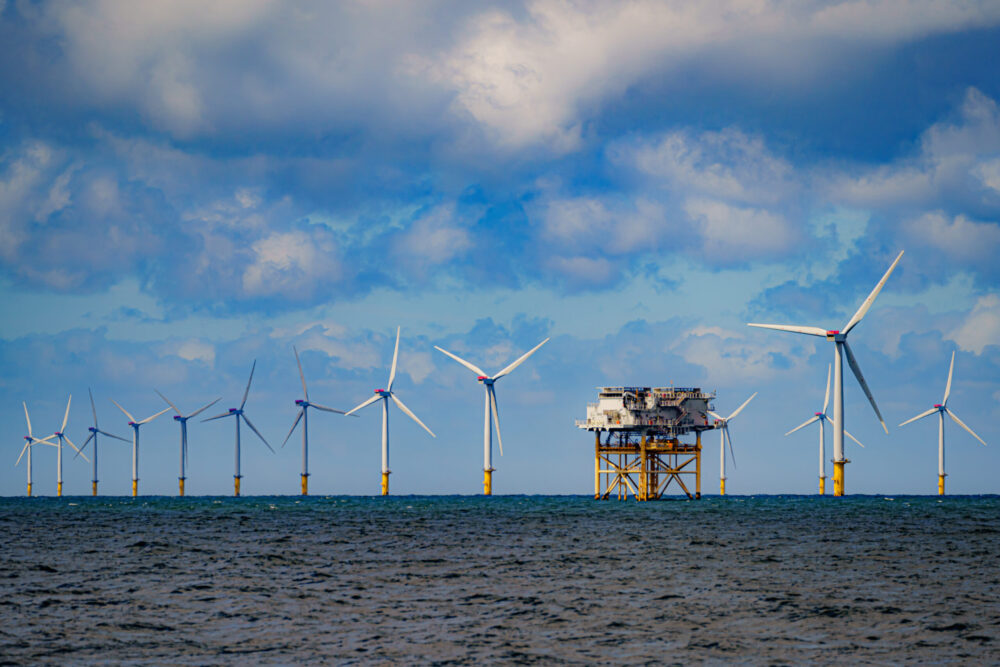
RWE's Gwynt y Mor, off the coast of north Wales. Image: Ben Birchall/PA Wire

Franck Banza

Wales is at a crossroads. For too long, our economy has drifted without a clear destination. We are not manufacturing enough. We are not producing enough. Our connectivity is weak. Transport links are poor. Internet access—especially in rural Wales—is unreliable.

Farmers are drowning in bureaucracy instead of being enabled to do what they do best: produce food. Energy production is underdeveloped. Hospitality is struggling, despite some of the most beautiful landscapes in Europe.

Culture and the arts are seeing declining support. Talented, hardworking people are overlooked. Ambition feels constrained. And too many of our young people are leaving Wales in search of opportunity elsewhere.

These are not isolated problems. They are symptoms of a deeper issue: Wales does not have a clear economic strategy rooted in what it is genuinely good at producing in an open, competitive world.

The Mistake We Keep Making

In a global economy, countries and regions succeed when they focus on what they do best. Wales, however, has spent years trying to copy others instead of backing its own strengths.

We have attempted to import industries that were never deeply rooted here—often with generous public subsidies—only to watch them fail or leave once the support ended.

We have seen this story before:

  • LG in Newport, once heralded as a manufacturing revival, eventually collapsed.
  • Aston Martin at St Athan, supported with public funds, shut down production.
  • TVR, another high-profile automotive project, failed to materialise as promised.
  • The Circuit of Wales, meant to be a global motorsport hub, absorbed public money but never delivered.

The lesson is clear: we cannot build prosperity by chasing prestige projects that do not align with Wales’ long-term economic DNA.

And we should stop trying to replicate places like Singapore, New Zealand, or even Scotland. Wales is not them. We should not aspire to be.

We should aspire to be the best version of Wales.

What Wales Already Has — And Undervalues

Despite the challenges, Wales is not poor in assets. Far from it.

We have:

  • Extraordinary coastlines, not just for tourism but for renewable energy.
  • Hardworking farmers, willing to adapt, diversify, and innovate if freed from unnecessary burdens.
  • A powerful “Made in Wales” brand, associated with authenticity, quality, and trust.
  • A strong hospitality base, capable of innovation rather than decline.
  • Young people who love Wales, but cannot see a future here.
  • A world-class cultural reputation, producing global icons.

Wales has given the world talents like Anthony Hopkins, Catherine Zeta-Jones, Michael Sheen, Richard Burton, and today, creators like Russell T Davies. These are not just cultural successes—they are economic assets.

We are also becoming a more culturally rich and diverse nation, with new ideas, skills, and energy shaping modern Wales.

The problem is not a lack of potential.
The problem is that we do not organise our economy around it.

Energy, Food, Culture: Where Wales Can Lead

If Wales is serious about prosperity, we must focus on sectors where we already have natural advantages—and then build the infrastructure around them.

Energy

Wales should be an energy-producing nation.

  • Tidal energy projects like the Swansea Bay Tidal Lagoon should have been built years ago.
  • Nuclear energy must be part of the conversation if we want reliable, cheap power.
  • Cheap energy makes everything else more productive: manufacturing, food processing, data, innovation.

Food and Farming

Farmers should be supported to farm—not buried under regulation.

  • The collapse of local slaughterhouses is a perfect example of policy failure.
  • Farmers in South Wales having to travel to Wrexham or even Birmingham for processing is economically absurd.
  • We should rebuild local food supply chains, support food and drink manufacturing, and export quality Welsh produce to the world.

Hospitality and Tourism

Wales’ hospitality industry should be thriving, not surviving.

  • Innovation, not decline, should define tourism.
  • Food, culture, landscape, and experience must be linked into a high-value offering.

Culture and the Creative Economy

Why shouldn’t Wales create its own global film and TV hub?

India built Bollywood.
Nigeria built Nollywood—now worth billions.

Wales could build “Wollywood”.

The supply chain would be enormous: writers, actors, technicians, designers, musicians, digital artists, caterers, builders, marketers. We already have the talent. What we lack is coordination, ambition, and political will.

Connectivity: The Basics We Keep Ignoring

None of this works without infrastructure.

  • Better roads and strategic transport links
  • More accessible air travel
  • High-speed internet everywhere, not just cities

In today’s economy, poor internet access is economic exclusion. Young people could be content creators, developers, gamers, designers, entrepreneurs—but without connectivity, they are locked out.

This is not a luxury. It is economic survival.

Young People, AI, and the Future

There is growing fear that AI will replace human jobs. That fear is misplaced.

AI works with humans, not without them. The real danger is not AI—it is being unprepared for it.

Wales should:

  • Teach young people how to use AI creatively and productively
  • Encourage problem-solving, innovation, and big thinking in schools
  • Support young people to start businesses when jobs are scarce
  • Link education directly to local industries like farming, food, hospitality, energy, and creative arts

If we don’t prepare our young people for the future, they will leave—and Wales will shrink.

Politics: Choosing the Right Driver

Politics is the engine that drives all of this.

Right now, it feels like the driver has lost the address. The car is moving, but no one is quite sure where it’s going.

In less than six months, Wales will choose a new driver in the 2026 Senedd election.

So ask yourself:

  • Would you trust a driver who has never driven before?
  • Would you trust one who doesn’t know the destination but promises a “safe journey”?
  • Would you trust someone intoxicated by slogans and anger?
  • Or would you rather have a confident, experienced driver who knows the road and the destination?

That is the real choice facing Wales.

The Destination Wales Deserves

Wales deserves a government that is bold enough to:

  • Focus on what Wales does best
  • Remove burdens from farmers and producers
  • Support food, drink, and energy manufacturing
  • Invest in connectivity and infrastructure
  • Back culture and creativity as economic drivers
  • Keep young people here and help them innovate
  • Put Wales on the world map for the right reasons

We do not need to be louder.
We need to be smarter.
We need to produce, build, innovate, and believe in ourselves again.

Wales can be prosperous.

But only if we stop drifting—and start driving with purpose.

For the price of a cup of coffee a month you can help us create an independent, not-for-profit, national news service for the people of Wales, by the people of Wales.

42 comments

Amir

I agree, Wales appears to be heading out to sea with no one at the rudder. Farmers do need a better deal to produce food or they just sell out to solar farms. Then we have to import our food and that requires burning fossil fuel to transport them here. Nuclear sounds like the dream until you have to bury the waste. Where do we bury the waste? Sellafield is full.

Reply
Andy w

North America trades extensively with Central and South America - that is not government led, their logistics organisations lead. National Farmers Union Cymru has complained about lack of support for farmers; the public is not behind Welsh farmers - virtually all service stations only sell junk food - Greggs, KFC, Subways etc. In French Service Stations you can actually buy a meal that includes salad and vegetables.

Reply
Alwyn

Interesting stat; farming is 1% of Wales GVA. I live in a rural area, it's important for us but I wouldn't base our country's economic strategy around it

Reply

In reply to Alwyn

Iain

But what growth in this sector is possible by merging family farms into fewer huge industrial farms using the latest mass production techniques, amd and targeting new export markets.

Reply
Chris Jones

"Nuclear sounds like the dream until you have to bury the waste. Where do we bury the waste? Sellafield is full." TLDR: Yes, we need to develop long term geological storage for high-level waste but this isn't produced in huge quantities, the rest of the waste has varying degrees of radioactivity but all can be dealt with. . In the 75 years since the UK nucelar programme began, the UK has produced, in total, 1500 cubic meters (roughly 2500 tons) of High Level Waste (HLW), this is the stuff that we really need to be worried about, this is the nasty stuff. HLW exists in two forms in the UK, what's known as 'Highly Active Liquor', an interim stage between where the waste is reprocessed and vitrified glass (basically the waste is mixed with a glass like substance meaning it can't leak and it can't escape. We do need to pull our fingers out and sort out long term geological storage for this stuff. The rest of the nuclear waste we produce is classfied as Intermediate Level Waste (ILW), Low Level Waste (LLW) and Very Low Level Waste (VLLW). The latter two in particular make up the vast majority of waste produced and are relatively benign. Sure, you wouldn't want your kids playing with it, but when stored with appropriate regulation and oversignt there really is little concern. LLW and VLLW is stored for a few years for any residual activity to reduce and is then disposed of as VLLW. Most of that waste is so low that most of it can be thrown away in landfills or recycled through standard municipal recycling centres. ILW does require processing and stabilisation to solid form waste which is then stored. Through a combination of an abundance of (understandble) caution and economic factors, the UK govt has decreed that this waste will be put into long term geological storage. It could be further processed to reduce its volume and potency if ther political/commercial will was there to do it.

Reply
Andy w

Look at Quebec, Belgium and Switzerland in 1990s - their governments resource shared, same sovereign wealth funds (built through property acquisitions near where Air Canada / Air Transat / Sabena / Swissair created new routes), strong focus on professional services jobs (WSP, AtkinsRealis, NATO and United Nations offices); but more importantly Switzerland had financial services seminars / conferences in Winter months and Quebec had International Air Transport Association route planning conferences November to March in Casino de Montreal (next to Gran Prix circuit that was used in summer only). None of those countries focus on the latest transport type such as driverless cars or high speed trains. None of them have wasted billions on sports events such as Olympic Games. 2025 saw TfWs first transport conference in Wrexham and an Investment summit in ICC. Wales has excellent Universities, technology has enabled a work from anywhere culture to thrive and we need to focus not on competing with Dublin (organisations based there to benefit from lower rates of corporation taxes) but growing Welsh Organisations. If Iceland Foods sold frozen Laverbread / fish caught from Pembrokeshire then the the overall economy would grow. Could the Celtic Collection buy a hotel on Blaenavon? https://nation.cymru/news/iconic-hotel-at-heart-of-its-community-set-to-close-in-2026/

Reply
Anonymous

You make many excellent points. "Wales has excellent Universities"; excellent at one thing: not patenting their new technology/discoveries resulting in a HUGE opportunity cost. 

Reply
Iain

Switzerland owes its small country success to a corporation tax structure that varies by canton and municipality.

Reply
Blodwen

Some interesting points here, but shouldn't there be a declaration of interest somewhere noting that Franck Banza was a Lib Dem candidate in the last General Election? And why does the expensive, dangerous, toxic technology behind nuclear power have to be part of the energy solution? Look the Lib Dems' page on "environment" and you will see that nuclear is not mentioned.

Reply
Smae

Nuclear is... relatively... safe. Even if you take into account what could happen if things go catastrophically wrong ala Chernobyl. The 'toxicity' is thing, but it is well managed. Lots of people think that nuclear waste is equivalent to land fills and would spread radiation everywhere but this is far from the truth. The only reason it's expensive is due to how many regulations are in place to prevent accidents. In fact, it's much better for the environment than say... fossil fuels, you could even say it's better when compared to Hydroelectric. Nuclear produces a ridiculous amount of energy and remarkably little waste in comparison. Specifically in UK nuclear power stations (since Sellafield), waste is absurdly controlled as is everything else.

Reply
Dai Ponty

Face the facts Wales will never be prosperous until we are an independent nation and from under the English boot on our throats we are just treated as a colony of the old English empire

Reply
Ange

Is Franck still a Lib Dem Senedd candidate? He was announced, but now doesn't appear on candidate lists.

Reply
James wilson

Totally agree with all the points made, it's hard not to. For far too many years, the default position from Welsh Government has been akin to a coping strategy combined with an embedded view amongst the civil service and it's legal advisors of a primary function being to 'protect minister' as opposed to enacting policy. So despite the almost endless flow of words, found in imaginative policies and brave statements that seek to define the socio-political and economic landscape, what we find instead is a consistently underperforming economy, a degraded environment and record levels of absolute child poverty. Mediocrity reigns supreme. But it doesn't have to and it shouldn't One further distinction common in many of the small successful economies and strong in the context of Wales is bilingualism and the doorway that provides to multilingualism. The lack of focus, and often interest, from schoolchildren in utilising this innate distinction to pursue modern languages in Wales particularly, is one of the biggest self inflicted head slaps going. Here's hoping that we all decide that Wales can have a better future in 2026

Reply
Undecided

There are some fair points here (but also quite a few rather vague concepts). However, there is one glaring omission. Roughly two thirds of jobs in Wales are provided for by small and medium sized businesses. Wales needs to support these entrepreneurs.

Reply
Iain

These entrepreneurs should be invited to put forward business cases showing what growth they might be capable of with more support. The next investment summit could organise "Dragon's Den" style events with these entrepreneurs pitching for government and private investment.

Reply
Frank

Yes, and those jobs you speak of mainly go to English incomers. Listen to the accents.

Reply
Undecided

Nonsense.

Reply
Alwyn

It’s a nice article but not breathing anything new and mostly rhetoric. You point to LG, Aston Martin - but some FDI has been very successful – JCB, Toyota, Kellogg’s etc etc with thousands of jobs supported. Tidal energy has been trialled all around the world and unproven/expensive, with better options. Nuclear is being done but takes decades to implement. Cheap energy ‘does not make things more productive’; sometimes the opposite - plus the most productive parts of the UK economy don’t use high volumes of electicity. We’ve tried the film hubs, and roads, air travel and high-speed internet requires money. “We should aspire to be the best version of Wales.:” no idea what that even means.   If I was to recommend changes; introduced a flat income tax, corporate profits not taxed if reinvested, create a very business-friendly environment (encourages entrepreneurship and foreign investment).Become a digital state. Educate with a tech focus; strong emphasis on math, science, coding, programming/AI taught early in schools (about only thing I agree with). This can produced skilled workers for IT and startups and companies like Skype  to emerge. Joinging the EU and euro would help though politically unfeasible. Oh and massive sacrifices needed on pensions, benefits. Not my idea; basically follow the Estonia roadmap

Reply
Iain

And learn from one of the wealthiest small countries in the world Singapore with its unique blend of free-market principles and significant government intervention with Government-Linked Companies (GLCs) accounting for a third of market cap.

Reply
Alwyn

I chose against Singapore as a companion. It was desperately poor in 1965. Completely forgot different to Wales. Also strategically important location, and is still today- again not us. Education has been key to their success also. It's had good governance even though there are caveats. Interesting they pay politicians much higher there, I think 7 figures - so top people from private sector are attracted

Reply

In reply to Alwyn

Iain

You didn't comment on the level of government intervention.

Reply
Josh

Cheap renewable electricity created and sustained hundreds of manufacturing jobs in at least one Welsh village for nearly a hundred years. Manufacturing goes where the costs are low, including transport, land, wages, power. Fighting that is like fighting gravity. Unless we build more renewables in south Wales, it won't change.

Reply
stuard

we should be radical on tax. lower the top rate tax rate by a few points to differentiate versus england. reduce tax for under 25s and raise it for over 60s make wales a place attractive for workers.

Reply
Mike T

Good point. These things are worth trying as they could be hugely important.

Reply
Smae

uh... no. We should not reduce the top rate of tax... add in a few more bands perhaps!

Reply
Iain

Current powers don't permit changes to bands, only adjusting the rates by upto 10%. Nudging the higher rate up and dropping the additional rate to match the higher rate, effectively abolishing the additional rate which doesn't raise much in Wales, would simultaneously raise more revenue from the wealthier senior public sector types and allow Wales to claim the lowest income taxes in the UK.

Reply
Mike T

A decent piece but the glaring omission is business. Both in terms of SMEs and attracting big companies to Wales. Radical ideas such as slashing corp tax should be given a try as this underpins everything.

Reply
Rhufawn Jones

By decolonizing the economy...

Reply
Adam

Wales is being stolen from while simultaneously having our hands tied behind our backs financially. The British occupiers are purposely stopping us from thriving. If this was a relationship it would be the abusive kind. Wales will never thrive without independence to make our own decisions. Wales will never thrive while it's being systematically abused and looted.

Reply
Iain

The so-called economic level playing field is rigged to enrich London at the expense of everyone else. That's why the GDP of London is larger than the next ten city regions combined.

Reply
Mawkernewek

Just saying this article has a lot of short paragraphs, bullet points and em dashes.

Reply
Frank

It suits Westminster and the WG to keep the population poorly educated and thick so they can pull the wool over the eyes of the gullible.

Reply
Smae

There are some fundamental problems with farming and it's mostly down to free trade with Europe and other countries. This is the one situation where I think Trump has a point, even if he has gone over the top somewhat. Tariffs. It is not possible for Wales to compete in terms of food. Whether that's locally produced lamb (cheaper to import similar quality from the other side of the world), wheat (Ukraine, America), apples (Kent/EU) etc. It's also something Wales has zero control over. Instead, Farmers have environmental considerations, pressures from social movements (veganism, not criticizing but it is a problem for say dairy farmers), production costs, employment costs, employment accessibility... Honestly it's a wonder how farming has survived in Wales. Of course part of the answer is government subsidies, of which a good many farmers rely upon to survive, especially the smaller farms. If we took away the subsidies, farming in Wales would collapse over night and milk and meat would otherwise skyrocket in price. Yet what can Wales do? It's population cannot afford to buy local food at a fair price. Energy, specifically renewable energy, is perhaps the one place that Wales can compete but it's population hates it. They cannot for some reason, stand the view of a wind turbine, they hate seeing solar panels... they protest in thousands against nuclear... and if you attempt some kind of tidal energy the environmentalists come out of the woodwork complaining about biodiversity, harm to animal life, never mind the scenery. Now... Wollywood... seriously? Perhaps that was just a poor joke. Wales is working on the infrastructure, but this also has to be done in a sustainable way. Despite promises from the UK government, the funding that Wales lost from the EU (lets not forget Wales collectively voted to leave) has meant the money is simply not there any more. As for linking education to employment. Stop. Just Stop. No. This is a bad idea and has lead to the current situation in education we currently find ourselves in. The vast majority of employers in the UK have zero or next to zero interest in training their workforce, happy instead to outsource it to the government. That is not what education is about... I'm not entirely sure it's all about arts and literature either but we must stop education pupils according to what commerce demands. We cannot afford to do this and business... who are mostly private interests, should be the ones contributing to the economy, not the government subsidizing business and doing everything for them. Education in Wales and the UK is in dire need of reform and has needed reform for decades and it needs to cut out a good chunk of the curriculum so that teachers can focus on the basics. Logic & Mathematics, Communication, Observation, Meta-learning, Basic Life Skills. Please note how this doesn't on the face of it, include Art, Music, History, Geography, Business Studies, Religious Education, Literature... none of which should have their own subjects (unaffordable). I'm not saying that they can't be a part of lessons, but ultimately far too much emphasis is placed upon them. If people want those subjects then they can pay extra. Art, Music and History are important sure however, the important parts can be bundled in individual lessons. This does include however, surprisingly for me since I'm not an advocate, Cymraeg. It used to be... prior to the world wars, that education sat half and half, parents taught various skills, teachers taught others. However, a lot of parents do not have the skills themselves let alone pass them onto their children. Children attending nursery without being potty trained, not even being able to write their own names? Naturally the government needs to step in here, and encourage parents (by introducing a 4 day work week) to educate their children once we've given them the skills.

Reply
J Jones

30+ comments show at least some realise that the economy is the elephant in the room if Cymru can banish itself from the Evil English Empire and stand on our own two feet as an independent nation. This responsibility lies with each and every one of us from the off, merely demanding companies come here or lauding actors who all leave here are inadequate steps on their own. We need a massive cultural re-set to the work ethic we had in coal and steel, agriculture and education. Very difficult under the current political and economic climate, but we have overcome so much in the past to save our language, culture, history and identity as Cymru.

Reply
Philip Bramley

The strengths noted are weak to say the least . We have terrible transport links on the main arteries, those need to be freed up . We do have a big customer on the doorstep which we could service if the the burden of excessive overheads were reduced , do we need to look overseas , one of the biggest dangers on the horizon is China and the UKs reliance on it for product ,

Reply
Why vote

The celebrities mentioned all had to leave Wales to further their careers and fortunes many never returned choosing far off lands to live. The downfall of the Welsh economy seems to be the inability to support new welsh grown companies helping them to expand their business within Wales and add to the welsh economy, with grants and construction permissions being granted to foreign companies to build wind and solar farms anywhere they wish whilst not adding to the welsh economy and not employing local labour. And all overseen for 26 years by the labour controlled senedd.

Reply
Iain

The Welsh economy was never devolved in any meaningful way and central government continued to use its economic powers to centralise the UK economy in London. The original promises of devolution assumed a good faith partner in Whitehall which isn't what happened, as HS2 proved.

Reply
Daf

We need a leadership that understands business and commerce, not leaders who have a social worker or bare public sector background or those that will always put feelgood active travel way before critical infrastructure developments. People itching to hammer anyone lucky enough to dream of approaching a six fig income. People too fearful to put a penny on income tax but who blindly stifle growth and jobs via so many convoluted additional business costs and NI hikes and taxes. I fear we are totally screwed and progress will never happen. I'm getting out. Trist. 😢

Reply
J Jones

Correct, which will be proved by so many getting jobs in May at treble what they would earn in the real world, also remembering that so many will never even make it to the real world. Discussing common sense economics with many in this country is like a bad evening down the pub, they insist they have a superior knowledge to decide what strange beers we have to buy, then always go AWOL whenever it's their round.

Reply
Charles Coombes

Nuclear power is NOT cheap! Wales does not need it!

Reply
Jonathan F Dean

I was expecting this to mention offshore wind, as we have the first in the U.K., but nuclear? Put here originally by Westminster as part of a 1960’s social engineering exercise due to low population density. As soon as nuclear closed, so did the other industries it brought with it. And we are about to repeat that, only with AI rather than an aluminium smelter

Reply
Llew Gruffudd

An article of fluff and lack of understanding of the constitutional arrangements. Wales is at a crossroads, so which direction to go. Build our own economy on Wales strengths. More support for SMEs, farmers, arts, build on our renewable resources and nuclear energy. This begs the question. With what? Wales has neither the economic or legislative means It is given annually sufficient finance for its public services and not much more.. It doesn’t have the money or can raise the money for such investment. Wales imported the LG’s etc because it had no other means of creating jobs. Less than ideal but the only way and the same is true today, Ron Davies, one of the architects of devolution and the Silk Commission on devolution have agreed  that the Wales government cannot grow the economy under the present constitutional arrangements with the UK. They don’t have the means. Comparisons with the likes of Singapore are meaningless, they are sovereign states able to raise their own finance and make their own laws . The point about renewables is to misunderstand the system. Although Wales is an unlimited source of renewables, it doesn’t belong to Wales. The Crown Estate issues the licence to private developers, invariably foreign, so the profits go over the border as does tax revenue and licence fees. And Wales is left with ??? Even in Scotland where Crown Estates are devolved. The Crown Estate office still makes the decisions. Scotland presently gets £12 million per year from the Crown Estate and its block grant is reduced accordingly.. Nuclear, even Plaid Cymru are seduced by it. The Small Modular Reactor proposed for Wylfa is not just smaller versions of the large ones. They are a different technology. An untested technology. The Wales plant will be not just the first in the UK, but the first in Europe. The only SMRs outside of the development stage are in Russia and China. They have more waste per unit of output and are chemically more toxic. They have higher neutron leakage than the conventional reactor and contaminates more of the infrastructure and water supply. Waste management of SMRs are untested and are recognised as problematic. So the answer. Try it in Wales first This in spite of the fact that Wales does not need nuclear. Recently the first licences have been awarded for floating turbines.Three licences in fact. The output from each of these floating turbine contracts is the equivalent to five of these nuclear reactors. Farmers. A lot of emphasis on farmers. Its regulation and lack of support is holding them back. No it’s producing the wrong product that's holding them back Welsh farmers are meat producers, a declining product. People, particularly the younger generation are moving away from meat consumption. Producers in New Zealand and Australia are also seeing this, so opening the UK market was a good move for them. A decision that Wales had no say in. Wales imports almost 70% of its fruit, vegetables and grain. Due to the change in climate, crops can be grown in Wales than even a decade ago was a problem. Yet there is no noticeable switch in priority to horticulture and crops. As for more support for actors. Wales is already supporting enough of them in the Senedd. So given these restrictions on the creation of wealth, I guess the author must be advocating sovereignty for Wales. It's the only way.

Reply

Leave a reply

Replying to Iain Cancel

But what growth in this sector is possible by merging family farms into fewer huge industrial farms using the latest mass production techniques, amd and targeting new export markets.

Comments are reviewed before they appear.
