


Opinion
Former Brexit Party leader in Wales advocates for social insurance system to pay for health care
Martin Shipton
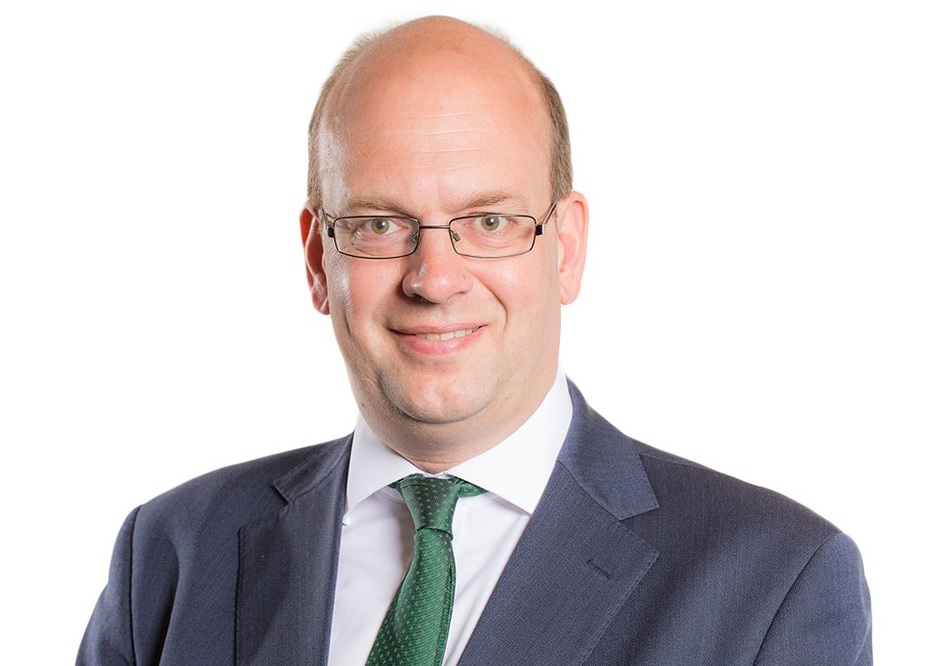
Mark Reckless, the former leader of the Brexit Party in Wales, has suggested that the UK should consider abandoning its commitment to free health care for all, instead advocating a system under which individuals would be expected to pay for social insurance.
Political parties in the UK, even those on the hard right, have been reluctant to advocate a move away from the principle that NHS care should be free at the point of delivery, taking the view that to do so would alienate voters.
But contributing to a Twitter discussion, Mr Reckless has suggested there is an alternative to the “extremes” of universal free healthcare in the UK and the free market approach adopted in the United States, where decent treatment is unaffordable for many.
Defending the NHS, Anthony Glees, a well-known professor of politics at the University of Buckingham, tweeted: “The appalling alternative would be a US system, with free emergency care for the poor & prohibitively expensive treatment via insurance for everyone else.”
Mr Reckless responded: “Or we could have a mixed system with social insurance like almost every other developed country.”
In 2016, Mr Reckless was one of seven UKIP representatives elected to the then National Assembly.
After a series of upheavals and changing allegiances, he emerged as the leader of the newly established Brexit Party group.
By the time of the Senedd election in 2021, he had become a member of the Abolish the Welsh Assembly Party. He lost his seat.
Before coming to Wales, he was elected in 2010 as a Conservative MP in Kent, defecting to UKIP in 2014.
He resigned his seat, won the ensuing by-election but was defeated by the new Tory candidate at the 2015 general election.
[mid-content-banner]
Retired
When we contacted him after his tweet this week and asked him to expand on his views, he said he was reluctant to do so because he had “retired” from politics and was now devoting himself to his business interests.
He continues to live in Cardiff, where his wife Catriona is a Conservative councillor.
Mr Reckless did, however, confirm that he had worked as a researcher at Conservative Central Office from 2002 to 2005, at a time when the party looked at how other European countries funded their health services to see whether alternatives would be appropriate in the UK.
When David Cameron was elected party leader in 2005, he decided that moving away from universal free healthcare would be unacceptable. Such research was ended.
Nevertheless, nearly 20 years later the present and future funding of the NHS is a major problem that politicians in all four UK countries are finding difficult to cope with.
In Wales, around half the Welsh Government’s total budget is spent on the NHS and that proportion is predicted to rise as people live longer and health inflation exceeds the general rise in the cost of living.
It’s perhaps unsurprising that a former politician like Mr Reckless, who is no longer seeking votes, should advocate a change in the way the health service is funded.
Other European countries have social insurance schemes, where most people pay and those earning below a threshold get free treatment.
The likes of Mr Reckless argue that such arrangements can be more efficient and reduce waiting times to a minimum.
Radical change
Some politicians are already advocating radical change, although none have so far argued for any system that would involve charging for treatment.
Reform UK, the successor to the Brexit Party, is advocating a system under which patients who were unable to access NHS treatment within a set deadline would be able to use a voucher and get treatment in the private sector.
Such a policy would be likely to be extremely costly, but those promoting it argue that it would act as an incentive to the NHS to operate more efficiently.
Yet those working within the NHS say that its problems are not, in the main, caused by inefficiency but by a lack of capacity and resources - and that more staff are needed to deal with the ever-increasing demands.
And while other countries in Europe and elsewhere may be able to steer a middle course between the UK and the US ways of organising healthcare, British people - and above all Welsh people - are unlikely to be persuaded any time soon to abandon a system under which treatment is free at the point of delivery.
Support our Nation today
For the price of a cup of coffee a month you can help us create an independent, not-for-profit, national news service for the people of Wales, by the people of Wales.
Get more trusted Welsh news
Choose Nation.Cymru as a preferred source in Google News to see more of our journalism.
