


Opinion
Forget the PM’s cliched war rhetoric – but there is one way war can help us understand coronavirus
Stuart Stanton
The increasingly urgent public debate concerning the easing of the government’s ‘lockdown’ is being played out against a rhetoric of cliched World War II words and phrases.
In all sections of the media jingoistic cries to win battles, defeat invisible enemies and emerge triumphant have served to mask the very human and very personal responses to the Covoid-19 health crisis.
There are wider implications to this form and application of language, in that it is emboldening people to believe a British native spirit is more than enough to see of any external threats, no matter what.
The images and comments surrounding the hospitalization of the Prime Minister only served to heighten this mood.
The Telegraph newspaper, in particular, has been careful to advance this theme, with columnist Allison Pearson arguing almost quasi-religiously than Johnson’s health “is the health of the nation”. Wales’ own Guto Harri argued less metaphysically that the Prime Minister had “become a one-man metaphor for the nation's battle”.
The attempted Churchill-isation of Boris Johnson is of course a long term project encouraged by the Prime Minister himself, and in the case of coronavirus the World War II comparisons largely serve to attempt to encourage – successfully, if you look at the polls – a ‘rally around the flag effect’ in which nationalism mutes criticism of the government.
And indeed allows anyone who does criticise can be portrayed as traitorously not supporting the ‘war effort’.
Of course, our fight against the pandemic has little to do with World War II, and there is plenty of room to criticise the UK Government. The government’s actions - when compared to nations such as New Zealand – do not seem to have been particularly successful in reducing the number of illnesses and deaths.
All we’ve had is the repeated claim from the government that their measures are ‘working’ (which is no doubt gratifying news to all those who have lost relatives and friends). But according to the media, now that ‘Boris’ is back at the barricades all will be well and day-trippers will find even more ingeniously dangerous ways to drive hundreds of miles to Snowdonia, the Beacons and Cardiff Bay – where they can enjoy a leisurely ice-cream.
In reality, it is probable that the approved language and custom, this latter personified by the now formalised tone of ‘Clap for Carers’, of the last six weeks will continue for a few months at least.
[mid-content-banner]
Connection
However, there is one way that Britain’s wars can help us come to terms with the gravity of what is now unfolding.
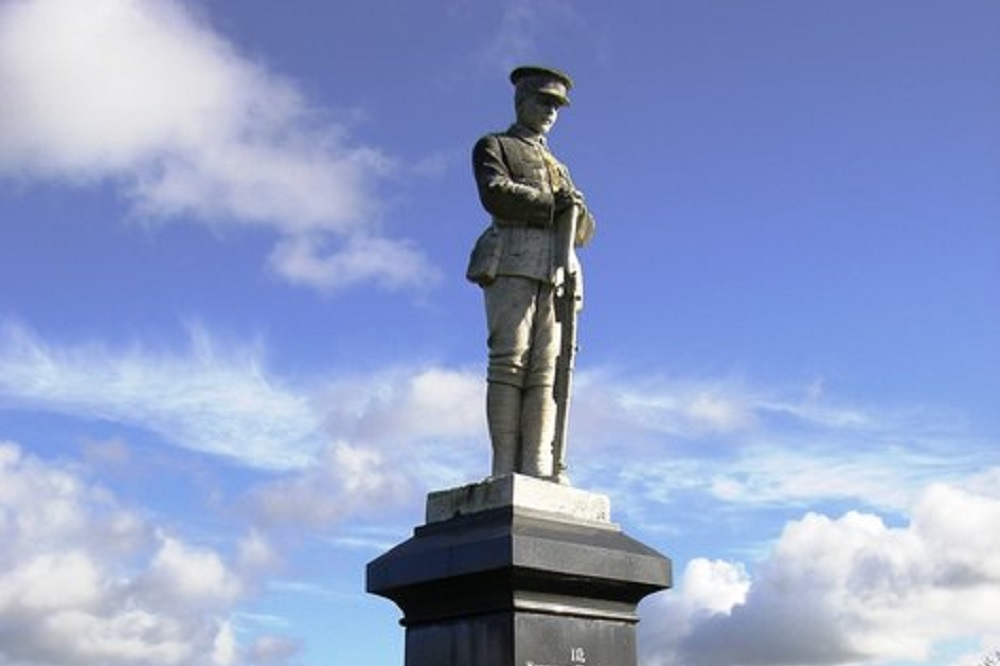
I suggest that people in towns and villages all over Wales break away from the impersonal banalities of digital media, visit their nearest War Memorial and simply taking note of the names, addresses and ages listed on them.
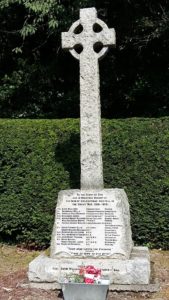
In certain respects, the similarities between the arbitrary nature of Covid-19 and the Great War stand out.
In both, people’s lives were taken by a force they did not fully understand and in ways beyond experience. The many thousands of young, Welsh soldiers largely went off to a War for reasons that were unclear to them, in places they had little idea existed and, for those whose communities were Welsh-speaking, fought out in a language they did not comprehend.
There could be much to be gained, both in personal humility and social connection by this simple act. The memorials have the unique advantage of being solid, material objects in public places and are therefore beyond direct ownership.
This fact may become very relevant as time progresses for the remembrance of those already lost to Covoid-19 has begun, but only in metaphysical terms as no traditional funerals are currently allowed.
The final point for this paper is that there exists a huge demographic distancing between the victims of the two disasters – for that is surely what they both were and are – largely 50+ as of now and very largely 30- in the Great War.
There is certainly not, despite rumblings from ‘Downing St. sources’ earlier in the current crisis any distinction between the values of human lives defined by age.

Support our Nation today
For the price of a cup of coffee a month you can help us create an independent, not-for-profit, national news service for the people of Wales, by the people of Wales.
Get more trusted Welsh news
Choose Nation.Cymru as a preferred source in Google News to see more of our journalism.
