


Opinion
Eryri & Y Bannau: Respect isn't optional
Stephen Price
No one wants to be a party pooper or moaning old hag, but these are trying times and if I must, I'm more than hapus to bring out my inner forest witch for a good old release of some hot opinionated air.
So, buckle up, hold my pointed hat and warty hands, and get ready for this week's episode of 'What's pissin' 'im off now mun...'
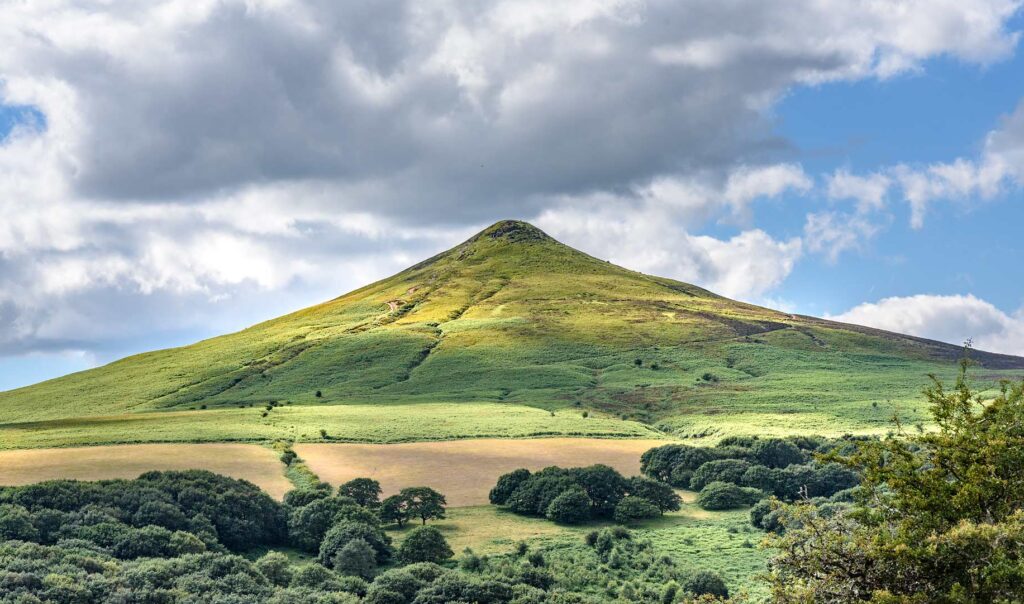
This bleak midwinter January Saturday, it's none other than The Beeb's Alice Roberts who's been encouraging more people to disturb my lovely walks up Y Fâl/Pen y Fâl (otherwise more commonly known by its ugly English moniker, Sugar Loaf)...
Sharing a reel from the top (but not letting slip if she'd taken one of the many paths all the way up or driven to the car park near the top, leaving only a short wander to follow), she said: "Here's today's effort at fighting the decrepitude. I'm up on the top of Sugar Loaf and it's an amazing view all over the Brecon Beacons from up here.
"Absolutely gorgeous, snowy landscape - I've just about got about enough light to get back down.
"Fight the decripitude!"
Naturally, the commentary went on to discuss the use of the term 'Brecon Beacons' (or the uglier-Bristolian-approved 'Brecons' as said by no one in Wales ever), with one writing: "Don't call it the Brecons. You'll upset the Welsh. It is stunning up there though. No debate."
One chap chimed in to 'correct' the above commenter, who himself needed correcting with his line: "There is nowhere called “the Brecons”!! It’s the Brecon Beacons."
An intelligent, Cardiff-studying, academic, it's no doubt oversight from Alice, but still, her words matter, and they reflect a broader and growing acceptance that, when it comes to Welsh names at least, words don't matter that much any more.
Even if us Welsh folk say they do.
Before we talk more about 'The Brecons', let's head first to 'Snowdonia'...
In news from only last week, "Police have slammed Instagram-obsessed tourists after hundreds of vehicles were dumped dangerously along snowbound roads in Snowdonia as Storm Goretti battered Britain" according to the Mirror in their story entitled, "Fury as tourists queue up to park on Snowdonia during Storm Goretti"
Further into the article, the Mirror clarifies that the park is "now officially known as Eryri". although, of course, for them it's optional.
The Welsh press, and BBC are usually slightly better, but that's just 'usually'...
A BBC news article from November 2025, entitled 'Lost student fell 500ft to his death on Snowdon after making final call to family' typifies the approach from journalists across the UK.
A horrifying tragic story, perhaps I should only focus on the fluffier to play it safe, lest I'm told it's only apt sometimes (but I won't of course), it perfectly demonstrates the approach: use Snowdon in the title, and 'Yr Wyddfa, also known as Snowdon' within the article to ensure backs are covered.
BBC West Midlands in December 2025 did similar - the title, quoted to ensure no wails from the Welshies, 'I am eating Christmas dinner alone on Snowdon' and the clarification within, with its opening line, "A campaigner will be eating his Christmas dinner at the summit of Yr Wyddfa (Snowdon)"
Liverpool Echo, similarly, shared the news about a "Stunning Snowdonia walk closed until 2027", but they were sure to clarify within how "One of Eryri's (Snowdonia's) most picturesque routes has been shut off to walkers until 2027."
In an article from 21 December, however, there was no such respect paid in their clickbait article titled 'The beautiful hotel and spa with mountain views tucked away in Snowdonia' - no need for Eryri here it seems.
And on we go, back down south to the 'Brecon Beacons'...
North Wales Live/The Daily Post have surely got the memo from their readership about Eryri and Yr Wyddfa, but no such respect is paid to the national park formerly known as 'the Beacons' in their article 'Visitors slammed for 'unacceptable behaviour' in Welsh mountains' from 12 January where they mention how "over the weekend, emergency teams, including volunteers, were twice summoned to Pont ar Daf in the Brecon Beacons National Park to deal with situations on Pen y Fan. Helicopters were also seen circling overhead as part of the response".
The photos within the article use both Bannau Brycheiniog and Brecon Beacons, but the article itself? Brecon Beacons will do.
Live for the Outdoors, in an article from December 2025, invite you to read their article, asking: 'New to winter hiking? Why Sugar Loaf in the Brecon Beacons is the perfect place to start'.
Not one mention of Bannau Brycheiniog. Why bother with such a 'tongue twister'! That's all the Welsh language is you see, an annoyance, a luxury, a bit of PC inconvenience of use to no one.
Week after week, we receive press release after press release mentioning Snowdonia or Brecon Beacons, such as this Burberry one, and make the necessary changes, and it's very clear that the message has not got through - or it has, but the names are simply not worthy of being respected.
I could list more and more articles and examples, but you get the message. It's optional, it's unnecessary, it's effort.. it's out of the news now so who cares.
Confusion
I would argue, however, that many of Wales' institutions are helping to continue the confusion and acceptance of Eryri and Y Bannau being called their more recent, English titles with a mix of websites in need of an update, or websites they feel are best left alone while the 'new name' (which isn't a new name) beds in.
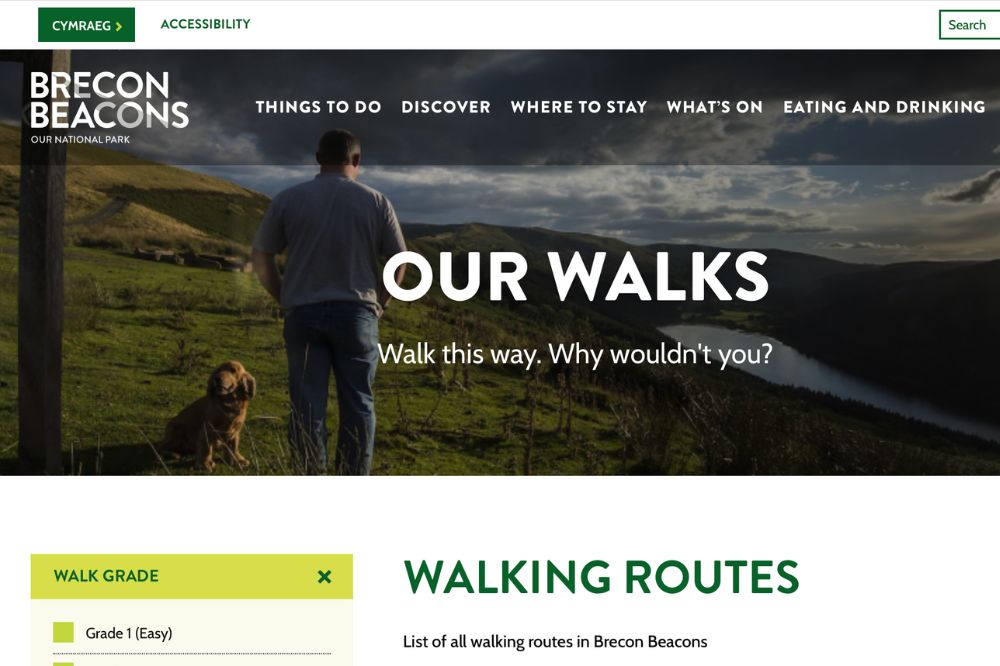
We have BreconBeacons.org, Visit Brecon Beacons Bannau Brycheiniog, Brecon Beacons Tourism - the latter "a business-led, not-for-profit organisation dedicated to strengthening and sustaining the visitor economy in Bannau Brycheiniog (Brecon Beacons) National Park and the surrounding areas.
They write "By joining Brecon Beacons Tourism, members gain access to exclusive marketing and networking opportunities, benefiting from our well-established digital platforms and promotional reach."
Eryri is a bit more organised, but still with its Visit Snowdonia type organisations, the first port of call for a visitor - and who are we to demand cheese companies, railway companies (the Snowdon Mountain Railway is an unlisted public company owned by Jersey based Cherberry ltd to save you a search) and the like to change.. Well, we could actually, but I'll leave that to you.
Laughably, www.visitsnowdonia.info is the official website for the "Snowdonia Mountains and Coast tourism destination" managed by Cyngor Gwynedd on behalf of the Snowdonia Mountains and Coast Marketing Area Partnership. The other partner is Conwy County Borough Council. So have they not had the memo?
I will, then, admit and agree that there is little wonder why some tourists are confused when even our own tourist boards and councils are singing from different hymn sheets, but with the New York Times praising Bannau Brycheiniog in its list of the best places in the world to visit in January 2024, there could be no better proof that the right decision was made to use its authentic name and that a precedent has now been set.
Featuring at an impressive number 18 on the list, the national park has been commended for the return to its original name which took place in April of last year - seeing its English name scrapped in favour of Bannau Brycheiniog to underline its commitment to Welsh culture, language and heritage.
The change also came about as a response to the climate emergency. In Welsh, Bannau means ‘peaks’ while Brycheiniog is reference to the old kingdom of Wales’ fifth century ruler, Brychan.
Its former English name was a reference to wood-burning, carbon-emitting beacons, which no longer fitted with the park’s eco ethos.
The name Bannau Brycheiniog is first attested in the sixteenth century, and 'Brecon Beacons' first occurs in the eighteenth century as "Brecknock Beacons".
The New York Times praised the national park for the decision to use its Welsh name only, and for ‘conserving Welsh culture amongst scenic mountains’.
Journalist Susanne Masters wrote: “Reclaiming the name Bannau Brycheiniog for a beloved national park in Wales last year was more than a linguistic change to Welsh from English; it was a shift to spotlight the Welsh culture of the 520-square-mile park, formerly known as Brecon Beacons. The park’s emphasis on the relationship between nature and local culture is also shown in a new logo."
Commitment to the future
“Instead of the burning brazier of Brecon Beacons, the logo now has an ancient Welsh crown set within a green forest under stars, a reflection of the park’s commitment to a future where planting native trees restores temperate rainforest, the revegetation of peatland captures carbon and the dark sky is protected from light pollution.
“While visiting Bannau Brycheiniog, ‘the peaks of Brychan’s kingdom,’ make use of the park’s public transport and bike rentals, including the Explore Wales Pass for trains and buses, or take in the views by hiking through waterfall country from the village of Pontneddfechan.”
Michael Sheen featured in a moving short film to launch the name switch from Brecon Beacon’s National Park to Bannau Brycheiniog back in April 2023 – describing it as “a name from our past, to take us into our future.”
The short film entitled ‘Cynefin’ was written by Welsh novelist, poet and playwright Owen Sheers, and begins with breath-taking shots of the park’s rivers, woodland and mountain walks as Sheen wanders through the rugged landscape.
Looking back at articles featuring the name Brecon Beacons, its use couldn’t look more outdated or more inappropriate for the Cymru of today.
Articles from 2023 appeared in print and online with businesses claiming it would damage the region and its ‘Beacons’ named businesses - and yet, here we are today with one of our national parks featuring in one of the most important and most-read news publications worldwide.
A priceless PR move, with y Bannau firmly planted in the minds of American and worldwide tourists and their deep pockets.
But sadly, with the headline-making news no more, ‘Brecon Beacons’ is slipping through the net day in, day out, with the predictable commentary to follow.
In 2024, hot on the heels of the name change, there was a now-forgotten, Labour-overlooked and lost-momentum school of opinion pushing to change the name of Wales to Cymru, as evidenced by the popular Senedd petition.
If there was a better gauge for how this could impact Cymru’s standing on the world stage, save perhaps for independence, then I’d be hard pressed to find a better example.
X User, Mrs Eff, said: "No point calling it Cymru when nobody's even heard of Wales? Well it worked for #BannauBrycheiniog, didn't it."
While former Plaid leader, Leanne Wood shared the news, saying: "Here’s hoping all the 'you mean Brecon Beacons' brigade will now bore off!"
It's not just the use of the Welsh names for national parks that needs rethinking however, or even the very name of our nation, it's every single name in Wales with a Welsh and English 'alternative' - but strangely, one where (the correct) Welsh rarely sees the upper hand.
Across Wales, we bypass the rich history of original Welsh names for the go-to English ones, but why should we?
Wales' place names should reflect our nation's history, our people, our native language. Without them, Wales is lesser, we are lesser.
It's time we did indeed fight the decrepitude of colonialism and minority language loss, and take Wales into a confident future, where its villages, towns, cities and hills sing with one voice. The native one of this land.
Bannau, Eryri, Yr Wyddfa... Cymru even... It really is quite easy.
Support our Nation today
For the price of a cup of coffee a month you can help us create an independent, not-for-profit, national news service for the people of Wales, by the people of Wales.
Get more trusted Welsh news
Choose Nation.Cymru as a preferred source in Google News to see more of our journalism.
