


Wednesday, 15th July 2026 Cardiff 17° · Clear sky
NationCymru A news service by the people of Wales, for the people of Wales.

Opinion

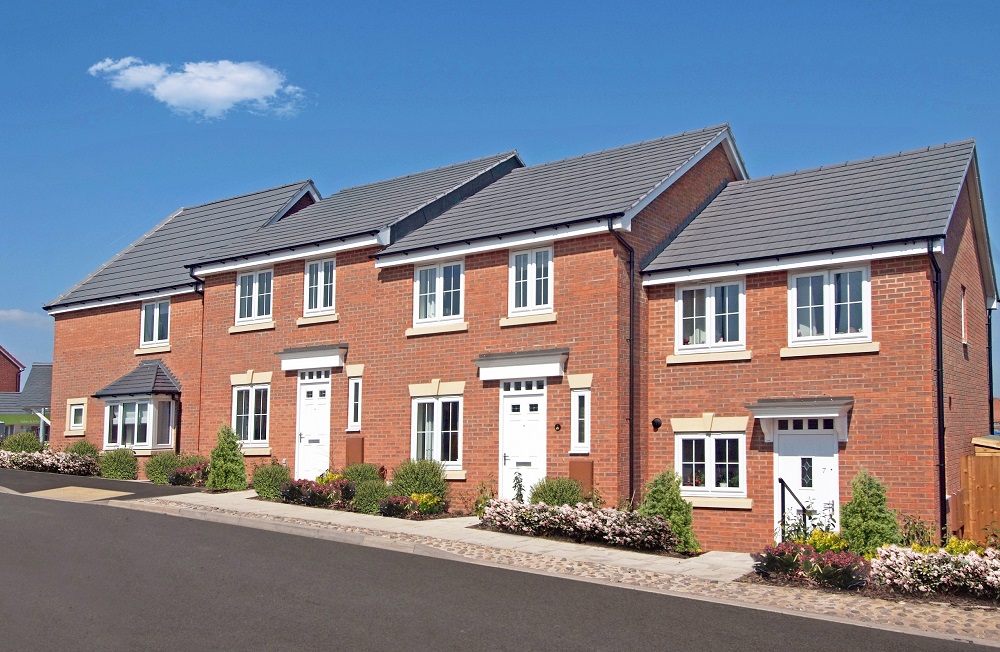
Eradicating the scourge of large volume house-building could boost Wales' economy
By NationCymru

Rhisiart ap Siencyn, the former director of the Federation of Master Builders Cymru, argues that the Senedd needs to take control of housebuilding

During the 80’s two-thirds of new housing in Wales was built by small building firms. Today they build less than one-third.

Why is this? And why is it important to us in Wales?

I’ll deal with the first question first. One reason is that Wales’ local authorities’ planning policy no longer caters for local need.

Instead, they have become obsessed with the need for growth. The more houses are in the local authority, the more council tax is paid. And the council then have more money to pay for their grandiose plans!

The fact is that Wales doesn’t really need to build many new homes at all. There are upwards of 30,000 empty homes in our country and bringing those back into use would mostly cover our housing shortage.

The barrier to doing so is that a builder refurbishing an existing building pays the full 20% Vat, whereas volume housebuilders building new homes pay… wait for it… yes, 0% Vat!

To facilitate growth, therefore, councils have to identify vast tracts of land for which they can conveniently grant planning permission.

This land will almost invariably be ‘green field’ and require a major financial transaction between the fortunate landowner and whoever can afford the massive financial outlay involved in converting acres and acres of green field into a housing estate.

Volume house builders can also afford to buy the vast tracts of planning land which they then hold on to for many years and build on at their own pace, as demand rises and falls.

Small, local housebuilders generally can’t afford to do this. Which leaves the field open (pun intended) to large, well-resourced house builders who build whole estates at a time.

The local developers and builders are instantly priced out of the process.

Unaffordable homes

So, why is this important to Wales?

Most of these global sized volume house builders are headquartered outside Wales. They will mass purchase materials and services as cheaply as possible and as a result, will they end up buying little or nothing in our country.

Surely, you say, they employ loads of local builders? That’s often true, but generally on such poor sub-contract/self-employed terms that they make too little to invest in their own businesses or training.

This means that there is very little benefit to the local economy in the longer term, which there would be if small, local building companies built up their own thriving enterprises over many years.

The real problem, however, is that the houses built don’t really meet the local need, which is for affordable housing for the 1/3 of our population who live in poverty.

A planning restriction will usually insist that a small percentage of the new houses are affordable but the bulk will be in a price bracket that local buyers can’t afford.

Large volume house builders care little where they build, what strain it puts on the area’s services, and about the character of their properties.

A housing estate in Aberteifi, Abingdon and Aberdeen will look exactly the same and all will have similarly twee names like Mulberry Crescent that make little reference to an area’s culture and history.

Solution

Currently, therefore, local authorities effectively hand over housing policy to volume builders.

They choose the number of houses built, the type of houses built, where houses are built, what they look like and what they are named.

How could this be changed? It wouldn't take a huge leap of imagination to envisage a local authority planning department which could ensure that conditions are more favorable for local builders.

But this is the hard part. In order to make the costs affordable, the council would have to install the services first; roads, drains etc.

And then they would have to split the planning land into manageable chunks for local companies to bid on and furnish them with the required housing.

This wouldn’t be easy. However, we would get the housing we actually need in the locations we actually need them, and even - praise be – a unique, recognisable identity in keeping with their surroundings.

Also, the area’s builders, who are far more likely to employ apprentices and train people from that area, would prosper. The area’s suppliers would also get a fairer crack of the whip.

The value to the local economy of the construction of housing would increase substantially.

It's not rocket science. But there’s very little incentive for councils to do this at the moment, and therefore it’s an issue that would probably need the government to fix.

Do Wales’ politicians have the will to wrest control of house building in Wales from the vested interests of volume house builders?


Support our Nation today

For the price of a cup of coffee a month you can help us create an independent, not-for-profit, national news service for the people of Wales, by the people of Wales.

16 comments

marcvjones

Rhisiart identifies the problem well in regards to housing in Wales - we have developer-led communities not community-led developments. One simple solution could be to add VAT to large greenfield new builds, thus making refurbishing empty properties more attractive. Planning in Wales needs a revolution - it's not working for the good of the community.

Reply
David Clubb

This has got strong resonance with the WikiHouse approach, which supports small and local development. https://wikihouse.cc/

Reply
Anne Greagsby

No it doesn't....

Reply
Capitalist and Welshnash

Myself, as someone who sees property investment and being a landlord as one of the best means ordinary people have to escape having to work for other people, to give themselves economic freedom and to get them out of tax and into their aspirations, I support what is being suggested. Cutting back these tasteless, modernist, utilitarian builds, in no way interferes with my ability to make a profit as a landlord and be free of having to work for other people. So yes, let's get rid of mass-produced modernist rubbish. I would suggest a building operation like Poundbury, funded by the Prince of Wales, in which tradtional, small-scale Georgian architecture was used to build an entire village with an organic, home-grown feel, in which local and small business were employed to design and construct from beginning to end. Then, locals were given priority, with those from outside allowed to buy after extensive local consultation and catering to local needs first.

Reply
sibrydionmawr

Rentier = parasite.

Reply
Capitalist and Welshnash

Anarchist hippy = servant.

Reply
Robert Williams

That rare thing, even on this site, an article that proposes practicable, implementable steps to improve life in Wales. The article ends with a question: I only hope Wales's politicians, at national and local level, do have the will to act. Da iawn, Rhisiart.

Reply
Richard Jenkins

Diolch Robert, much appreciated. Thanks to all for your supportive, cnstructive comments. Rhisiart

Reply
Tame Frontiersman

A thoughtful article Wales has a large aging housing stock and there’s a large number of properties either vacant or in serious need of extensive renovation which could be turned into quality homes for families. The VAT exemption may indeed be an incentive for new-builds over renovations. But it’s not the only barrier. In the upper reaches of the South Wales Valleys, for example, the costs v returns are not favourable. In regards the problem of small Welsh builders competing with the big boys, this may be a naive question, but is there no way small builders could work together? Would postponement of, or help with CIL, s106, overage/uplift payments or other upfront costs help small builders/developers? Personally speaking, I would like to see the development of some unique Welsh architectural styles. Apart from a few iconic buildings there are few new buildings which have anything distinctive about them. Stand in many a new housing estate and you could indeed be in “Cheshire by the sea” (Ref: N.C. news 14.9.17)

Reply
Penderyn

Thing is Capitalist and Welshnash....you may be sitting pretty as a landlord and dreams of becoming part of the Im alright jack lot....but landlordism ...is keeping us under 35s in poverty......high rents and underpaid job wages mean Im finding it very hard to get on the housing ladder...and both me and my girlfriend are working fulltime in SKILLED jobs......I really dônt think many of the older generations have a clue. The inheritance of vast wealth by a few families to children who did nothing to earn that wealth...........is destroying capitalism by creating horrific inequality in a rapidly tech advancing world

Reply
sibrydionmawr

Many of the older generation does have a clue, which is why in the immediate post WW2 period decent housing became a hot political issue. It wasn't just that large amounts of housing had been bombed out of existence, but as part of a general scheme to try and ensure that everyone had a decent place to live. Even the Tories were caught up in this economic and political consensus , though they I'm sure they'd have wriggled their way if they could have. For those who wanted a home that they owned themselves there were local authority mortgages available. which often covered 100% of the cost of a house. A decent place to live is a fundamental human need, and should be provided as of right at a rent that people can easily afford. The old and for many good reasons unlamented German Democratic Republic more or less just managed to solve the huge housing crisis they had just before the country became history. The vast majority of people rented their homes from the various local housing providers, (none of them rentier landlords) for rents that amounted to 4 or 5 percent of their incomes, which was probably enough to cover both the cost of building and maintaining the structure if aggregated over time. The housing problems there were solved because it was seen as a fundamental human need. Your final line is interesting indeed, and highlights the big inner contradiction of capitalism: left to it's own devices it will always do that, create a situation that destroys it, or causes financial crashes. There have been many in history, but most of them coincide with the advent of capitalism. Capitalism will always create inequality, as it needs that to survive itself, even as it destroys. Capitalists don't do anything to create wealth, as only workers create wealth, and then the capitalists steal most of that wealth they created away from them, firstly through profits, then through such things as rent and through selling them the things they produced at greatly inflated prices. Capitalism is an evil, and as such it is incompatible with any notion of democracy, as it is based on inequality, and you can only have a democracy when there is equality between people. I find it quite strange that housing doesn't have a much higher political profile than it does in present day Wales, as in some ways it is as important an issue as was the drowning of Tryweryn. Most of us are very clearly aware that we have been saddled with a housing policy that is completely inappropriate for the needs of our country, but whilst there is coverage of this issue, it hasn't become the huge issue it should perhaps be. Do any of us, for example, know what we think an average rent should be for a home? And what would that rent figure be based on and why? Fundamentally I think we need to completely rethink housing policy in Wales, to one that reflects the needs of people for homes and not the potential profits for parasite rentier landlords. I'd like to see a Wales where rents are strictly controlled so that a home is genuinely affordable, and a housing market that is rigidly controlled so that profiteering is outlawed and the cost of acquiring a home in this way represents the true cost of building it. I'm sure there are parts of our history that could tell us a lot about how our forbears housed themselves, using their collective energies and initiative. All we need to do is to learn them and adapt them for our own age.

Reply
Nic

Clywch! Clywch! I've been saying this for years. Our village has suffered horrendously from large building developments. It really sticks in one's craw to be told that 300 new houses are being built on greenfield sites around you when there are many existing houses (from as little as 70K) languishing in estate agent windows for months, even over a year. There is NO local demand. It's just a front for a huge colonisation project to facilitate the destruction of close, strong communities and the greater goal of Anglicising Wales.

Reply
Carrie Harper

Interesting article, genuine local need should clearly be the driver. I'd disagree that local authorities have any say in the housing numbers though (the official line is of course that they set the numbers but this is a nonsense in practise). The over-development is dictated from the Welsh Gov and their flawed population projections, the numbers are then enforced via Local Development Plans by the Planning Inspectorate. At its politest, it's social engineering, I could think of other terms.

Reply
Cofi Dre

Excellent piece. May of my European friends coming the the UK notice the identi-kit nature as well as the poor quality of our modern housing, whereas in Europe plots tend to be sold in small batches and various different architects work with the buyer. It's not expensive, and it means your whole country doesn't run the danger of looking like Swindon. It's more responsive to local needs and it means developers don't have huge power over communities as well as driving policy through lobbying MPs.

Reply
Dafydd ap Gwilym

Agree with Rhisiart, However, I would take it a step further by ask Cymru to follow the policy of having just two kids per family, turn away, for the time being, any foreign settlers (refugees would still be taken in) and see properties revert to private individual ownership to be passed down to the next generation and no block private landlord type ownerships. Oh and an Independent Cymru to make it happen! This would be the start of many changes to solve the problem of having been in mental slavery to the English/British!

Reply
Robert Williams

One more belated point - Carl Sargeant claims 'volume' house builders get up to dirty tricks to avoid installing sprinklers. Another reason - as if any more were needed - to eschew them.

Reply

Leave a reply

Replying to David Clubb Cancel

This has got strong resonance with the WikiHouse approach, which supports small and local development. https://wikihouse.cc/

Comments are reviewed before they appear.
