


Opinion
Don’t listen to Gareth Davies: north and south Wales are united through history
Niklas George, owner Welsh Histories
Gareth Davies, MS for the Vale of Clwyd, recently caused a stir by claiming that the majority of people within North Wales have ‘closer links with the North West of England and Midlands than they do with Cardiff.’
Whereas it is true that we in the north often view Cardiff (and, indeed, much of the south) as some “distant realm” separated from us by mountains, valleys, and an uninspiring railway line in desperate need of funding, it is untrue that we see them as more distant than any region of England.
In fact, there is far more that unites us and any claim to the contrary is either ignorance or gross dishonesty.
Historically speaking, the north and south of Wales have far more in common with each other than Davies lets on.
[mid-content-banner]
Myth
This myth that north and south are divided is a long-standing one typically the result of a politically motivated agenda normally perpetuated by the right of the political aisle.
However, we need not get political to disprove such claims by Mr. Davies but, rather, get historical (though, inevitably, some of this history is rooted in politics).
If you wish to find historical similarities between north and south, then what better way to begin than with our industrial history?
Both poles of the country fuelled the island of Great Britain during its long-gone glory days – Wales was, after all, the engine room of the British Empire whether we wish to admit it or not. The south, of course, is synonymous with coalmining and the north, too, has its own coalmining history (the Flintshire and Denbighshire Coalfields being examples of this).
The historic steelworks of the south were/are equally as prideful to the south as the slate mines are to the north. The remnants of our industrial past are visible to all throughout the country and the common claim that while the south was digging for coal the north was tending sheep is, again, dishonest.
[lower-mid-content-banner]
Industrial past
Our industrial pasts are also both intrinsically linked through tragedy, too. The Senghenydd Colliery Disaster of 1913 killed 440 people at the Universal Colliery in Southeast Wales.
It was a tragic event not talked about enough today and, perhaps almost as tragic, was completely omitted from our school history curriculums. In the north, the Gresford Disaster of 1934 killed 266 men near Wrexham and is similarly ignored (though it did receive a warming nod in Season 2 of Welcome to Wrexham).
Furthermore, both north and south were victim of English establishment inflicted tragedy in the mid-20th century, too. The north had Capel Celyn in 1965 and the south had the heinous tragedy of Aberfan just one year later.
Both events occurred within such a short period of time that it is impossible to declare that the country wasn’t unified by such events. Does the northwest and/or midlands have two such disasters inflicted upon them by a neighbouring country within just one year? Perhaps not, but Wales does.
Capel Celyn
Speaking of Capel Celyn, one of the primary complaints by Welsh people in the north today is that we still provide water to Liverpool and the northwest. Someone from the south (and middle) might argue that this is eerily like their chief complaint about parts of the south (and middle) of Wales which provides water to Birmingham and the midlands.
We are also united by our unique Welsh culture and language. It is, after all, true that there are Welsh speakers all over the country, whether north, south, or middle. It is also true, however, that the number of Welsh speakers has been declining within all areas of Wales over a period of centuries and it would be very easy to make a unified case that this is a result of a historically oppressive English establishment which dates all the way back to Edward I in the late 13th century.
Edward’s Conquest of Wales in 1283 couples with Henry VIII’s Laws in Wales Acts of 1535-42 and was largely responsible for later oppressive measures taken against the language, such as the Welsh Not of the 19th and early 20th centuries. To make the case that North Wales is somehow cut off from South Wales (in anything other than railway lines which, once more, it is) is, for the last time, dishonest.
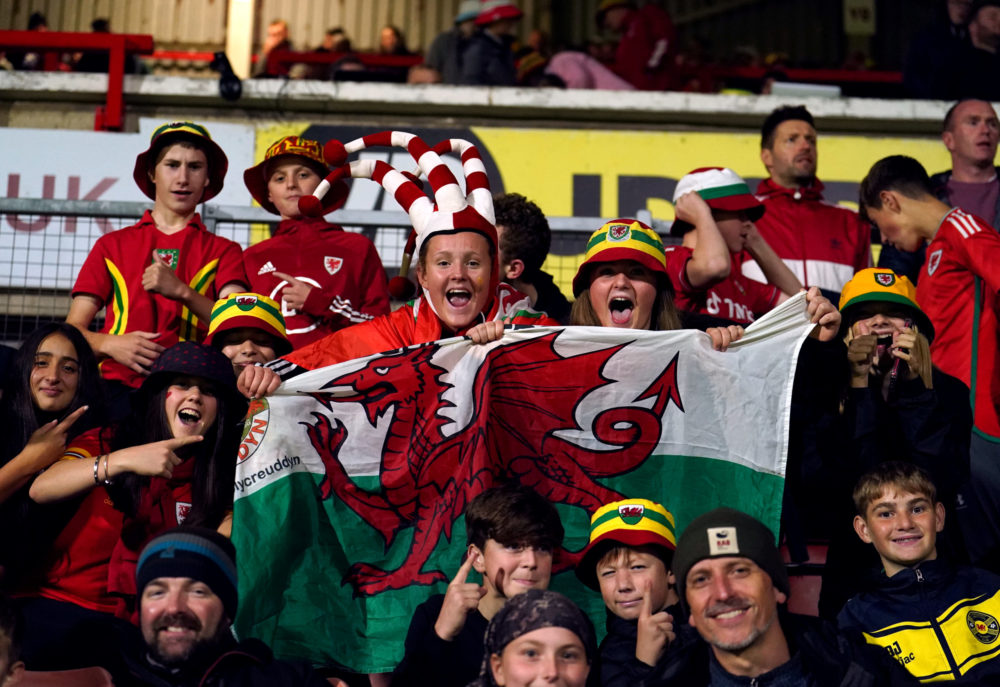
Wales comes together for all manner of reasons. From the Six Nations to the Eisteddfod, from European and World Cup Championships to the protective stance on all things Welsh that we share.
Historical figures
We celebrate Welsh historical figures like Betsi Cadwaladr and Margaret Haig Mackworth and the more recent celebrity figures of Michael Sheen and Dafydd Iwan - all of whom embodied and continue to embody what it means to be Welsh no matter the side of the country we find ourselves on.
Even in politics, we are mostly unified in a shared disdain for the political party Gareth Davies comes from and maybe, just maybe, this is part of the reason why he celebrates our divisions and neglects our unity.
There is a common theme here and, once more, one would be either ignorant or dishonest to deny the connections between the north and south. As explored, we are connected by coal, slate, water, and a shared Welsh identity that is not divided on the basis of north or south.
Support our Nation today
For the price of a cup of coffee a month you can help us create an independent, not-for-profit, national news service for the people of Wales, by the people of Wales.
Get more trusted Welsh news
Choose Nation.Cymru as a preferred source in Google News to see more of our journalism.
