


Opinion
Does Wales' bus industry have a future?
Professor Stuart Cole, CBE. Emeritus Professor of Transport Economics and Policy, Prifysgol de Cymru / University of South Wales
The bus industry in Wales has far fewer numbers of passengers, routes, buses and areas served than in the 1960s.
The 1960s and 1970s saw the rise in the purchase of small family cars and the decline of bus usage.
These small cars (Ford Anglia, Morris Minor, Minis) all costing around £500 were now affordable by the average family especially with the growth of regulated ‘hire purchase’. Prior to that cars were priced for professional and senior business people.
Car ownership in Wales, a key factor in the bus industry’s decline, remains at a high level.
In comparing 2021 with fifty years previously, 22% of families have no car (1971: 48%); 45% had one car (1971: 44%); 33% have two or more cars (1971: 8%).
This trend has lost the bus industry a large part of its core market – work / school journeys and family holiday travel.
[mid-content-banner]
Downward spiral
There followed a downward spiral where passengers numbers fell, fares were increased to compensate the loss of income (which drove away some customers simply through price elasticity effects where a fares increase of 10% could expect to reduce passenger demand by 3%).
This was my experience as Cheshire County Council’s economic adviser transportation in the 1970s.
Repeating that policy, recent large fares increases may lead to further decline. The cost to government in concessionary bus travel payments will also increase as these are fares based.
Over fifty years it has become a vicious circle. In addition the perceived single journey cost is often only fuel and parking; the sunk cost of purchase / leasing and maintenance is ignored for cost comparisons between car and bus travel.
In recent surveys, 45% of car owners said they could not possibly use buses as there were no convenient services or the journey took much longer.
The reliability, frequency and cost of bus travel will, as this column has indicated, will determine the modal split of the journey from home to work.
This varies between cities (Cardiff 42%; Edinburgh 57%) and often determined by the degree of jobs located in the central area rather than out of town.
[lower-mid-content-banner]
Lockdown
Covid further reduced patronage through lockdown and ministers’ advice that public transport travel was dangerous – when it wasn’t – perhaps another issue for the Covid inquiry.
Demand is now back to between 75% - 90% of pre-covid levels. The reality however is that bus travel will not easily reach the old levels.
Retaining many bus services, or at least providing reduced frequencies, has only been possible through government / county council revenue support payments to operators.
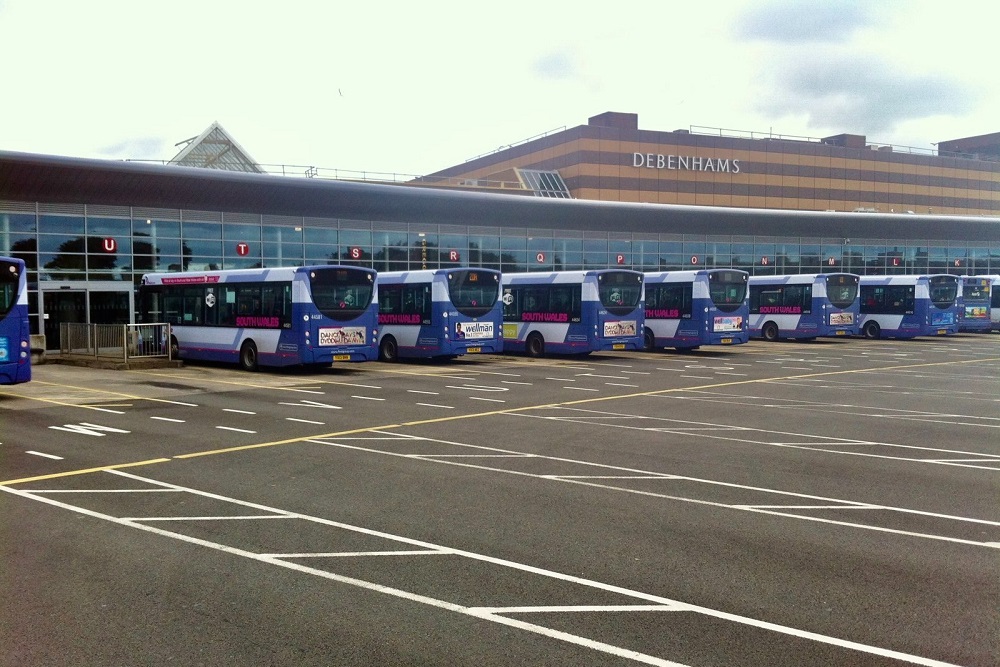
In Swansea, for example, that amounts to £3.6m. The total Welsh Government share in 2024 / 25 is £60m plus concessionary fares payments – £39m for Bus Network Grant revenue support; £21m will fund specific projects.
Bus companies are all profit-led businesses. They also operate within the competition framework of the now discredited bus deregulation legislation.
Where bus services are cut, there is some legal doubt about whether a county council could fill the gap through their own bus companies.
The buses bill being prepared for the Senedd may allow this but should those companies continue to operate at arms-length from their owners (e.g. Cardiff Bus and Newport Bus) or be seen as a socially necessary mobility service?
Before trying to attract new passengers, the industry would have to heavily invest in buses, drivers and infrastructure to improve reliability and capacity. These involve risks small companies would be reluctant to undertake.
Major infrastructure such as bus stations (Cardiff and Swansea are examples) often require an associated commercial retail, office or residential venture.
State funding
In all instances state funding is likely to be required which fits government franchising policy – where TfW provides buses for contract companies to operate and maintain.
Contracted school transport is a major source of income for smaller companies. However with declining budgets, some counties will seek to reduce the mileage-from-school criterion which is currently a figure set by law to save money despite increases in council tax.
Affordable access to hospital appointments is best achieved by relatively cheap / free bus travel and is an important source of bus revenue.
The ‘8 am bottleneck has disappeared’ claimed Eluned Morgan last week on BBC Newsnight despite evidence to the contrary and an NHS report 12 years ago, it remains detrimental to bus operations and to patient travel.
The elderly and those on low incomes, with no car available either must pay expensive taxi fares or start their journey on free hospital transport often at a very early hour.
Health board appointment services and bus companies must work more closely together to identify the best bus journey for each hospital customer and attract that market back to the bus.
Retail business
Bus operation is a retail business just like a supermarket and needs an inviting entrance and window display at the bus station and the humble bus stop.
Too many bus stops have not progressed from the 1930s when people’s living standard expectations were much lower.
Fully enclosed, well-lit shelters with hard copy or, preferably, real-time information and attractive appearance must become the norm – such as those on the TrawsCymru network.
Some bus companies have introduced apps which show the bus location – easier for big group companies; so government must financially help smaller companies to provide the same service.
Ken Skates, the new, correctly designated, transport minister is a good appointment in this column’s view. He has held the post previously so that transport policy experience should give him the confidence to critically assess advice
The new franchising regime proposed in the Senedd bill must be taken forward by Mr Skates through ensuring sufficient funding to achieve service improvements which integration / franchising will bring.
The Coach and Bus Association Cymru prediction that the current round of contracts given to big companies will lead to their market domination and a loss of small local bus businesses has also to be urgently addressed.
The bus industry in Wales does have a future but Welsh Government must set the framework for its operation.
In any event this column will continue to provide the minister with positive transport advice and policies advantageous to Wales.
Support our Nation today
For the price of a cup of coffee a month you can help us create an independent, not-for-profit, national news service for the people of Wales, by the people of Wales.
Get more trusted Welsh news
Choose Nation.Cymru as a preferred source in Google News to see more of our journalism.
