
Opinion
Why Wales now needs a campaign movement to demand powers over rail infrastructure
Ifan Morgan Jones
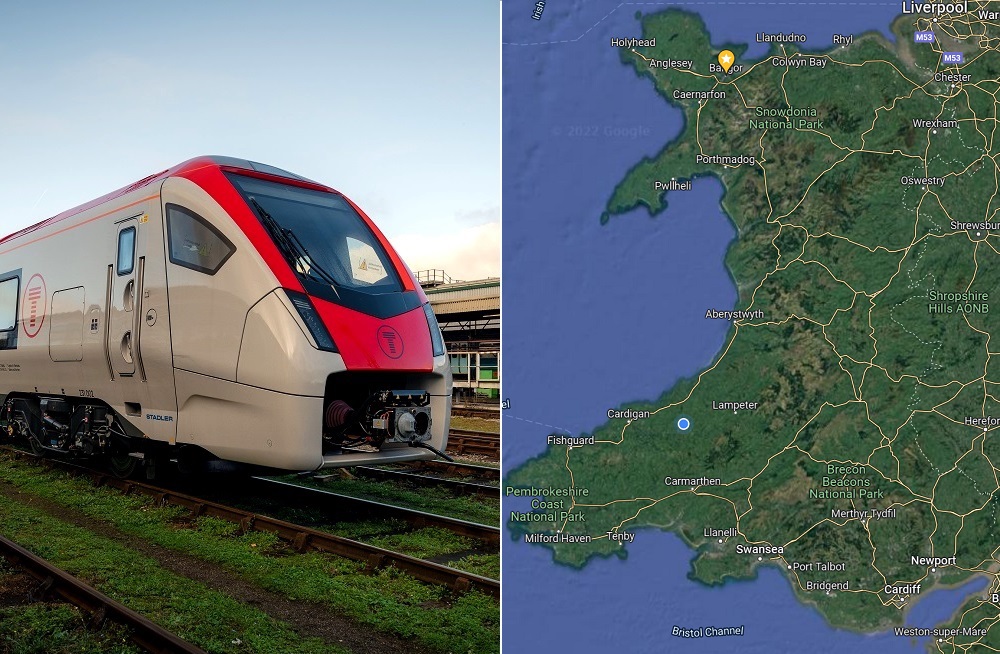
I don't need to tell anyone who has spent any time in Wales that the public transport network here is almost farcically bad.
The oft-cited example of course is the complete lack of any rail network connecting the north and south of Wales, meaning that you have to leave the country in order to cross it.
But even the connections between our largest cities areas, Cardiff and Swansea, are slow, unreliable and creaky - denied basic investment such as electrification.
This has always been a problem but is about to become a much bigger one, because we are fast approaching the point where a functioning public transport system is no longer something that would be nice to have, but a necessity.
Rising fuel costs are going to make private cars less and less of an economically viable option.
At the same time, we now need to tackle climate change head-on and that means getting people out of their cars and into trains and buses.
Investment in Wales’ infrastructure is also essential if the country’s economy is going to develop.
Contrary to the UK Government’s mantra of ‘levelling up’ Wales is actually falling further behind the rest of the UK – especially those parts of the UK that do enjoy significant transport investment, London and SE England.
If Wales wants to escape its post-industrial state of being little but an economic backwater on the outer periphery of one of the world’s richest city-states then investment in transport infrastructure is crucial.
Unfortunately, under the status quo - where decisions over where to invest this money are locked into Westminster - there is simply no hope of any of this happening.
[mid-content-banner]
Denied
Currently, the Welsh Government is responsible for rail services in Wales, but not the rail infrastructure itself.
This means that the Welsh Government can pour some of its own money into projects – like the South Wales Metro – but we depend on Westminster for the bulk of the investment.
There's nothing stopping the Welsh Government from discussing and planning for exciting new options such as a rail link between the north and south of Wales. But in practice to actually get any of them built it would have to get out the begging bowl and go to Westminster.
And that’s a problem because the UK Government simply hasn’t delivered that investment.
Professor Mark Barry of Cardiff University estimated this week that England is receiving 200 times as much rail investment as Wales, despite only having 10 times the rail route and 20 times the population. 'Staggering and completely undefendable' was his rather polite description of the situation.
This has happened partly because the UK Government classes HS2 and other projects as ‘England and Wales’ meaning that Wales will not benefit in the same way as Scotland and Northern Ireland from additional rail funding.
There is no good reason to class these projects as 'England and Wales' because not a metre of their tracks pass through Wales. The railway will no doubt be of some use to Welsh people. But I sometimes use of New York underground and that’s no argument for designating it a New York and Wales project.
This is quite simply a decision by the UK Government to deny Wales proper transfer investment, and it’s a decision they seem entirely comfortable with.
If rail infrastructure were to be devolved, then Wales would automatically get its fair share of the funding under the Barnett formula. A Cardiff University report found that Wales would have received an extra £514m investment in its rail infrastructure between 2011-12 and 2019-20 alone.
Even the Welsh Conservatives agree that the current situation is unfair. While they reject any more devolution, have now called openly for Wales to receive “its fair share” of HS2 funding.
Protest
It’s arguable therefore that this isn’t a contested issue within Wales – there is agreement across the mainstream political spectrum that Wales is being shafted. It’s a cross-party issue.
But while everyone now thinks Wales should get its proper share of investment, while the UK Government doesn't agree, we aren’t getting it, and there is no prospect of us getting it. Ever.
All the Welsh Government and other parties in Cardiff Bay can do is ask politely. All experts on public transport in the media and academia can do is pen articles such as these or blogs decrying the terrible state of our railways.
The UK Government, ideologically opposed to any sort of devolution, will remain unmoved.
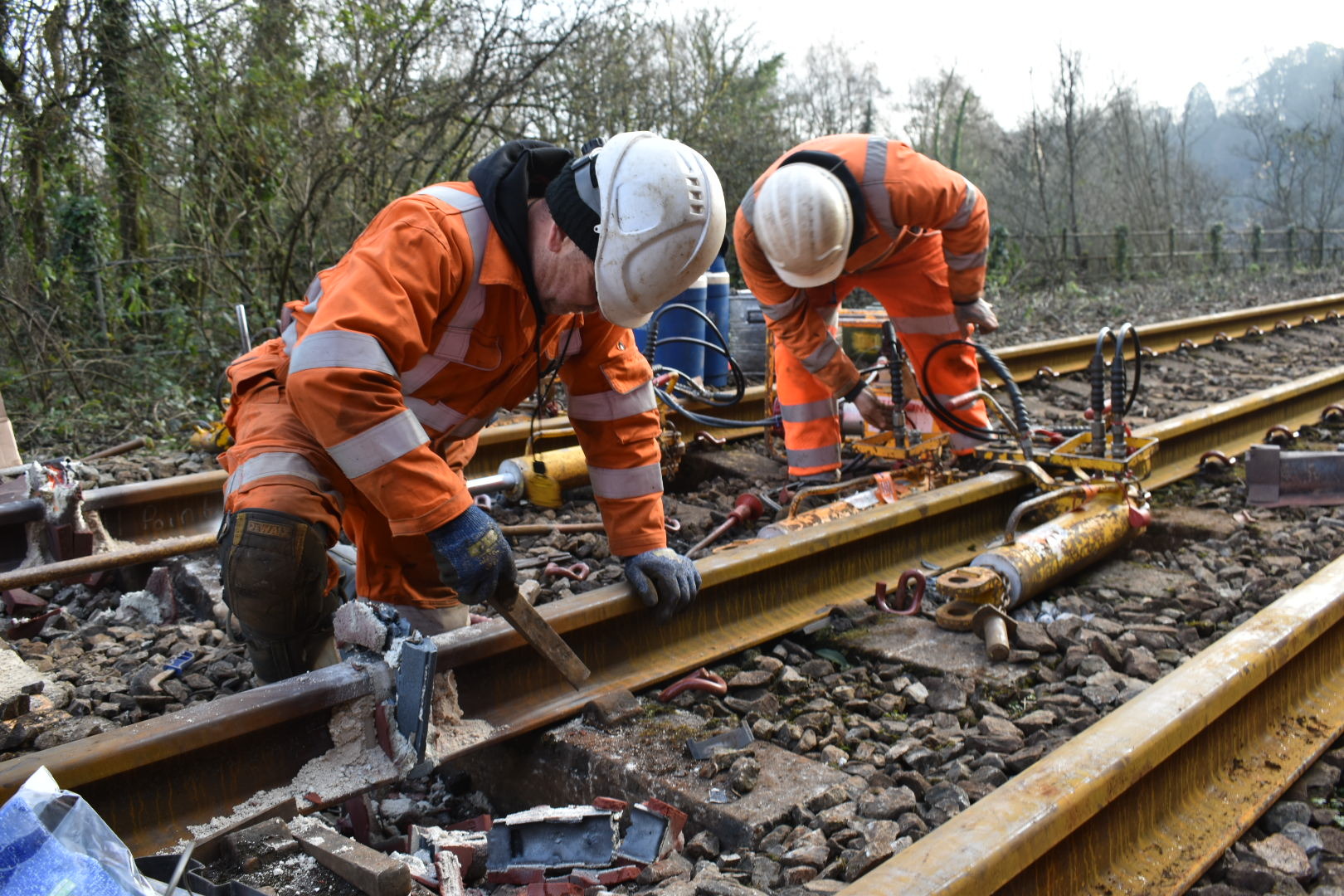
The only thing that will do the job of changing the UK Government minister’s minds is some sort of campaign of public protest.
Since the dawn of devolution, the kind of protest movements seen during the late 50s to early 90s seem to have dwindled.
The feeling perhaps has been that with ministers now more accessible and sympathetic to the needs of Wales there is less of a need for the kind of non-violent campaigning seen pre-devolution.
But in the case of devolving the power over rail infrastructure to Wales, we may have little choice, as the Welsh Government and Senedd’s pleas are falling on deaf ears within the UK Government.
The only reason the UK Government would grant any further devolution to Wales is that not handing those powers over would become more of a political headache than doing so.
The closest comparison would be something like the establishment of S4C under the Thatcher government in the early 1980s.
The UK Government clearly did not want to create S4C. They promised the channel and then u-turned once again on delivering it.
It was only a sustained non-violent campaign by Cymdeithas yr Iaith – including, eventually, a threat by Plaid Cymru President Gwynfor Evans to go on hunger strike – that ultimately delivered it.
In the end, it became politically more painful for the UK Government not to deliver S4C than it was to deliver it.
‘Only by revolutionary means will we succeed’ said Saunders Lewis at the start of the campaign for Welsh language powers.
To get the wheels of Wales’ public transport infrastructure turning, a similar mindset may well be needed.
Support our Nation today
For the price of a cup of coffee a month you can help us create an independent, not-for-profit, national news service for the people of Wales, by the people of Wales.
Get more trusted Welsh news
Choose Nation.Cymru as a preferred source in Google News to see more of our journalism.