


Opinion
Cymunedoli
Ben Wildsmith
The opening days of Autumn are an anxious time. The first chills beckon us towards dark afternoons, menacing gas bills, and the long grind towards Christmas, so life feels heavier and more worrisome.
A debt is being called in – if you danced through the summer, now you must pay the band. We’re all haunted by the school gates in September. Time to knuckle down…
Rachel Reeves’ satchel must feel particularly burdensome as she dawdles towards the bus stop. Her fiscal black hole, we are told, has widened from a previously catastrophic £22 billion to a newly cataclysmic £40 or £50 billion. She’s put off her Autumn budget to the last possible day, so I wouldn’t be expecting a Cadbury’s selection box from her this Christmas if I were you.
‘Who’s that coming down the chimbley, Auntie Rachel?’
‘Aaaaaaaagh, it’s the bond market…’
[mid-content-banner]
Vapid posturing
I hope you’ve all been ignoring party politics over the summer. As someone who’s required to keep up with it, the pointless jockeying and vapid posturing of our political class has trundled on like Eastenders, recycling plotlines and keeping self-regarding nonentities in employment.
Without parliamentary business to distract them, egotistical creeps of all political stripes have been free to poison the airwaves with self-promoting stunts that illuminate nothing and taint everything. If Robert Jenrick were advised he could displace Kemi Badenoch by being fired, naked, from a cannon into an asylum hotel with the flag of St George painted on his arse, we’d be forced to suffer it.
Unless, of course, we just stop indulging this pantomime altogether.
On Wednesday night in Pontypridd, a crowd packed Clwb y Bont to hear the results of a consultation exercise exploring how the Cymunedoli movement could work in the South Wales valleys.
The success of community enterprises, including energy production, hospitality, and tourism ventures in Gwynedd has echoes of distinctly Welsh achievements through history. From subscription libraries, union scholarships, and the NHS, to the miners’ buyout of Tower Colliery, Cymru can point to a culture of cooperative action that has often led the world in social innovation. Our communities have historically been engines of self-improvement where a rising tide of circumstance was expected to benefit all.
Cymunedoli, the coming together of community, is a modern expression of a collective instinct that has defined Welsh life, but which has atrophied under the twin assaults of economic decline and obsessive individualism.
Events this week in China illustrated the tilt eastwards of global economic power. As Xi, Modi, and Putin celebrated the passing of the American moment, we are left to ponder our futures as part of an isolated UK. From here in the Rhondda, it seems that as western supremacy fades into history, its spoils were hoarded, stolen, or wasted with little of substance left for communities like ours. In Norway, which discovered North Sea oil at the same time as the UK, a sovereign wealth fund was created that now amounts to $1.9 trillion in assets, or £250 000 per Norwegian citizen. The UK’s oil dividend was principally spent on unemployment benefits as the government deliberately deindustrialised the economy.
[lower-mid-content-banner]
Top-down change
So, it seems unlikely that voting for top-down change in the UK is going to result in improved economic performance on a national level. Even if our political class wasn’t incompetent at best and corrupt at worst, the economic wind has changed direction so irreversibly that our fortunes aren’t within their wheelhouse. When the real decisions are made, the UK is no longer invited to the meeting.
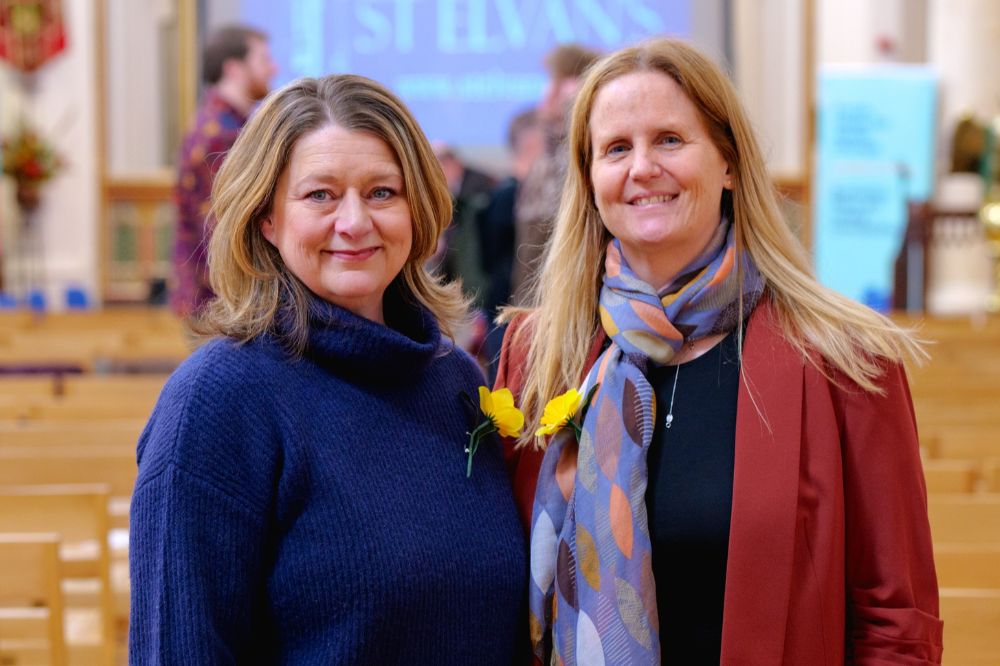
In Pontypridd, however, we saw that if global influence is beyond us, then local control is not. A series of initiatives, from crowdfunding the purchase of Capel Rhondda to plans that would see the profits from wind farms used for community projects, demonstrated that a different sort of politics is possible. The meeting built on work by Beth Winter and Leanne Wood who, from different political traditions, have sought to engage their communities in a cooperative, democratic approach to organising the resources we have.
In the decades past, our mountains have grassed over the evidence of the coal industry, as the tips have settled into precarious additions to the natural landscape. Of late, wind farms have sprouted all over them, once again powering homes and generating profits outside of our communities. There is an unsettling symbiosis to the relationship between coal and renewables.
Exploited
The economic structure that was born of the Industrial Revolution exploited the people and landscape of these valleys without any plan for what would happen when extraction ceased. Typically, foreign-owned supermarkets sit over the sites of pits now, whilst above us wind turbines turn as we fret about our bills coming in. Those should belong to us, shouldn’t they?
The old politics is all about what we can’t do. We can’t afford to educate kids, or look after the disabled, or keep pensioners warm, or house everyone properly. In thrall to international capital, we are told how to organise our society under threat of punitive interest rates. What we may feel is important doesn’t feature in decisions made so far away from us as to render democracy absurd.
‘Sorry son, you can’t have an ice cream because banks in America bundled together parcels of bad debt and dishonestly sold them as investment vehicles to gullible punters whilst simultaneously selling hedge funds that bet on their failure to favoured customers. Have a Polo mint, instead.’
Enthusiasm at the meeting was palpable and heartening. Representatives of different projects offered help with everything from building work to translation services. There was a hunger for small-scale achievement rather than theoretical dreams.
Community ownership
The experience in Gwynedd, pioneered by the late Sel Williams, is proof that community ownership can be made a reality. The historical success of similar models in the Valleys suggests that this approach is suited to the outlook of people here, particularly at a time when so many have been immiserated by the death throes of an economic system that was imposed upon us in defiance of our democratic choices at every election.
Will it be the answer to all our ills? Of course not. Doubtless there will be challenges and failures for this movement as there are for anything worth doing. Keeping more profits for local communities, though, is an objective every well-meaning person can support.
The collapse of national politics has resulted in a toxic paralysis of the population. We have become accustomed to politics being done to us, invariably to our disadvantage. Resultingly, people are despairing and open to fraudulent approaches from bad actors. That needs turning around so that we are the drivers of our civic decisions.
You should be looking up at wind turbines and smiling as they rotate in the service of your local school, community centre, or bus service. The politics around you should be for you, something you can join in with and enjoy the fruits of. The happy atmosphere at last night’s meeting spoke to people’s need to contribute and belong.
As we organise the resources of a declining economy, those of us without property and share portfolios should be more, not less, engaged in who owns what. With less to divvy up, communities need to stand up and demand their due. Our political energy should be diverted from the prancing charlatans at Westminster towards the buildings, resources, and people around us. We know for a certain fact that voting gets us nowhere.
We can do better ourselves. September’s here, time to knuckle down.
Support our Nation today
For the price of a cup of coffee a month you can help us create an independent, not-for-profit, national news service for the people of Wales, by the people of Wales.
Get more trusted Welsh news
Choose Nation.Cymru as a preferred source in Google News to see more of our journalism.
