


Opinion
Could Labour really means test the state pension in its latest phase of neo-liberal madness?
Martin Shipton
The level of cuts being contemplated by the UK Labour government is horrifying, and if implemented would seriously undermine expectations we have had for more than a century.
A couple of days ago the Times reported how several departments were understood to have been told to find more than £1bn in savings each, with others ordered to find hundreds of millions of pounds in a cost-cutting drive that goes well beyond an attempt to fund public sector pay rises.
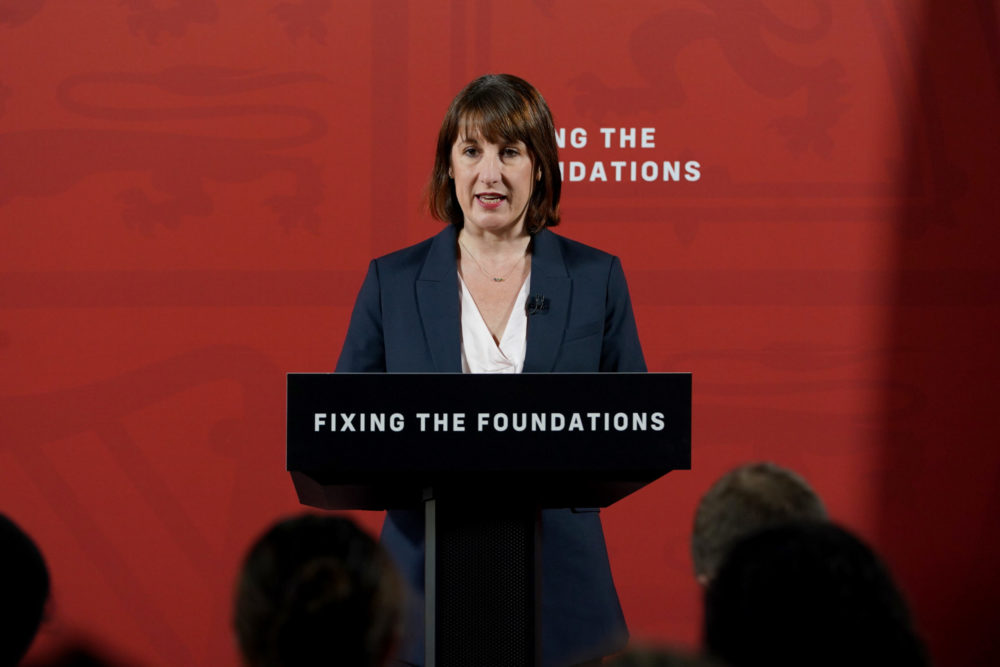
However, it’s suggested that Chancellor Rachel Reeves has been warned that she will have to look at more radical reforms, such as means-testing state pensions, to achieve the scale of savings needed in the years ahead.
Old age pensions were introduced in 1908, when Herbert Asquith was Prime Minister and David Lloyd George the Chancellor. Needless to say, they have been seen as a fundamental and irreversible part of our welfare state ever since. Not even in her darkest moments did Margaret Thatcher contemplate means testing the state pension, but such a prospect seems to be on the radar for a Labour Chancellor more than 30 years after Thatcher left office.
The idea is, of course, at complete odds with the values Welsh Labour purports to stand for. One of the main components of the “clear red water” ideology that Rhodri Morgan and his chief adviser Mark Drakeford devised was the notion of universal benefits to which everyone was entitled regardless of their means. The state pension was such an obvious part of the deal that it was completely taken for granted that no-one would ever seek to challenge it.
[mid-content-banner]
Lack of voices
What’s extremely worrying is the lack of voices from within Labour raising concerns about the direction their government is taking. Winning the election was the goal, and it seems little thought was given by most of those elected to what comes next. They’ll have been aware that saying anything that criticised Keir Starmer’s policy U-turns would imperil their hoped-for career, so they've got used to keeping quiet.
The bulk of them, of course, are from the right of the party anyway, and perhaps have no problem with the ideological lurch that has taken place. But by failing to challenge what is happening, those who think of themselves as having moral fibre are enabling moves that risk making the party unelectable.
Labour made much of the Tory failings over the NHS during the election campaign, citing long waiting lists in NHS England and conveniently omitting to mention that NHS Wales is the responsibility of a Labour government, where waiting lists are even longer. With the spending cuts advocated by Starmer and Reeves, there is little prospect of the situation improving.
In a prescient report released eight days before the general election, Guto Ifan and Ed Poole of Cardiff University’s Wales Governance Centre made it clear that the Welsh Government’s budget would suffer whether Labour or the Conservatives emerged victorious. They wrote: ”Both the Conservative and Labour manifestos largely maintain the trajectory of existing UK Government spending plans. If these plans are implemented as intended by the manifestos, the Welsh Government would face serious budgetary challenges. It would have to implement further deep cuts to non-protected spending areas to fund increases to health spending.
“Under Labour’s plans, the Welsh Government budget for day-to-day spending would increase by an average of 1.1% per year in real terms from 2024-25 to 2028-29. [Assuming] the Welsh Government directly passes on health and education consequentials, an additional £248m of funding would be required in 2025-26 to avoid real term cuts to non-protected spending areas, a gap which would grow to £683m by 2028-29. It is unclear therefore how these plans would fulfill the promise of “no return to austerity” under Labour. The additional consequential spending for Wales projected from the 2024 Labour manifesto amounts to just 5% of the consequential spending included in Labour’s 2019 manifesto.”
NHS budget
However, Ifan and Poole continued, even if the NHS budget grew by 3.2% per year in real terms, that would still be below likely spending pressures. That, we can conclude, would make it even more difficult to bring down waiting times - making a nonsense of Labour’s promise to do so.
I asked Liv Baker of the Welsh NHS Confederation in broad terms to estimate how much money would be required to deal with the problem of waiting lists in Wales. I received the following response: “That’s quite a complex question, as I’m sure you can appreciate, but a good one. I’m unaware of a specific monetary figure being out there at present, but it wouldn’t be just a question of money, but also available resource.
“To increase elective capacity, you’d need more hospitals/wards/capacity with staffed beds (aka also more staff), more diagnostic capacity etc. So capital investment would be an essential part of the cost of increasing elective capacity, but this would not have instant results if money was ploughed in due to the time it would take to plan and build additional facilities.
“In terms of staff, this is also not an overnight fix in terms of increasing the number of staff to be able to tackle elective backlogs. Bringing in agency staff would be one option of course, but there’s been a huge drive to reduce the agency bill as part of financial efficiency efforts, and this is an area of constant criticism for the NHS (spending too much on agency). You‘d also need to target things impacting overall capacity such as patient flow/hospital discharge, urgent and emergency care demand etc. to really be able to make headway with the elective backlog.
“In terms of putting a figure on it, it probably also depends what kind of time frames you’d want to work towards – doing something over a longer period of time is of course cheaper. NHS leaders are constantly trying to balance reaching performance targets and achieving financial balance – an increasingly difficult balance to strike in the current climate. So, as you can see, there are too many variables to be able to quickly figure out a number.”
At the root of the problem, and the cause of continuing austerity, is the devotion of Starmer’s Labour Party to the kind of neo-liberal economics that has held sway in the UK and further afield since the 1970s. The left-wing economist Richard Murphy, who not that long ago was an adviser to Labour’s previous leader Jeremy Corbyn, wrote a book published in 2011 called The Courageous State, in which he outlined how politicians’ failure to have faith in a government’s duty to intervene in the economy to create a fairer society had led to mounting inequality and the near crash of the banking system.
Our current UK Labour government has swallowed whole the orthodox view that imposing public sector spending cuts leads to economic growth - a belief that deserves to be cited as a classic example of economic illiteracy. There are, as Murphy argued in his book and as he continues to argue now, other strategies, including borrowing money and simply creating it, as the Bank of England did during both the 2008 banking crisis and the Covid lockdowns.
The worrying conclusion one must draw from Labour’s cowardice is that Reform UK, with its simplistic narrative that illegal immigrants are responsible for all the UK’s ills, could pose a realistic challenge at the next Senedd election in 2026.
Disillusioned
Plaid Cymru’s health spokesperson Mabon ap Gwynfor accepted that the election is likely to see a battle for the support of disillusioned Labour voters between Plaid and Reform.
He said: “The difference between Plaid and Reform is that Plaid will be honest about what needs to be done while Reform will lie.
“Labour in Wales is in a real mess. Its members in Cardiff West, which has been the intellectual centre of the party, with Rhodri Morgan and Mark Drakeford trying to set out a distinct policy framework for Wales, must be mortified at having one of Starmer’s closest aides imposed as their new MP. The Welsh emphasis of the party has disappeared, and they just seem to be going along with Starmer’s right-wing agenda.”
Gaining control of the Senedd wouldn’t be a complete solution, though, as Mabon ap Gwynfor and others in Plaid realise. We now have a UK Labour government that shares a neo-liberal economic outlook with the Tories it recently defeated. So far, there isn’t the smidgeon of a hint that they’ll change course.
So much the worse for Wales.
Support our Nation today
For the price of a cup of coffee a month you can help us create an independent, not-for-profit, national news service for the people of Wales, by the people of Wales.
Get more trusted Welsh news
Choose Nation.Cymru as a preferred source in Google News to see more of our journalism.
