


Wednesday, 15th July 2026 Cardiff 28° · Clear sky
NationCymru A news service by the people of Wales, for the people of Wales.

Opinion

Clean energy for Wales
By Mark Mansfield
Photo Danny Lawson/PA Wire

Gordon James

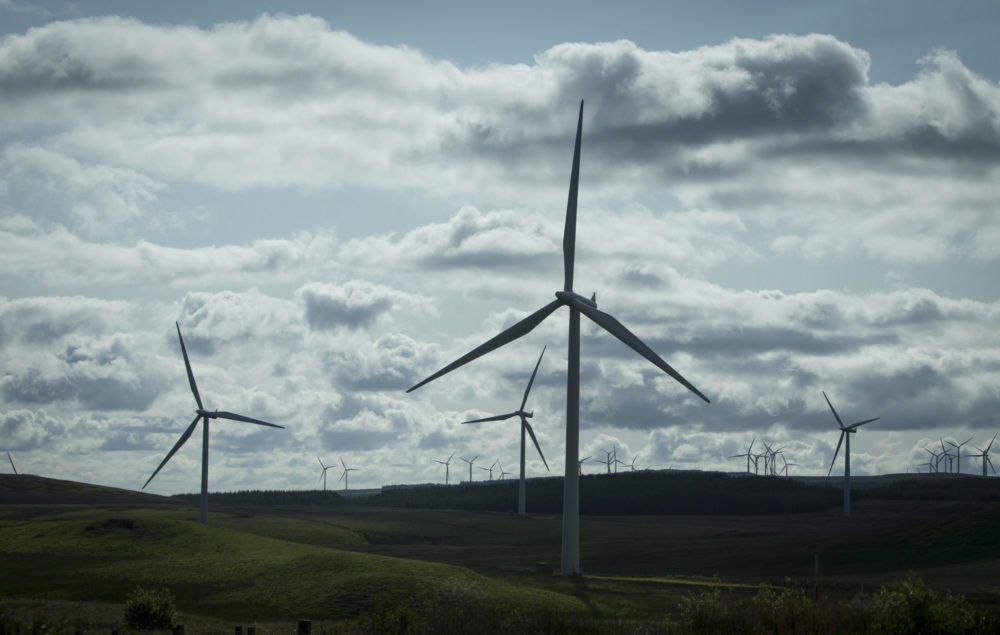
Onshore wind is one of the cleanest and cheapest forms of electricity generation available. As such, it is a vital weapon in our battle against climate change.

Official figures show that onshore wind costs £38/MWh (megawatt-hour) compared to £114/MWh for gas and £128/MWh for the new Hinkley Point C nuclear power station [1]. Our electricity bills are high because, absurdly, they are tied to the cost of gas [2] even though renewables generate more of our power.

Wind energy is also generally popular. The Government’s public attitudes tracker shows that onshore wind is supported by 73% of the population [3]. Concern about climate change is an important factor in this.

Despite countless international conferences, such as the COP 30 hosted by Brazil this week, climate changing emissions keep rising fuelling destructive extremes of weather in all parts of the globe.

In November last year, nearly a month’s worth of rain fell on Bannau Brycheiniog in one night causing the river Taff to burst its banks flooding homes in Pontypridd and elsewhere [4]. Welsh farmers are also suffering. One study has concluded that extremes of weather are already costing them tens of millions of pounds [5].

World Weather Attribution has calculated that this year’s deadly wildfires in Turkey, Greece and Cyprus were made ten times more likely by climate change [6] while the recent super hurricane that smashed through Jamaica was 30% stronger.

Climate change is mainly caused, not by “the power of the sun or volcanoes” as ludicrously claimed by Reform UK’s Richard Tice in an interview on BBC Breakfast last year [7], but by burning coal, oil and gas. The key to lessening its destructive impact is switching as quickly as possible from fossil fuels to renewable energy.

While opening COP 30, the UN general secretary, Antonia Guterres, welcomed some progress in clean energy developments but warned that we are on track to miss the 2015 Paris Agreement to limit global warming to 1.5°C above preindustrial levels. This target, he stated, was a “red line” for a habitable planet and that “every fraction of a degree means more hunger, displacement and loss – especially for those least responsible. This is a moral failure.” [8].

As Wales, for so long a powerhouse of coal-fired industrialisation, has made a significant contribution to the emissions that are unravelling the climate stability on which our civilisation depends, it surely now has a duty to make a full contribution to the zero carbon revolution. Or are we to say to those who, in countries like Bangladesh, Jamaica and the Pacific Islands, are losing their homes, their livelihoods and sometimes their lives, that we are not prepared to allow clean energy structures on our landscape?

Landscapist

Our most prominent landscapists - those who are using the hose pipe to water the flower bed when the house is going on fire - must be the Campaign for the Protection of Rural Wales (CPRW).

CPRW was given extensive coverage in Nation Cymru on the 28th of October when readers were told that it supports “renewable energy solutions when they work in harmony with Wales’s landscapes”. As wind turbines and solar panels are visible on landscapes, it would appear that most would only satisfy the organisation’s criteria if they were cited underground!

On the 1st of July, Nation Cymru carried an article by CPRW which stated that, at the Pen y Cymoedd windfarm, “the excavated peat had been destroyed and degraded”. This surprised me as the windfarm’s planning application had included a commitment to restore peatlands. In response to this, I organised a visit of seven people, including botanists and an energy consultant, to the windfarm. What we found was an extensive peat and habitat restoration programme being expertly guided by Natural Resources Wales - quite the opposite of the impression given in the article.

It is also disappointing to see Plaid Cymru - the party which once provided courageous and inspiring leadership on environmental issues - become more negative about renewable energy. It is easy to become entangled in the multiple reasons for objecting to these proposals, particularly in response to local concerns, whilst pushing into the background their raison d’etre - the immense crisis of climate change. The party is in danger of being accused of fiddling while Rome burns.

Disastrous

Climate scientist, Genevieve Guenther, recently wrote, “the children we have in our homes today are threatened with a chaotic, disastrous and unliveable future”. We would rather not believe it, but this is the frightening reality that we face.

Wales has a huge potential for developing clean energy resources which benefit the environment, human health and the economy. The opportunities are so great and the prospects for the future so serious, we must press that green button. We do not have time on our side.

Notes

1.https://assets.publishing.service.gov.uk/media/6556027d046ed400148b99fe/electricity-generation-costs-2023.pdf (p. 25)

  1. https://www.carbonbrief.org/factcheck-why-expensive-gas-not-net-zero-is-keeping-uk-electricity-prices-so-high/
  2. https://www.gov.uk/government/statistics/desnz-public-attitudes-tracker-spring-2025/desnz-public-attitudes-tracker-renewable-energy-spring-2025-uk
  3. 4. https://www.theguardian.com/commentisfree/2024/nov/26/wales-valleys-floods-aberfan-climate-adaptation
  4. 5. https://www.bbc.co.uk/news/articles/crgyr68lrr8o
  5. https://www.worldweatherattribution.org/weather-conditions-leading-to-deadly-wildfires-in-turkiye-cyprus-and-greece-made-10-times-more-likely-due-to-climate-change/
  6. https://www.theguardian.com/environment/article/2024/may/31/factcheck-no-richard-tice-volcanoes-are-not-to-blame-for-climate-change
  7. https://www.theguardian.com/environment/2025/nov/06/missing-15c-climate-target-is-a-moral-failure-guterres-tells-cop30-summit?utm_source=cbnewsletter&utm_medium=email&utm_term=2025-11-07&utm_campaign=Daily+Briefing+Leaders+speak+ahead+of+COP30+Norway+s+%243bn+TFFF+boost+UK+to+double-down+on+net-zero
  8. Genevieve Guenther is an expert reviewer for the UN Intergovernmental panel on Climate Change and author of ‘The Language of Climate Politics’. https://www.theguardian.com/environment/ng-interactive/2025/jun/24/tipping-points-climate-crisis-expert-doomerism-wealth

For the price of a cup of coffee a month you can help us create an independent, not-for-profit, national news service for the people of Wales, by the people of Wales.

57 comments

Evan Aled Bayton

We should be more economical with energy. We cannot destroy the landscape with hundreds of windmills and power facilities.

Reply
Smae

Many more wind turbines please! If we have enough of them we could possibly phase out gas power stations entirely (or convert them to green hydrogen). Once the gas power stations are out of the market energy prices will decrease and I dunno about anyone else, but energy prices are still absurd.

Reply
Dr Jonathan F Dean

I agree - lots more turbines offshore where the wind is stronger, more constant and needs less balancing and grid costs

Reply
Smae

I'm happy with onshore wind too. I'd be extremely happy if someone put one right in my back yard.

Reply

In reply to Smae

Dr Jonathan F Dean

At 250 m high?

Reply

In reply to Dr Jonathan F Dean

Smae

Sure why not. Neighbours might have to sacrifice some of their garden space to accommodate, but if my garden was big enough, absolutely. I pretty much walk my dogs amongst the turbines near where I live, I really don't get the fuss. Sadly, my home isn't on top of the mountain where it would be ideal.

Reply

In reply to Smae

Dr Jonathan F Dean

And how big are those?

Reply
Frank

If green energy became king the UK would still charge top prices. It's called 'greed'.

Reply
Mari Mitchell

The actual production, transportation and erection of turbines counteracts much of the benefits. Also, foreign companies benefit, not you!

Reply
Smae

There's nothing stopping community enterprises from setting up. I compare and contrast the total carbon chain of wind turbines... to any fossil fuel plant (or heck even bio-fuel). I'll guarantee you here and now wind turbines come out better. They're not perfect I'll grant, but if we always aim for perfect we will get nowhere and we'd still be stuck on coal. As for not benefiting from the two local wind farms to me (one on either mountain), I don't personally benefit sure, but my community does as the wind turbines generate a community fund expected to last until around 2050. They're also directly funding restoring the natural habitats such as wetlands across 1,500ha. My local community center is directly funded by the project. There's also Awel energy which is a community/welsh charity project.

Reply
Dr Jonathan F Dean

Just to clarify, the quote I used about Pen y Cymoedd was not mine, I was quoting from the Welsh Government soils policy unit in a briefing note to the Cabinet Secretary, obtained under a FoI request. This is available now on the WG website So, not my words, but the words of the Welsh Government

Reply
Dr Jonathan F Dean

DESNZ public attitudes tracker Copy of email sent to Ed Miliband on November 4th Dear Secretary of State I see that the summer 2025 public attitudes tracker questions are still likely to generate erroneous results To pick one, close to my heart, the question covering onshore wind farms "Now imagine there are plans for an onshore wind farm to e constructed in your local area. How happy or unhappy would you be about this? If you already have this in your local area, answer on the basis of how you feel about this now" Through my front window I see a dozen turbines of the Trysglwyn Wind Farm. They are 50 m high and 5 km away, so in my local area Based on these I would answer that I would be happy to have another dozen placed 5 km behind my house However, knowing that modern onshore turbines are at least 200 m high, there is no legal minimum distance from housing, and that in Wales they are being proposed 500 m from homes, I should answer that I would be extremely unhappy So just question could legitimately generate two very opposite answers! Similarly, the question on solar farms. Based on the little one powering Llangefni sewage treatment works in my local area, hidden behind high hedges, I would be very happy. However, I'm actually faced with the 3,000 acre Maen Hir development! Not all the questions are bad, but these two in particular are probably generating nonsense results  Please, get better questions and produce better analysis, or net zero itself is at risk from the populist right Cofion Dr Jonathan F Dean Campaign for the Protection of Rural Wales

Reply
Dr Jonathan F Dean

Just to clarify the CPRW position on wind power - it is essential to reach net zero However, a quick glance at the NESO Future Energy Scenarios reports over the past couple of years will show you … Wales currently uses about 15 TWh of electricity To reach net zero Wales will need about 40 TWh of electricity Wales has the potential to produce about 10 TWh from onshore wind And 70 TWh from offshore wind So with ONLY offshore wind Wales can easily achieve net zero levels of generation AND continue to export electricity to the rest of GB, but can never do it with onshore wind alone As such, onshore wind can only ever be a “bit part player” in the transition to net zero, while offshore wind will always do the heavy lifting This is confirmed in the Welsh Government pathway to 2035 report, and the Renewables U.K. Cymru response to the Future Wales consultation It is onshore wind which is helping fuel the “anti net zero” beliefs of populist politicians. It is putting net zero at risk of ever happening And finally, after yesterday’s announcement of eight 470 MW SMRs at Wylfa, which will produce about 30 TWh, why is this excluded from the Welsh Government’s targets? I’m well aware that nuclear is not renewable, but the climate doesn’t care, it’s all low carbon energy Those same SMRs will also “waste” about 60 TWh of heat into the sea, which could be used for domestic, industrial or agricultural heating via district heating networks if the SMRs were better located

Reply
Peter J

I don’t know where to start with this nonsense. But let’s focus on the last paragraph.; what is your proposition? Move SMRs to city Centre so that we can benefit from district heating? Do you know how hard it is to get approval for new nuclear sites? in my view, one of the biggest problem with renewables is non-experts posing as experts, thinking they know all the solutions. That’s why the UK government convenes 5+ expert committees and organisations to advise on energy policy….

Reply
Dr Jonathan F Dean

And that’s why the U.K. Government has removed all locational restrictions for the siting of SMRs in the latest nuclear national policy statement EN-7 They wouldn’t need to be located in city centres but in industrial areas adjacent to cities The Welsh Government has already identified 16 areas in Wales for district heating networks eg Deeside, Wrexham, Port Talbot etc and SMRs could be a way of supplying those The SMR proposal in Bridgend will sell both heat and power Currently we have plans to build nuclear, throw away the heat, then use the electricity to power heat pumps to generate heat. It’s not rocket science to think that process could be optimised. Heat integration in standard in other industries but not U.K. power generation. Heat networks are standard in other countries, but not the U.K.

Reply

In reply to Dr Jonathan F Dean

David J

So you want to put a nuclear reactor in an industrial estate next to a city? Are you insane? But anything to maintain the CPRW vision of a landscape of rolling hills, cosy hamlets, rosy-cheeked farmers and little lambs in the fields (until they are horribly slaughtered).

Reply
Dr Jonathan F Dean

It is current government policy that all new thermal power stations must consider combined heat and power under NPS EN-1, and has been since 2012

Reply
Grace Lloyd

I simply do not know where to start with the jaw dropping ignorance shown by this article. Wales should take the burden of industrial sized onshore wind installations because the Welsh countryside was destroyed in the past by coal extraction that contributed to excessive CO2 emissions? This is deeply strange and flawed logic.

Reply
Grace Lloyd

As the contributor said below, all onshore turbines are not created equal. I am happy to see 7 x 60 m tall turbines out of my kitchen window, a couple of km away from my home. I am not happy with the natural habitats of our uplands being ripped up to the detriment of wildlife and nature when we have so few wild places left. Trecelyn windfarm are planning to cut down 70-odd mature trees to prevent bats roosting too close to their 145 m tall turbines. We have a climate emergency to respond to, but as one of the most nature-depleted countries on the planet, we in Wales need to ensure the renewable energy we generate is produced by working with nature, not destroying it.

Reply
Frank

So energy companies can destroy trees to stop bats roosting but if I have them in my attic it is against the law to disturb or remove them.

Reply
David J

The idea is to cut down trees near the turbines to prevent bats roosting near them. This is BEFORE the bats arrive in the trees, because, yes, it is lllegal to disturb bats. Hope that makes it clear, maybe think things through before posting?

Reply
David J

70 trees are not a great loss, provided you plant 700, or better yet, 7000 to replace them. Or do you refuse to use timber products in your home, on the basis that a tree has to be cut down to provide them? Or is it a case of "cut somebody else's trees down for my kitchen worktop, but don't spoil my view"? And stop repeating the "natural landscapes" line - it is nonsense. Nearly all British uplands are the exact opposite of "natural", they are man-made ecological deserts with hardly any wildlife. Compare that to a rewilded and replanted landscape, similar to what existed before hom sap got his grubby little hands on the hills. Windfarms do not "rip up" the landscape, they use a tiny part of it for a beneficial end (reducing global heating), so cut out the hysteria.

Reply
J Jones

As the dodgy companies who have moved into this can afford to pay off politicians and hire thugs to bully protestors, maybe their excessively large profit margins can be used to bring down prices even further, by higher taxes and then the option of nationalisation.

Reply
Mari Mitchell

Yes, even our own Welsh Government thought it acceptable to hire the same security firm as Bute/GreenGen.

Reply
Tim Smith

You are deluded if you think onshore wind is ‘green’. Quite apart from the resources required to make, ship and construct wind turbines, they are a source of toxic infrasound levels, microplastics and heavy metals pollution which is bio accumulative. The toxic legacy for future generations!

Reply
Peter J

Over the life cycle, onshore wind is incredibly ‘green’. Picking up on a few smaller environmental impacts doesn’t offset against the enormous benefits from onshore renewables

Reply
Mari Mitchell

picking up on the industrial scale destruction of the environment in the name of green energy is not small!

Reply

In reply to Mari Mitchell

Peter J

There is very little heavy metal pollution from wind and I’ve no idea what infrasound levels are. As for microplastics, they’re everywhere already. So overall they’re fairly minor

Reply
David J

So if we have nuclear reactors, there will be less pollution? On the other hand, if you want to advocate offshore wind as an alternative, the plastic and metal pollution will be worse, due to the more extreme wind and wave erosion of the structures. As for the infrasound, many studies have found no impact on those living nearby, so to state they are "toxic" is untrue. More research needs to be done, but at the moment there is no evidence to suggest that infrasound from turbines is any more problematical than that from waves on the beach, road noise, or structures such as bridges.

Reply
Charles Coombes

So we don't need Nuclear!

Reply
Peter J

In my view, as a FIET and medium business owner, I feel the article is somewhat misleading; renewable energy costs are high, not because of the technology itself, but due to the significant "system costs" required to integrate intermittent sources like wind and solar into the grid. Paragraph 2 claims of cheap renewables are misleading because they fail to account for the necessary back-up generation (like gas and nuke), the need for new transmission infrastructure and storage to handle the variable output. The current system doesn’t help with highest wholesale price being pinned to gas, but renewables are not 3-4 times cheaper. We need to change because of national security and climate change, but such big savings costs are misleading and will ultimately put people off when they see their bills not coming down. Even as a pro renewable energy guy, I think we should be honest

Reply
Smae

You don't 'need' back up energy though. That's potentially necessary during the transition period but a mature renewable energy network has no need for Nuclear or Fossil Fuel... it would have no need even for bio-fuel. The main issue we have is the lack of battery storage (whether lithium based, hydrogen based or salt based) but chronic years of under investment... much like getting rid of the gas storage tanks... and well what did anyone expect? On-shore wind and solar easily make up the cheapest and most substantial inflow of energy (or at least the potential to do so), already proving naysayers wrong not only in the UK but globally. However, it doesn't work all the time it's not guaranteed every day... that's where batteries come in. However... do you know what does work every day? The tides and with sea levels rising, tides will only become even more exploitable, these provide at least twice a day power supplies, with Lagoons providing longer lasting energy production, hydroelectric dams are a major source of energy too. The scale is easy enough to understand even at a home-scale. You can compare and contrast the costs of purchasing solar panels (say from China) vs a Diesel generator, making sure to properly track the costs of the diesel going in. If you run the solar panel independently and don't hook it into the mains, the initial outlay repays after two years, this includes the cost of the leisure batteries you'll need. A diesel generator + fuel takes a good while longer to provide a suitable ROI (though it is more convenient). There's a reason why small boat and caravan owners are largely going electric and renewable, it's just cheaper and much easier to maintain. So you're right to draw attention to the costs of changing the grid, but it's unfair to pin this cost on the price of renewables. It's not renewables fault that we were stupid and decided to put all our hopes in fossil fuels and created an entire network upon it. It's not as if we haven't been exploiting wind (windmills) and hydro-power for eons.

Reply
Paul Swann

Gordon James simplistically presents industrial onshore wind as “clean and cheap”. For small rural communities like ours, targeted for 220-metre industrial turbines, that rosy picture looks dangerously naïve and out of touch with emerging scientific evidence on three critical counts.  Firstly, acoustic science has recently changed irrevocably. Peer-reviewed research by Professor Ken Mattsson (Uppsala University) demonstrates that infrasound and low-frequency noise (ILFN) from modern wind turbines is significantly higher—and travels far further—than earlier industry models assumed.1 This renders the UK’s current noise standards, which entirely ignore ILFN, scientifically obsolete. Based on her own research2, Dr Ursula Maria Bellut-Staeck (Faculty of Medicine, Dalhousie University) concludes that “humans, animals and plants within a radius of at least 10 km can be harmed by far-reaching emissions from industrial wind turbine installations.” Taken together, and reinforced by decades of research into the physiological impacts of ILFN by Professor Mariana Alves-Pereira and her team at Lusófona University, Lisbon3, this convergence of findings is now impossible to ignore.  Second, the “clean, green” label collapses under material scrutiny. Gordon James must surely know that wind turbines use permanent magnets made from rare-earth elements such as neodymium, praseodymium, dysprosium and terbium. Mining and refining these metals produces extreme toxic and radioactive waste.  As widely documented by the BBC, The Guardian, and multiple independent investigations, Baotou in China houses a vast toxic lake, 10km by 2km, which visiting researchers have described as feeling “like hell on earth”, with ”dozens of pipes lining the shore, churning out a torrent of thick, black, chemical waste from the refineries that surround the lake.”  The local population suffer from cancer rates 70 times higher than the rest of the country, with many being treated in a 20-story hospital dedicated purely to bone medicine.4 On this basis alone, James’ claim that wind power is ‘clean’ is factually indefensible. Industrial wind turbines are simply not “friends of the earth”.  Third, microplastics: recent engineering studies of wind-turbine blade erosion estimate that onshore turbines shed roughly 8–50 grams of composite microplastic per blade per year through leading edge erosion, with additional losses of 40–160 g per blade per year from maintenance and repair.5 Early field and modelling studies around offshore wind farms show microplastics from blade erosion accumulating in surrounding waters and sediments, yet the long-term behaviour of these particles in soil, freshwater systems and food chains remains largely unstudied. I fully support a transition away from fossil fuels. But when ILFN, rare-earth extraction, and microplastic shedding are taken into account, the notion that vast industrial wind complexes in upland communities are ‘clean’ is impossible to sustain. One set of externalities (fossil fuels) are simply being exchanged for another (chronic microplastic and chemical shedding) with unknown long-term consequences. With regard to James’ moralising claim that Wales must atone for past coal emissions by accepting today’s industrial wind colonisation, the logic is both historically selective and ethically misplaced. Small rural communities like ours should not be made to feel duty-bound to sacrifice their uplands to atone for previous rounds of profit-driven resource extraction. Gordon James employs the term “landscapist” as a pejorative, but this is one of the few things he inadvertently gets right. I am someone who places the landscape — its ecosystems, habitats, waters and cultural inheritance — above the greed-driven interests of corporate wind developers’ shareholders. This is environmentalism in its most basic, grounded form. As someone who has spent decades campaigning for the protection of the environment, James should understand this better than anyone. Apparently not. In the interests of public and environmental health, the pragmatic logic of the Precautionary Principle must now be applied, and the headlong rush toward massive industrial-scale wind complexes brought to a halt. Notes 1. Efficient finite difference modelling of infrasound propagation in realistic 3D domains: Validation with wind turbine measurements, Ken Mattsson et al, Department of Information Technology, Uppsala University (Applied Acoustics, 2025). https://www.sciencedirect.com/science/article/pii/S0003682X25006280 2. A fundamental basis for all living creatures, mechanotransduction, is significantly endangered by periodic exposure to impulsive infrasound and vibration from technical emitters - in particular cardiovascular and embryological functions. Dr. Ursula Maria Bellut-Staeck, Faculty of Medicine, Dalhousie University, Halifax, Canada (SCIREA Journal of Clinical Medicine, Volume 10, Issue 2, April 2025). https://article.scirea.org/pdf/321372.pdf  3. https://ulusofona.academia.edu/marianaAlvesPereira 4. Baotou Iron & Steel to Expand Vast Toxic Lake Dump at Inner Mongolia Rare Earths Complex, Pratap Chatterjee, CorpWatch, June,2025  https://www.corpwatch.org/article/baotou-iron-steel-expand-vast-toxic-lake-dump-inner-mongolia-rare-earths-complex 5. Microplastics Emission from Eroding Wind Turbine Blades: Preliminary Estimations of Volume, Leon Mishnaevsky Jr. et al. (Energies, Vol 17, Issue 24, 2024). https://www.mdpi.com/1996-1073/17/24/6260 Paul Swann Llanfihangel Nant Brân Coordinator, Amddiffyn Mynydd Epynt  (writing in a personal capacity)

Reply
Mari Mitchell

Why did you not submit this as an article, and not a comment? Clear and informed and balanced. Thank you.

Reply
David J

I think you need to do some homework, if you think Paul's contribution is balanced.

Reply
David J

You have cherry-picked a few studies that confirm your preconceived prejudices, and included a list of references to give the impression that you are a "serious" researcher. The jury is still very much out on the supposed toxic effects of infrasound from windfarms; I can reference twice as many studies that show no harmful effect. If, as you claim, you support renewables, would you be happy with more acres of solar farms as an alternative? I would, but I suspect you would produce more cherry-picked studies to show how "toxic" a solar farm was. So do tell us what your solution would be, because it's easy to criticise. And what on earth does industrial pollution in China have to do with it? The Chinese are at a particular stage of their industrial development which unfortunately leads to the situation you describe; they are also much better than we were at cleaning up their mess, and finding better ways to do things. We haven't even dealt with slag heaps in the South yet, and look at the mess at Ffos-y-Fran. They also produce vast amounts of renewables, so don't be in a hurry to blame them. When we put our own house in order we might have earned the right to criticise others.

Reply
Paul Swann

Your jury might be out on the polluting, health-damaging effects of infrasound and low frequency noise from industrial wind turbines; mine isn’t. Of course you can reference numerous studies that show no harmful effect; it’s called the status quo. Open your mind, dig a little deeper and you might find a pattern of wind industry influence and reductive thinking.  Your doubts about my support for renewable energy are misplaced; it’s simply a matter of scale and ownership. Yes, massive solar farms do have negative environmental impacts, but at least they don’t create infrasound. The solution is simple: appropriately scaled, community owned, ecologically sound, responsibly managed renewable energy projects with the power output and financial benefits remaining local; not massive, industrial scale, corporate owned, profit driven, ecologically and socially destructive sacrifice zones from which the power would be distributed largely to England, with the profits flowing into offshore accounts, while Wales is left to deal with the environmental consequences. The toxic, radioactive industrial pollution produced as a byproduct of rare earth mineral mining and refinement in China demonstrates that wind power as “clean energy” is pure unadulterated nonsense — unless you’re content to bury your head in the sand and pretend that what happens in another part of the world where most wind turbines are built has nothing whatsoever to do with their deployment in Wales. If the Chinese are so much better at cleaning up their mess, why haven’t they dealt with the massive toxic lake in Batou?  Yes, China produces vast amounts of renewables: the point you’re failing to grasp is that there are environmental costs which you and Gordon James either wilfully or ignorantly overlook in claiming that wind energy is clean. I enjoyed the irony of you asking “What on earth does industrial pollution in China have to do with James’ false claims?” The point is, we *are* all on Earth, and industrial pollution exported from one part to another cannot be discounted simply because it’s “foreign”. Global demand for production of massive wind turbines for installation in Wales has consequences for communities and ecosystems elsewhere.  In response to your personal insults, they say more about you than they do about me. I am a serious researcher, was paid to be one in the latter stages of my career, and have an instinct for getting to the bottom of issues instead of accepting superficial narratives. Gordon James provided links to evidence his false claims; I provided links to contradict them, which I hope he will follow up on and start thinking more deeply before trotting out ill-judged misinformation like this.

Reply

In reply to Paul Swann

David J

Since all human activity damages the environment, it is a matter of choosing the least damaging. What is missing from your rant against windfarms is any suggestion of a realistic alternative; local small-scale schemes sound lovely, but how are they to work where the population density is great, and the land available for solar farms is minimal, not to mention the increased need for electricity for EV's for example? If you want to advocate for solar panels on every building I will be right behind you, but there are some people who even object to that. And I repeat, the landscape you are so passionate about defending is entirely man-made; windfarms will not degrade them further, and can easily be removed if we find better ways to generate electricity.

Reply

In reply to Paul Swann

David J

And by the way,it's not "my" jury, it is "the" jury. You clearly accept only those studies which support your position, and in labelling those that do not as the "status quo", you betray your bias. Would you apply the same logic to the "status quo" on climate science? After all, there are still a few benighted individuals arguing that there is no such thing as global heating, while at the same time producing the occasional study to back that up. An open mind is a very good thing; so is looking in the mirror occasionally.

Reply
Mari Mitchell

So much to unpick here, but what leapt out at me was the classic victim blaming, that 'Wales has a duty' to compensate for previous use of fossil fuels. I don't think the Welsh population had much choice in the 19th and 20th century exploitation of their country.

Reply
David J

Who is saying that?

Reply
Smae

https://www.gov.uk/government/publications/contracts-for-difference-cfd-allocation-round-6-results/contracts-for-difference-cfd-allocation-round-6-results-accessible-webpage Did that and? It clearly shows wind power being one of the cheapest. Off shore is naturally the more expensive of the renewables due to its complexity (you try putting a wind turbine off shore). The most expensive according to last years strike prices, was Tidal Stream energy, but this is relatively new tech (also difficult). Gas is not on the list because no new gas power station eligible for a strike price.

Reply
Dr Jonathan F Dean

What that doesn’t show though is that as onshore wind is more variable, balancing costs are higher, and as the capacity factor is lower, use of grid assets is less efficient

Reply
Smae

We're getting better at that, more battery projects are coming on line and the energy infrastructure is being upgraded... (slowly). The grid is currently (still) based on Gas providing the bulk of the energy, despite this increasingly not being true. That's not really the fault of renewable energy. The energy is supplied to the grid, it's not the wind turbines fault if the grid isn't managing the energy properly.

Reply
Annie Zak

Clean energy is essential — but what’s happening in rural Wales is not a fair or balanced transition. Communities are being asked to sacrifice their landscapes, heritage, wildlife and way of life for vast industrial-scale schemes that export power and profits elsewhere, while local infrastructure, biodiversity and democratic processes are sidelined. We are not against renewables — far from it — but we need a genuinely responsible approach that protects fragile environments, respects rural communities, and stops treating Wales as a dumping ground for oversized wind farms, pylons and associated roads. A just transition cannot be built on environmental harm and community disregard.

Reply
Smae

It's uh... not going to be fair or balanced. England doesn't have the best landscape for wind energy (though it does have a great landscape for solar power and one only needs to read the local papers from Salisbury or Kent or Devon to realize that they're complaining just as much). Wales also has the most (and best) opportunities for tidal energy. Scotland is best for off-shore wind farms (and hydroelectric, though they're very much reluctant to flood a couple of the lochs on the scale required.) Scotland and Wales also both have excellent landscapes for on-shore wind energy. We also have some great opportunities for hydroelectric dams... but... flooding the Taff or Cynon valleys is not exactly a vote winner... this may change with a Plaid Cymru government since the Taff and Cynon valleys tend to vote labour anyway!

Reply
Jenny

There might well be an "extensive peat and habitat restoration programme" going on at Pen y Cymoedd, "expertly guided by NRW." Could this by any chance be the same NRW whose expert at the Royal Welsh Show a couple of years ago pointed out to me that peat grows at a rate of 1cm every 10 years? The same NRW that no doubt works with the Welsh Government's own soil expert, who strongly believed that Bute Energy's Twyn Hywel wind farm should not be approved because of the destruction of peat that it would cause. All jolly words, "extensive programme" "expertly guided" but when you look behind them it's a bit of a vacuum ..

Reply
Smae

You said check last years contracts for difference... those are last years contract for difference. The point to be resolved is not the actual prices, but whether onshore is more expensive than other forms of energy, which they are not. Or are you suggesting that Tidal Stream or Off shore did not go up just as much, or than Nuclear is not wildly more expensive? (As would be setting up a new gas powerstation).

Reply
Adrian

Keep drinking the Kool Aid. So-called ‘green’ energy is considerably more expensive that fossil fuels, less reliable, and would not be viable without massive subsidies. None of this is remotely debatable: it’s a matter of demonstrable fact.

Reply
Smae

Yet you're not providing any evidence that supports your statements? The evidence you referred to suggests the opposite.

Reply
Guto Owen

The costs cited are out of date. Plus, in DESNZ’s own words: "the simplicity of the [costs] measure means that there are factors which are not considered". These factors include back-up, balancing, grid expansion & the constraint payments which are required for intermittent generation. At a recent DESNZ Committee, the Big 6 energy suppliers gave evidence that even if wholesale (generation) costs fell to zero, electricity bills would remain high because of all these mounting add-on costs. Grid upgrades and expansion alone are estimated to cost in the region of £100bn across GB over the coming years. That would equate to over £5bn paid from Wales electricity bills. To pay for the proposed works themselves but to also satisfy distant shareholders’ expectations. And electricity is only around 1/3 of overall energy use. Wales spends between £5-10bn on all energy - electricity, heat, transport fuels - EVERY YEAR (someone needs to work out exactly how much). The vast majority of that money floods out of Wales. Yesterday, Nation Cymru reported on Bridgend Council’s massive £100bn cost to try and reach “unachievable” Welsh Government net zero targets by 2030. Bridgend and every public sector body, business and home in Wales faces continued high energy costs and also a UK Budget which may slap a tax on EV cars and the removal of heat pump grants. It’s all getting more expensive and complex. Why pursue policies which are evidently self-harming and extractive? In a country which is so energy rich, why is there so much fuel poverty? And what use windfarms on the hills when the power is cut in the valleys below from floods (Monmouth, right now) or wind itself (Storm Darragh, last year - more storms forecast)? Energy resilience should be a top priority. We do need to “do something”? But the starting point is to craft policies which deliver clean, reliable and affordable energy for Wales. Which are appropriate for Wales. Which retain and create wealth out of energy. And where a small country makes a meaningful contribution to a global problem - that means developing clean tech which can be exported. And then there’s the question of all the critical and rare earth minerals which are required to deliver the current approach. Do we know where they come from and at what cost - not just budgetary but to people and the environment in distant countries? Wales needs to reboot energy and climate policy.

Reply
Mike T

If we got rid of all other forms of generation, how many wind turbines and acreage of solar panels would we need to satisfy Wales power needs?

Reply
Adrian

Well a nuclear power station takes up around 450 acres. Wind turbines to generate the same output would occupy around 150,000 acres.

Reply
Mike T

Interesting. Have a feel that facts such as these are highly pertinent.

Reply
Dr Jonathan F Dean

10 GW of offshore wind and we could reach net zero

Reply
David J

No, the turbines would occupy a small fraction of that 150,000 acres. The space between them could be used for a variety of things; tree planting, vegetable growing, greenhouses, even sheep grazing (if you are stupid enough to think that grazing sheep is good for the environment). As windfarms are generally sited on bare sheep-blasted hillsides, which have little or no agricultural, economic, or even leisure value (you can't walk on them due to the presence of impassable bogs), the 150,000 acres you quote is not such a big deal.

Reply

Leave a reply

Replying to Guto Owen Cancel

The costs cited are out of date. Plus, in DESNZ’s own words: "the simplicity of the [costs] measure means that there are factors which are not considered". These factors include back-up, balancing, grid expansion & the constraint...

Comments are reviewed before they appear.
