


Wed, 22nd July Cardiff 26°
Nation.Cymru wordmark
Advertisement

Opinion

Carbon capture in north Wales – an expensive white elephant?
By Emily Price
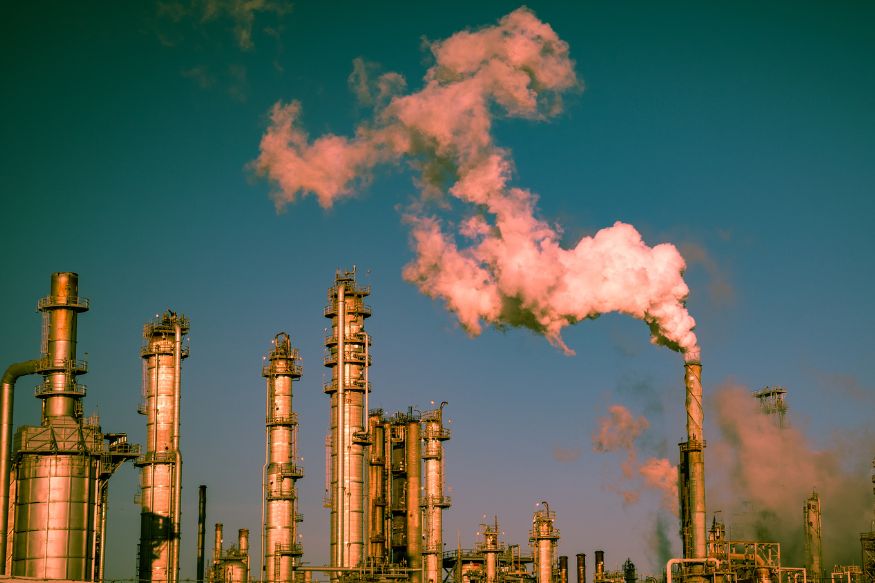
Carbon pollution from smoke stacks.

Carolyn Thomas - MS for North Wales

For the last couple of years, here in north east Wales, local communities, local authorities, politicians, and town & community councils have all been facing a political charm offensive from the carbon capture industry.

Having successfully captured the imagination of Westminster politicians with their tales of a ‘low carbon future’, the industry has now set its sights on capturing carbon dioxide in the north west of England before pumping and dumping that ‘captured’ carbon into empty gas wells off the north Wales coast.

These ‘blue hydrogen’ plans are being put forward under the ‘Hynet’ brand, which is an umbrella group funded by fossil fuel polluters such as ENI, Essar and Ineos.

Wales, of course, has history with Ineos, after previously agreeing to allow the company to build gas-guzzling 4-wheel drive vehicles at a plant vacated by Ford in Bridgend. Ineos would later pull out of the deal in favour of a site in Germany, leaving the Welsh taxpayer with a £4m bill.

One of the world’s largest petrochemical companies, Ineos is well-known for tax avoidance and union busting practices, and is owned by Sir Jim Ratcliffe, who has lobbied to weaken green taxes and reduce restrictions on fracking. Red flags, anyone?

[mid-content-banner]

Clean

Whilst Wales has been here before with Ineos, the people of the north Wales region have every right to be especially sceptical about the flashy brochures of massive, climate-wrecking conglomerates promising a future of clean energy aplenty.

On Anglesey, people spent more than a decade being promised the fruits of nuclear development at Wylfa. The plans faced strong local opposition, with campaigners pointing out that the project was always doomed to failure. They were right; in 2019, Hitachi announced the ‘suspension’ of the Wylfa nuclear project, before pulling out entirely a year later.

These examples expose a broader problem with the extractive nature of much of the Welsh economy. Whether it is foreign fossil fuel polluters or the Crown Estate, non-Welsh entities are exploiting Welsh natural resources and syphoning the profits outside of the country.

Support, and subsidies, for these activities are justified on the basis of providing jobs, but is that alone enough?

When I have asked Hynet about whether the workers on their project will be guaranteed union recognition or about whether they have any plans to reinvest a percentage of their profits into north Wales, I have received only obfuscation and evasion in response.

[lower-mid-content-banner]

Fossil fuel

Fundamentally, this project, subsidised to the tune of tens of millions by the UK taxpayer, will serve to entrench fossil fuel reliance whilst posing a significant safety risk to residents in north Wales living above and near the pipeline.

The UK Health and Safety Executive when referring to Hynet said: "HSE accepts the current evidence base which indicates that CO2, as it will be processed, transported and stored as part of Carbon Capture, Utilisation and Storage (CCUS) operations, presents major hazard potential."

The odourless, colourless liquid is both an asphyxiant and intoxicant.
In 2021, the head of the UK Hydrogen and Fuel Cell Association, Chris Jackson, resigned stating: “I believe passionately that I would be betraying future generations by remaining silent on the fact that blue hydrogen is at best an expensive distraction, and at worst a lock-in for continued fossil fuel use that guarantees we will fail to meet our decarbonisation goals.”

To date, barely a single carbon capture scheme worldwide has collected as much carbon as promised. For example, the United States oil and gas giant Chevron has acknowledged that its flagship carbon capture and storage project off Australia’s north-west coast is operating at just a third of its capacity, with the facility beleaguered by problems.

The US itself has spent billions of dollars of public and private money on decades worth of carbon capture projects, only to be repaid with colossal failure. One of the largest was the Petra Nova coal plant in Texas, once the poster child for carbon dioxide removal, now shuttered for good.

In setting aside £20bn of taxpayers’ money for the carbon capture gamble, the UK Government is planning on repeating the mistakes of the United States. Perhaps the most egregious part of all of this sordid affair is the impact that £20bn could have if spent on cost-effective and proven green renewable energy projects, including a mass-home insulation programme.

It is vital, and clearly in the public interest, for there to be transparency regarding the future liabilities of this project, and who is likely to pay the price for those liabilities.

As those who opposed Wylfa know, the Japanese say that building a nuclear power plant is like ‘building a house without a toilet’ in order to underline the problematic nature of dealing with nuclear waste, which needs to be
secured for thousands of years.

Perhaps Hynet have learnt from the example of Wylfa in that they do at least have a plan, of sorts, for dealing with the waste carbon – storing it permanently under the sea.

But this poses a whole host of its own problems, including the risk of leakage. Already, the increased amount of carbon dioxide in our oceans is having a major debilitating impact on animal life due to the acidification of the water, as well as the global rise in sea temperatures.

Solutions

From turning carbon dioxide into pellets to restore soils and increase crop yields, through to using carbon dioxide in precision fermentation to create food, progressive technological solutions are consistently being developed which threaten to make a large and expensive project such as Hynet
obsolete.

Researchers for the Institute for Energy Economics and Financial Analysis have stated that trapped carbon dioxide will need to be monitored for centuries to ensure it does not leak into the wider atmosphere.

But despite this, ENI have said they will only monitor their carbon dioxide reservoirs off the north Wales coast for 20 years. Perhaps they haven’t learnt the lessons of Wylfa after all?

Just last year, 80,000 litres of oil spilt into the sea off the north Wales coast – who was responsible? You guessed it, ENI. Why should this fossil fuel polluting company be given further opportunity to cause environmental destruction across north Wales?

Why instead is the UK Government not investing in proven, safe and reliable renewable technologies which will create the green energy we need and deliver jobs for local communities?

I believe that Hynet’s plans fail to comply with either the ethos or the objectives of the Wellbeing of Future Generations Act, especially when partnering with a multi-national such as ENI, who are facing a ‘lobbying and greenwashing’ lawsuit in Italy.

But more than that, their plans tell a depressing story of the exploitation of Welsh natural resources for private profit. As such, in Wales, we have a duty to oppose this act of political, climate, and economic folly.

For the price of a cup of coffee a month you can help us create an independent, not-for-profit, national news service for the people of Wales, by the people of Wales.

Get more trusted Welsh news

Choose Nation.Cymru as a preferred source in Google News to see more of our journalism.

Choose Nation.Cymru as a preferred source in Google News

14 comments

Jeff

Stop putting it in the ecosystem in the first place. That means no new oil licences.... oh yeah, too late.

Reply
Hywel Davies

This is one of the best summaries that I have read on carbon capture. The whole experiment is a delusion. There is now considerable scientific evidence that it cannot deliver a sustainable green future. It is only being touted as such so that colossal energy companies can carry on extracting the fossil fuels that are causing our climate catastrophe. To pretend that carbon capture or blue hydrogen will lead to a sustainable future is deeply cynical.The petrochemical companies are hustlers with a track record of deceit. The article also provides compelling evidence of the extent of the exploitation that we face in Cymru. Not for the first time in our history, our natural resources are being plundered, making huge profits for the few and leaving behind impoverished communities. Surely, it is time for us to realise this truth. 

Reply
Steve Heaney

Likewise, with the carbon credits scam, buy a forest and carry on polluting. A forest grown on Welsh farmland no less.

Reply
Robert Williams

Excellent summary, Hywel. Thanks.

Reply
Nick Powell

“a site in Germany”? If the Germans really had annexed Alsace-Lorraine again, I think we’d have heard more about it. (Ineos took over the former Mercedes Benz factory at Hambach in France).

Reply
Richard Davies

There is only one form of carbon capture that will ever work, the one nature came up with — trees!

Reply
Erisian

Right now methane reduction is a far better way to go.

Reply
Don Naylor

This describes the 'lobbying and greenwashing' lawsuit taken out (in Italy) against North Wales CO2 pipeline hopefuls, Eni. Part of the solution? ... err, nope, more like knowingly being part of the problem in the first place! Italian oil firm Eni faces lawsuit alleging early knowledge of climate crisis | Oil | The Guardian

Reply
Mark Jones

Roll up roll up -- holiday of a life time coming soon - .new attraction - .bathe in the fizzy carbonated sea off north wales

Reply
Ros Rice

Thanks Carolyn for this very clear explanation of what CCS would mean, not just for Wales, but for everywhere. I'm left wondering what we can do to bring these facts to the attention of politicians, decision makers and the wider public. I'll forward your piece to my MP and Ed Milliband ( Shadow secretary of state for climate change). Hynet has managed to situate itself as the answer to a carbon free future for the NW of England and a guarantor of jobs, so maybe the unions need to be brought up to speed as well.

Reply
Jess

Thank you for writing this article 🙏 I really hope it gains traction and can help raise awareness and stop this happening

Reply
Nicky C

Thank you Carolyn for raising this important issue. The UK government is, no doubt in response to the powerful lobbying of the fossil fuel industry, putting billions of taxpayer subsidies their way and propping up a dieing industry. It's like paying the tobacco industry to cure cancer. a government committted to social justice could be using this funding for genuinely green solutions, which would directly benefit those who struggle most, and reduce inequality in the UK, through local renewable energy generation, through insulation schemes, and through support for a real green transition that would create properly funded green jobs. For anyone who wants more information about blue hydrogen and the issues with it have a look at the article by Kevin Anderson and Simon Oldridge 'Warning: the UK government’s hydrogen plan isn’t green at all, it’s another oil industry swindle' in the Guardian.

Reply
CATHERINE G

Such a good article summarising what's wrong with this project. I can't understand why the consumer goods customers for the blue hydrogen are taken in by the greenwash. Why don't they just go electric or straight to green hydrogen? It would be much cheaper for them and not lock them into fossil fuel gas.

Reply
Bob H

I also feel that this is a vast white elephant! A rather expensive, inefficient and ugly looking one! I feel that with consideration of similar "projects" totally failing financially in Europe, perhaps we are owed some promises of efficiency vs effects locally and globally. Has Enfinion released any data containing plausible projected monetary and CO2 emission and capture figures. Not just from the final plant, which appears to be the selling point, but from the overall logistics of obtaining, transporting, sorting, processing usable waste, safely disposing of unsuitable waste. Sucking CO2 out of the exhaust and somehow getting it to where it can be pumped underground (this will take a lot of power) One of their photographs depicts a single waste vehicle approaching the site, This image could be used to form a good image of efficient electricity production vs costs. Perhaps an estimate of the final usable electrical energy produced from this single load could be provided to us. I feel that the energy density of this rubbish is very low compared to common fuels, it may take 100's of trucks per hour to keep the system operating at an efficient rate. The north Wales expressway certainly wouldn't be operating Carbon capture is the buzzword. Looking a little past the buzzword in the leaflets provided to locals, the basic site operation is demonstrated. One diagram suggests that the carbon capture component will only be reducing the overall CO2 output from this single site, and neither a zero or negative greenhouse emission is claimed. Logistics of obtaining and preparing the fuel. Transport of waste over greater distances will be necessary, much unavoidably by road; LGV's currently are not suitable for electrification and will burn a considerable amount of diesel. They will slow the free flow of traffic along the approaching primary route, causing higher emissions from the delayed traffic, which will be slowed so that it is running at less efficient speeds. The waste will require a lot of sorting in a large plant. Unsuitable waste will require removing from the site to be disposed of a second time. How much? How is this being transported and to where? Usable waste containing carbon will then require drying, compacting and further processing, which requires storage, multi handling, time, and the consumption of power at different stages. The overall fact appears to be that this will be a power station which uses low energy density fuel. Low energy density means that less power will be obtained per unit of weight than any other common fuel source. The company have obtained a large financial backing from the gov't in the name of carbon capture, how will this be repaid? Similar European plants have tried this, most have never recovered their investments and have closed! Another inescapable fact is that the CO2 planned to be captured by Enfinion is part of that rereleased by them after burning materials in which carbon was already stored and bound tightly to its molecules. Nothing other than extreme heat of combustion would combine it with oxygen to form CO2. Left where it was, nature and time would deal with the carbon.... What is coal formed from? No process is 100% efficient, some CO2 will get past and be released. Forget the pipe dream of negative carbon emissions, this would only be possible at the extreme cost of stand alone chemical scrubber stations..... Or, did you know that places like the bleak looking Yorkshire moores and many other places in the UK were once covered by shrubs, trees, woods and forrests? Nature is very good at capturing CO2 and turning it into all forms of vegetation!

Reply

Leave a reply

Replying to Nicky C Cancel

Thank you Carolyn for raising this important issue. The UK government is, no doubt in response to the powerful lobbying of the fossil fuel industry, putting billions of taxpayer subsidies their way and propping up a dieing industry. It'...

Comments are reviewed before they appear.