


Opinion
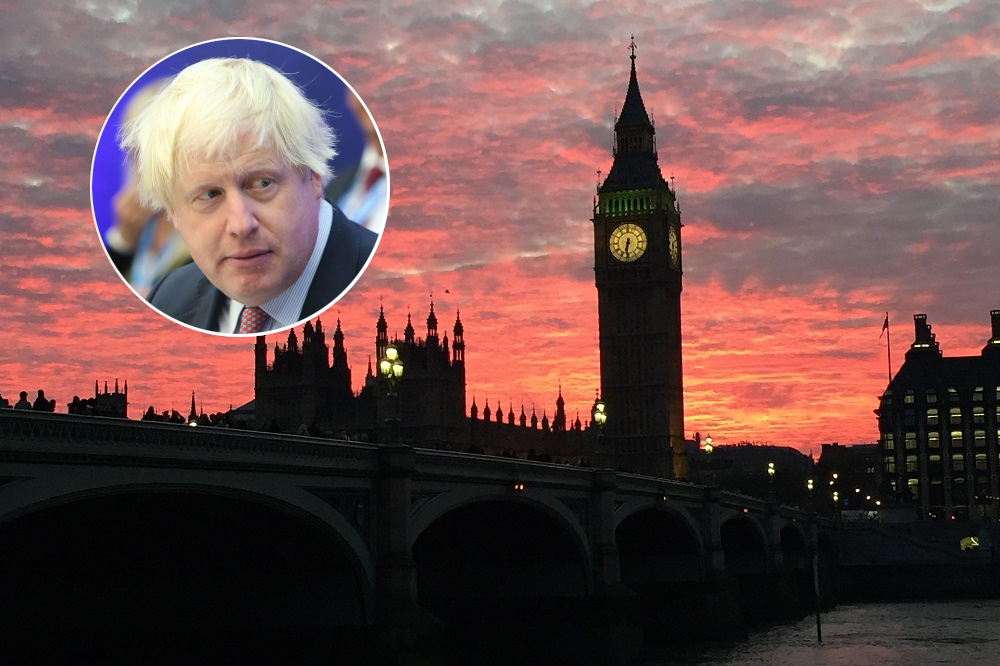
Boris Johnson is just a human manifestation of the British state - getting rid of him won't solve all its problems
Ifan Morgan Jones
It looks like it's now over for Boris Johnson's premiership, whether he goes quickly or his demise is dragged on over months or even a year.
It's very difficult to think of anything more damaging for a politician, particularly one who claims to be a populist man of the people, than to impose strict rules on the population and then to be seen to have presided over a government that flouted those same rules repeatedly and extravagantly themselves.
Every day seems to bring a new revelation about a string of parties or a colourful anecdote about someone dragging a suitcase full of wine from Co-op that will stick long in the public memory.
But while Boris Johnson may carry the can for them the scandal isn't down to one person but rather a matter of attitude and culture at Westminster and Whitehall. He is just a human manifestation of a British state which seems to believe there is one rule for them and another rule for the rest of us.
Boris Johnson may have been at the party on 20 May, but so were over 100 other people, few of whom seem to have recognised that there was anything wrong with what they were doing. There were parties going on at No 10 while he wasn't there, and there seems to have been other parties going on in other parts of Whitehall that had nothing to do with Number 10.
It's clear that while Boris Johnson seems to have turned a blind eye to or even participated in what was going on, this culture of telling the public to do one thing while doing another themselves is deeply embedded within the UK Government.
The scandal also tells us something bout how tangled the network of colleagues and contacts are within Westminster and what impact that has on people's ability to keep each other in check.
One of the parties alleged to have happened at No 10 was to say goodbye to James Slack, who quit as Boris Johnson’s director of communications to become deputy editor-in-chief of the Sun - which seems to partly explain why the Sun has been so quiet since the scandal first broke.
This cosiness and lack of accountability seem built into the structure of these institutions. The Met Police won't investigate any criminal wrongdoing unless the internal UK Government inquiry points to any. But the senior civil servant carrying out the investigation into alleged Covid rule-breaking in Downing Street and other departments, Sue Gray, reports to Civil Service head Simon Case, who reports to the Prime Minister.
In her excellent book Haven't You Heard? Marie le Conte paints a picture of a Westminster where power depends on drinking in the right groups of men (and it is mostly men) from a certain class and educational background. Those who have access to those networks get things done and rise through the ranks far more efficiently than those who are not.
The Westminster Bubble has never seemed so much a barrier between the rulers and ruled. And it points to there being something incestuously unhealthy about the British establishment. Everyone who is supposed to be keeping each other in check seems to know each other very well, and depend on each other for their advancement, and that can ultimately only lead to back covering and closing ranks.
[mid-content-banner]
Varied
The other similar scandal that comes to mind straight away is the phone-hacking scandal of almost exactly ten year ago. In that case, it wasn't until the New York Times started digging into the story that it turned out the entire establishment - politicians, media and even the police - had been turning a blind eye to what was going on.
In the case of both the phone-hacking and party gate scandal the lethal mistake seems to have been to annoy the Royals - in the first case, by hacking Prince Harry's phone and in the latter by partying before Prince Phillip's funeral. It seems that accountability only follows if the British establishment slights another and more senior part of that same establishment.
In many ways, Boris Johnson represents the British state in a microcosm - well-connected, wealthy, Eton and Oxford-educated, but arrogant and dysfunctional. And removing him as Prime Minister won't solve the problem - the whole nature of the scandal is the result of a culture and attitude deeply embedded within the fabric of the British state.
It would be very easy at this point to end by juxtaposing Wales with Westminster and argue that our own political institutions don't have any of those problems.
But it's worth remembering that the prequel to the current scandal was the resignation of the Welsh Conservative leader Paul Davies for drinking in the Senedd with other politicians, a few days after the Welsh parliament had introduced an alcohol ban at pubs.
If we want to build a state that is better run than that controlled from Westminster, we need to put the structures in place to ensure that power is spread around the country and that we are represented by people from different backgrounds who mix in different circles.
We also need to ensure that our media is as varied as possible. There's no point having pluralism if the media are best mates with everyone in power and all singing from the same hymn sheet.
Otherwise, we are in danger of simply recreating Westminster in Cardiff Bay and Whitehall up the road in Cathays Park.

Support our Nation today
For the price of a cup of coffee a month you can help us create an independent, not-for-profit, national news service for the people of Wales, by the people of Wales.
Get more trusted Welsh news
Choose Nation.Cymru as a preferred source in Google News to see more of our journalism.
