


Opinion
Basket cases and purple rinses: Wales' 'baby deserts' are not of our making
Stephen Price
Finland, with its population of 5.58 million, was crowned the happiest country in the world for the eighth year in a row, according to the World Happiness Report 2025 late last week.
Unsurprisingly, the UK, with Wales in tow, suffered its lowest ranking to date at a dismal 23, with the unhappy band of unequals also reporting its lowest average life evaluation since the 2017 report.
Other Nordic countries are once again at the top of the happiness rankings in the annual report published on Thursday 20 March by the Wellbeing Research Centre at the University of Oxford. Denmark, Iceland and Sweden remain in the top four and in the same order.
“Happiness isn’t just about wealth or growth — it’s about trust, connection and knowing people have your back,” said Jon Clifton, the chief executive of Gallup. “If we want stronger communities and economies, we must invest in what truly matters: each other.”
Researchers say that beyond health and wealth, some factors that influence happiness sound deceptively simple – sharing meals with others, having somebody to count on for social support and household size.
In Mexico and Europe, for example, a household size of four to five people predicts the highest levels of happiness, the study said.
Believing in the kindness of others is also much more closely tied to happiness than previously thought, according to the latest findings.
[mid-content-banner]
Daily Mail study
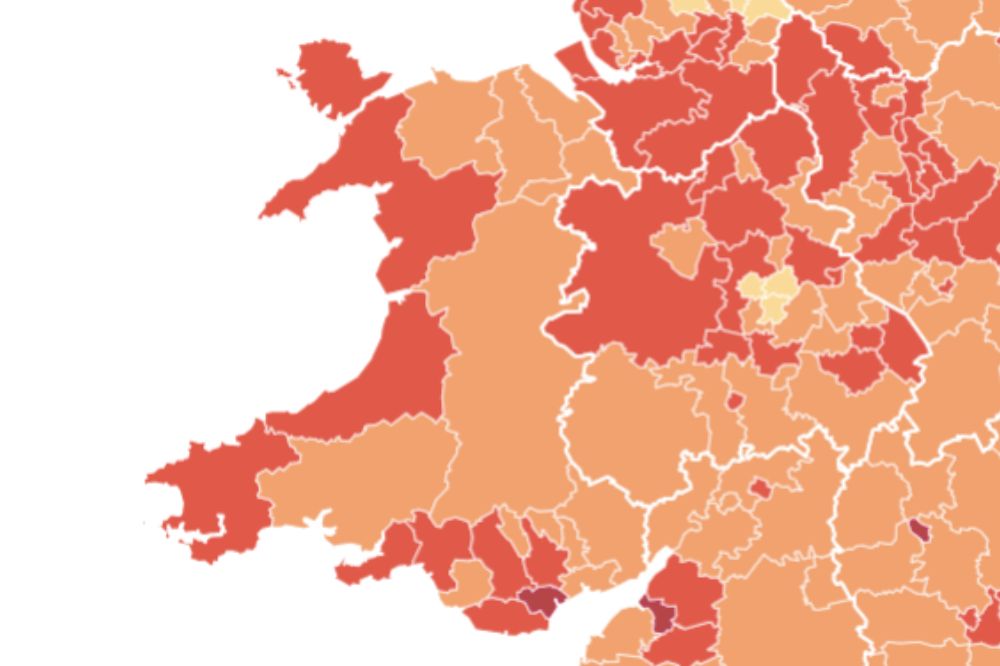
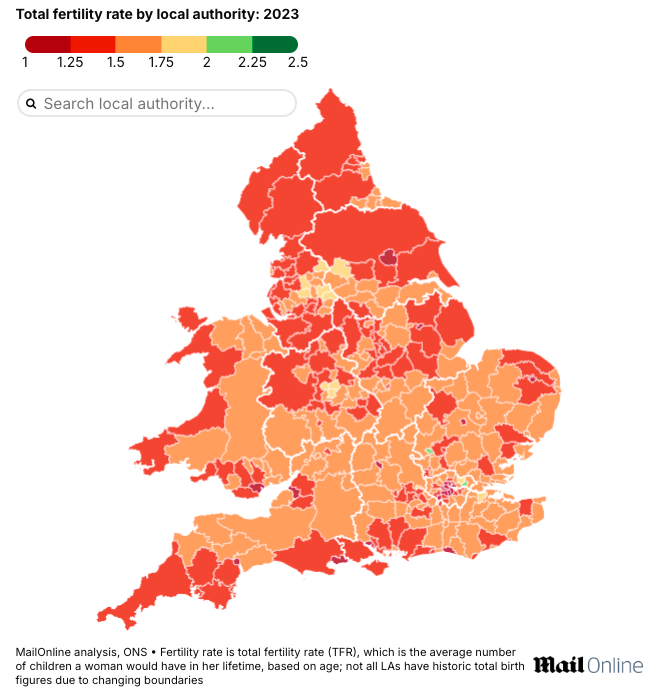
Over the weekend, the Daily Mail shared a startling piece, titled 'Britain's biggest 'baby deserts' are revealed amid terrifying threat of 'underpopulation': Interactive map shows how many children women have in YOUR area'.
The article shared how fertility rates have plunged in every local authority in England and Wales over the past decade.
"Alarming figures" lay bare the 'baby bust' some boroughs have seen with a 60 per cent decline in women having children since 2013, according to the news website, who added that: "Experts fear the freefalling rates will trigger an 'underpopulation' crisis, potentially leaving Britain reliant on immigration to prop up our economy."
The outlet spoke to Professor Berkay Ozcan, a demographer based at the London School for Economics, who said that without immigration 'the UK’s population would eventually shrink', if these levels persisted.
Fertility replacement, the article states, doesn't account for the impact of immigration, meaning overall population levels can still increase in a country despite a drop in fertility rates.
Adding: "Yet becoming reliant on immigration to offset low birth rates would only fuel the fire, on what is already a hugely controversial topic in British society. Immigration levels have spiralled to all-time highs over the past few years, with tens of thousands having arrived on small boats."
Professor Ozcan concluded: "One key challenge is that immigrants' fertility rates tend to converge with those of the native population over time.
"While immigrant groups often arrive with higher birthrates, these rates decline across generations.
"This means that to sustain population growth through immigration, a continuous influx of new migrants is required – making long-term demographic planning both politically sensitive and costly."
Dismaland
The UK is not alone in facing a fertility crisis, with the latest figures showing that the EU also experienced a plunge last year to an all-time low.
Double-digit percentage falls were recorded in Romania (13.9 per cent), Poland (10.7 per cent) and Czechia (10 per cent).
Wealthy EU nations, including France and Germany, also saw significant drops.
Back to the UK, however, one of the most notable declines, as evidenced on the Daily Mail's chart, is Anglesey.
The Daily Post shared back in January how plummeting birth rates on Anglesey have prompted a review on further education provision on the island. Also underpinning the move is the continued inward migration of older people combined with an exodus of educated youngsters."
In the seven years to 2019, annual birth rates on Anglesey plunged more than a third, from 835 to 557
Andrew Forgrave wrote that "the island risks becoming a retirement home for incomers. The local authority said older adults – especially those in their fifties or above – are relocating to the island.
"Many are “likely to be approaching or already retired, or in the downslope of their career”, said the report – though some may have been attracted by the idea of home working."
Prescriptions are on us!
[lower-mid-content-banner]
From wipers to the wiped
Wales has a few million fewer folk than our Finnish cousins, with the latest census standing at 3.1 million - the highest on record, but why should we be worried about that?
Finland is no small country, standing at an impressive 338,145 square kilometres compared to Wales' puny 20,782 square kilometres (8,024 square miles) which puts their population size, and density, into an even more important perspective.
Smaller countries are dynamic, closer knit, more cohesive, and I would argue more intent on forging ties based on kindness not on economic (and military) might.
For too long, GDP has been the driving force for politicians around the world, obsessively number-gazing while citizens look on trying to make sense of failing services, fragmented communities, with a strong desire to wind back the clock.
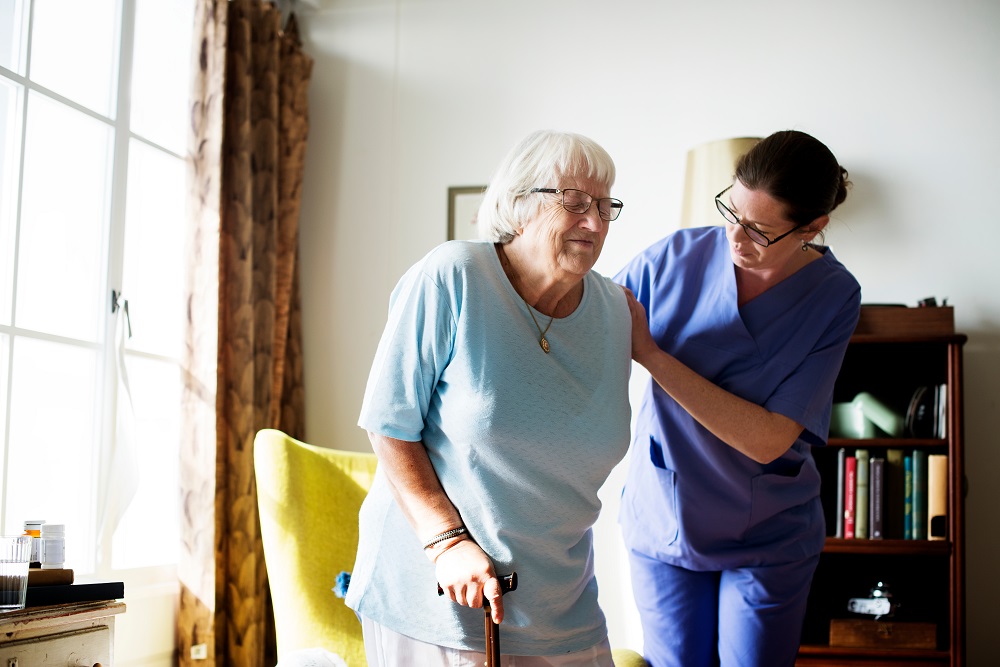
The beast is insatiable - we must have more people to care for our elderly, to work for the NHS, to slaughter our cows and so on and so forth.
Like an upturned pyramid, we must have more - more numbers on paper, more hands to hold the elderly we no longer will, more houses in Abergavenny, Monmouth, Newport, Wrexham and Chepstow for folk from Bristol and Chester to pay a little bit less for.
And when the latest batch of more begin to need their arses wiped, their pension pot filled, their rubbish collected, their retirement home built, we'll need more again. Ad infinitum.
Surely there's another way?
More, more, more
Back to the happiness report, in a concerning development, the study said 19% of young adults across the world reported in 2023 that they have no one they could count on for social support. A 39% increase compared to 2006.
We aren't going the right way with the more, more, more approach. By any measure, we're spiralling.
The face of Wales is changing, and seemingly overnight. My own small home village in the Bannau no longer has a primary school, which at its highest point in my living memory stood at 52 children, while nearby towns are undergoing a house-building boom, with Abergavenny's sprawl swallowing up nearby villages in every direction.
But who are we building these houses for? The prices, and their strategic positioning, suggest not for us. Indeed, most young folk from this neck of the woods are heading valleys-ward in a London-led game of dominoes, leaving the communities there to try and fight for scraps.
Commenters asking 'where are the doctors surgeries, schools, dentists or places to play?’ are branded NIMBY's, and we all just have to accept that we don't know what's for the best, unlike our doting, benevolent politicians. Our roads are congested, our doctors surgeries barely pick up the phone, our rivers are full of chicken and human shit, but yes, we need more.
Welcome at all costs
Wales' 'baby deserts' are a wake up call for our politicians to make rural, coastal, far-from-Cardiff locations viable for young families and the people of these overlooked and underpaid communities.
The current approach to build more houses is a 'throw it at the wall and see if it sticks' approach that simply isn't working, and is doomed to fail the longer we ignore reality.
Maybe, just maybe, the pyramid might turn the right way on its own if we were deemed capable enough to manage our own affairs, and if a housing act could ensure people in Wales can live in their own communities, whether through purchase or rent - and if we stopped accepting our position as a quaint, welcoming at-all-costs overspill and retirement village.
It wouldn't hurt for our councils and housing associations to prioritise Welsh people over England's high band-scoring basket cases either - perhaps we wouldn't need to be building quite so many social housing properties and retirement homes if we did.
Any actions taken in the meantime need delicate Wales-specific implementation, not an England-led one-size-fits all and self-perpetuating call for more at any and every cost.
As Wales and Finland prove, there's much to be said for the beauty in the small.
Support our Nation today
For the price of a cup of coffee a month you can help us create an independent, not-for-profit, national news service for the people of Wales, by the people of Wales.
Get more trusted Welsh news
Choose Nation.Cymru as a preferred source in Google News to see more of our journalism.
