


Opinion
Alex Salmond and thinking independently
Ben Wildsmith
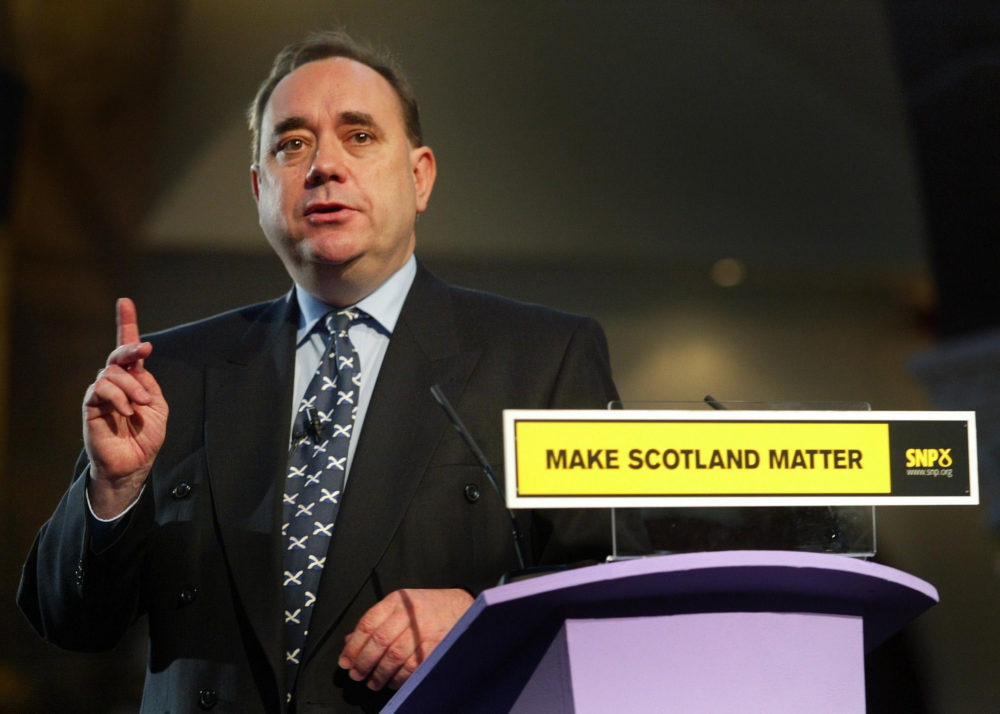
The unexpected death of Alex Salmond yesterday left the British state without its most effective critic.
Having led the independence movement in Scotland to the brink of success in 2014, his final years revealed the price that anybody flying so close to the sun of self-determination will be expected to pay.
There is a difference between commitment to a cause and forging a career by attaching oneself to it. Independence movements are stuffed to the gills with politicians who wear the clothes of self-determination whilst seeking compromise at every turn.
Salmond wasn’t one of those. His final tweet concerned SNP leader John Swinney’s decision to attend Keir Starmer’s ‘Council of the Nations & Regions’.
It is designed to diminish the status of our Parliament and the First Minister. Part of becoming independent is about thinking independently, not subserviently. John should have politely declined the meeting with the words “Scotland is a country not a county”. (5/5)
— Alex Salmond (@AlexSalmond) October 12, 2024
There speaks the voice of experience. The clammy hand of UK friendship is forever outstretched to peoples who have indicated a desire to go it alone.
[mid-content-banner]
Home rule
From Balfour ‘killing home rule with kindness’ in Ireland to the arrival of devolution in Wales and Scotland a century later, Unionist politicians have presented the status quo as being reformed on their watch.
The temporary ceding of power is sold as a direction of travel that negates the need for independence and all the upheaval that would bring.
In time, disquiet grows and further ‘initiatives’ are sold to a new generation of pliable politicians.
Salmond was unusual in his refusal to play ball with these tactics. His successor as First Minister foregrounded her role and secured plenty of attention for her country. She failed, however, to advance the case for independence.
If there is a lesson for nationalist politicians from the last decade it is that a prolonged period in devolved power is incompatible with securing independence.
[lower-mid-content-banner]
'Events'
Macmillan’s ‘events, dear boy’ pile up around any party of government, obscuring its purpose and achievements.
Devolved governments have the unique difficulty of trying to govern under the financial constraints imposed upon them from above. A cynic would suggest that a nationalist government that is funded and regulated by a permanently unionist state is not only bound to fail but designed for that outcome.
For a while, after the Brexit referendum revealed a clear geographical divide in UK politics, Scottish independence looked inevitable. That no second referendum was secured, despite the UK government reneging on the promises it made to win the first will stand as a defining failure of the independence movement of that time.
Moments when change is possible are rare in politics. Keir Starmer has just wasted the 100 most powerful days he will experience as Prime Minister. Along with events, personal vendettas and public disaffection conspire quickly to erode political momentum. For the independence movement in Scotland, the period between Brexit and the pandemic was its golden opportunity.
The circumstances by which Salmond found himself in court for a slew of sexual offences of which he was subsequently cleared are hotly disputed.
Toxic
In terms of independence, however, nobody could dispute that it took a major figure off the pitch at a critical time. Similarly, quite how the toxic and seemingly insoluble question of gender ID became so uniquely central to SNP politics is opaque. That it paralysed the party at a crucial juncture, however, was certainly convenient to those charged with maintaining the structural integrity of the UK.
Salmond ended his days as a marginalised figure.
As the new UK government sought to formalise the reduction of Scotland, Wales, and Northern Ireland to parity with English mayoralties, he was shouting through the letterbox of Scottish politics in dissent.
As we approach the Senedd elections in 2026, the near certainty of a coalition government will see Plaid Cymru weighing the virtues of compromise against principle once again. The comforts of government can be the enemy of change.
Support our Nation today
For the price of a cup of coffee a month you can help us create an independent, not-for-profit, national news service for the people of Wales, by the people of Wales.
Get more trusted Welsh news
Choose Nation.Cymru as a preferred source in Google News to see more of our journalism.
