Opinion
A Question of Chickens
Jasmine Donahaye asks 'What are the costs of intensive poultry production for rural Wales?'
Forget the tame noir aspirations of Hinterland, the TV series: the real hinterland is the wild west. If I weren’t feeling so threatened, I’d wonder at the film setting: two pick-ups blocking the road; angry ranchers, elbows on open windows, facing off with environmentalists; shotguns cocked… No, actually there are no shotguns. And we’re talking about a chapel.
Or at least that’s what we appear to be talking about. Capel Bethesda is a listed building on the farmers’ land. A group of us have walked up from the nearest house along the public right of way to have a look at it.
‘And when you’ve had a look at it,’ the young farmer says, pointedly turning off his engine, ‘you can go back home.’
Below the chapel, a stone’s throw away, the Afon Cyneiniog runs in lively spate after rain. Behind the chapel lies a large expanse of level ground, the proposed location of two intensive poultry units that would together house 110,000 broiler chickens at a time, totalling some 800,000 per year.
This tense encounter illustrates one of the serious but largely unrecognised costs of the rapid expansion of the intensive poultry industry in Wales: the deterioration of community relations, in the interests of huge, often multinational, corporations.
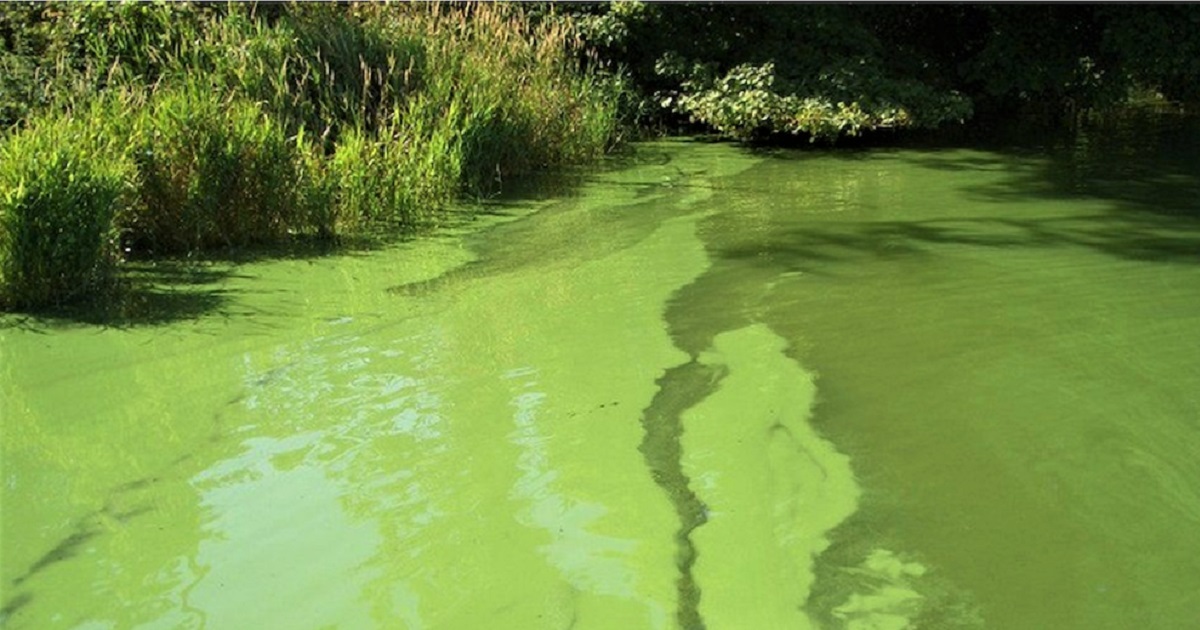
The industrial poultry development along the Wye, and the severe pollution it has caused, is now widely known, thanks to the sustained efforts of environmental groups, conservation organisations, an effective public information campaign, and – belatedly – media coverage.
With the public spotlight on pollution in Powys and across the border in England, where else might the expanding poultry industry turn its sights?
Carmarthenshire County Council has found the wherewithal to refuse a major application on environmental grounds, which leaves Ceredigion the new target, something that’s happening by stealth, ineptitude, and inattention.
Barriers
I know that farming is hard graft, and is often profoundly lonely and heart-breaking. I grew up in rural England, and worked on a farm throughout my childhood, and where I live now I am surrounded by working farms.
Knee-jerk hostility to farmers makes my hackles rise, and there’s plenty of that knee-jerk hostility in the positions many take on farming, rewilding, and food choices. But knee-jerk hostility by farming interests is just as destructive.
None of this angry positioning helps solve the problems of food security, habitat destruction and biodiversity loss, or the vulnerability of rural communities. Instead it builds differences into monolithic barriers that seem increasingly insurmountable.
Farmers, like all inhabitants, have an important contribution to make to the health of rural locations – economic, communal, linguistic, cultural and environmental. And regardless of how farmers voted on Brexit, they have to diversify to survive in the tightening post-Brexit economy.
That need to diversify is an opportunity for large corporations to take advantage, particularly when it comes to our dependence on purportedly ‘cheap’ food.
[mid-content-banner]
Objections
A few years ago, despite my support for farmers finding new ways to survive economically, I objected on environmental grounds when a neighbour submitted a planning application for a large poultry unit where I live.
Neighbours I spoke to had their doubts, but no one wished to publicly object, and the development went ahead.
It’s a free-range egg production unit for Clarence Court (so much for their idyllic upmarket claims that their birds ‘enjoy a life of privilege roaming free on acres of England’s green and pleasant land’), which subsequently doubled in size.
When an application for a new site on the opposite side of the road was submitted, it was also approved. Once again I was the sole individual objector.
That’s not the case with the planning application in Talybont, which has received more than 300 objections. It’s taken the potential death of the Wye for this to happen.
Anyone who’s travelled by train on a hot summer day through the eastern part of Wales will have noticed the smell.
The proliferation of industrial poultry and egg production in Powys stinks, both metaphorically and physically, and there is now growing awareness of some of the players involved, and the costs they exact.
The opposers in Talybont are a disparate group, representing a cross-section of the community.
Some object to any industrial development in this rural location, and some to an intensive poultry unit on principle (for animal welfare reasons, or because of environmental costs, or for food beliefs).
Others have objected out of more personal concerns about the impact on quality of life: traffic, health risks, house prices and leisure.
Fault lines
Of course farmers will defend their entirely legitimate right to diversify, and will see objections like this as alien metropolitan environmentalism, and the interference of ‘outsiders’, but the objectors are rather too many and diverse to fit neatly into those boxes.
Inevitably with contentious planning applications, as with recent large-scale botched conservation initiatives, the differences that make up our rural communities are identified along predictable fault lines: those of language, place of origin, political affiliation, age, communal roots, and beliefs about food, farming, the countryside and the environment.
One of the most challenging fault lines to even broach as a subject for discussion is the argument that the needs of the deep-rooted farming community must be safeguarded as the repository of the Welsh language, a privilege not afforded to other inhabitants, some of whom, even if they raise Welsh-speaking families, are not acknowledged as playing a role in language continuity, because their roots are elsewhere.
But you don’t need to identify with any group, real or imagined, or any ideological position, to see that what is proposed in Talybont is insupportable on every measure. The approach to the proposed site of this massive chicken factory is the embodiment of idyllic rural beauty.
The road from Talybont to Bontgoch runs through unspoiled deciduous woodland: after tight narrow turns near the village, it is less a road than a lane among trees, along a river. It’s an ideal place to live, but, more importantly, it’s a precious, protected and increasingly rare piece of contiguous rich wildlife habitat.
Risk
When I visit, in October, the colours are just changing. I try to imagine the volume of birdsong in spring, something that children born now may well not grow up to hear anywhere.
The lane goes over the Cyneiniog, a tributary of the Leri, which joins Cors Fochno, a protected peatbog of international importance. The risk to these waterways from the factory’s wastewater is grounds enough for refusal.
But there are cultural grounds, too. The narrow stone bridge across the river is an important site of social history – members of the nearby chapel used to be baptised here.
Even a van driver would have to go carefully in order not to damage the sides, a classic example of stone craftsmanship.
The heavy lorries to provide the proposed factory with feed, bedding and thousands of birds, and to transport manure and mature birds the other way, would destroy the bridge, or another bridge would have to be built, thus destroying pristine habitat.
Infrastructure
Standing on that bridge, with its original stonework, I think of the feed deliveries, egg collections and the huge trailers of chicken manure roaring along the narrow road in my own village.
It’s a tiny proportion of what’s proposed for Talybont, and my heart breaks for the loss that would happen here: the destruction of visible cultural history, built and growing in an organic continuity with the past; and the poisoning and destruction of the visible and invisible natural world.
This massive infrastructure and heavy traffic is inarguably a large-scale industrial development, no matter that it is proposed on farmland – industrial development that belongs away from sensitive habitat, both human and non-human, in a place where traffic, noise, smell and contamination have least impact.
If this application were approved, it would create legal precedents for further exploitation by large multinational corporations with no local accountability. Soon Ceredigion could be the new Powys.
As Iolo Williams has said of this particular proposal: ‘It’s vitally important that this application is turned down as it will prove to be the thin end of the wedge. In Powys, where I live, there has been no control on intensive poultry units and our rivers are now paying the price. The once thriving River Wye is now largely devoid of life due to these units. This must not be allowed to happen in Ceredigion.’
Resilience
Ceredigion has yet to show it can take a stand – not a stand against farmers, who are also vulnerable here, but against the invisible corporate interests behind such developments, which are treating Wales as their dumping ground for quick profit, as has happened on the Wye.
In standing up to corporate exploitation of our hinterland, Ceredigion would also be standing up for the resilience of the rural community.
The damage to community relations, exemplified by the hostile confrontation I witnessed between farmers and objectors, is one of the costs of this kind of exploitation.
And the resilience of community, along with environmental safeguarding, goes to the heart of the Welfare of Future Generations Act.
Of course farmers need to find ways to secure their futures. But being at the mercy of exploitative corporations does nothing to safeguard farming, or increase food security.
Even the government’s own assessment recognises that ‘planning permission for poultry sheds is seen as a major barrier so many farmers rear on contract for the major companies,’ and acknowledges that the British poultry industry, dominated by large corporations, ‘is a high volume, low margin sector, with high costs of entry.’
Litmus test
The recent news of producers receiving only a fraction of the huge rise in the consumer price of eggs suggests just how unsustainable these kinds of developments are for farmers.
Destroyed community relations would put them in a weaker position still. Ultimately, that makes all of us vulnerable to food insecurity.
Ceredigion County Council has a reputation for highly questionable planning decisions, often ignoring its own planning officers’ recommendations to refuse.
Refusing this application could be a step towards finding sustainable solutions to the problems of rural development and rural resilience.
It is a litmus test of the government’s policies, and of the council’s credibility.
Jasmine Donahaye's next book 'Birdsplaining: a Natural History' is published in January. It can be pre-ordered here.
Support our Nation today
For the price of a cup of coffee a month you can help us create an independent, not-for-profit, national news service for the people of Wales, by the people of Wales.
Get more trusted Welsh news
Choose Nation.Cymru as a preferred source in Google News to see more of our journalism.