


Tuesday, 14th July 2026 Cardiff 23° · Clear sky
NationCymru A news service by the people of Wales, for the people of Wales.

Opinion

A post-Brexit language plan has to put Welsh-speaking communities first
By NationCymru
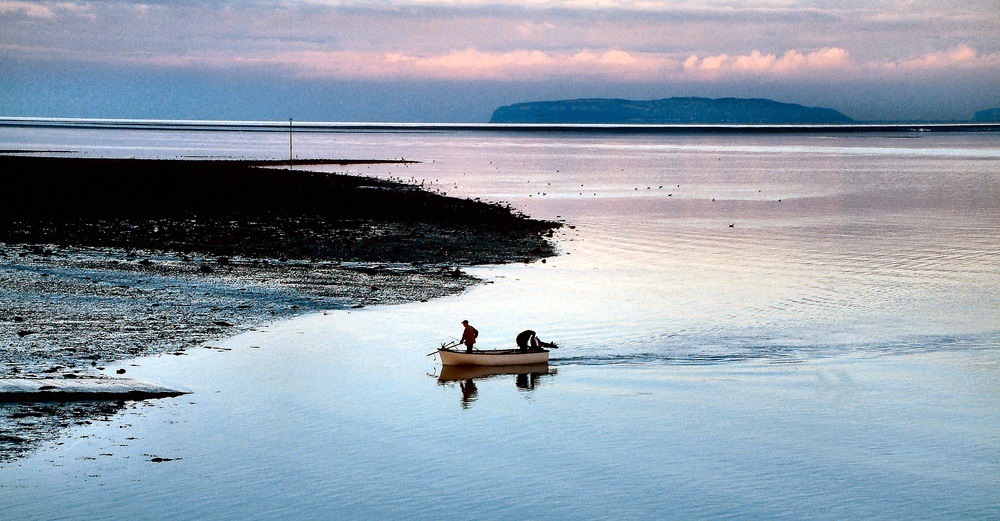
Picture by Denis Egan (CC BY 2.0)


Aled Gwyn Job

Last week's National Eisteddfod on Ynys Mon seemed different somehow.  Just over a year after the Brexit earthquake of 2016, there appeared to be a fresh verve and a new sense of vitality.

It was as if this nation had taken a whole year to really absorb the full implications of Brexit, and had now emerged more resolute and more determined than ever to protect our Welsh identity.

The increased presence of young people all over Y Maes was also indicative of this new spirit.

The Welsh language culture has always been something of a cultural dynamo. And the more pressure that is put on it, the livelier it seems to be.

The Eisteddfod is dangerous however as it can blind us to the real deterioration that is happening in our Welsh language communities.

When the festival-goers all go home, how many of them will get a chance to speak Welsh or partake in cultural activities in their own communities?

A plan

A good deal of sentimentality and wishful thinking automatically kick in when it comes to discussing the future of the Welsh language in Wales.

But right now, what is needed more than anything else is a pragmatic, hard-headed and completely focused approach to language planning.

It is important of course that the Welsh language continues to be developed across Wales.

But sustaining the remaining communities where Wales remains a living language must come first in any credible language regeneration strategy for Wales.

The Welsh Government have just announced their strategy of creating a million Welsh speakers by 2050, primarily through the education system.

However, the evidence shows that pupils in Welsh language schools in mainly English-speaking areas struggle to sustain their Welsh language skills once they leave school.

If the language isn’t a living one at a community level, there is a lack opportunity to use it.

Present day socio-linguists are in complete agreement that a minority language cannot be sustained by the education system alone: it needs its own habitat where it can thrive.

Scholars of language have often used an environmental metaphor to explain why language conservation is important.

Imagine the Welsh language as a buffalo. If you release individual buffalos into the wild they will quickly be devoured by lions.

However, if you can build up a large herd of buffalos in a single area, they grow in strength. The lions may be able to pick off one or two young stragglers, but not many more.

Arfor

Adam Price, AM for Dinefwr, has developed a realistic plan for the conversation of the Welsh language.

He proposes a single authority called Arfor (on the coast) which would encompass Ynys Môn, Gwynedd, Ceredigion, and Carmarthenshire.

Arfor wouldn’t only be tasked with preserving the Welsh language, but also developing the economy, transport, housing and tourism in a part of Wales usually neglected by both the UK and Welsh Governments.

But consideration for the Welsh language would be a key part of decisions made by this authority and would influence its decision-making in these others fields as well.

Such an entity could unite west Wales from Caergybi to Carmarthen and serve as a dynamic counterpoint to Cardiff.

Arfor could use the cultural strength of these communities as a foundation to provide what the Welsh-speaking areas have long sought in vain - economic development, prosperity and a sense of hope and optimism.

Communities which are confident in their own culture are more likely to transmit that sense of confidence to the social and economic sphere in their areas, creating new ventures, enterprises and businesses.

Rather than being the "hindrance" alluded to by Newsnight in such a patronising and uninformed way: the Welsh language and culture can work as social and economic drivers, thus creating a virtuous and sustainable circle which can benefit the whole of Wales.

Tourism tax

Another interesting concept which could be considered by Arfor is a tourist tax.

Already, such a tax is in existence in many parts of Europe, and London is now all set to introduce their own tourist tax (£2 on each individual hotel/guesthouse per night) to assist the social fabric of London communities affected by the pressures of tourism.

A similar tax in the West could raise between £5 million and £10 million - which could be used to create new economic opportunities to keep young people in the area.

It is high time that Welsh communities fully benefited from the tourists who come here from all parts of the world to enjoy the attractions of Wales's outstanding landscape.

Unity

The only danger is that Arfor could weaken the Welsh identity that keeps the country together. It could become a nation within a nation, if you will.

However, with devolution in its 20th year, a sense of Welsh identity is surely resilient enough by now to recognise that Wales needs different solutions for different parts of the country.

And any steps taken to preserve the Welsh language in Arfor would quite obviously need to be part of a Pan-Wales language regeneration strategy.

But the Welsh Government have got to realise that a blanket bilingualism to cover the whole of Wales will NOT sustain the Welsh Language and help it grow and develop in the future.

There is a danger that the butter is spread too thin and we end up with a small increase in the number of Welsh speakers in some communities while the language dies altogether in areas where it used to be at its strongest.

The language will only thrive in future if it has strong, resilient Welsh-speaking communities where Welsh is the predominant everyday language.

The very existence of these communities can inspire learners and all those who harbour goodwill towards Welsh in all parts of Wales.

Brexit poses huge challenges for Wales, and for Welsh-speaking Wales.

Arfor is an innovative, creative and made in Wales solution to one of those challenges. Wales's politicians should get behind Adam Price’s plan.


Support our Nation today

For the price of a cup of coffee a month you can help us create an independent, not-for-profit, national news service for the people of Wales, by the people of Wales.

24 comments

Angharad

I'll worry about that if Brexit happens. The priority for the language (and multiple other reasons) is to stop Brexit. The whole English nationalist mentality that goes with Brexit is detrimental to the Welsh language. If Brexit does happen, this will be reinforced.

Reply
Trailorboy

The only bit I don't get in this one, is what has Brexit got to do with anything. I guess it's bound to have an affect one way or the other, but isn't this thinking one that stands on it's own, whatever happens with Brexit. Why divide opinions when it's Brexit neutral.

Reply
glasiad

Why countering the EU's and UK's disdain for national sovereignty (and Brexit was a first step in that direction) is important for Welsh identity and language. The case for national sovereignty : http://www.spiked-online.com/newsite/article/why-i-wrote-a-radical-democratic-defence-of-populism/20231#Brexit

Reply
Capitalist and Welshnash

We urgently need an economic region for Cymraeg. Our native language must be seen as economically viable beyond public sector government jobs, a language through which young people can be bankers, factory owners, business owners and venture capitalists. I fully endorse a plan to establish a large Welsh-speaking region across the west centred around economic growth. On one condition: it must not become an experiment used to promote left-wing economic ideologies. Welsh-speakers need jobs of economic strength in their language, and the establishment of financial institutions which operate through the medium of Cymraeg.

Reply
sibrydionmawr

I'd only support it if it didn't become an experiment to promote right-wing economic ideologies, such as you have described. I don't want to live in a Wales that is dominated by the same bankrupt economic systems. It's capitalism that is both Wales' and the Welsh languages greatest threat, and I don't think that allowing the small time Welsh capitalist crooks to replace the current set of exploiters will make any difference. Whether Welsh workers are exploited through Welsh or English, they will still be exploited.

Reply
Trailorboy

I'm not sure our biggest threat is capitalism. By doing that we are externalising the problem. I believe that our biggest strengths are our differences in terms of outlooks and opinions, while the biggest problem we face is our disunity. It's a double edged sword that makes us hard to overcome, but prevents us from ever winning.

Reply

In reply to Trailorboy

Capitalist and Welshnash

Exactly. When are we going to stop blaming capitalism for the Welsh not standing up and raising hell?

Reply

In reply to Capitalist and Welshnash

Communist & WelshNash

I don't think we can stop blaming Capitalism! Wasn't it rampant greed that killed the Welsh Language in what is now the South Wales Coalfield. Anglo-American Culture is daily chipping away at what is left of Welsh Language Culture. This is a culture where the strong survive and the weak waste away. Do we have to emulate Capitalist culture or can we emphasise a more community spirited collectivism. If we keep peddling this 'Diwedd y gan di'r geiniog' then this self fulfilling prophecy will come true and all those commenting on these opinion posts will just be stood around pointing fingers at each others, blaming each other for a different opinion and a different world view. Just because a human being acts out of self interest and is selfish does not mean that these traits cannot be unlearned. If we are just Anglo-Americans who just happen to speak Welsh, then what is the point?

Reply

In reply to Communist & WelshNash

Wrexhamian

Capitalism is certainly part of the cause of the erosion of the Welsh language, but we could try beating them at their own game. Let's get to a million speakers and then worry about overthrowing the system.

Reply
Warren

I agree that neo-liberal Capitalism is our biggest threat. All this talk of independence doesn't make sense to me if we are just going to continue the status quo under a new banner. I wonder how split the independence movement is on this? Left/Right? Comes down to what see being 'Welsh' to mean.

Reply
Clive King

Look after local young people, give them jobs and a future and the welsh language will "mostly" look after itself. Dont look after young people as has been the case for 40 years plus in ceredigion and they will leave.

Reply
Leia

It was remarkable riding the Traws Cymru up to Bangor from Haverfordwest (Slow yes, a clear clear indicator of the state of our transport links yes. But the way the language changed around me from default English to default Welsh was a thing of beauty. It really showed how important those stronghold are.

Reply
Mrs Mary Susan King

I had a dear friend in meirionedd who with the help of the WI members used to take a learner into their home one afternoon to converse in Welsh. Maybe they'd change the sheets or make a cake. Anyway Dim saesneg at the front dopt. O have suggested this idea in our welsh village to be told. You all learn posh welsh and we speak pobl o cwm welsh.

Reply
sibrydionmawr

Many ordinary Welsh speakers will express embarrassment over what they perceive is their 'bad' Welsh, but you have to insist, as you are the learner, and, unfortunately the onus is on you. Don't worry, they might initially answer your questions in Welsh in English, but if you persist, you'l l eventually get what you want, and they will speak Welsh to you. But be prepared to hear Welsh in it's natural, raw form, unadulterated but the filter of education. Don't be put of when you hear words and phrases you don't understand, it may be that they are just saying familiar things in a heavily accented way, of at a zillion times faster than you've ever heard it before, or it may be an interesting dialect phrase. The solution is quite simple, apart from the accent bit, but your ear will eventually become attuned, and also very soon you'll find yourself uttering the very same phrases that will be all but unintelligible to any outside your milltir sgwar, and that is to simply ask the person to 'Siaradwch yn araf plis' or 'Beth mae hon (hwn) yn ei golygu (olygu)?' Do yourself a favour, look upon the classroom as a place that gives you a basic intro to the language, and then go out into your local Welsh speaking community, (should you be so lucky as to live in one) and make a real nuisance of yourself and insist on speaking Welsh to everyone. Your Welsh tutor may have a stroke/heart attack/fit of apoplexy but you will learn 'Welsh as she is spoke' and will soon be able to fool anyone not from your immediate area that you are a fluent Welsh speaker, and have been since you could first utter words. You will have a lot of fun, and learn lots of words and phrases that you would never hear within any classroom, and more than anything, will gain an idiomatic grasp on the language, something which is nigh on impossible to teach in any classroom setting. Launching yourself into a Welsh speaking world is a little daunting, but do take that leap, as you'll find that you won't drown. You might struggle a bit, but you'll find yourself in a learning environment on steroids, as you'll find that not only does the complete immersion in Welsh help you, but that you are all the while living your life in the medium of Welsh, effectively learning through doing. Beware though, it's a little like a drug, and there are few things that can come near the buzz you'll get from it. Even now, well over 30 years since I seriously started to learn Welsh, I get a tremendous buzz when I get to spend a whole week when I can speak dim Saesneg!

Reply
David Roberts

First? No mate, both languages are equal. Strange how equal keeps being misinterpreted as giving priority to Welsh on this site.

Reply
Wrexhamian

Yes, but as well as being the native language, Welsh is the more vulnerable of the two and therefore now needs 'special measures' to cure the damage done to it by Westminster policy in the Nineteenth and Twentieth Centuries.

Reply
Robert Williams

An excellent contribution by Aled Gwyn: those of you who speak Welsh might well be interested to read his article on Cymru Rydd, of which this piece is largely a condensation. If it is not fatally anoraky to express excitement about anything to do with local government, may I say that I do find the concept of Arfor genuinely exciting. There's just one question about it that niggles a bit, and I'd be glad to hear any suggestions: what to do with Pembrokeshire, which, despite a Welsh-speaking north is not suitable for inclusion, but would be cut off by S. Carmarthenshire from the other counties with which it could sensibly combine in the proposed regional groupings. Any suggestions?

Reply
Bryn-daf

Many young Welsh speakers (be aware) have had to leave the Welsh speaking areas to find jobs.....only public sector working young people have stayed behind. Those with qualifications generally also leave the area. I keep meeting many Young Welshies in SE England while I worked there, but we are so scattered, I had little chance to practice my Cymraeg.....online chat helps though!...Meet a Welsh speaking group on a multiplayer racing game online! Da wir!

Reply
Anarchist and Welsh Nash

I think anarchist philosophy could be very suitable for the type of authority suggested for the Welsh-speaking areas. All right, I know that the word "anarchist" may be a turn off- but bear with me. I'm still looking for a word which can sum up this wonderful concept in more palatable terms for people! These areas are instinctively communitarian and co-operative in nature- this is true of the whole of Wales- but maybe the very nature of the Welsh language itself actually intensifies these features in Y Fro Gymraeg. I know there is this popular idea that Welsh is the preserve of the "Crachach"( posh and socially connected people) popularised by Labour politicians: but the truth of the matter is that Welsh is a tremendous leveller at a community level. There is just something very, very special about the bond between people speaking a minority language in a community, which goes way beyond "nationalism": it's almost akin to a spiritual bond in a way. There's just this intense connection between speakers. I'd like to see this new authority reflect this wonderfully democratic nature of Welsh itself. So, what about doing away with the ridiculoulsy hierachical nature of our modern councils? No blatant top down management, with senior officers doing very well thank you very much and the ordinary workers on much less. And no Cabinet system which encourages councillors to become indistinguishable from officers. Let's show the rest of Wales that the Welsh-speaking areas can devise a form of communitarian democracy, where the emphasis is on ensuring that Welsh is sustained and developed securely and not developing a career structure for a select few at the top! A flat-based organisation where the pay levels between top and bottom are no more than say 3:1, say £60,000 tops and £20,000 at the other end. Let's show our fellow countrymen that Welsh is not only a wonderful language, but that it's also a democratic language that reflects who we are as a people.

Reply
Communist & WelshNash

Perhaps we could ALL mobilise for a beach clean and litter pick in the areas mentioned and speak Welsh and talk Nationalism with each other instead of going round in circles on here?

Reply
Tame Frontiersman

The decline of the rural economy isn’t a recent phenomenon, it started with the industrial revolution. Like all change, leaving the EU and new trade relationships when (if) they happen, will create threats and opportunities. New Zealand and its rural/agricultural economy faced and overcame similar challenges when the UK joined the Common Market One take on devolution is that it transferred responsibilities from Westminster which had the resources to fix the economic decline of Wales but no political will or incentive to do so. My fear is that the creation of the Arfor region would lead to the onward transfer of responsibilities from Cardiff Bay to the new regional authorities without the necessary resources (cash) following. Cities and city regions are still considered to be the economic powerhouses of nations and young people in particular are drawn to their buzz. But we now live in a digital age and are on the threshold of a new AI driven industrial revolution. Could this lead to a new technology driven, dynamic, high quality of life, attractive rural economy? We need more research. Yes, there’s probably potential for more money to be made out tourism in Wales. Tourist tax, yes and any way of ensuring wealth created in the local community stays in the local community. But tourism is notorious for its negative effects on language and culture too. Good jobs and family businesses will help to keep more young people in the community where they were brought up. Networking is key. Why are people from outside local communities apparently so successful? Any strategy for the development of rural Wales has to ensure obstacles to local people competing for jobs or obtaining loan and mentoring to start businesses are removed- and of course tackle the thorny problem of the unconstrained housing and rental market! In terms of strategies to address the decline of Welsh as a community language, I think there needs to be more emphasis on interventions at the point of language use. For example, why might fewer people use Welsh language services or opportunities – at an ATM, enquiries at a council office, a library, in the pub- than might be expected from the number of Welsh speakers in the area? Understand the barriers, implement solutions, evaluate their effectiveness, discard unsentimentally anything that isn’t working and share good practice – and yes, there needs to be a drive to recruit new learners –more incentives and more support for learners and more support for organisations, for example, who wish to give time off to their staff to improve their Welsh.

Reply
Trailorboy

Talking of barriers coming down - this isn't strictly relevant, but I just did a google search for something science related and a patent link popped up. It took me to Google patents, where cyfieithu button appeared. I clicked cyfieithu and low and behold the patent wasin Google Welsh - instantaneous and quite an acceptable translation. Had to share, because it below me away.

Reply
Wrexhamian

Brexit will not impact either positively or negatively on campaigns to safeguard and expand the use of Welsh. Neither Westminster nor Brussels will lift a finger for us and we have to do it ourselves. The market economy has contributed to the erosion of the use of the language since the year dot, and an economic plan such as Arfor is potentially an excellent way to make capitalism work for the Welsh language by making Welsh a language of economic development, whether funded by the private or the public sector. Let's do it now! It could also help to make us less dependent on that other scourge of Welsh culture, namely, tourism, but even if Arfor succeeds, Wales will still be blighted by tourism for many years in the future unless we can find a way of gradually closing it down and giving a viable economic alternative to those Welsh people who live by it. Perhaps Arfor or a similar project could address itself to that trick problem. We have a government in Cardiff Bay. They need to address all this issue of a Welsh-language-based economy.

Reply
Trailorboy

I like Arfor and how it describes the area. As a thought though - The origins of Cymru are telling - proto-celtic word could be Kom and mrogis - Kom =with, together and mrogis being region or country. Komrogi - regions together. I know there are other theories - brothers together etc, but maybe the precursors of Wales were debating these very same things.

Reply

Leave a reply

Replying to Mrs Mary Susan King Cancel

I had a dear friend in meirionedd who with the help of the WI members used to take a learner into their home one afternoon to converse in Welsh. Maybe they'd change the sheets or make a cake. Anyway Dim saesneg at the front dopt. O have sug...

Comments are reviewed before they appear.
