


Opinion
A future in the air
Brian Davis
I was raised in a Welsh-speaking community on the edge of the Cambrian Mountains.
Both sides of the family, both paternal and maternal, have associations going back many generations within the area. I spent very many days in my formative years walking and exploring the hills. This led to a deep-rooted affection and appreciation of this unique area, and their matchless landscapes. I was very fortunate to grow up among people whose connections to their cynefin are embedded in their historical language and culture.
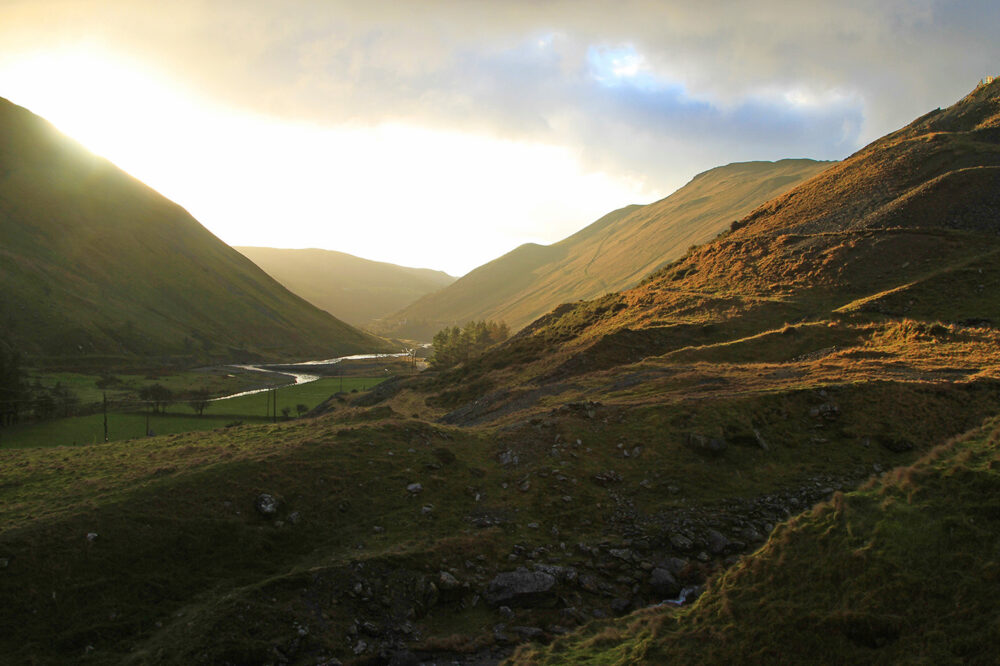
The Cambrian Mountains are the central part of the upland spine of Wales, and Cymraeg (Welsh) is, in many ways, still is the language of the area. The ancient language has survived within isolated communities whose traditions and cultural practices have ensured its persistence.
It is devastating, therefore, that all of this is now under threat from wholesale industrialisation. Wales’ upland communities face an inordinate number of planning applications for wind power stations, especially in some of the most isolated and beautiful areas. Unlike other regions targeted for renewable power, building giant turbines in the remote Cambrians would also require construction of substantial access roads and power infrastructure. In combination, these would inflict severe damage to the landscape and its tourist potential, as well as collateral, unquantifiable and long-lasting effect on the region’s biodiversity, like the fragile population of red squirrels.
Construction would exacerbate carbon emissions, both from the activities themselves and from the release of carbon in excavated soils and peats. These releases are not included in most lifetime carbon analyses for wind power, because for most projects elsewhere, the infrastructure is already there.
The proposals which would potentially undermine local communities are backed by faceless foreign investors. Despite Bute Energy’s office in Cardiff, it is supported by Danish investment firm Copenhagen Infrastructure Partners. Lluest y Gwynt is owned by Statkraft. Galileo Energy is a Swiss Company backed by investors from as far afield as New Zealand. These firms have little understanding of the unique cultural background and the importance of the language which underwrites the Welshness of the Cambrian Mountains. To add insult to injury, most of any energy generated by these new schemes will be exported.
Historically, sheep and cattle farming by Welsh-speaking families constituted the backbone of the economy. Metal mining, long since abandoned, from as far back as the 17th century, required the importation of specialist labour from as far afield as Cornwall.
In the nineteenth and twentieth centuries, a number of valleys were drowned for reservoirs, enforcing removal of isolated rural communities and impacting on an abundance of Welsh speakers.
Since the First World War commercial conifer forestry, too, has encroached on the landscape. Fewer people are needed now to farm the area, and the workforce is far less homogeneous, further eroding the status of Cymraeg as an everyday working language. Afforestation of farming land today is being rapidly expanded by a combination of government grants and foreign investment on the pretext of carbon offsetting schemes – despite these increasingly being recognised as ineffectual to reduce the carbon load in the atmosphere.
Tourism
The only industry remaining with potential for growth within the Cambrian Mountains is tourism, based on the attraction of the landscape, its peace and timelessness, and the associated biodiversity.
Many local individuals and organisations have significantly invested in tourism with the establishment of high-quality accommodation from hotels and self-catering, to glamping and shepherd huts. Formal visitor attractions include mining museums, narrow gauge railways, and red kite feeding stations – set up to provide an allure to both day and residential visitors.
Local communities, the historical culture and language, now have further additional support from enthusiastic émigrés who wish to reconnect with rural life and nature. Many learn Cymraeg and become embroiled in supportive community and environmental work within their adopted home.
With mutual effort and support from all in the community today, the indigenous language, values and culture can stay strong and remain a vital part of the Cambrian Mountains.
The wind power plant proposals threaten to undermine the local businesses upon which my friends and family rely and also threaten to diminish the old communities, forcing them to dwindle further, taking with them their language and cultural heritage.
Risk
It is easy to solicit support for renewable energy development by asking questions emphasising only on its benefits, but a fairer assessment would also account for what we risk losing in our haste to embrace the next big thing.
Rather than simply succumbing to fine words and the dazzle of wealth, we need to ensure that any wind of change blows in the right direction.
Support our Nation today
For the price of a cup of coffee a month you can help us create an independent, not-for-profit, national news service for the people of Wales, by the people of Wales.
Get more trusted Welsh news
Choose Nation.Cymru as a preferred source in Google News to see more of our journalism.
