


News
'We're not Nimbys but defenders of rural Wales' says Bute Energy's leading opponent
Martin Shipton
Opponents of a controversial company that plans to build a network of wind farms across Wales are not climate change-denying Nimbys but defenders of rural Wales and its economy, according to a leading campaigner.
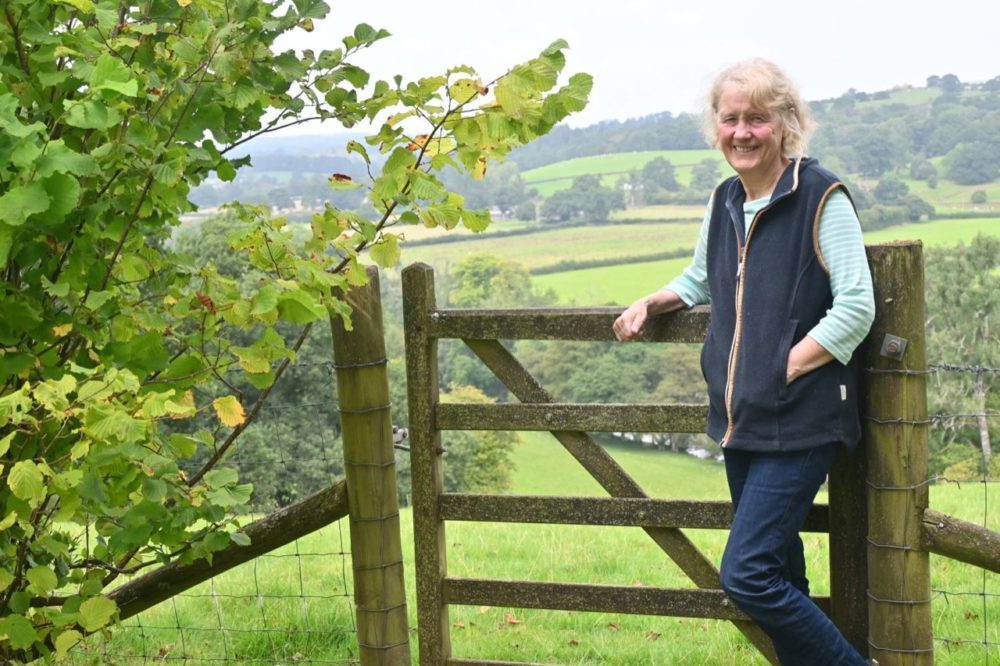
Former BBC Radio 4 producer Jenny Chryss, who lives in Powys, dedicates much of her time to battling with Bute Energy, whose project she and colleagues in the Re-think group are trying their best to defeat.
Whether they succeed depends on the outcome of a series of planning applications, the first of which may be announced by the end of September.
[mid-content-banner]
Fait accompli
Asked what had galvanised opposition to Bute’s plans, Ms Chryss said: “I think people objected to the fact that it was a private company coming in from outside Wales with foreign investors - Copenhagen Infrastructure - and it was the attitude of Bute Energy.
“The implication was, right from the start, that we’re coming in to do this, not that we would humbly come in and hope that we could gather the concerted agreement of the population. The implication was that they were coming in and getting the plans passed was a fait accompli.
One of the first consultations was held during lambing. That enraged people almost more than anything. It was a complete lack of understanding of how this area works and how important agriculture and farming is. People are busy lambing - the sheep won't say ‘well you pop off to the consultation and I’ll wait to give birth until you get back’.
“I’m not a farmer but I know from the farmers who live next door to us that once they’re lambing, they’re lambing - and it meant that people who would like to have been at the consultation meeting couldn’t be there. And the feeling was that it was done deliberately, because it was repeated this year as well.”
Asked to what extent opposition to the plans was founded on an objection to the way Bute had handled themselves and treated other stakeholders, and to what extent it was it a principled objection to having wind turbines and pylons, Ms Chryss said: “I don’t think it’s an objection to the principle of having wind turbines. I think everyone understands - and I can think of very few people that I know who would not understand - that somehow we need to move away from fossil fuels. But it was the way they came in. They turned up on people’s doorsteps.
"The community feels that they’ve ridden roughshod, and that’s been enhanced recently by the letters they’ve received from their agents relating to the power line and the pylons or wooden poles or whatever they are, and access to the land.
"The recipients of the letters felt they were threatening them with legal action way before they got the IDNO [Independent Distribution Network Operator’s] license, which they had absolutely no power at that time to use. This feeling that we’re just getting in the way of what they intend to do has developed rather than gone away - and the consultations have not helped - either the timing or the information that’s been given or the fact that very few senior people from Bute come to the consultations.
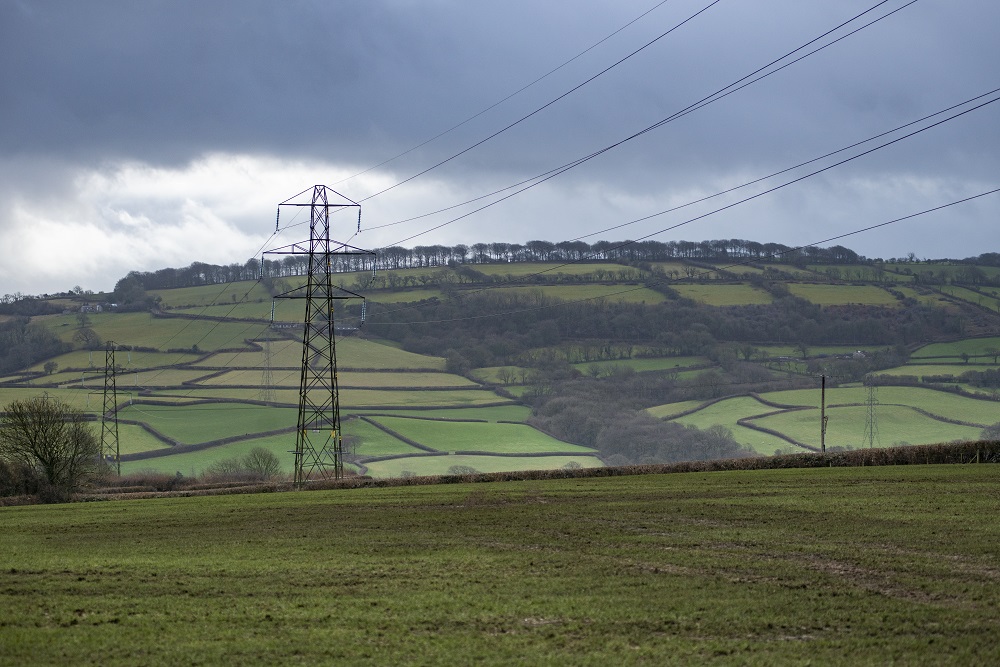
“I think people are worried for their businesses, they’re worried for the tourism industry, they’re worried about farming. There’s potentially division amongst families and between neighbors. People are very perturbed that Bute Energy wants to put 65 turbines to the east of Llandrindod Wells and Builth Wells and a 60-mile overhead power line to Carmarthenshire.
Ms Chryss said: “We are extremely worried about the precious landscape of Wales, but that’s not the only thing. I wouldn’t have a view of any of the wind farms close up - we would see them in the distance. I’m not worried about the view from my point of view. I’m very worried about how it will affect people who will have them literally 1,000 metres from their back fences - in some cases 500 metres from their back fences. And how they will look up and see these enormous turbines.
“They see themselves as basically a big human experiment. These are turbines the size of which have not yet been seen in the UK. There are bigger ones in planning or having received planning permission, but they haven’t yet been built so far as I know.”
Asked whether the objection to the turbines was essentially aesthetic, Ms Chryss said: “In part, but very much only in part. Nobody knows how these turbines are going to affect people living near them - the noise, the shadow flicker.
“It’s going to be very different when you think that some of them are going to be exactly twice the size of the turbines at Hendy Wind Farm [in Radnor Forest, which isn’t functioning]. Hendy is known as the most notorious wind farm in the UK, because it has never turned because it doesn’t have a connection to the grid. People look at 110 metre Hendy turbines and the realisation is that some of these turbines are going to be double the height, and most of them are going to be over 200 metres tall.
So when you look at the Gherkin in London or the BT Tower, they’re going to be 20 metres or more higher than those. And there will be 31 of these in the first development of Radnor Forest alone 31 of these, according to Bute. It’s not a small wind farm - it’s an enormous development.. And when you add on the other 34 that would make up Bryn Gilwern and Aberedw Energy Parks - 16 and 18 respectively - you’ve got 65 turbines, mostly over 200 metres, towering over the communities of East Radnorshire. And I think you can understand why an awful lot of people are very unhappy about that.
“There are obviously a number of farmers and landowners who are going to have a turbine on their land, and that means there are financial implications for them and they sign non-disclosure agreements. But it’s not always the people whose land it’s on who are going to be most affected by the overbearingness of the turbines. You’ve got to remember that in their planning consultation documents for Radnor Forest, there are about 60 residential properties which will have a high visual amenity impact from the turbines. So this isn’t just a few people saying, ‘it’s going to affect me and I’m not going to like it’. This is an admission that it is going to be a problem.
“There’s case law that refers to where it becomes overbearing to a point where it's not a good place to live any more. Bute says none of those reach that threshold. It’s not for me to decide whether they do or not - I don’t live there and I’m not a planning inspector. There are a number of people worried about how turbines of that size will behave in terms of shadow flicker and the noise from them.So there are huge concerns just from people who live near them.
“But then of course it extends to people who live near them but also live near the proposed power line and the concern for the tourism industry because there’s no getting away from the fact that our area of Wales relies very heavily on tourism. I would say that everybody who comes to mid Wales comes for the outdoor enjoyment. You don’t come to mid Wales to sit indoors; you come not just to look at the countryside but to cycle in the hills.
"I live in mid Wales and we have cyclists cycling along paths, looking at the views. People come for all sorts of things - horse riding, walking. It’s big business and the people stay here normally because they’ve come from areas elsewhere. They’re going to camp and stay in B&Bs and hotels. They’re going to stay here, they’re going to eat here, they’re going to buy their food here, and there is serious concern about the effect this is going to have. It’s not just the turbines. It’s the pylons as well. Somebody was heard to say at one of the meetings, with feeling, ‘who’s going to sit in my field under a pylon on my campsite and eat their sandwich lunch’.”
Nimby
Ms Chryss rejects utterly the designation “Nimby” [not in my back yard] to describe Bute’s opponents.
She said: “The fear is that this could devastate the rural economy. There was research from the LSE [London School of Economics] recently which showed the likelihood that living near to pylons and also turbines will affect your house price. And there is serious concern about property values and local estate agents have already been to value some properties and there is a reduction. So absolutely it’s not just about landscape.It’s a very cheap thing to say, ‘they don’t want their view spoiled’. There’s so much more to it than that.
"I’m a former chair of a wildlife trust and the ecological side of things is a great worry to me as well. I know that the human cost of this has to come first - I completely appreciate that. The reason I’ve got so involved and basically have put everything aside like others on the team have to is because I can see what it’s doing to local communities already.
"People sometimes say the fear is worse than the reality. I’ve no idea whether that’s going to be the case because none of us actually know what the reality is going to be. But people are very afraid. People have been to the doctors, people are depressed, people are in tears because it’s a really big deal for the area and the fact that it’s made so much worse by the attitude of Bute and its agents, and by not knowing and getting different versions from different people.

“[Bute Energy] managing director Stuart George made the point very strongly in your recent interview with him that these project sites would not be sold on once planning permission had been achieved. That’s not what his staff are telling people at the consultations. They’ve been told that they will be sold on - or at least some of them will. Community councillors have been told that at least some of them will be sold on. Copenhagen Infrastructure, their funders, have got a call option at the point of start of construction. That means that if they want to buy the sites they can do so.
“It’s very hard when you’re hearing two different versions. Whether they’re sold or not is extremely important for local people. Better the devil you know. I suppose at least they see that this is a company that has begun to realise what the local area is about - or we hope they have. But if they were to sell on to somebody else, to yet another organisation, that we’d need to deal with, to get to know. The community benefits are a huge conundrum, and would be made even worse because how would you be sure that the people who bought the sites would honour the community benefits. And that’s a really important point.
“I've found it, and I know other people have found it, absolutely extraordinary that Bute thinks that they have the wherewithal, the authority, the knowledge of the area to come in and prescribe five headings under which the community benefits [paid by developers to communities] are going to be distributed. How dare they? Who knows the area? Where have they come from? They’ve come from Scotland. OK, some of the staff are now from Wales, I fully concede.
"But Bute Energy is a Scottish company - and they come here and tell us under what headings we should spend our community benefits and how they will allocate them! But if Bute are no longer involved and have gone back to London to run another property development organisation or whatever they’re going to do … It’s bad enough dealing with Bute, but imagine some purchaser of the sites coming along and doing it instead. It’s just adding to the unknown and the uncertainty - and the feeling that Bute doesn’t give a monkey’s about the people of Radnorshire.
“I know Stuart George made a big thing in his interview about how we need to work more closely with the communities and we’re being very open and engaging. That’s not how the communities see how they’re operating.”
Private sector company
For Jenny Chryss, the fact that Bute Energy is a private sector company whose purpose is to make money for its shareholders is a hugely negative consideration: “It’s a lot worse that this is a private company,” she said. “The power they hope to generate is not for Wales. It’s for the grid. It’s going round the UK.
"There’s nothing in it for Wales. People around the UK won’t say: ‘Ooh, that’s Bute Energy’s electricity’, will they? It will just add to the grid. If they do this, it would be sent down to the grid on a power line used not by National Grid or Western Power or whatever it’s now called, but by Bute Energy, for the profits of Bute Energy. So you can understand this is gradually building into something which people see as the same sort of ‘rape’ of our area that was the Elan Valley, water to Liverpool and water to Birmingham. And people are talking about this in the same light. They feel a private company has come in to take what it can.
“Why couldn’t the Welsh Government get involved in a joint venture to see the wind farms are built in the best ways for the community? There are all sorts of ways the Welsh Government could have worked it so there was more gain for Wales. They’ve really sold our area, and other parts of Wales too, down the river.
“The fact that Bute Energy and [the firm’s owner)Oliver Millican would walk away with millions if these energy parks get built sticks in the craw when people feel in danger of losing their livelihoods and not benefitting from anything and seeing the power from proposed wind farms passing down the grid into Carmarthenshire to go off whizzing round Britain.”
Sustainable
Ms Chryss suggests that Bute’s claim to be a sustainable developer is on shaky ground when the foundations of its proposed wind farms are taken into consideration. She said: “When you think that the foundations of the turbines in Radnor Forest each have 25 metres in diameter roughly and would have something like 2,500 tonnes of concrete. What you see above is one thing. What goes below is something else. In total there are going to be 141,000 tonnes of concrete put in Radnor Forest, 16 miles of roadways, hardstanding for cranes by every turbine.
"To me it goes against the argument that it’s a green project because you replicate that in every other energy park that’s developed. There’s going to be something like 408,000 tonnes of construction material, including that concrete. They’re going to dig deep quarries for the stone, they’re going to bring in sand. The carbon that’s going to be used in all this, they say in their blurb for this wind farm that the turbines will recoup the carbon in 1.4 years. I’m not an expert, but I would find that very hard to believe.
"I’d like to know what they’ve included - they talk about the ‘construction of’. Do they mean the ‘manufacture of’? Do they mean the bringing from wherever the turbines are coming? The blades are obviously coming from abroad because they’re going to be brought to a port, currently. They haven’t decided which port yet. There’s so much that isn’t green about these developments. You sit at the end and you look at turbines up on a hill and they look quite pretty. But there’s a lot going on underneath them. And when they’re decommissioned, the concrete doesn’t get taken out of the ground.The top bit does, and then they just leave the rest of it. That concrete will never leave the ground.”
Onshore wind
Ms Chryss insists that she isn’t opposed to onshore wind in principle: “I keep going back to this - with the Bute plans it’s the scale. And I think they’ve made a huge mistake by creating 16 energy companies and putting them in Companies House within the words ‘energy park’ at the end of them. If they’d done one and then set up another one, I think they’d have got away with more. I’m only saying that because it really shocked me when I saw 16 energy parks proposed.
"In terms of onshore wind, we already have some. We could have more in terms of smaller developments that are built nearer to communities. They might be private ones, they might be public ones, they might be community ones - but if they were built nearer to the communities that actually benefitted from them and could then be ones that actually had at least a share of money achieved from selling them, which would be vastly more that a few grand per MW installed of the community benefits and actually had an interest in these turbines turning and producing electricity. It just doesn’t feel well planned - it feels ‘oh we've got to be seen protecting the planet’ Good. ‘ This company from Scotland looks pretty good - let’s sign them up.’ And once they’re with them, they can’t get out of them, really. The relationship is formed.
“What would be an absolute tragedy is if we built these huge turbines, 17 square miles of turbines in Radnorshire, and then it was found that there were other ways of doing it.
“We are absolutely not climate change deniers and we distance ourselves entirely from anybody who is. In terms of the Wellbeing of Future Generations Act, you could look at it both ways. I’m sure that supporters of big developments and Bute Energy would say they’re working for the wellbeing of future generations because they’re providing clean, green renewable energy. We would say you’re industrialising an area and destroying habitats and wildlife that future generations won’t be able to enjoy - and possibly also businesses that future generations won’t be able to work in. It’s a two way thing.
Angered
Ms Chryss and other members of the Re-think committee were angered by a letter sent out by Mr George to candidates during the general election campaign that suggested the group had been inciting people to be verbally abusive to Bute staff members, and obtained personal data relating to staff members’ bank accounts.
Mr George also stated that a staff member’s car had been tampered with in a way that could have caused a serious accident. Ms Chryss said: “It completely gobsmacked us. We couldn’t believe it when we saw it. We thought, what on earth is he talking about? When I first saw the letter I laughed and thought this has to be a joke. Does he not know who we are? Eco-terrorists we are not. I was flabbergasted and so was my team. Of course it goes without saying that we refute everything contained in the letter. He says ‘the group Re-think.’ I think he’s maybe misunderstood what the group is.
"The group Re-think is seven people sitting on a committee. We don’t have members - we have supporters but they’re not related to Re-think in any way whatsoever. I think you have to be very careful when you’re making allegations about seven people. And I don’t think he realised probably that he was making allegations against seven people. I think he probably thought there was a wider group.”
Ms Chryss dismisses as ridiculous the idea that as someone who has moved to Wales from England she is in the same category as Bute directors who have established a business in Wales while still living in Scotland. She said: “We have a lot of Welsh people amongst our supporters and nobody has ever said ‘well you’re not Welsh.’ We live in Wales, we pay our taxes in Wales.
"I’ve lived in Wales nearly 13 years, so I was here long before Bute turned up. I haven’t come intending to make a big profit. I’ve expressed concern that the profits made by Bute will be large, and they’ll be taken out of Wales. But we’re all doing this for nothing. A lot of the time we don’t even claim expenses. I think that is a huge difference.
"We’re not planning to ‘do to’ the environment, the landscape, the ecology and the people and communities of this area. We’re trying to stop this particular organisation doing what they’re particularly planning and ensuring that things are done in a better and more acceptable way for the communities of the area. We’re basically a group set up by the community for the community.”
Support our Nation today
For the price of a cup of coffee a month you can help us create an independent, not-for-profit, national news service for the people of Wales, by the people of Wales.
Get more trusted Welsh news
Choose Nation.Cymru as a preferred source in Google News to see more of our journalism.
