


News
Welsh Labour MP at centre of book's concerns about the rise of Starmer
Martin Shipton
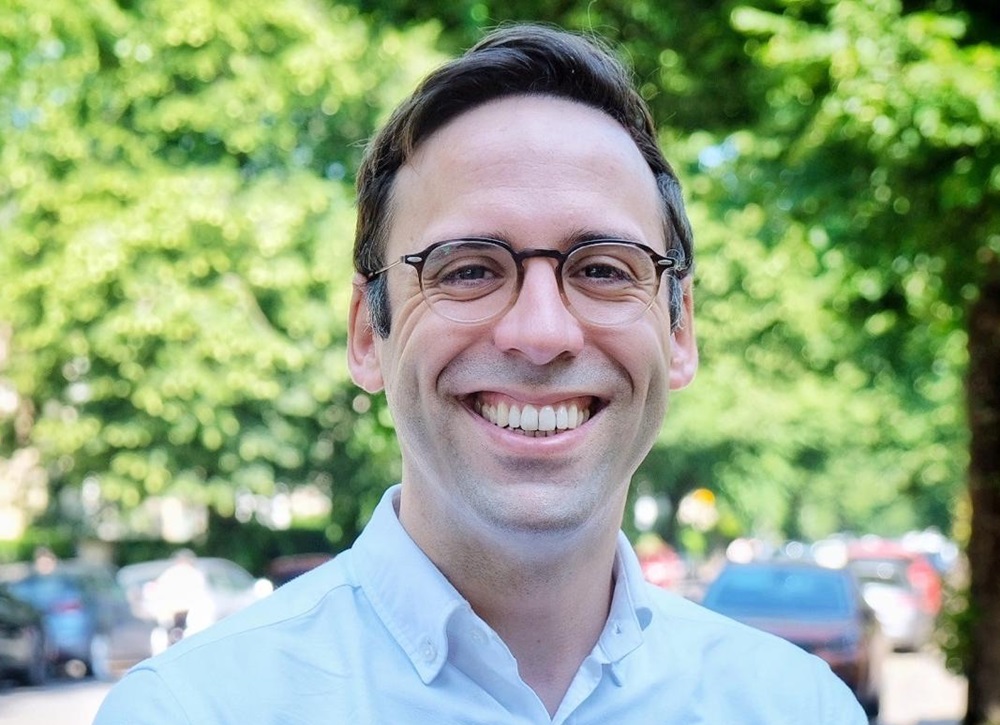
The author of an explosive book that raises major concerns about the role of Welsh Labour MP Alex Barros-Curtis in the rise of Keir Starmer says he will ask the solicitors’ watchdog to consider whether the MP’s conduct should be investigated.
Barros-Curtis, a solicitor by profession and until his election to Parliament the executive legal director of the UK Labour Party, was foisted on Cardiff West Labour Party as its candidate in last year’s general election after his predecessor Kevin Brennan made a late decision to stand down. After a few months as First Minister Eluned Morgan’s chief special adviser, Brennan was awarded a seat in the House of Lords.
Ordinary members of Cardiff West Constituency Labour Party (CLP) were not given the opportunity to select Brennan’s successor and a party panel decided the role should go to Barros-Curtis. Widely seen as arguably the most left wing CLP in Wales, it is considered inconceivable that Barros-Curtis would have won the nomination if all local party members had been allowed to vote.
His selection was seen by many as a reward for his involvement in getting Keir Starmer elected as party leader and in a parallel campaign involving “stitch-ups” to neutralise and purge the party’s left wing.
The Fraud, by investigative journalist Paul Holden, chronicles in great detail the sometimes ruthless actions taken by Keir Starmer’s team of loyalists, of whom Barros-Curtis is a key member.
Asked by Nation.Cymru to describe the areas of concern about Barros-Curtis’ actions, Holden said: “From the point of view of good governance, it really is extremely problematic that you have him from late 2019 all the way through to 2024 as both the head of legal for the Labour Party and also the sole director of Movement For Another Future Ltd [a company originally set up to run Starmer’s leadership campaign]. He effectively headed up the party’s Governance and Legal Unit, which deals with all the complaints against members as well as things like candidate checking and vetting, and deciding who can and can't become a councillor, MS or MP. People were investigated for criticising Keir Starmer over the way he handled Jeremy Corbyn’s suspension and local party officials were suspended from their positions for allowing such matters to be discussed at meetings of Constituency Labour Parties. It was a profound conflict of interest.”
Complaints
Another area of major concern was, argues Holden, the very fact that the leader’s office under Starmer, and guided by Barros-Curtis, was involved in the managing of complaints against party members, some of whom were prominent figures. The investigation report of the Equality and Human Rights Commission into allegations of antisemitism in the Labour Party made it very clear that the leader's office should have no role in handling complaints, especially when the complaints were around protected characteristics like antisemitism or racism and Islamophobia, because that's considered indirect discrimination.
One of multiple examples in the book of Barros-Curtis’s allegedly irregular involvement in the complaints process relates to the removal from the shortlist of candidates to be Liverpool’s elected mayor of Councillor Anna Rothery, who is Black.
After Rothery praised Corbyn during an interview with the Liverpool Echo, Barros-Curtis and other senior party bureaucrats exchanged emails raising issues relating to her. A complaint was made about her by a former councillor who disliked her, described by Holden as “a generalised character assassination that drew on arguably racist and sexist tropes.”
Rothery was excluded from the list, but a panel was set up to consider whether she should be reinstated. She was re-interviewed. Rothery’s solicitor, Martin Howe, emailed Barros-Curtis to say he had serious reservations about the way the re-interview had been conducted and threatened to seek a court injunction to stop any decisions being made.
Holden writes: “What subsequently transpired was astonishing. Barros-Curtis responded the following day, February 21 2021, to Howe’s letter. He rejected the idea that the matter was urgent and sought to dissuade Howe from issuing injunctive proceedings.”
Barros-Curtis said no decision would be taken before 5pm on February 24 at the earliest, and that Howe would be informed what was happening.
'Misleading'
Holden writes: “Barros-Curtis’s promise that no substantive decisions would be made before February 24 was plainly misleading. In fact, on the very day that Barros-Curtis sent that email, the 21st, the selection panel had reconvened and decided they would reopen the nominations process. The panel was slated to meet again the following day to decide whether Rothery and the two other candidates would be allowed to be included in the nominations. Contrary to Barros-Curtis’s written commitment, Howe was not informed.
“ … It is clear that Barros-Curtis was eager for a decision to be made on February 21, knew a decision would be made on the 22nd or 23rd, but had nevertheless told Howe that no decision would be made before the 24th.
“The panel did indeed meet on the evening of the 22nd, as Barros-Curtis had been predicting. He attended to assist the panel, literally sitting in on and contributing to discussions where a decision was made - yet still neglected to inform Howe that a decision was forthcoming.”
Edited
Subsequently, Barros-Curtis edited the minutes of the meeting to take out reference to the fact that he had addressed the meeting, with his interventions recast as discussions by the panel. He also removed all reference to discussion about a possible injunction.
Holden writes: “Why did Barros-Curtis make these edits? Did he edit them because a judge might be swayed by the argument that the threat of an injunction on the basis of bias might have unduly influenced the decision of the panel? And were Barros-Curtis’s edits sufficiently material as to mislead the court by omitting key information about who said what and when?
“I don’t know the answer to these questions. But they would certainly make for a spicy line of inquiry if Barros-Curtis were forced to answer them before the Solicitors Regulation Authority, which I believe should give serious consideration to probing Barros-Curtis’s conduct on this and other matters.
“Barros-Curtis’s minutes would be central to the litigation that followed; his minutes were submitted to the court to prove the probity of the party’s decision. The judge, who decided in favour of the Labour Party, quoted extensively from the minutes, placing emphasis on the quote Barros-Curtis had injected into the proceedings (but placed into the mouths of ‘the panel’) about how the ‘honesty and integrity’ of the party’s candidates was ‘a cornerstone’ of ‘our democracy’.”
Holden told Nation.Cymru: “I intend to send a copy of the book to the Solicitors Regulation Authority for their attention, and would be happy to cooperate with the SRA if they pursued matters addressed in the book.”
Alex Barros-Curtis, who has swiftly risen to chair the Welsh Parliamentary Labour Party at Westminster, was invited to comment, but did not do so.
Support our Nation today
For the price of a cup of coffee a month you can help us create an independent, not-for-profit, national news service for the people of Wales, by the people of Wales.
Get more trusted Welsh news
Choose Nation.Cymru as a preferred source in Google News to see more of our journalism.
