


Sun, 23rd August Cardiff 20°
Nation.Cymru wordmark
Advertisement

News

Welsh Government invests in major tidal energy project
By Mark Mansfield
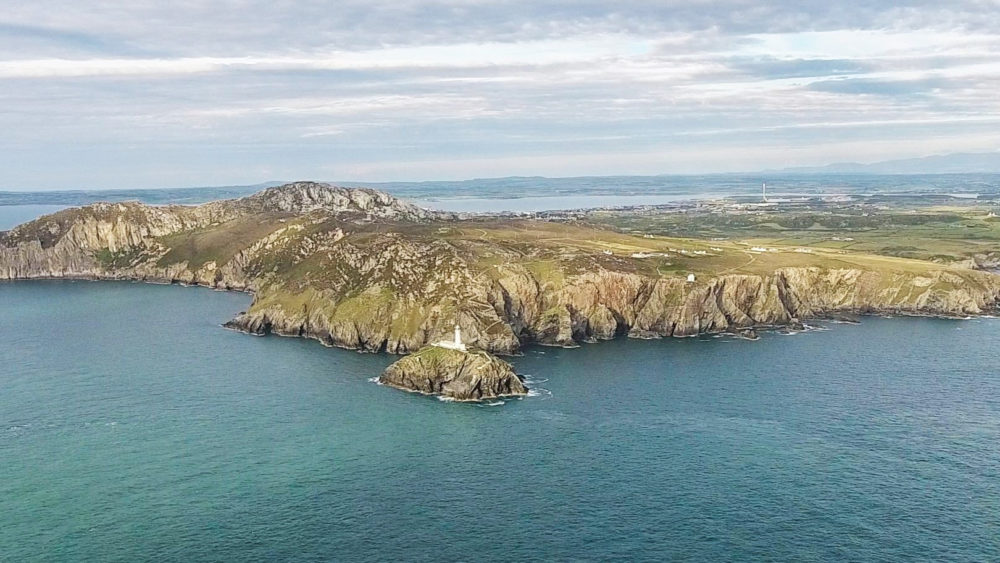
Morlais tidal stream energy project will connect to the national grid and a substation on the shore near Ynys Lawd (South Stack).

The Welsh Government has bought a stake in what will become the largest consented tidal energy project in Europe.

Menter Môn, the Morlais tidal scheme, owned and managed by Ynys Môn social enterprise, is the first of its kind anywhere in the world and will be operational from 2026.

The Welsh Government has taken an £8m equity stake in the project to ensure its progress.

The Anglesey site could generate enough energy for up to 180,000 Welsh households, offering a unique ‘plug and play’ model for developers of tidal energy devices.

This will help reduce costs as they scale up operations to generate clean electricity.

[mid-content-banner]

Grid connection

The Welsh Government’s investment will help fund the Cydnerth phase of the project, which will see the grid connection improved at Parc Cybi, Holyhead.

Cabinet Secretary for Economy, Energy and Planning, Rebecca Evans, said: “We want to make Wales a world centre for emerging tidal technologies and we’re off to a good start on several fronts.

“Our investment will support Menter Môn Morlais to scale up capacity, and develop an industrial cluster for tidal energy and innovation in North Wales, whilst delivering jobs and growth through its pioneering technology, keeping the value local.

“This will further benefit clean energy suppliers of all sizes and position Wales at the forefront of the energy transition.”

Innovation

Dafydd Gruffydd, Managing Director of Menter Môn said: “We welcome the Minister’s announcement, which strengthens our ability to deliver clean energy and local jobs through the Morlais project. This funding supports our vision to position North Wales as a leader in tidal energy innovation, creating opportunities for growth and collaboration across the region.”

John Idris Jones, Chair of Menter Môn Morlais Limited added: “This funding demonstrates the Welsh Government’s commitment to renewable energy and the significant role tidal power can play in our energy future. By supporting projects like Morlais, we are not only unlocking the potential of our natural resources but also laying the foundation for a resilient, green economy in north Wales.”

In response to this announcement, Rhun ap Iorwerth MS, the Member of the Senedd for Ynys Môn said: “I warmly welcome the Welsh Government’s support for the Morlais tidal energy scheme. Ynys Môn has the potential to be at the forefront of renewable energy innovation, and this scheme is a perfect example of how we can use the natural resources at our disposal not only to generate green energy for thousands of homes but also to create sustainable jobs and economic development on the island, and to do so in a way that sees the profits being reinvested in the community.

“I look forward to continuing to work closely with Menter Môn to ensure this project realises its full potential.”

For the price of a cup of coffee a month you can help us create an independent, not-for-profit, national news service for the people of Wales, by the people of Wales.

Get more trusted Welsh news

Choose Nation.Cymru as a preferred source in Google News to see more of our journalism.

Choose Nation.Cymru as a preferred source in Google News

22 comments

PeterC

Good. Far more sensible than intermittent solar and wind

Reply
Ap Kenneth

It is the predictability that is most important, the energy generated varies from Spring to Neap tides and their are periods of no energy generation when the tides turn. But you will know in advance what you are getting months or years before. Tidal lagoons may cover the intermittent problem in a more comprehensive way.

Reply
Dr John Ball

I note that my comment has attracted two negative replies. You are of course quite entitled to your opinion, which I respect. But I think it's worth repeating. The Senedd is tied to a limited budget and attempting to provide substantial services within that straitjacket. It is simply a matter of priorities, doctors or an unproved, expensive technology?

Reply
John

WG have bought an equity stake. That's a little different than paying for more doctors. Once you add the overheads (nurses, receptionists buildings, accountants), it's not that many doctors by the way It's also supporting an community driven project in an area that has lost its two biggest employers in recent years. If it supports 10s or 100s of jobs in the future, it will pay back that 8m several times over. Be positive, mun!

Reply
caroll Ann Morris

wel said

Reply
Mab Meirion

Surprisingly young technology, first introduced in 1966 on the Rance estuary in France... If the Victorians had thought of it, imagine the tally of mangled pre-teen seaweed removers there would have been under the main arch of the bridge over the Mawddach...

Reply
Greg

Tidal mill at Carew anyone? Hundreds of years old?

Reply
Mab Meirion

Making electricity...sorry I should have repeated what the article was about...

Reply

In reply to Mab Meirion

Mab Meirion

While electrically driven water craft* have been around for about one hundred and fifty years, making commercial quantities of electricity from the 'tide' is recorded as 1966... *see Electrical Boats and Navigation 1894...

Reply
Roger Duke

What great news for the environment. It's good that we're investing in tidal generation at last. We have good tidal levels round our coast and the tide is always there. We know when it's available. That's why is so good coupled with wind and solar, which are good but not always available

Reply
Mark

Great news for the environment unless you consider marine life to be part of the environment. Just like wind-power, tidal energy has a negative local environmental impact and can, if migrating species are affected, have a negative impact further afield too. Unfortunately there is no free lunch when it comes to energy generation - every technology has an environmental cost.

Reply
Drew Anderson

Tidal comes in many forms, this project is using in-stream generation. A very different approach than using estuarine barrages, or tidal capture. Tidal capture delays the tide going out and barrages could interfere with flow rates, so there some fairly obvious implications for adjacent areas. What, specific, problems are you aware of with in-stream turbines?

Reply

In reply to Drew Anderson

Mark

Putting large pieces of rotating equipment in the water exposes marine life to injury or death. The low-frequency noise emitted from these machines is thought to affect marine mammals who use sound for communication, navigation and hunting. There is little information regarding how significant either of these risks are, which is why most stream-tidal projects are only being given consent on a trial basis accompanied by an environmental monitoring programme.

Reply
Mark

Bear in mind this is not an investment in tidal generation, it is an investment in the infrastructure to allow others to invest in generation. This project provides substations and an improved connection to the National Grid but it requires tidal energy companies to invest in the generation itself.

Reply
Frank

Shouldn't this be classified as an England and Wales project? After all the electricity produced will be fed into the national grid and that means that England will benefit if electricity becomes cheaper! In that case Westminster should also chip in towards the cost.

Reply
Llew Gruffudd.

I would be very careful what you wish for. As it stands it is a Welsh owned and consents within the power of Welsh government [ other than that required from the Crown Estate ] . It is relatively small scale commercially and the financial value lies in the technology and intellectual property generated, which is presently largely under Wales control. Once it is shown to be successful, the predators will circle soon enough without inviting them in.

Reply
Frank

You are more informed than me. The first thing that came into my mind after reading the article was: "Hang on a minute, Cymru has had to contribute to HS2 so why not the other way around?"

Reply

In reply to Frank

hdavies15

It could be. If London got off its high horse and lobbed even a decent fraction of that HS2 money to Wales Gov the latter could fund several marine projects and other useful stuff, even a few doctors and nurses. As things stand Eluned & Co are disinclined to get into a dispute with Keir and his mob. If they wait too long Keir will have wrecked the UK and there'll bu99er all to dish out via Barnett or any other formula.

Reply
Mark

Sorry to burst your bubble, but tidal generation technology is not largely under Welsh control at all. Seven generation companies are considering participating in this project. One of them (Môr Energy) is a Welsh subsidiary of a Scottish company (QED Naval). The rest are Scottish, English, Irish, Spanish, French, Swedish or American. The investment referred to in this article is in infrastructure on dry land (substations and grid connection) - it allows others to test and develop their technology/IP, but does nothing to build Welsh capability other than perhaps in installation & maintenance.

Reply
Howie

Anything like MeyGen in Scotland. MeyGen https://g.co/kgs/6Khzng4

Reply
Drew Anderson

Partly. From what I can gather, some of the turbines will be mounted on the seafloor; others will be floating.

Reply
Ap Kenneth

You could spend every penny of the budget on health services and still not have a healthy population. This sort of investment replaces energy supplied by burning stuff, that in itself has a positive affect on health. Productive jobs have an effect on mental health and the possibility that Caergybi could be part of a new industry. An investment like this can also produce a return that may in the future be spent on health - or something else.

Reply

Leave a reply

Replying to Mab Meirion Cancel

Making electricity...sorry I should have repeated what the article was about...

Comments are reviewed before they appear.