


News
Welsh football pundit prompts BBC censorship
Martin Shipton
An almost throwaway remark by a Welsh football pundit evoked more than 850 years of Irish history and led to an act of BBC censorship.
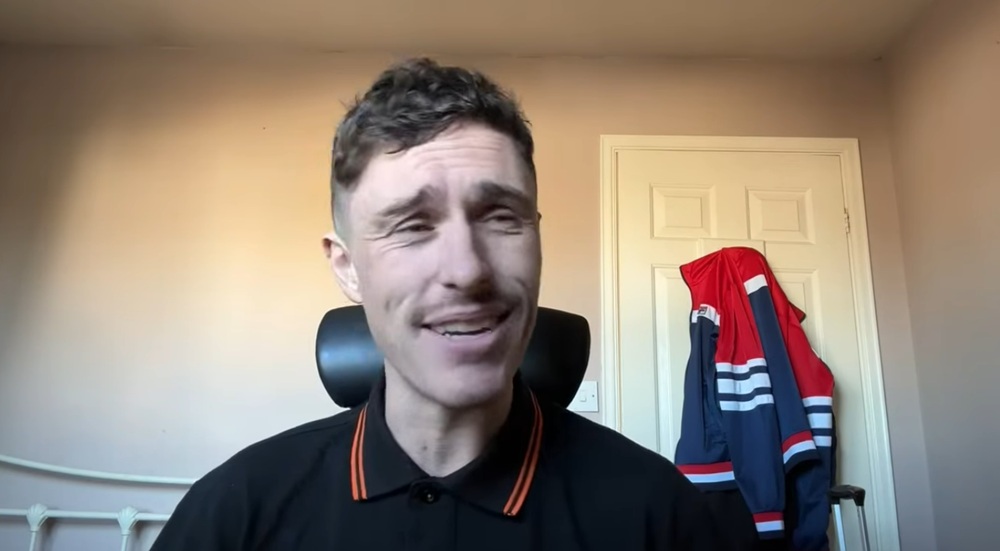
During coverage of the draw for the play-off sections of the World Cup, the Wrexham fan and football pundit Tom Lewis, better known as Tomi Caws, referred to Northern Ireland as “the team from the occupied part of Ireland”.
Those listening contemporaneously to the BBC5Live broadcast would have heard the words as they were uttered, but anyone listening to the Sounds catch-up link later wouldn’t have heard the comment because it had been removed by BBC bosses.
A note appeared on the BBC Sounds website stating: “This programme has been edited after broadcast to remove a comment made by a contributor which listeners may find offensive.”
Tomi Caws made the comment in the presence of a Northern Ireland fan who didn’t react .
For the benefit of any reader who is unaware of Irish history, here is a potted summary, courtesy of the website Wilderness Ireland.
In 1171, English King Henry II landed in Waterford, commencing a four-year offensive that led to the Treaty of Windsor between Henry II and High King of Ireland Ruaidrí Ua Conchobair (Rory O’Connor). This treaty halved Ireland under two influences—Henry as lord of Anglo-Norman lands and Ruaidrí as lord of the rest of Ireland, with Ruaidrí agreeing to swear fealty to Henry.
By 1300, the Anglo-Normans controlled most of the island, aside from a few pockets in Connemara, the peninsulas of Cork and Kerry, Clare, and northwestern Ulster (interestingly enough, these regions correspond with the Gaeltacht or Irish-speaking communities of modern Ireland.
Cromwell’s army arrived in 1649 to put “troublesome” Gaelic and Anglo-Irish back in their place after the 1641 Irish Rebellion and the 1642 Confederate Irish War. The English Civil War was over, the king was deposed, and the rebel Irish were a thorn in England’s side.
Within weeks, Cromwell’s forces controlled most of Ireland’s East through violence, murder, burning and pillaging, leaving a trail of death and destruction in his army’s wake.
Rebels
Rebels and participants were executed, or had their lands confiscated and were shipped off as indentured servants to the West Indies. Others were forced to flee or become tenants on the poorest lands in the West of Ireland.
Cromwell was a fanatical Protestant, viewing Catholicism as disgraceful and abhorrent, forbidding them from residing in towns and paying his soldiers by dispossessing Catholic landowners to give their land and castles to distinguished Crown soldiers.
Seen as ethnically cleansing the Gaelic people and replacing them with the English language, laws and customs, it put a strain on Irish-British relations.
In the mid-19th century, around one million died of starvation in what became known as the Irish Famine, caused by British neglect and exploitation. A further two million emigrated on unsafe “coffin ships”, with many dying in transit from drowning and disease.
On Easter Monday 1916 there was an insurrection in Dublin, later known as the Easter Rising, aimed at overthrowing British rule.
It ended in defeat for the Irish, but the decision to execute the Rising’s leaders galvanised opposition to British rule and four years later the Irish Free State came into being following a War of Independence.
Six counties
The British, however, insisted on retaining six of Ireland’s 32 counties in the north-east corner of the island where there was a majority of Protestants descended from settlers who had come largely from Scotland.
Controversial as Tomi Caws’ comment may have been seen by the BBC, then, it does have plausible legitimacy. Had there been a referendum in the whole of Ireland in 1920, the majority would undoubtedly have voted for independence from Britain.
Support our Nation today
For the price of a cup of coffee a month you can help us create an independent, not-for-profit, national news service for the people of Wales, by the people of Wales.
Get more trusted Welsh news
Choose Nation.Cymru as a preferred source in Google News to see more of our journalism.
