


News
Welsh cardiologists urge over 60s to come to Cardiff Bay for simple check for deadly hidden heart disease
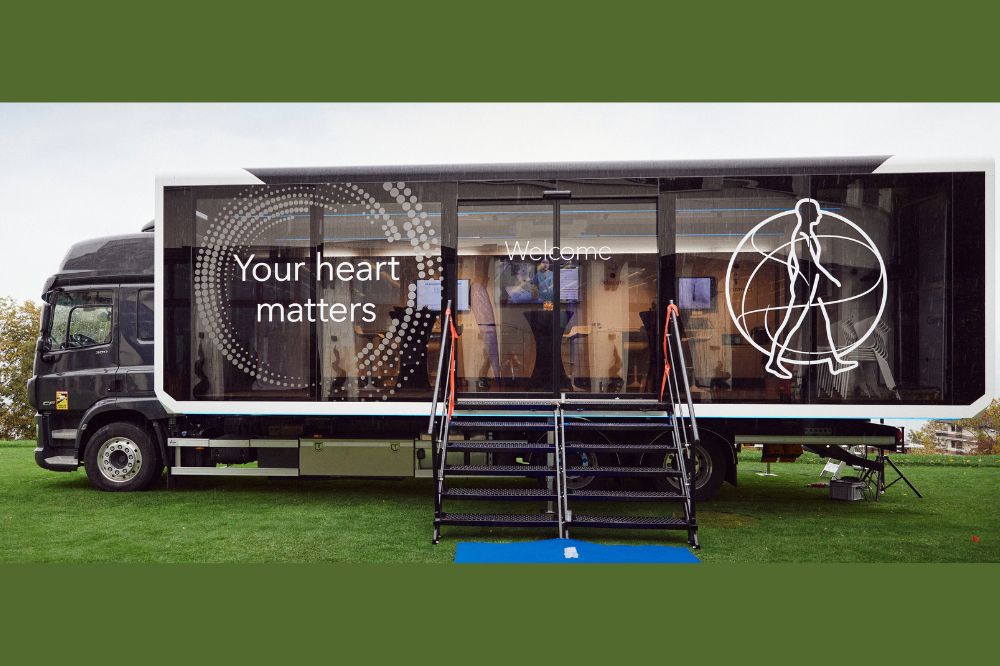
Welsh cardiologists are urging people over 60 to come to Cardiff Bay for a simple check for a deadly hidden heart disease.
It's estimated are over 250,000 people in Wales aged 60+ living with undiagnosed Heart Valve Disease (HVD).
Cardiologists from the University Hospital of Wales (UHW) are warning about this hidden heart problem - which has worse outcomes than cancer if it’s not diagnosed in time - that occurs when one or more valves in the heart stops working well.
HVD puts extra strain on the heart and increases the risk of heart attack, stroke and death.
[mid-content-banner]
Checks
A team of heart specialists will be visiting the Cardiff Bay area (Roald Dahl Plass) on Wednesday 7 May to offer free heart checks to the general public.
Professor Richard Anderson, Consultant Interventional Cardiologist at the University Hospital of Wales and Board Member of the UK Valve for Life Initiative said: "Most people do not realise how deadly heart valve disease is, but by contrast how ‘every day’ the symptoms of it are.
"A team of heart specialists are coming out into the community and our aim is to perform hundreds of heart checks on older people who might not know they have a serious heart issue."
Most people think of heart trouble as sudden stabbing pain in the chest or pins and needles down one arm - but in fact HVD symptoms can be much more subtle.
[lower-mid-content-banner]
Subtle
The disease can cause mild symptoms often mistaken for normal ageing such as breathlessness, weariness and fatigue.
HVD is treatable and when detected early, surgery or minimally-invasive procedures can restore quality of life.
However, there is a huge disparity in the UK when it comes to HVD with Welsh patients in particular facing a number of unique challenges.
The specialised healthcare providers offering treatment procedures in Wales (University of Wales Hospital and Morriston Hospital in Swansea) are currently facing waiting list and cost pressures.
Therefore some Welsh patients wait long periods of time for both their cardiac investigations and their treatments.
Heart charity Valve for Life UK has warned that this can compromise a patients clinical care.
Wales also has much higher numbers living in rural locations. Clinicians at University of Wales Hospital (Cardiff) say that some patients who cannot drive travel around 2 hours each way to get to their medical appointments.
If services are not running well, this can lead to patients missing critical appointments.
Diverse
Cardiff is a culturally diverse areas with hard-to-reach populations who may not engage in
health services in a typical way.
UK data suggests that white people, particularly those born in the UK and with English as their first language, are more likely to be diagnosed with a heart condition, referred to a Cardiologist and treated.
A recent study found that Black or South Asian patients were less likely to receive aortic valve replacement surgeries than white people.
One study of HVD treatment found almost all (96%) were performed on white people.
Interventional Cardiologist Dr Omar Aldalati said: "Cardiff is a very multicultural areas, but we have observed that we see lower referrals from the South Asian and Middle Eastern communities than we would expect.
"Some barriers to seeing medical professionals and getting a referral to cardiology might be lack of car ownership or driving license, language struggles or concerns over modesty during examinations.
"There is also, I believe, cultural expectations of frailty in older people, so when an elder person in the family feels weary or tired all the time, they are looked after or encouraged to rest, rather than take charge of their own health and seek medical attention."
Support our Nation today
For the price of a cup of coffee a month you can help us create an independent, not-for-profit, national news service for the people of Wales, by the people of Wales.
Get more trusted Welsh news
Choose Nation.Cymru as a preferred source in Google News to see more of our journalism.
