


News
European Commission wants to learn from Wales’ future generations policy
Luke James, Brussels
The European Commission wants to learn from Wales’ future generations policy as part of its efforts to “reunite society” following far-right gains in last year’s European elections.
The new EU executive, which took office in December, for the first time includes a commissioner for “intergenerational fairness”, a role created following a campaign which cited Wales as one of its “major sources of inspiration”.
Glenn Micallef, the 35-year-old Maltese socialist who holds the position, has been tasked with drawing up a strategy that ensures decisions taken at EU level do no harm to future generations.
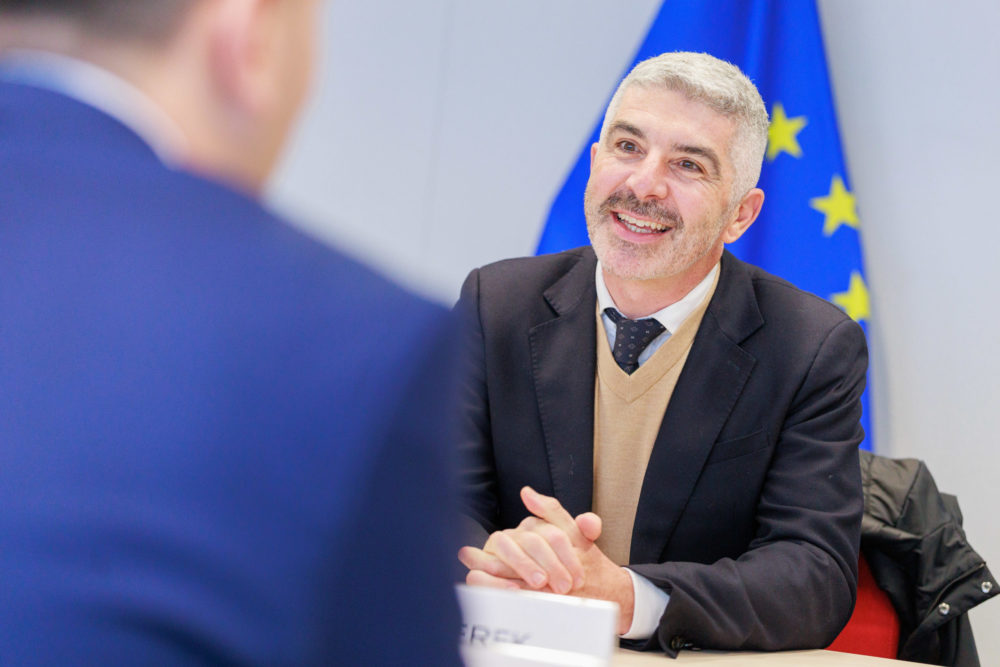
Ahead of a formal consultation to be launched this spring, Micallef met with Wales’ future generations commissioner, Derek Walker, and representatives of the Welsh Government in Brussels on Friday.
[mid-content-banner]
'Fruitful'
Following the meeting, which was his first on the subject since taking the job, Micallef told Nation.Cymru: “I’ve had a very fruitful exchange of ideas with Derek Walker, Commissioner for Future Generations for Wales, on Intergenerational fairness last Friday.”
“Against the backdrop of the launch of the scoping exercise of the EU's first ever Intergenerational fairness strategy, I’m particularly interested in existing positive experiences elsewhere in Europe and beyond.
“And Wales has had for 10 years now, ever since 2015, its Well-being of Future Generations Act in place being the first country in the world to create such legislation that protects the interest of people in the future obliging policy makers and decision makers to consider the long-term impact of all policies.
“I was especially interested in the citizens' engagement dimension, but also in the way specific well-being targets had been defined and how the progress towards the targets is measured.”
'Practical model'
Walker said Wales offers a “practical model” which the EU and other governments can follow, something he said is helping to open the doors of decision makers around the world.
“The Commissioner was really interested in how it works in Wales and how it came about,” he said after the meeting. “Sometimes people talk very academically or theoretically about the need to think about future generations and think long term.
“But we’ve implemented a way of trying to do that through legislation that is unique. So people can learn from that and Wales offer a practical way of doing that.”
He added: “It opens doors for Wales to talk about its experience and then talk about other things as well, and that’s what it’s done here.”
There are though key differences in the approach being taken by the EU. While Walker is independent and tasked with scrutinising the delivery of the Future Generations Act by the government and public bodies, Micallaf is part of the EU executive with responsibility for delivery despite the EU so far not committing to delivering new legislation.
Political problems
And while the Welsh commissioner’s focus is strictly on prioritising long-term decision making, the EU Commissioner is also responsible for trying to address more immediate political problems.
“One of the takeaways from the last European elections was an unease in society, causing divisions in our communities and enabling extremists to play on people’s fears,” wrote Commission President Ursula von der Leyen in her programme for the next five years.
The document charges Micallef with the job of "reuniting our society" by ensuring there is "increased solidarity and engagement between people of different ages.”
Walker and Micallaf spoke on Friday about “how to involve people and communicate decisions that need to be taken”.
“A lot of this agenda is challenging,” said Walker. “It’s taking different decisions that we might otherwise have done so because we want to do the right thing for future generations. People need to be brought into that and understand why that’s happening.”
Campaigners such as the ZOE Institute and Good Lobby called for the EU to follow in Wales’ footsteps on the future generations policy in the hope it will prevent the EU from further backsliding on its green commitments following angry protests by farmers in Brussels opposed to increased environmental legislation.
However, the Welsh Government has since also been forced to water down environmental requirements for farmers following protests in Cardiff.
Uphill battle
As one of the most junior members of the Commission and without Welsh-style legislation, Micallaf faces an uphill battle to keep the EU’s climate commitments on track at a time when the Commission is under pressure from industry to prioritise deregulation.
Sophie Howe, Wales’ first future generations commissioner, had called on the EU to make the future generations commissioner an executive vice-president, making them second or third in command to von der Leyen.
“Whether it’s in Wales or the European Commission, whoever holds responsibility, it’s got to be a cross government approach,” said Walker.
“The challenge will be to ensure it’s embedded right across the Commission. That’s what you’ve got to find ways of doing so. Legislation does help with that but there are other ways.”
He added: “We need to be bolder and take more urgent action. I’m not taking away from the difficulty of doing so but we are running out of time on some of these issues: climate change, the nature emergency. Some of the actions we’re taking aren’t turning things around.”
Walker’s visit to Brussels came during negotiations between the EU and the UK Government over closer relations, in which the EU is pressing for the UK to rejoin the Erasmus youth mobility scheme.
Walker, who worked in Brussels for two years after leaving university, said: “It’s not necessarily in my role as future generations commissioner, but personally I really hope we can find ways to build some of those bridges and enable opportunities for mobility, learning, education and experiences across Europe for young people in the UK in the way that I benefited from.”
Former First Minister Make Drakeford has said the Welsh Government is “very proud” of its own Taith youth mobility scheme but that “if we had a choice we would much rather we were part of an established scheme.”
Support our Nation today
For the price of a cup of coffee a month you can help us create an independent, not-for-profit, national news service for the people of Wales, by the people of Wales.
Get more trusted Welsh news
Choose Nation.Cymru as a preferred source in Google News to see more of our journalism.
