


Fri, 17th July Cardiff 24°
Nation.Cymru wordmark

News

'Unprecedented' international interest in Senedd election
By Mark Mansfield
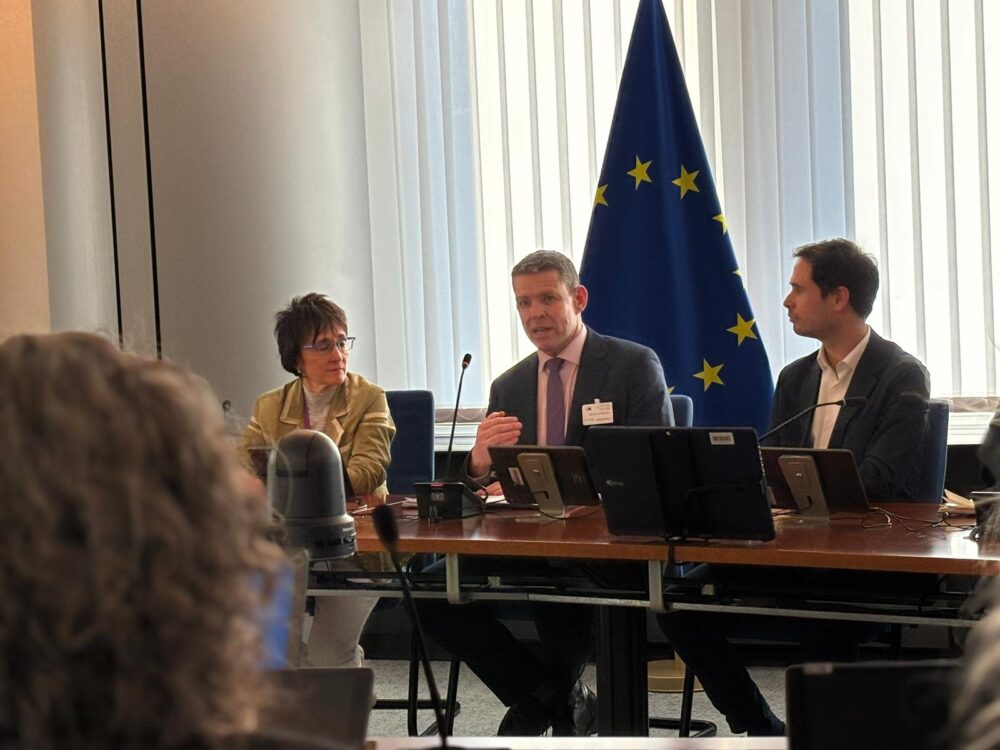
Rhun ap Iorwerth in Brussels last month

Luke James, Brussels

The governments of countries from across the world are showing an “unprecedented” level of interest in the upcoming Senedd elections, Nation.Cymru can reveal.

With polls forecasting that Labour will lose power for the first time since devolution began, politicians and experts have been inundated with requests for meetings with diplomats keen to know what direction Wales will take after May 7.

“There has been completely unprecedented levels of interest in the 2026 election from international missions and other groups,” said one Welsh politics observer who has been helping to meet the demand coming primarily from the London embassies of European countries, but also from those further afield.

“There’s a great deal of interest in the factors that might be leading the Welsh electorate to consider parties other than Labour, what the new electoral system means for the campaign, and what we can expect in terms of government formation after the election.”

Much of the international interest is fixed on understanding what Plaid Cymru will do if, as polls suggest, they are the biggest party in the next Senedd.

The party’s recent spring conference in Newport was attended by representatives from the UK embassies of the European Union, France, Germany, Italy, the Netherlands, Poland and Ireland.

Plaid leader Rhun ap Iorwerth also recently travelled to Brussels to meet with members of the European Parliament and said he was conscious of the “growing interest” in Welsh politics.

“Our team in Westminster keeps pretty close ties with various embassies,” he told Nation.Cymru. “European embassies, obviously, being the most prominent among them.”

“But yes, we are very aware of the growing interest in what building relationships with Wales could look like, especially building relations with a Wales that is internationally minded.”

International issues have played a prominent role in the election campaign.

Ap Iorwerth says a Plaid Cymru would take the Welsh Government’s international work to a “new level” and the party’s manifesto includes a dedicated European strategy and a ‘Diaspora Task Force.’

The Green party, who could win ten seats according to the latest YouGov poll, have also pledged to “strengthen Wales’s international engagement” and promise to commission an independent assessment of Brexit’s impact on Wales.

International aid

However, Reform UK, which polls suggest is Plaid’s closest rival, has vowed to “scrap all international aid spending in devolved budgets.” In particular they criticised the £270,000-a-year spent on planting trees in Uganda through the Size of Wales charity as part of efforts to tackle climate change.

The Welsh Conservatives say they would save £4.7 million a year by closing the Welsh government’s 20 international offices, which they described in their manifesto as “Labour’s overseas mini-embassy network.”

Under Labour, the Welsh Government has won praise in Europe for its international policies, including the Taith youth mobility scheme introduced when the UK pulled out of Erasmus.

The Welsh Labour manifesto makes no mention of international issues, but its leader, Eluned Morgan, told the BBC she is an “absolute Euro-enthusiast” and wants the “closest possible relationship" with the EU.

For the price of a cup of coffee a month you can help us create an independent, not-for-profit, national news service for the people of Wales, by the people of Wales.

Get more trusted Welsh news

Choose Nation.Cymru as a preferred source in Google News to see more of our journalism.

Choose Nation.Cymru as a preferred source in Google News

10 comments

Steve D.

The difference could not be more stark. It's either opening Cymru up to the world (hopefully in preparation for independence) or closing it down completely and hiding it within a corrupt, declining Union. Choose Plaid in May.

Reply
Pawl

Neu'r Blaid Werdd, mae'r 6ed sedd yn bwysig

Reply
Elfed A

It's not surprising. I think many are trying to get their heads around why incumbent parties are so unpopular. It doesn't stop at Wales or UK, just about every country in the democratic world has a public unsatisfied with their current governments. Cost of living? Lack of trust? Who knows. Voters seem to blame whoever's in power, even if it's out of their control. What's clear after manifesto launches, there not going to be much change coming

Reply
John Young

I don't understand your point. All six will be decided according to how many of us vote for the individual parties. I don't know why you refer to four being feted to a job. Can you tell me now what four MS's are going to be returned in Gwyr/Abertawe (my constituency) ?. And what party they'll be representing ? And how you compare this with the HOL I don't know. Did anybody vote for those 800 + leeches ?

Reply
Undecided

Williams & Elhassan (Plaid), O’Brien (Reform) and Hedges (Labour). Reform will very probably get one of the other two. The point is that anyone in the top 2 on the list (or top 3 in many places) is a shoo in.

Reply
Undecided

I agree entirely. This closed list system is anti democratic and I wouldn’t be surprised if turn out was down. Also, this “observer” is engaging in a degree of wishful thinking. There is interest in the likelihood of a Labour rout; but much less in the election per se.

Reply
Paul ap Gareth

All elections we have ever had have been closed list. How has it suddenly become anti-democratic? The old Senedd election system was closed list in both the FPTP and additional member list.

Reply
Undecided

Nope. Previously we got to vote for a candidate in 40 seats, not some party crony selected by a handful of activists in a back room with incumbents usually given preference.

Reply

In reply to Undecided

Bob

Actually I'm looking at the options and making my choice by what I think about the first candidate on the list.

Reply
Guess Again

Reform's deputy leader Richard Tice owns the property company Quidnet REIT Limited, which paid six figure dividends to Tice and his offshore trust. Quidnet was required by law to withhold around £120,000 of tax from those dividends and pay it to HMRC which, according to company accounts and public filings, never occurred. Tice insists he paid income tax on the dividends but that is at best an evasive response. His firm was legally required to pay tax; the law does not allow REITs to defer their tax obligations. Quidnet was officially registered as a real estate investment trust between 10 August 2018 and 9 August 2021. A company wishing to become a REIT must apply to HMRC; the company then becomes exempt from corporation tax on its property rental business, but its investors are - broadly speaking - taxed as if they held the real estate directly. During its curiously short lifetime as an REIT, Quidnet was almost entirely owned by Tice and entities connected to him. The (part time) MP received some of these dividends in the form of shares, meaning he also continues to hold equity he would never have received had tax been correctly deducted. Tice still runs Quidnet, which owns industrial estates in Newark and Northampton. At the time the dividends were paid out, he controlled the firm via a complex ownership structure.  According to the Real Estate Investment Trusts (Assessment and Recovery of Tax) Regulations 2006, the company must pay a 20% withholding tax before any dividends are paid out and provide written records to HMRC. Quidnet broke this law by failing to hold back tax before making dividend payments to shareholders on at least three occasions: March 2020, September 2020 and April 2021. The first was a dividend of £684,055, which Quidnet chose not to pay in cash but in the form of 423,040 newly created shares. The company did not deduct tax on payments destined for Tice and RJS Tice Family Settlement, his trust in Jersey. Had it done so, it would have issued 29,300 fewer shares than it did and sent their value in cash, £47,700, to HMRC.  The second was a dividend worth £289,459, which the company issued as 186,627 new shares. In effect, all shareholders received 5p worth of shares for every share they previously held. But Tice and his trust should have received a lesser amount - 4p of shares for every share held - so that the difference, £20,041, could be paid directly to HMRC. The third was a dividend paid partially in cash, partially in shares. Tice was entitled to £55,000 in cash, from which £11,000 should have been deducted. The trust received around £64,000 of shares, from which £13,000 should have been deducted. Company filings show that the trust’s shareholding increased by more than it would have done had tax been deducted before shares were issued.  Overall, Tice’s company did not deduct tax from these dividends, which were worth around £456,000, leading to a tax shortfall of around £91,200. He was responsible for the company’s affairs alongside two fellow directors, Nicholas Tribe, his long-term business partner, and John Purcell, who, unlike him, did not hold a substantial stake in the company. These 'corrupt liberal elites', eh?

Reply

Leave a reply

Replying to Undecided Cancel

Nope. Previously we got to vote for a candidate in 40 seats, not some party crony selected by a handful of activists in a back room with incumbents usually given preference.

Comments are reviewed before they appear.