


Fri, 28th August Cardiff 19°
Nation.Cymru wordmark
Advertisement

News

UK economy unexpectedly declines as services sector stalls
By Stephen Price
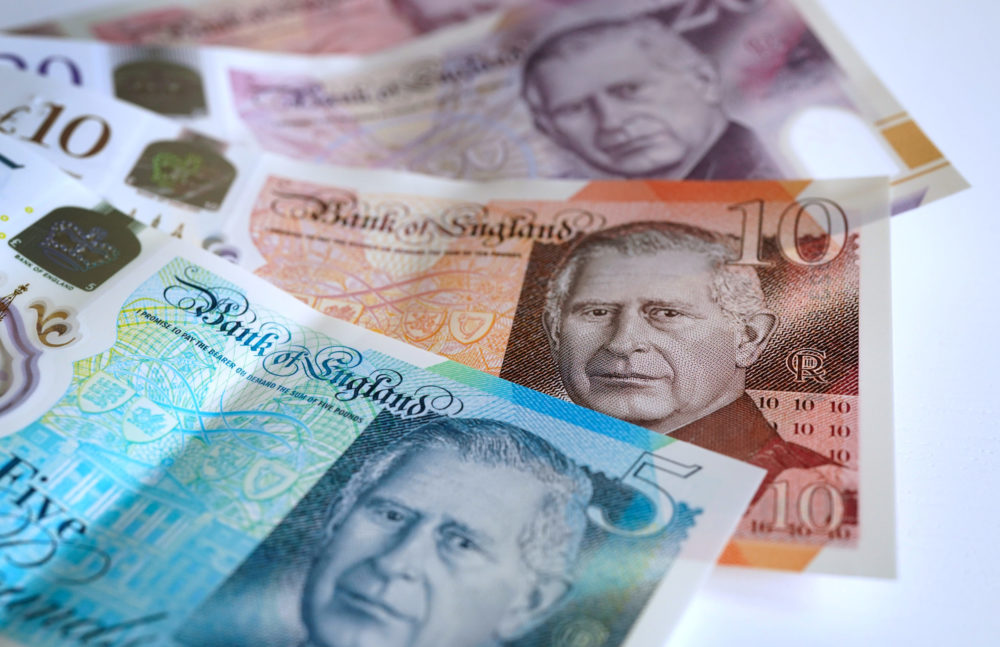
New bank notes. Image: Gareth Fuller/PA Wire

The UK economy unexpectedly contracted in October, marking two months in a row of negative growth for the first time since the pandemic, new figures show.

Chancellor Rachel Reeves said she was “disappointed” by the data after a weak month for pubs and restaurants dragged on growth amid some uncertainty ahead of the autumn Budget.

The Office for National Statistics (ONS) said gross domestic product (GDP) contracted 0.1% in October.

Most economists had been expecting GDP to rise by 0.1% during the month.

[mid-content-banner]

Shift

The latest figures from the ONS follow a 0.1% estimated fall in September – meaning it is the first time the economy has contracted for two consecutive months since March and April 2020, during the onset of the Covid-19 pandemic.

It marks a fractional shift in the outlook for the economy after it eked out 0.1% growth over the latest quarter, between July and September.

The ONS said the services sector recorded no growth in October after also stalling in September.

Liz McKeown, the ONS’s director of economic statistics, said: “The economy contracted slightly in October, with services showing no growth overall and production and construction both falling.

“Oil and gas extraction, pubs and restaurants and retail all had weak months, partially offset by growth in telecoms, logistics, and legal firms.

“However, the economy still grew a little over the last three months as a whole.”

[taboola-banner]

Plan for Change

The Chancellor said: “We are determined to deliver economic growth as higher growth means increased living standards for everyone, everywhere. This is what our Plan for Change is all about.

“While the figures this month are disappointing, we have put in place policies to deliver long-term economic growth.”

The ONS’s monthly business survey showed signs of a mixed response ahead of the autumn Budget announcement at the end of the month.

Some industries, like manufacturers, retailers and recruiters, said turnover was affected as they waited for the outcome of the tax-setting statement.

Others, like real estate and legal services, were more positive and increased activity in the run-up, according to the ONS.

[lower-mid-content-banner]

For the price of a cup of coffee a month you can help us create an independent, not-for-profit, national news service for the people of Wales, by the people of Wales.

Get more trusted Welsh news

Choose Nation.Cymru as a preferred source in Google News to see more of our journalism.

Choose Nation.Cymru as a preferred source in Google News

3 comments

Adrian

Unexpected? We have Rachel from Complaints in charge of finances.

Reply
A.Redman

"unexpectedly? Disappointed? Only to those who fail to realise that is their actions that are solely responsible for the situation. Own it,it is down to you and you alone!!!

Reply
Daniel Pitt

Five months into its tenure, the Labour government’s economic record can only be described as underwhelming. The latest data from October shows that the UK economy contracted for the second consecutive month, a 0.1% decline that underscores the lack of momentum under Chancellor Rachel Reeves’ stewardship. Despite initial hopes that the economy would rebound following the dip in September, the data reveals a deeper issue: Labour’s economic policies are failing to inspire the growth needed to lift the country out of stagnation. The contraction is particularly concerning given the sluggishness in key sectors such as retail, hospitality, and manufacturing. Publicans, restaurant owners, and retailers reported weak months, a sign that consumer spending remains muted. Even the services sector, which represents the bulk of UK economic activity, stalled entirely in October. This stagnation cannot be dismissed as a temporary blip but should be viewed as a worrying signal of deeper structural issues at play. Reeves, in her response to the figures, called the drop in growth “disappointing,” but promised that her policies would deliver long-term economic growth. However, after five months in power, the government’s economic agenda has yet to yield tangible results. The promise of revitalisation appears increasingly distant, as businesses remain on edge and consumer confidence continues to erode. With the economy contracting, it is difficult to see how Labour’s purported “long-term” growth strategy will gain traction. The uncertainty surrounding the government’s budget, delivered at the end of October, has also played a role in dampening economic activity. As KPMG’s chief economist, Yael Selfin, observed, businesses and consumers pulled back in anticipation of the fiscal measures the government would announce. While some sectors, including real estate and law firms, hurriedly brought forward work to avoid post-budget disruption, the wider economy languished. This prolonged period of uncertainty suggests that the Labour government’s economic communication is failing to reassure investors and households alike. The performance of the UK economy over the last five months has been deeply disappointing. With just one month of positive growth in that period, it is clear that the economy is not responding to Labour’s policies in the way the government had hoped. Manufacturing, which had already been struggling in recent years, suffered a sharp decline of 0.6% in October, while construction also saw a 0.4% drop. These are sectors crucial to the UK's recovery, and their continued underperformance is a significant red flag. Moreover, while the latest GfK consumer confidence survey showed some slight improvement in personal finances for the year ahead, it revealed little optimism about the broader economy. Neil Bellamy, consumer insights director at GfK, succinctly captured the mood, saying that the "uncharitable view" of the UK's economic prospects is suppressing consumer confidence. Given the ongoing stagnation, it is not surprising that the public remains unconvinced by the government’s assurances. The government’s repeated references to long-term economic growth ring hollow when the immediate outlook is so grim. Labour has failed to deliver the growth it promised, and the economy has not shown any signs of significant recovery. The conflicting signals coming from Labour’s leadership - where Starmer initially warned of a “painful” budget, only to later backtrack and deny any intention to talk down the economy - only serve to heighten doubts about the government’s ability to provide a coherent economic strategy. Ultimately, the Labour government’s economic performance to date reveals a concerning lack of direction. The economy remains mired in stagnation, confidence is fragile, and the government’s policies have yet to provide the clarity and momentum needed to drive growth. As things stand, the future looks uncertain, and the hope that Labour can deliver a revitalised economy appears increasingly misplaced.

Reply

Leave a reply

Replying to Adrian Cancel

Unexpected? We have Rachel from Complaints in charge of finances.

Comments are reviewed before they appear.