


Thu, 3rd September Cardiff 21°
Nation.Cymru wordmark
Advertisement

News

Transport for Wales issue statement on Powys train crash
By Emily Price
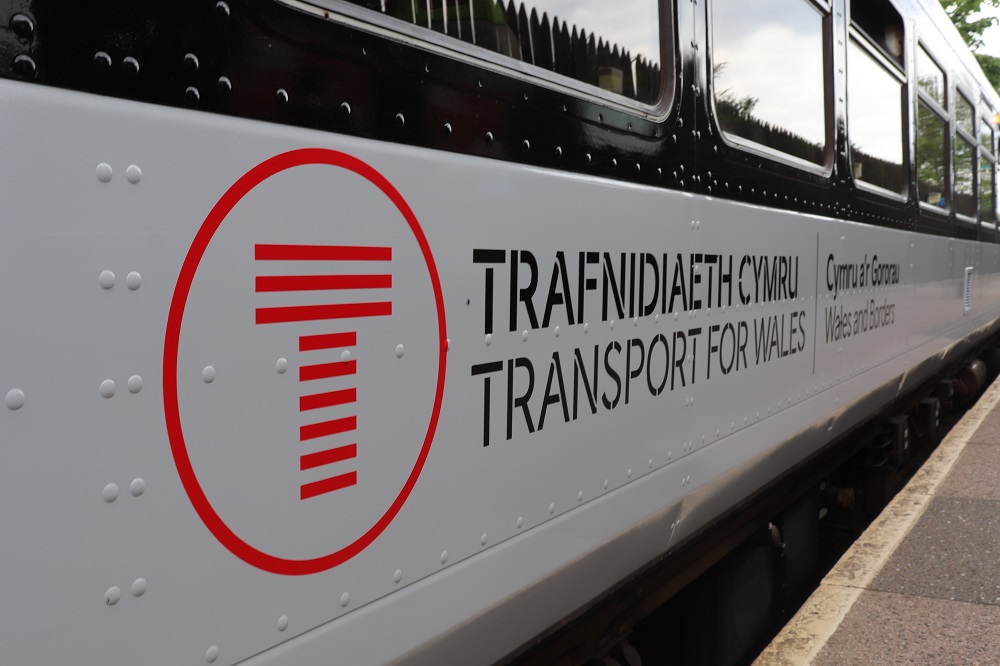
Class 153 logo. Transport for Wales

Transport for Wales have issued a statement following a crash between two trains in Powys.

One passenger died and 15 were taken to hospital following the collision near Llanbrynmair in Powys shortly before 7pm on Monday night.

Their injuries are not believed to be life-threatening or life-changing.

All remaining passengers were evacuated.

The trains, which were both Class 158s operated by TfW, were the 6.31pm service from Shrewsbury to Aberystwyth and the 7.09pm service from Machynlleth to Shrewsbury.

The rail operator issued a statement on Tuesday morning.

[mid-content-banner]

Collision 

TfW said: "At 7.29pm on Monday 21 October, two TfW trains were involved in a low speed collision near Llanbrynmair in Powys, Mid Wales.

"Sadly one passenger has passed away, and a number of other people are being treated for injuries at nearby hospitals. Our first thoughts are with the family and loved ones of the man who has lost his life, as well as all the other people involved in this incident.

"The Cambrian railway east of Machynlleth will be closed while specialist teams continue their investigations, and we urge passengers not to travel to this part of the network.

"We're extremely grateful to the emergency services who attended the scene and helped our passengers and staff in challenging circumstances.

"we are working closely with other agencies, including emergency services, to understand how this incident happened and they will have our full support."

[lower-mid-content-banner]

Disruption

Wales' Transport Secretary Ken Skates said: "Sadly, a man has died following the collision and 15 others have suffered injuries which are not believed to be life threatening or life changing. Our thoughts are with all those involved.

"The Cambrian Railway east of Machynlleth will be closed while specialist teams continue their investigations, and Transport for Wales urge passengers not to travel to this part of the network.

"I am extremely grateful to the emergency services who attended the scene and helped our passengers and staff.

"The safety of our passengers and staff is, as always, our key priority. Transport for Wales are working closely with all agencies, including emergency services and Rail Accident Investigation Branch (RAIB), to understand how this incident happened and they will have my full support."

Slippery

Earlier on Monday TfW advised passengers that its services were running at reduced speeds through Dovey Junction station – which is on the same line – because previous trains reported the track was “extremely slippery”.

The operator suspended all services on the separate Heart of Wales line on Tuesday “until further notice” due to “poor rail conditions”.

Leaves cause major disruption every autumn when they stick to damp rails and become compressed by train wheels.

This creates a smooth, slippery layer similar to black ice on roads, reducing trains’ grip.

Speed restrictions are often imposed in an attempt to reduce accidents such as the crash between two trains outside a tunnel near Salisbury, Wiltshire, in October 2021 which left 13 passengers and one driver requiring hospital treatment.

A South Western Railway (SWR) train slipped on crushed leaves, causing it to slide past a stop signal and smash into the side of a Great Western Railway service.

The SWR train was a Class 159, which is in the same family as the 158s.

The last incident in which a passenger died following a collision on Britain’s railways was the derailment of a ScotRail train which hit a landslip in heavy rain in Stonehaven, Aberdeenshire, in August 2020.

A passenger, driver and conductor died, and six other people were injured.

Crash

Transport Secretary Louise Haigh said she was “incredibly sorry” to hear about the train crash in Wales.

She said: “I’m incredibly sorry to hear one man has died and many others were injured in the train crash in Powys.

“My thoughts are with all of those involved, and their families.

“I also want to thank the emergency services who responded so quickly last night and remain on the scene.

“Safety on our railways is my absolute priority and we are working at pace with Transport for Wales and Network Rail to understand what happened and how we can better prevent it going forward.”

For the price of a cup of coffee a month you can help us create an independent, not-for-profit, national news service for the people of Wales, by the people of Wales.

Get more trusted Welsh news

Choose Nation.Cymru as a preferred source in Google News to see more of our journalism.

Choose Nation.Cymru as a preferred source in Google News

14 comments

Mab Meirion

There are no hospitals 'nearby'...! See Air Ambulance...

Reply
Mab Meirion

Let's hope this puts an end to the idea of moving the air ambulance from Welshpool... For Guardian readers this 'rural line' is the mainline across mid-Wales...

Reply
Brychan

Speculation that the westbound train 'slid through' the Talerddig passing loop to confront an eastbound train having already passed Llanbrynmair is strange, as this cab ride view of this section shows. https://www.youtube.com/watch?v=HXJx1xFf-dA From 1:13:30 travelling toward Llanbrynmair. The passing loop has a 15mph speed limit and since this video was made this section of track has had ERTMS signalling installed, where the train 'digitally' gets the token for this section of single track. Notice the stop signs. The train should not move (brakes on) without it. Question arises why there was the eastbound train at a stand on this section, and why was the token not withheld by this standing train. Am surprised TfW are speculating on slippage using other lines as an example prior to the official accident investigation.

Reply
Valleys Lad

Indeed, many are surprised how far it went past the loop. https://www.railforums.co.uk/threads/incident-at-talerddig-wales-21-10-2024.275845/page-6

Reply
Brychan

Yep. Not only that, we see the points on westbound exit of the Talerddig loop would have shown no normal if the train was tokenless. The digital transfer of token on ERTMS would set these points to normal automatically on hand over. For slippage and impact to occur the points must have been run-through. The 1/25 down gradient does not start until after the points according to the cab ride training commentary. If the driver had over sped up to the loop due to low rail head adhesion it would still be a driver error, but even then, the over-distance on exit is huge. As ever the TfW the train operator is trying to shift blame to Network Rail even before the black boxes recovered and investigation concludes.

Reply

In reply to Brychan

Susan Davies

Sorry, but that is plainly unfair. None of TfW's official statements have apportioned blame or speculated on a cause.

Reply
Susan Davies

Nothing published backs up the assertion that the system "failed to withhold the token". It seems far more likely that the westbound train simply overran its authorisation because it was physically unable to stop in time.  There are no stop signs or posted 15mph limits at Talerddig and the old days of both trains drawing up a low speed, stopping and then exchanging tokens are long gone - procedures changed during the ERTMS switchover which you yourself alluded to. Typically one train will stop in the loop while the other passes by at line speed. The timetable suggests that the westbound train was the one planned to stop and wait at Talerddig on this occasion, which fits with the eastbound train still being some distance away. As to why the eastbound train was stopped, we can only speculate: it may have itself been struggling with slippery rails and ground to a halt, or it may be that the driver of the westbound train initiated an emergency call in time to stop it.

Reply
Valleys Lad

With all the money being spent on the railway infrastructure in and around Cardiff, we still have a system that allows head on crashes in mid Wales.

Reply
Amos

The Cambrian line has the most modern signalling in the UK because it's Network Rails test bed for ETCM. Indeed it was recently upgraded as ordered by the Grant Shapps.

Reply
Brychan

There's cab honking if you exceed line speed with ERTMS. Line speed is 15mph through the Talerddig loop. As with all such features it's often used as a driving aid rather than a safety feature. If the higher blanket Emergency Speed Restriction (ESR) for poor railhead conditions was wrongly uploaded to the system, that would explain why a train sped into the section. No honking until too late. Then a slide. A number of things to check in the investigation. 

Reply

In reply to Brychan

Amos

That would be a massive design fault, if a higher temporary speed restriction could override a lower standard speed limit. Any idea what the recent upgrade was at a technical level? https://www.gov.uk/government/news/multi-million-boost-from-uk-government-for-welsh-railways-to-level-up-infrastructure-and-improve-journeys-for-passengers "The Transport Secretary has also announced £3 million to advance plans for upgraded signalling on the 241-kilometre Cambrian line from Shrewsbury Sutton Bridge Junction to Aberystwyth and Pwllheli. The planned state-of-the-art digital signalling system will modernise the network, improving the reliability of services, and support the introduction of a new fleet being rolled out across the network in December 2022."

Reply
Valleys Lad

Did anyone see the London to Brighton rail journey at high speed. To mark its 40th anniversary they shot another version and showed them both side by side. The remarkable thing was the amount of vegetation now as compared to previously. Mostly to do with sparks from steam train causing line side fires. But I bet they never had issues with leaves on the line there wasn't a tree for 100 yards!

Reply
Amos

You'd imagine there were approved and banned bushes and trees alongside railways. There's no need for it to be barren but having huge leaf droppers right overhead isn't smart. Ideally all lines would be replanted with native evergreen bushes so views weren't blocked (a particular problem on the HoW line).

Reply

Leave a reply

Replying to Amos Cancel

You'd imagine there were approved and banned bushes and trees alongside railways. There's no need for it to be barren but having huge leaf droppers right overhead isn't smart. Ideally all lines would be replanted with native evergreen bushe...

Comments are reviewed before they appear.