


News
Senedd committee raises serious concerns over controversial farm acquisition
Martin Shipton
Lessons must be learned from the purchase of Gilestone Farm, according to the Senedd’s Public Accounts and Public Administration Committee, which is calling for urgent improvements and better governance for acquisition practices.
The committee identified significant failings in the handling of the acquisition, raising broader concerns about governance, due diligence, and community engagement. The committee's report highlights that the purchase was rushed due to end-of-year budget pressures, resulting in avoidable mistakes.
In March 2022, the government paid £4.25m for the freehold of Gilestone Farm, near Talybont-on-Usk in Powys, as part of a plan to secure the future of the Green Man Festival held nearby. The deal was approved by the then Economy Minister Vaughan Gething. There has since been a £500,000 drop in the asset’s value.
[mid-content-banner]
Ancillary businesses
While there were no plans to move the festival from its current location, Green Man owner Fiona Stewart devised a £23m plan to develop ancillary businesses including regenerative farming, glamping, small events and a bakery, brewery and baking school. The Welsh Government bought Gilestone Farm with the intention of leasing it to Green Man where the new activities would be based.
But local opponents as well as opposition politicians at the Senedd questioned Mr Gething’s judgement in buying the farm before a detailed business plan had been submitted. The issue created bitter divisions in the local community, with allegations of bullying and intimidation.
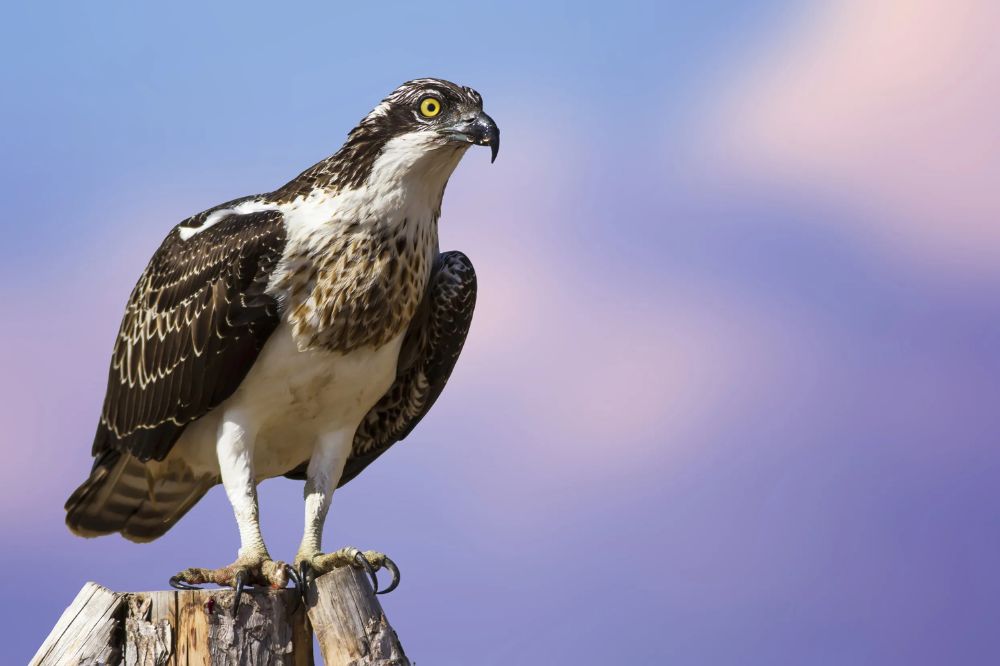
Subsequently the Welsh Government was left with egg on its face and a farm it didn’t need after it was forced to abandon the project when nesting ospreys returned to the immediate area for the first time in hundreds of years.
[lower-mid-content-banner]
The committee has made eight recommendations:
The Welsh Government should review the arrangements around how Ministerial Advice is shared with Cabinet Secretaries and Welsh Government Directors, to ensure all senior decisionmakers are presented with the information that is relevant to their portfolios. They should also review any guidance about the content of the advice, to ensure that the necessary information is provided to decision-makers.
The Welsh Government should review its practices around consultation and engagement more generally and report its findings to the committee. The review should consider whether enough is being done to communicate with the public, whether the most effective methods of communication are being utilised and whether enough is done to reflect this community engagement when finalising plans or strategies.
The Welsh Government should explain how it evaluates the success of their consultation and engagement more generally and what data do they collect about engagement levels and contact rates in the communities where these exercises are held, and more generally.
The Welsh Government’s Permanent Secretary should conduct a full review of the purchase process and reflect on the significant loss in value to the land and whether this could have been mitigated had the Welsh Government performed more rigorous due diligence ahead of the purchase. It should reflect on whether more robust due diligence could have detected the risk of this issue arising, had more thorough pre-purchase checks been undertaken. The review should set out clearly the options available to the Welsh Government to mitigate the losses to the public purse.
The Welsh Government should set out what preinvestment guidelines or milestones, if any, are followed before proceeding with property or land purchases, including what searches or surveys must be undertaken to determine the suitability of the land. This explanation should also set out any exceptions where these rules do not need to be followed, if applicable.
The Welsh Government should explain what guidance or rules are followed in relation to obtaining valuations on prospective property or land purchases and what’s required of Ministers and officials.
The Welsh Government should outline the role of the Land Division in relation to property and land purchases and explain how they work with the relevant departments to ensure the land is suitable for the purposes that are intended, and the due diligence they are expected to perform in advance of purchases.
The Welsh Government should inform the Committee of any updated valuations for the land. They should also update the Committee when decisions are made about a future use for the site, including if the process to sell the site commences.
Inquiry
The report concluded: “The committee will commission an inquiry into the Welsh Government’s approach to property investments, to better understand the processes applied and to evaluate whether they are sufficiently rigorous.
Mark Isherwood MS, Chair of the Public Accounts and Public Administration Committee, said: “The committee is deeply concerned by the Welsh Government’s handling of the purchase of Gilestone Farm. While we recognise the importance of acting swiftly to support the creative sector, this decision was taken with avoidable haste and without the thorough due diligence that the public rightly expects. It raises serious questions about internal processes and the robustness of governance structures.
“Furthermore, the Welsh Government must do more to ensure that communities are not only consulted but genuinely listened to. Engagement must be meaningful, inclusive, and consistent.
“The significant loss in the value of the property is particularly notable in the current financial climate, and we expect the Welsh Government to clarify its future intentions for the site and to set out how it will mitigate the financial loss to the public purse.
“To ensure lessons are learned, the committee will want to carry out further work looking at the Welsh Government’s approach to property investments, to assess whether current processes are sufficiently rigorous and fit for purpose.”
'Proper process'
The Welsh Government said: “Gilestone Farm was acquired in 2022, following proper processes and in keeping with market values at the time, in order to support the growth of the Creative Sector in Wales and a stronger Mid-Wales economy.
“We were delighted to learn in August 2023 of the arrival of the pair of mating ospreys, which returned in 2024, and again this year. Their first egg hatched in early June 2025. This is believed to be a first for the Usk Valley in at least 250 years and marks an important milestone in the protection of this important species.
“The arrival of the ospreys necessarily impacted on the planned use of the farm, and the original project had to be stopped. Gilestone remains one of the Welsh Government’s property assets, and is being managed on our behalf as a working farm. We continue to explore potential opportunities for its future use, in keeping with our commitment to seek a sustainable outcome that helps local communities thrive.
“We will read the committee’s report with interest, and respond in due course.”
Support our Nation today
For the price of a cup of coffee a month you can help us create an independent, not-for-profit, national news service for the people of Wales, by the people of Wales.
Get more trusted Welsh news
Choose Nation.Cymru as a preferred source in Google News to see more of our journalism.
