


News
Reform UK's concentration on immigration 'poses big challenge to broadcasters'
Martin Shipton
Reform UK’s decision to make the non-devolved issue of immigration its main focus in the Caerphilly by-election campaign poses a major challenge to broadcasters in advance of the Wales-wide Senedd election next May, according to a leading media academic.
Professor Stephen Cushion of Cardiff University’s School of Journalism, Media and Culture has led research into broadcast coverage of the by-election, which will take place on October 23.
[mid-content-banner]
Litmus test
The report states: “The Caerphilly by-election represents an important moment in the current balance of power at the Senedd, but it also provides a litmus test for what might happen at the Senedd elections last year. A key part of the campaign will include how the media covers the election, in particular broadcasters in Wales who represent the most used sources of information and are the most trusted. In other words, how broadcasters in Wales impartially report the campaign will have significant implications for what people consume in the run-up to the 2026 Senedd election campaign. Broadcasters in Wales have already begun discussing how they will satisfy rules on impartiality given the nation’s distinctive political system, past electoral history and trends in opinion polls.
“Our study of how broadcasters reported the Caerphilly by-election so far offers some initial findings. Labour was the most referenced party in TV, online and social media coverage. As the government of the day, Labour appeared in many day-to-day stories about ongoing political issues. This represents what academics have long called the “incumbency bonus” – as parties and politicians in government have more media coverage than those in opposition.
"In TV news, Plaid Cymru, the Conservatives and Reform were referenced to almost the same degree. In online news, there was more variation in how much coverage these parties received. Plaid Cymru (21.9%) and Reform (19.7%) were referenced more than the Conservatives (13.1%). On ITV, Reform marginally received the most coverage (20.4%), followed by the Conservatives (18.4%) and Plaid Cymru (12.2%).
"Although the Conservatives are currently polling well behind Reform and Plaid Cymru, the party has received almost as much coverage during the by-election so far – although they do currently have 14 seats at the Senedd and represent the largest opposition party. Reform, who are neck-and-neck with Plaid Cymru in Senedd election polls in Wales, but leading UK wide opinion polls, was the second most referenced party, followed by Plaid Cymru and the Conservatives. While Reform only has one current member of the Senedd, the party did receive the third highest share of votes in Wales at the last general election (17% and 223,018 votes). All these factors will be shaping the impartial judgements of broadcasters as they allocate time to candidates in a crowded political market-place.
[lower-mid-content-banner]
'Challenge'
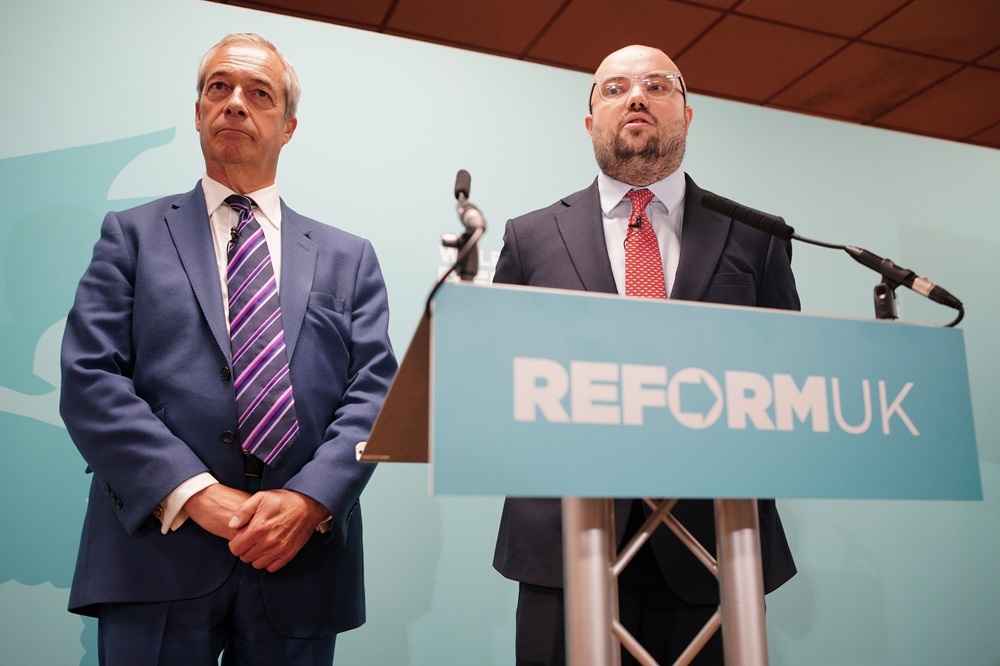
The report continues: “Of course, the challenge for broadcasters will be to not only reflect all the parties, but to hold them to account for their policy pledges and claims. Reform’s high profile leader Nigel Farage, for example, has received prominent attention during the campaign – something that may benefit Reform given a YouGov poll just days ago revealed he is the most favoured UK party leader in Wales. There is currently no specific leader for Reform in Wales (unlike other parties) and Nigel Farage has generated coverage by being the only UK party leader to have campaigned in Caerphilly.
“Reform’s main policy is to campaign on the issue of immigration, which has not featured in routine news reporting but was prominently discussed on the BBC’s Caerphilly’s by-election TV debate. But a BBC fact-checker online pointed out that immigration was a reserved Westminster power – not something the Senedd could decide. While the current Welsh government does have a "Nation of Sanctuary" policy that funds people resettling and integrating in Wales, it represents a tiny proportion of the £27bn the Welsh government spends in total each year.
"Broadcasters will need to decide if this policy – representing less than 0.05% of the Welsh government budget over six years – is something worth prominently covering not just in the remaining days of the by-election campaign, but in the run up to the Senedd election next year. Given Nigel Farage’s media prominence and profile in Wales, broadcasters will also need to decide how far he should be held accountable for campaigning on policy positions – such as controlling immigration – that are beyond the powers of the Senedd.”
Platform
The report refers to the televised debate between by-election candidates broadcast on October 15, stating: “The BBC hosted six of the eight candidates standing in the Senedd Caerphilly by-election the following week. This included figures from Labour, Conservative, Reform, Plaid Cymru, the Liberal Democrats and the Greens. The prime time hour-long TV programme gave all the major parties the platform to pitch their policies as well as the opportunity for Nick Servini, the BBC presenter, to scrutinise their responses and a live audience to hold the candidates to account.
“The BBC also had a live online blog monitoring what was said, with a team of journalists fact-checking claims. While the blog did not appear to be widely used by the public (attracting in the range of 700 to 800 viewers during the programme), it did put some debating points into useful context.
“The inclusion of six rather than eight parties in the live TV debate would have been driven by the BBC’s editorial guidelines on impartially reporting the by-election. Broadcasters have to follow strict rules on impartiality during election campaigns – laid out by media regulator, Ofcom – ensuring they allocate airtime to parties according to a range of factors, such as their past electoral performance and according to the latest trends in opinion polls. With the candidates from UKIP and Gwlad having limited past electoral success at the Senedd and barely registering on the latest opinion polls, understandably they were left out.”
Farage
Prof Cushion said: “The media prominence of Farage during the by-election campaign – and potentially in the Senedd election next year - could prove to be a significant factor in people voting for Reform. He is the only UK leader who has appeared in coverage campaigning in the by-election and he is the most favoured UK party leader in Wales according to a YouGov survey just days ago.
“Farage can not only appeal directly to voters, he can help set the media agenda and ensure the party’s main policy – controlling levels of immigration – is widely discussed even though it’s not a power that is devolved to a future Welsh government.
“This will be a challenge for broadcasters – how far should they allow this issue to shape the campaign agenda over the coming months given it’s a policy that rests with Westminster.”
Support our Nation today
For the price of a cup of coffee a month you can help us create an independent, not-for-profit, national news service for the people of Wales, by the people of Wales.
Get more trusted Welsh news
Choose Nation.Cymru as a preferred source in Google News to see more of our journalism.
