


News
Reform leader’s outsourcing track record is a warning for Wales, says Unison
Martin Shipton
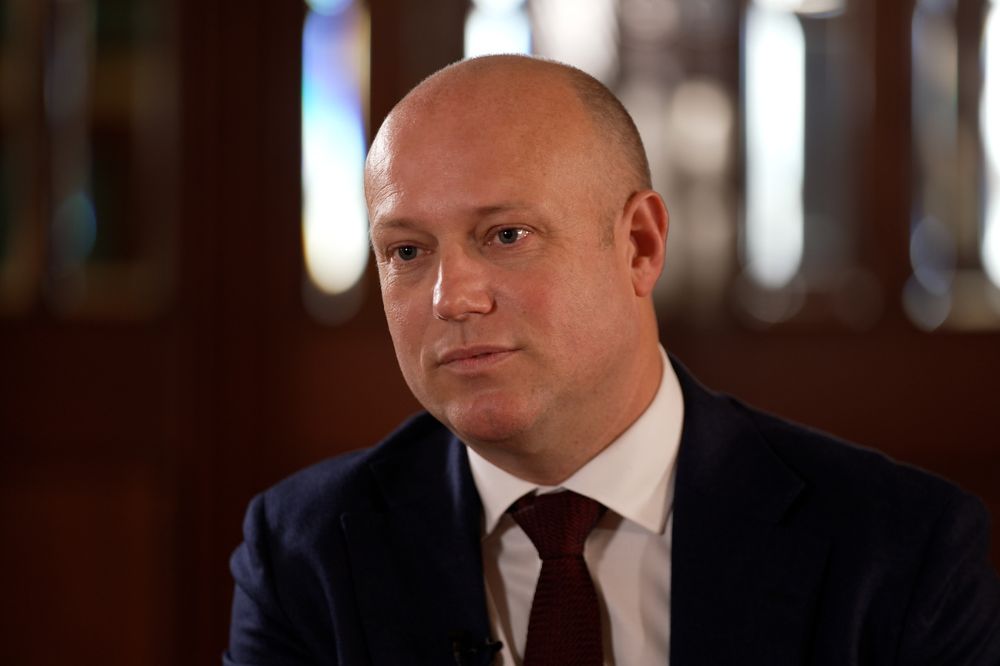
Welsh voters are being urged to look at the track record of Reform UK Wales leader Dan Thomas before trusting him with public services, according to a report by Unison the Union.
The report - Barnet’s Outsourcing Nightmare - details how the north London council became one of the most radical outsourcing experiments in British local government while Thomas served as a Conservative councillor, deputy leader and leader.
Core services were outsourced on a huge scale, costs rose sharply and scrutiny was weakened, says the report. Unison says the findings highlight how staff and residents paid the price during his 19 years at the council.
The report finds Barnet’s decade-long contracts with Capita cost £229m more than originally planned and jobs were transferred out of the public sector, with cleaners, IT workers and customer service staff among those affected.
The report states: “In the mid-2000s, the borough's Conservative leadership began promoting a vision that came to be known as ‘easyCouncil’. The name was borrowed from the budget airline model: residents would get the bare minimum as standard and pay more for anything extra.
“Behind the slogan sat a more radical ambition. Barry Rawlings, who later led Labour in Barnet and became council leader after the Conservatives fell, told the Guardian that the ideal was a council with no more than 200 direct employees, with private firms running most of the rest.
“Conservative politicians before and after austerity believed public institutions were bloated and needed discipline from the market. Barnet’s leaders shared that belief. In Barnet, the council would cut, contract out and remake itself as a commissioning body rather than a provider.
“Mike Freer, then the council leader, gave the project its first political force. Richard Cornelius, who succeeded him, carried it into the contract stage. Dan Thomas, elected in 2006 for Finchley Church End, rose with that administration. By 2011 he was deputy leader, holding office as Barnet made the decisions that would define the next decade.”
John Burgess, branch secretary of Barnet Unison, said: “Thomas was part of a new breed of right-wing Tories who were very ideological. He used to call us ideological because we were promoting insourcing, but he was vociferous in his defence of outsourcing, even in the face of mounting evidence that it was failing.” The crucial move came in 2013. Barnet signed two 10-year contracts with Capita worth about £500m to the company. One covered planning, regeneration, environmental health, highways and related services. The other covered customer and support functions including payroll, HR, IT and call handling.
The Guardian reported that around 790 full-time jobs would move into the private sector under the arrangements. The sums alone made Barnet unusual. The legal fight around the contracts made that clearer still.
In April 2013, the Guardian reported that Maria Nash, a severely disabled Barnet resident, challenged the council for failing to consult before outsourcing. The challenge was backed by residents, trade unions and activist bloggers. Lord Justice Underhill ruled the case had been brought too late, but he also found that the council had failed to consult residents about the outsourcing itself. The judgment said the council "never set out to consult about its outsourcing" and that residents should have had the chance to express their concerns before those services were handed away.
Local bloggers
Residents, trade unionists and a cluster of local bloggers fought the new model. The bloggers, operating in the space left by a weakened local press, brought stubborn, forensic attention. At a packed public meeting in 2012, with the so-called "Barnet Spring" gathering force, Cornelius tried to tell residents that the programme would deliver savings without the public noticing. A woman in the audience cut through him: "Do you think we're going to put up with you signing away our future for 10 years?" Residents wanted to know whether they could still influence the public institutions that governed their lives.
“Thomas spoke in similar terms that year. Defending cuts to Barnet’s library service, which saw the council close Friern Barnet library and hand others to volunteers, he told the Guardian: “I don’t think Mr and Mrs Resident are too bothered about who delivers the services.” He added: “Yes, it’s a bold move because it is the first time some of these services have been outsourced in local government, but there’s nothing wrong with being first.”
The report states: “Outsourcing at this scale changes the texture of local democracy. A council can be voted out, a 10-year contract cannot. If services start to fail, if residents cannot get answers, if workers complain that the new arrangements are not working, the formal machinery of democracy stays in place, but residents lose their practical leverage.
“Theresa Musgrove, the Barnet writer and researcher who blogged under the name Mrs Angry on Broken Barnet, described that shift to The Guardian. Ordinary dealings with the council became harder as people were pushed online and away from direct human contact. What the authority described as temporary problems became a normal way of working. Residents could no longer assume they would reach someone who knew the borough, knew the service or had enough authority to solve the problem there and then.
“John Dix, another long-time Barnet blogger who wrote as Mr Reasonable, made the democratic case. The Capita contracts, he said, threatened ‘very, very basic aspects of democracy’ because once services moved inside fixed commercial agreements, voters could no longer punish failure and expect change to follow.
“Pension queries were handled in Darlington. Parking notices were dealt with in Croydon. Payroll for Barnet school staff was administered from Carlisle. Some planning staff worked in Belfast. The call centre was in Coventry. This is the geography of outsourcing stripped of jargon.
Chain of accountability
The report says: “Barnet residents paid Barnet council tax and voted in Barnet elections, but many of the people administering their services no longer worked in Barnet at all. The borough still appeared on the headed paper. Behind it sat a private contractor operating through dispersed offices, different internal systems and a chain of accountability that did not run straight back to the public.
“If a resident spent days trying to fix a council tax problem, chase a planning matter or resolve a payroll mistake, the person on the other end of the system might sit hundreds of miles away, with no local knowledge, working inside a commercial structure built to standardise process rather than answer to the borough.”
Rawlings later said: “Councillors and officers answer to local residents; Capita answers to its shareholders. That is its legal obligation. Rawlings was describing what happens when a contractor becomes too large a part of the state's everyday machinery.”
Unison Cymru regional secretary Jess Turner said: “Barnet’s outsourcing disaster shows the price staff and residents have to pay when politicians hand public services to private contractors and weaken scrutiny.
“Wales needs high quality services that are properly funded, publicly delivered and accountable to the communities they serve. Staff and residents have every right to judge politicians by what they did when they had power.
“This report gives Welsh voters the chance to look at Dan Thomas’ track record and draw their own conclusions.”
'Arrogant'
Barnet Unison branch secretary John Burgess said: “I watched Dan Thomas operate for the best part of two decades in Barnet. He is adversarial, arrogant and hostile to anyone who challenges him.
“When residents tried to ask questions, he shut down public scrutiny at council meetings.
“People in Wales need to understand what he did when he had power. He championed contracts that cost the council £229m more than planned, left basic financial controls in tatters and saw Barnet become the first local authority fined by the Pensions Regulator.”
The impact on workers was traumatic. The report states: “Even when the politics changed, the damage did not vanish on election night. Different groups of workers ended up on different terms. Skills and institutional memory had eroded. Confidence in management had been damaged. Residents had already spent years living with worse service.
"Unwinding the contracts took longer than announcing the decision to unwind them. These workers deliver public services. Their employers told them their work mattered, then treated them as disposable. For a Welsh audience, this is probably the sharpest part of Thomas’ Barnet record. Outsourcing changes more than the logo at the top of a payslip. It alters the social contract around public service work. It strips away the things that make such work stable and worth defending: occupational sick pay, pension rights, collective bargaining and a clear line between the worker, the service and the public they serve.
“By 2022, Barnet's outsourcing model had become politically toxic. Labour took control of the council after 20 years of Conservative rule, winning 41 seats in total and taking 16 from the Tories. Rawlings called the Capita deal a ‘failed experiment’. In July of that year, the new administration voted to end the mass outsourcing of services and begin bringing them back inhouse. The reversal could not be swift. Contracts on this scale leave a long tail of legal, financial and administrative dependency. But the meaning of the election was plain. Barnet voters had watched the experiment for years, lived with its consequences and chosen to remove the administration that built it.”
Thomas defected from the Conservative Party to Reform UK in June 2025 and resigned his council seat at the end of that year. In February 2026 he was appointed by Nigel Farage as Reform’s leader in Wales.
'Weak controls'
The report states: “Welsh voters can look at the record for themselves. A politician now asking to be trusted with major public services in Wales spent years in senior office in a borough associated with largescale outsourcing, disputed cost overruns, weak controls and a later move back towards insourcing. One question, at least, has an answer.
"When Thomas held senior responsibility in local government, the defining experiment around him left a mess that residents, workers and the next administration spent years clearing up.”
We invited Reform UK to respond, but the party has not done so.
Support our Nation today
For the price of a cup of coffee a month you can help us create an independent, not-for-profit, national news service for the people of Wales, by the people of Wales.
Get more trusted Welsh news
Choose Nation.Cymru as a preferred source in Google News to see more of our journalism.
