


Fri, 28th August Cardiff 17°
Nation.Cymru wordmark
Advertisement

News

Reeves faces pressure to balance the books as borrowing costs rise
By Emily Price
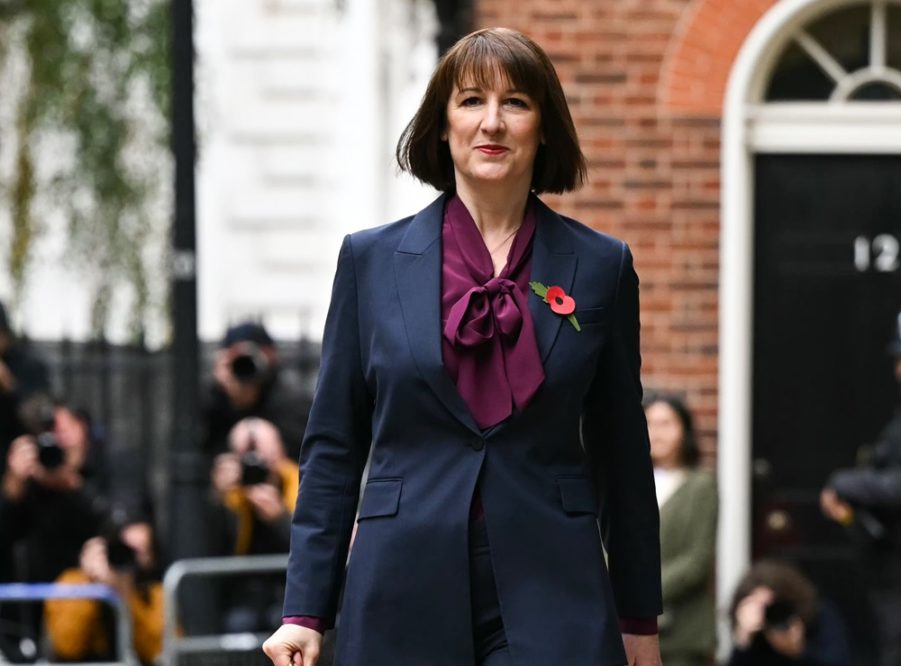
Chancellor of the Exchequer Rachel Reeves. Photo Justin Tallis/PA Wire

Rachel Reeves faces further pressure to balance the books as the UK’s borrowing costs hit their highest level since the 2008 financial crisis.

The Chancellor is said to be prepared to impose more severe spending cuts on departments if necessary, having already ruled out increasing either borrowing or taxes.

She has also asked ministers to draw up alternative plans for securing growth and “cease anti-growth measures” as she attempts to meet the Government’s aim of improving living standards across the country.

[mid-content-banner]

Review

Any further spending cuts could be announced in the Chancellor’s planned fiscal statement on March 26, ahead of a spending review that has already required Government departments to find efficiency savings worth 5% of their budgets.

The prospect of further cuts follows a rise in the yields on government bonds, which reflect how much it costs the Government to borrow money.

Yields on government bonds continued to rise on Thursday, up eight basis points to 4.89% for 10-year gilts, which is the highest since 2008.

These yields settled later on Thursday afternoon, sitting one basis point higher for the day at 4.82% when London’s market closed.

The rise in gilt yields has an inverse effect on the price of these government bonds, which are falling as a result, with some saying the current market woes echo those seen in the fallout from the disastrous mini-budget of former prime minister Liz Truss in 2022.

[taboola-banner]

Headroom

The rise in the cost of servicing government debts could cut into Labour’s expected financial headroom in a potentially worrying sign of how investors see fiscal sustainability in the UK.

That headroom against Ms Reeves’s debt target was already “razor-thin”, according to Isabel Stockton of the Institute for Fiscal Studies (IFS), meaning persistently higher interest rates could force the Chancellor to act or break the fiscal rules she set herself at the Budget in October.

Ms Stockton added: “If continuing to meet the fiscal target requires new tax rises, or cuts to the already tight-looking spending envelope for the subsequent spending review, then the Chancellor – and we – should not be surprised.”

The Chancellor has previously ruled out both increasing borrowing and raising taxes following the significant tax hikes in October’s Budget, leaving her with few options beyond further spending cuts.

Meanwhile, the Conservatives have criticised the Chancellor for proceeding with her planned trip to China this weekend rather than remaining in the UK to address the rising cost of borrowing.

Shadow chancellor Mel Stride said Ms Reeves was “missing in action” and accused her of “wheeling out her deputy to defend her loss of control of the public finances” as Treasury Chief Secretary Darren Jones answered questions in the Commons in her place.

Orderly way

Mr Jones said the trip was “important” for UK trade and would continue.

While Mr Stride said the Government was making “a panicked attempt to reassure the markets”, Mr Jones insisted that the bond market was functioning in an “orderly way”.

Mr Jones also pointed to global factors influencing the gilt market, saying there was “no need for emergency intervention”.

Government bonds have faced a sell-off around the world in recent months in the face of worries that US President-elect Donald Trump could introduce a tariff policy which would be inflationary for many international economies.

For the price of a cup of coffee a month you can help us create an independent, not-for-profit, national news service for the people of Wales, by the people of Wales.

Get more trusted Welsh news

Choose Nation.Cymru as a preferred source in Google News to see more of our journalism.

Choose Nation.Cymru as a preferred source in Google News

36 comments

Neil Anderson

Wrong Chancellor, wrong Governor of the Bank of England, wrong policies and wrong outcomes to follow... This is a mess - initiated largely by the Governor and his acolytes - that an incompetent Chancellor fails to understand and will certainly fail to respond to appropriately. Aided and abetted by the herd of Muskolites (sic) that are emerging from the shadows. Right-wing newspapers and economic 'commentators' who should know better. The bankers in the City of London. Reform, who only want to supercharge the stupidity... The fatuous quantitative tightening programme must cease immediately, interest rates should be quickly reduced towards 3% at most - anything else further imperils households, small businesses and employment everywhere. Failure to act is not in the interests of the peoples of the UK. Cymru, at the bottom of the food chain, will suffer more. We have very few choices. the best one being the rejection of Labour's inadequate policies at the ballot box in 2026, and strengthened support for annibyniaeth. YesCymru and Plaid Cymru are keys to our future, a future that need not be dominated by fascistic Reform and the neglect of action on climate change Cymru can escape the looming disaster that is the UK - but we need to act!

Reply
Neil Anderson

And there is no need to 'balance the books'. That simply demonstrates a naive and deeply wrong view of government financial management, to the detriment of (most) of us all. The trickle-up gush continues...we get politicians' mush in return!

Reply
John

The current government deficit is £120 billion per annum, and the current budget will only marginally improve the situation. This is far too high in the current economic climate As somebody who works in banking, the mistake made is that taxes haven’t risen anywhere near enough. They almost certainly will need to rise again in the next 12 to 18 months

Reply
Barry

That deficit is the cost of state pension benefits. The truth is that Brexit Britain can't afford retirees. Johnson understood this which is why he tried to let covid rip until he realised what that would do to party membership.

Reply

In reply to Barry

hdavies15

That's a bit cynical but in Johnson's case I wouldn't rule anything out. As for that "deficit" we have governments, Labour and Con, that quite merrily lob billions into bottomless pits like HS2, big ticket defence contracts that are often cost-plus with little or no sign of controls, palace refurbs, etc etc. When it comes to social policy to keep the population alive and well they are out there with hatchets cutting everything in sight.

Reply

In reply to hdavies15

Barry

Why are we giving handouts to millionaires? We should immediately means test the state pension. It's a small price for the sovereignty that the over 65s backed with a supermajority, the only demographic to do so.

Reply

In reply to Barry

hdavies15

The biggest handouts to millionaires don't come via state pension, it's the loopholes that the current tax regime allows all sorts of mitigation/ avoidance for high earners. If a person is a very high earner during working life then it is quite probable that he/she is a high earner in retirement. That should enable HMRC to collect taxes at the appropriate level from such people, but it doesn't because these are the people who have accessed the clever dick advisers who have driven horse and cart through the tax mazes constructed by successive governments. To date the Labour regime seems just as relaxed as the Tories about continuing with this lax tax regime. Maybe too many of them have their own scams schemes in place, so placing the burden on the lower and middle earners suits their purposes.

Reply

In reply to hdavies15

Barry

Tax avoidance is a different topic but both parties are just a thin layer on the Whitehall bureaucracy that really runs the show. One way they prevent change is to keep things complicated. New political demands result in more pages of a tax code so complex only those who can afford the best accountants can make sense and take advantage of. That's no accident. And it won't change until we move government out of Whitehall. What makes sense to people walking the dark 18th century candle lit corridors every day will seem ridiculous when they're in an average office near Coventry.

Reply

In reply to Barry

hdavies15

"Tax avoidance is a different topic" .. Not at all. It is part of the network that protects a select segment of society from the burden that they should be bearing. It is this silo mentality that you display that enables governments and other vested interests to duck the issue. Smashing the complex structures that currently exist to benefit only the seriously wealthy would be a big step towards easing the burden on the far less well off.

Reply

In reply to hdavies15

Barry

Muddying the waters is the go-to of those that don't want change. How revenue is raised is a different topic to how it's spent.

Reply

In reply to Barry

hdavies15

If you don't have a bad habit of gifting money ( tax avoidance) then you don't have to resort to screwing down on those further down the income scale. Your nest is obviously well lined and you don't like the thought of paying your share of the burden. Tax mitigation is about as muddy as you could ever make the waters of public finance.

Reply

In reply to Barry

Neil Anderson

Sorry, Barry, your first claim is incorrect. Our pensions are 38% of the European average - in the sixth wealthiest country in the world!

Reply

In reply to Neil Anderson

Barry

We could stop giving it to the 25% of retirees who are millionaires and boost it for everyone else. People did after all pay National Insurance. Insurance usually only pays out when you need it.

Reply
Neil Anderson

With respect, John, what is your criterion for a 'deficit' being 'far too high in the current economic climate'. Surely, near-recessionary times require counter-cyclical action, higher deficit...? Do you understand the role of the deficit in providing a safe place for savings? Are you aware of the history of deficits since, say, the Second World War? Or how the latter was funded? (Hint: MMT, like Covid, the 2008 - 09 banking crisis caused by your inadequately regulated colleagues of that time). How would you justify withdrawing even more services and assistance to many people already on the breadline? There is an alternative. The government could provide the funds required without impacting the deficit. They could 'borrow' from the Bank of England using whatever subterfuge they wish (QE, say), or they could be honest and simply 'print' the money - that is, by funding public services to meet the obvious needs, much of which would be supplied by the private sector. Inflation? Let's take a closer look. The interest rate games being played by the Bank of England have had NO IMPACT on inflation, much of which has been imported anyway. What does impact inflation? Taxes. Let's take a closer look at them. I agree with your inference that taxes need to increase. Especially for the wealthy who pay next to nothing. And on non-productive investment (eg. housing speculation). The better-off middle classes are suffering because of fiscal drag and the current incidence of taxation. The working and non-working classes (pensioners, disabled people, low-paid etc) cannot pay more taxes - they don't have enough to pay tax now! So, what to do? Close the loopholes certainly, but that won't be enough. The only answer is to change the tax system to become a fair one - increasing low incomes sufficiently so that those people can pay taxes! Progressive too, so that those who earn more, pay more. So that those who 'earn' most pay most. Treat all income on the same basis for taxation - especially investment income. Overall, the balance should shift taxes away from incomes - lower income tax (integrated with NI), lower VAT - and on to spending. Supertax might apply to racehorses, private aircraft, diamonds, high carbon lifestyles etc. And the wildly improbable incomes of people who supposed 'earn' millions a year. Can anyone of reasonable intelligence believe that anyone could be 100 or a 1000 times more productive or work harder than them? Neither can I. The changes I propose are justified in terms of fairness alone. Needs are not met by 'taxes' or 'revenue' - that's just part of the disgraceful illiteracy of the financial press about economics and finance. And the BBC. Needs are met by the government creating the funds necessary (MMT again) then destroying any excess liquidity with taxation. The only balance necessary is ensuring inflation does not exceed 2 - 3%. In the meantime, households, communities, small businesses and employment are maintained. People live in warm homes! Unfortunately, the above requires politicians who can think about more than one thing at a time...you know, non-linear, multi-disciplinary etc...and a media less enthralled by neo-liberal capitalism.

Reply
hdavies15

As somebody who works in banking you should have the courage to spill the beans rather than engage in flimsy attempts at deflection.

Reply
jimmy

When your government swaps your energy supplier for one costing two or three times as much you end up with economic misery. No surprises there. What's galling is the nation that demanded this swap (USA) is the very one making a fast buck from Europe's and UK's demise.

Reply
Nigel

Hi Vlad, so your friendly advice is to go back to Russian gas?

Reply
jimmy

Europe is still consuming Russian gas...it just comes in via the back door.at a higher cost.

Reply

In reply to jimmy

Nigel

So your friendly advice is to go back to Russian gas.

Reply

In reply to Nigel

jimmy

Too late. The bridges have been burned so to speak. Europe's and UK's economies are condemned by ill thought through geostrategic policies to decades of stagnation. That will not help any cause you choose to support.

Reply

In reply to jimmy

Nigel

Isn't our real problem Vlad that we don't have enough gas storage for when the wind isn't blowing? This means were forced to pay top dollar for gas when we could be buying it up and storing it when it's cheap.

Reply

In reply to Nigel

jimmy

Europe has gas storage and yet, the industrial powerhouse Germany is in serious trouble because like us, their energy costs have made them uncompetitive. The problem ahead is more to do with the question can any energy source provide sufficient power at a price that enables the economy to thrive while still making it's provision profitable for producers.

Reply

In reply to Nigel

the original mark

It is our fault we don't have enough storage, successive tory governments have operated a "just in time" operation when it comes to gas supply and have closed down or sold off gas storage facilities, in 2022 the uk held 9 days supply

Reply
Barry

Liz was right about one thing. The anti-growth coalition is real. Treasury and BoE orthodoxy is the problem. It's time for a second opinion. Where's The Troika when you need them?

Reply
John

what is your advice to do anything differently than what they are doing?

Reply
Barry

Neither institution was formed to run a modern economy. The BoE was set up by slave traders to bankroll the empire, the Treasury to hide the loot. Having everything these institutions are doing independently reviewed by global experts should concern no-one.

Reply

In reply to Barry

John

so your advice is to stop slavery?! Seriously though, the options are quite limited whilst inflation is high and unlikely to decrease anytime soon.

Reply

In reply to John

Barry

Removing trade barriers and red tape with the largest single market in the world on our doorstep is one option to reduce inflation. Isn't it? And these two institutions are focused on London as the sole engine of growth. This is legacy thinking. Targeting the underperforming economic regions of the UK instead will add far more to UK GDP than trying to squeeze a bit more out of an exhausted capital.

Reply

In reply to Barry

John

well, the UK isn't rejoining the EU, sorry. And inflation is high across the EU/US, so the UK isn't alone, though Brexit clearly hasn't helped. The BoE are a central bank, so financial services is key to their remit. I think I'm right saying, if the financial sector grows by 4% this year, the welsh economy would have to double in size to match the additional tax revenue. I'm not trying to be argumentative, but that's why it's so important to the UK government. Clearly, we need policies in other parts of the UK as well.

Reply

In reply to John

Barry

First, we don't need to be in the EU to be part of the single market. The question on the ballot paper only asked about EU membership. Second, your assessment exactly highlights the myopic thinking in the Treasury because GDP growth in the regions isn't only about extra taxes raised. It's also about the reduction in public spending that comes with being a wealthier region. And today there's another example of Treasury self-harm. Gas storage is back on the agenda. The Treasury was happy to close the Rough gas storage facility in 2017 to save some money. It was hastily reopened after Ukraine at great expense but how can any institution responsible for the economy think less gas storage was a good idea? Even in normal times, the ability to buy gas cheap and keep it for when it's expensive reduces bills. Cheaper bills means more disposable income which gets spent on goods and services boosting GDP. But all they could see was the cost of keeping it open, and like a miserly charity treasurer, thought their only job was to not spend any money.

Reply

In reply to Barry

Neil Anderson

Promise I'm not picking on you, Barry, but... I tend to agree with your second paragraph. Removing trade barriers might help - so let's rejoin the single market and the customs union, the quickest way that could be achieved. And I want red tape to protect our people from poor quality products and the degradation of our environment, say. Do you not want that?

Reply

In reply to Neil Anderson

Barry

We want red tape to trade with those who don't have similar standards and economic conditions. We don't want it to trade with those that do. It's the exact opposite of Brexit which touted free trade deals with everyone and now people are surprised our steel jobs are going to India.

Reply
Neil Anderson

Alas, Barry, Liz was wrong just about everything. As it happens I'm against growth too, but have absolutely no confidence in the Treasury or the Bank of England to deliver that or much else. Both incompetent and ideology-driven. But I am for growth in well-being, in culture and the arts, in food quality, in sustainable transportation...just not in economic growth they way that neo-liberal capitalism defines it. So, there's your second opinion.

Reply
Barry

The growth you want comes with wealth, and the only tool we have today to measure national wealth is GDP. Growth refers to increasing GDP which in turn boosts tax revenues allowing for more money to be spent on culture and transport, for example. You can argue forever about how wealth should be defined, if GDP (or better GDP per capita) is any good at measuring it, and what sectors we should focus on growing (diversity is king, relying on just financial services is a folly). But, when all is said and done, lower GDP almost certainly means less of what you want.

Reply

In reply to Barry

Neil Anderson

Oh, Barry, no. I recall Margaret Thatcher saying that we needed a strong economy before we could spend on improving the environment. We - er, a few of us - are very much wealthier now (larger GDP too!) than then but we still won't spend sufficient funds on protecting the environment. Go figure. GDP is a ridiculous measure - read Bobby Kennedy - "measures everything except the things that are worthwhile" - https://www.theguardian.com/news/datablog/2012/may/24/robert-kennedy-gdp I'm sure you're right about diversity in the economy though, and the reliance on financial services will frequently bite us (see 2008 - 2009, perhaps 2025). All of these get-rich-quick schemes (coal, tin, lamb, water, energy, tourism etc) have their day in the sun but are unsustainable and we are left poorer for it. There is no free lunch (except for the privileged few - so far. Now, is that a tumbril I hear?). We must learn to be more modest in our asks, especially from the environment. Needs first - food, shelter, income, health and care, education. After that we can think about mere wants... The future is probably a wood and hemp economy, with very few cars and many trams and bicycles and fitter people.

Reply
Llinos dafydd

I bet Liz Truss is drafting her letter to Sir Kier at this moment. I don't mean that one.

Reply

Leave a reply

Replying to Barry Cancel

Why are we giving handouts to millionaires? We should immediately means test the state pension. It's a small price for the sovereignty that the over 65s backed with a supermajority, the only demographic to do so.

Comments are reviewed before they appear.